Wonders & Monuments · Great monuments
Chartres Cathedral
The great Gothic cathedral at Chartres, famous for its west portals, its glass and its mismatched spires.
Still standing. The cathedral still stands and is in use. It keeps an unusually complete set of early thirteenth-century stained glass and a sculptured west front (the Royal Portal) that survived a fire in 1194.
Chartres Cathedral, in Great Churches & Monasteries
What it is
The cathedral of Notre-Dame at Chartres was rebuilt with astonishing speed after a fire in 1194, and the present nave, choir and most of the fabric belong to that early Gothic campaign, finished in the first decades of the thirteenth century. Older work survived at the west end: the Royal Portal and, on one side, an earlier tower. The two spires do not match — a fact a student can see at once from the west front. Inside and in the windows, an unusual amount of medieval glass remains.
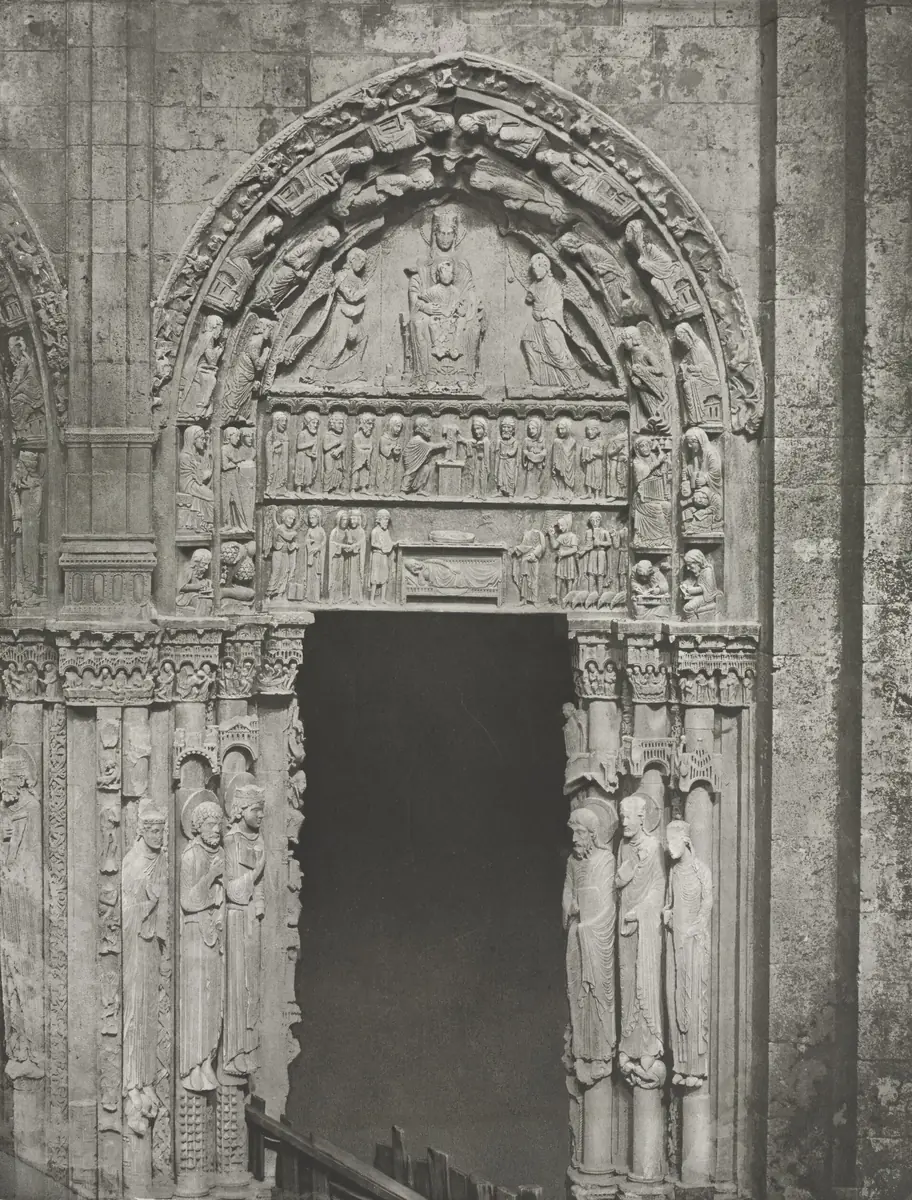
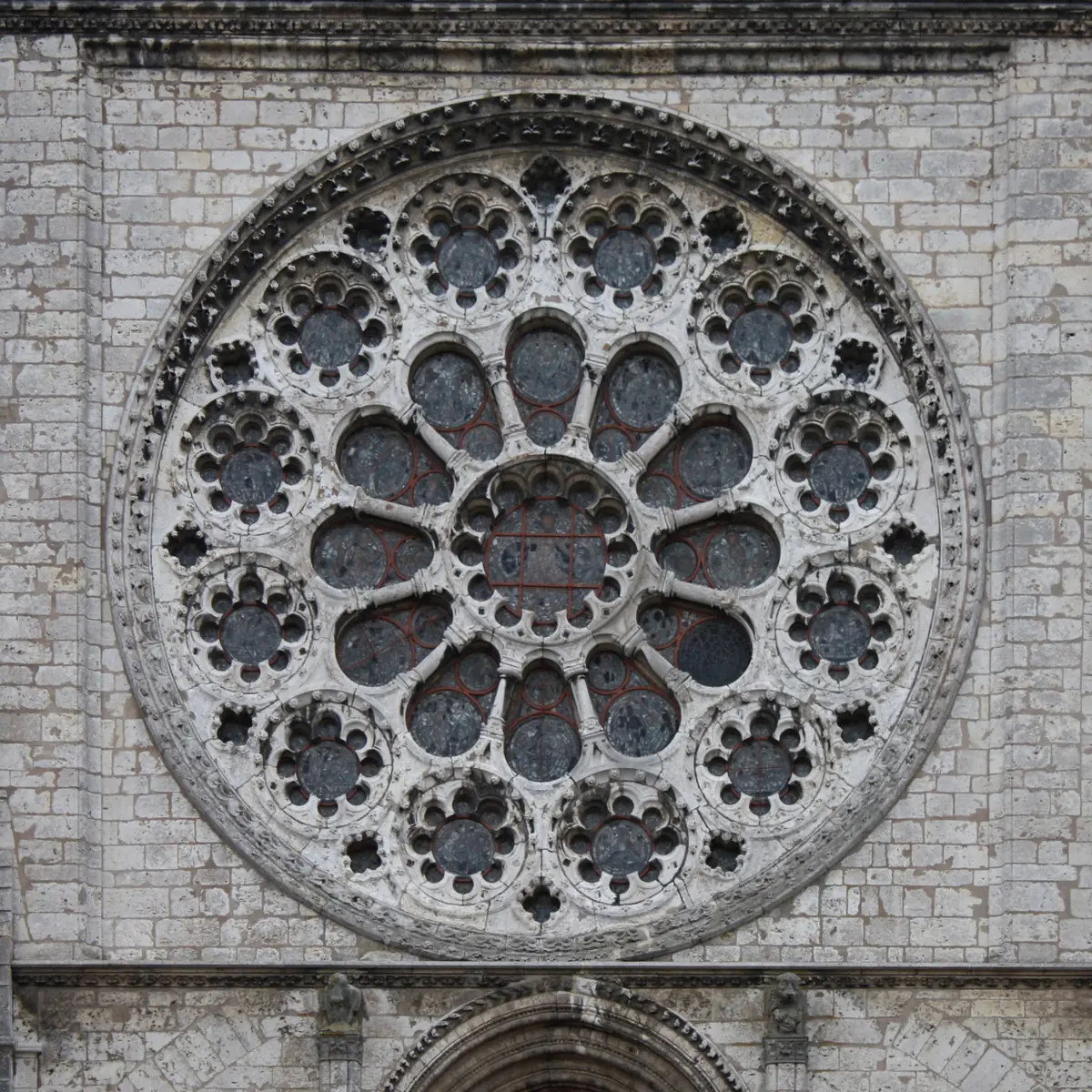
The Royal Portal is among the great sculptured doorways of the Middle Ages: kings, queens and holy figures in the jambs, Christ in majesty in the central tympanum. Charles Nègre photographed the right door in the 1850s. The west rose, from the outside, is a stone wheel of tracery before it is a window of glass. These are not later copies; they are the medieval work, worn and still in place.
Why it matters
This is costly work offered to the glory of God, raised by a whole city after a fire, and kept. The virtue to notice is perseverance and a love of beauty in stone and glass. To look slowly at the portals is to see teaching in sculpture, meant to be read by people who entered to pray.
Look closely
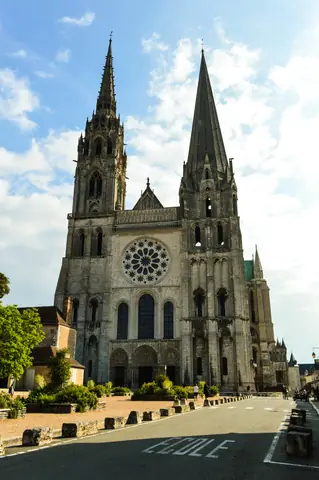
Image: Wikimedia Commons · CC BY 3.0 · Photo: Francisco Anzola The west front
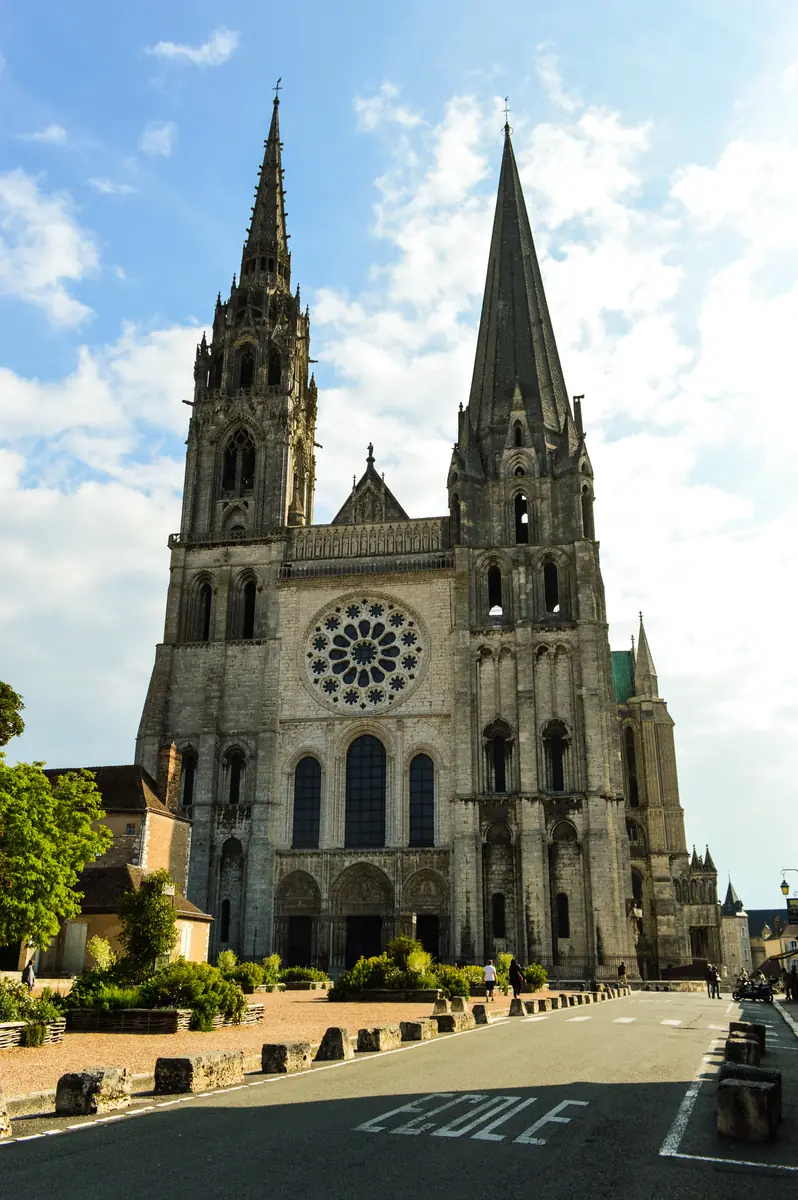
Look closely. The west façade of Chartres, with the two unmatched towers, the Royal Portal below, and the west rose in the centre. This is the best single view for the plan of the front. Notice how the older, simpler spire stands beside the later, more ornate one.
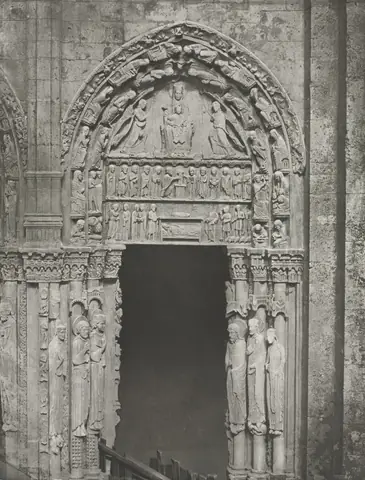
Image: Wikimedia Commons · CC0 (public domain) The right door of the Royal Portal
Look closely. Nègre’s photograph of the right door of the Royal Portal, with the jamb figures and the carved archivolts. The sculpture is medieval. Use the photograph to look slowly at the standing figures and at the depth of the doorway, without the distraction of a whole façade.
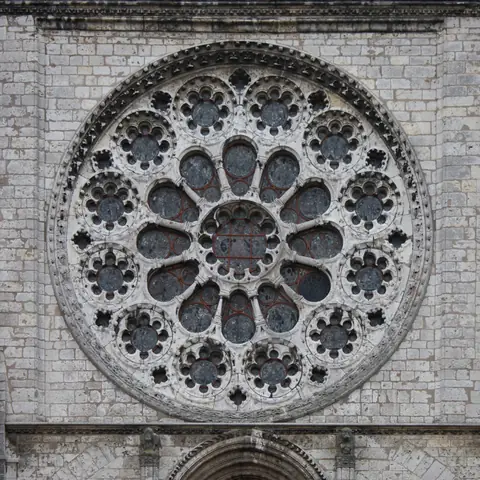
Image: Wikimedia Commons · CC BY 3.0 · Photo: Eusebius The west rose, from outside
Look closely. The west rose seen from the exterior, as a wheel of stone tracery set in the façade wall. The glass is not what this photograph is for; the design of the stone is. Compare its place on the west front in the wider view.


What to watch for
Look slowly- The mismatched spires. One tower is earlier and simpler; the other has a later, richer spire. That inequality is part of the west front.
- The Royal Portal. The west doors and their sculpture survived the 1194 fire. Look at the jamb figures and the tympanum.
- The west rose. From outside you see stone tracery; the glass is on the inner face.
- A complete Gothic church. Nave, aisles, flying buttresses and choir belong mainly to one early campaign. That unity is rare.
- Not Rouen, not Paris. Chartres is its own cathedral. Do not confuse its west front with Notre-Dame de Paris or with Rouen.
Sources
Dates follow standard historical references and, where we quote a book, the wording of the edition hosted in this library. Photographs are used only when the photograph itself is Public domain, CC0, or CC BY with a named credit. Lost wonders are shown in later engravings and reconstructions, which are imaginings, not photographs of the original work. Each picture links to its source page with full licence details.