Great Churches & Monasteries · Western Europe
Chartres Cathedral
The Gothic cathedral with the most complete set of medieval stained glass, rebuilt in a few decades after a fire.
Still standing. The cathedral stands and is one of the best preserved of the Gothic period. Most of its medieval stained glass survives, and a restoration of the interior was carried out in the 2010s.
Chartres, in Wonders & Monuments · Notre-Dame de Paris
What it is
A church has stood at Chartres since the early centuries of the Christian faith. By the ninth century the cathedral held a relic called the Sancta Camisa, the tunic that the Virgin was said to have worn at the birth of Christ. In June 1194 a fire destroyed most of the church, and people feared the relic had been lost. When it was found unharmed in the crypt, the bishop and chapter took this as a sign that the Virgin wished a greater church. Money and labor poured in from the town and the surrounding region, and the nave and transepts were raised in about thirty years.
The west front, with its three doorways of the Royal Portal, was made earlier and kept after the fire. Inside are about 170 windows of stained glass, most made between about 1200 and 1240, and a stone labyrinth in the floor of the nave. The north and south spires differ because the north tower was rebuilt in the 1500s after lightning. In the twelfth century Chartres had a famous cathedral school whose teachers studied classical texts. In August 1944, an American officer entered the town and was able to confirm that no German troops used the cathedral, which kept it from being shelled.
“Except the LORD build the house, they labour in vain that build it”
Why it matters for a classical Christian student
Chartres is built to let in the light of heaven, which is one of the great ideas of the Christian Middle Ages. The windows are the Bible in color, read by people who could not read. A classical Christian student can sense the connection between faith and learning in the cathedral school, between the light of the windows and the praise of the Creator. The virtue is communal perseverance: people of a town gave their labor, money, and years.
Read alongside
- The Bible: Psalm 127 begins: 'Except the LORD build the house'.
Look closely
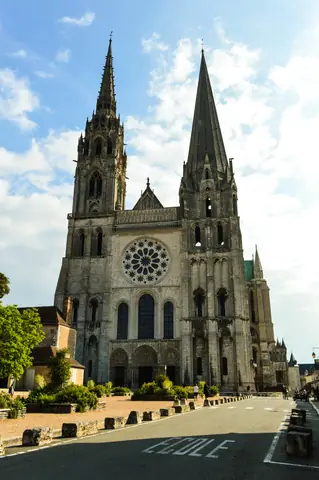
Image: Wikimedia Commons · CC BY 3.0 · Photo: Francisco Anzola The west front
Look closely. The west façade of Chartres, with the two unmatched towers, the Royal Portal below, and the west rose in the centre. This is the best single view for the plan of the front. Notice how the older, simpler spire stands beside the later, more ornate one.
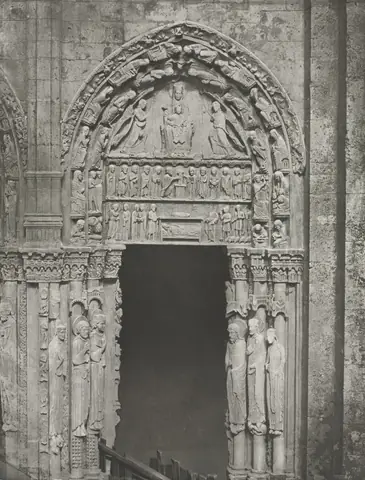
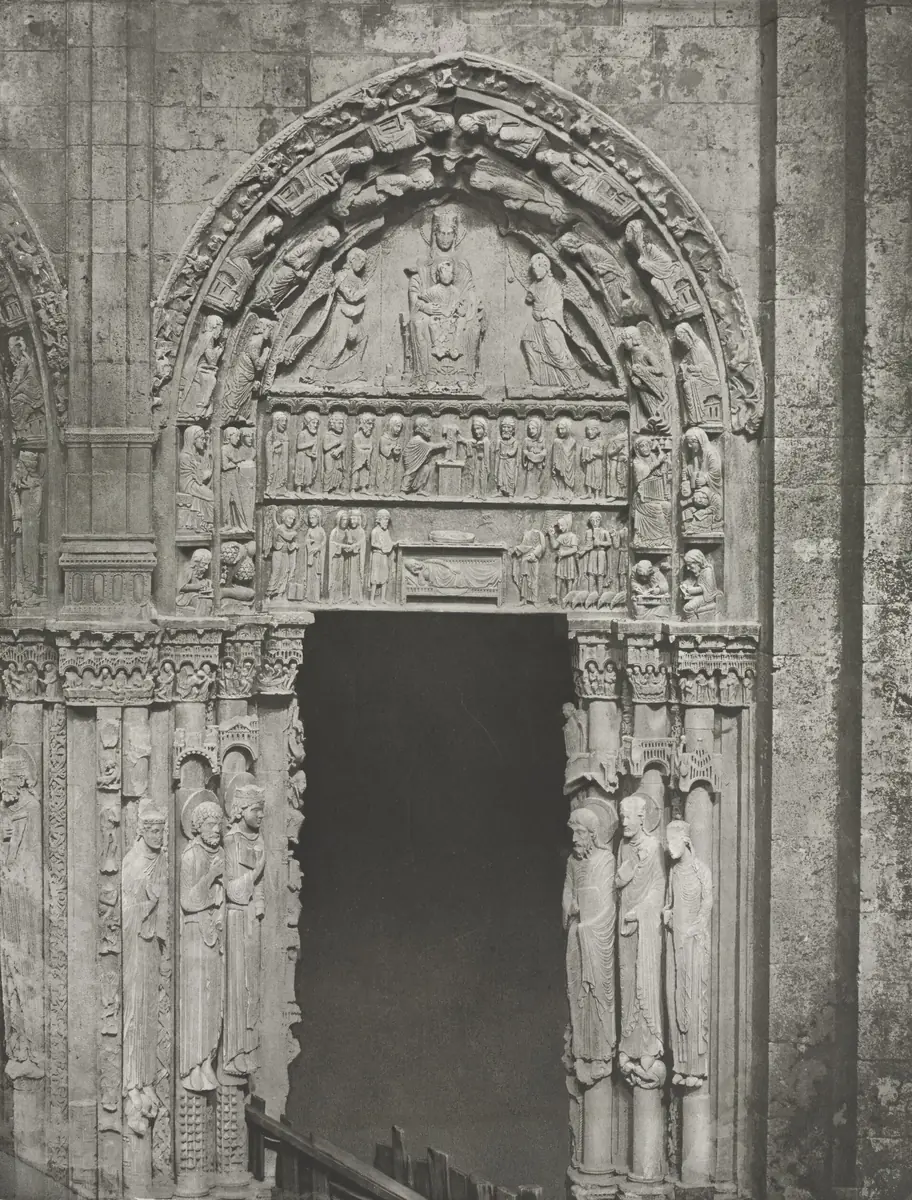
Image: Wikimedia Commons · CC0 (public domain) The right door of the Royal Portal
Look closely. Nègre’s photograph of the right door of the Royal Portal, with the jamb figures and the carved archivolts. The sculpture is medieval. Use the photograph to look slowly at the standing figures and at the depth of the doorway, without the distraction of a whole façade.
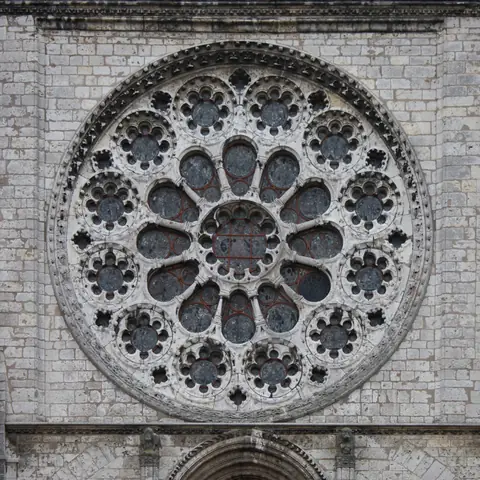
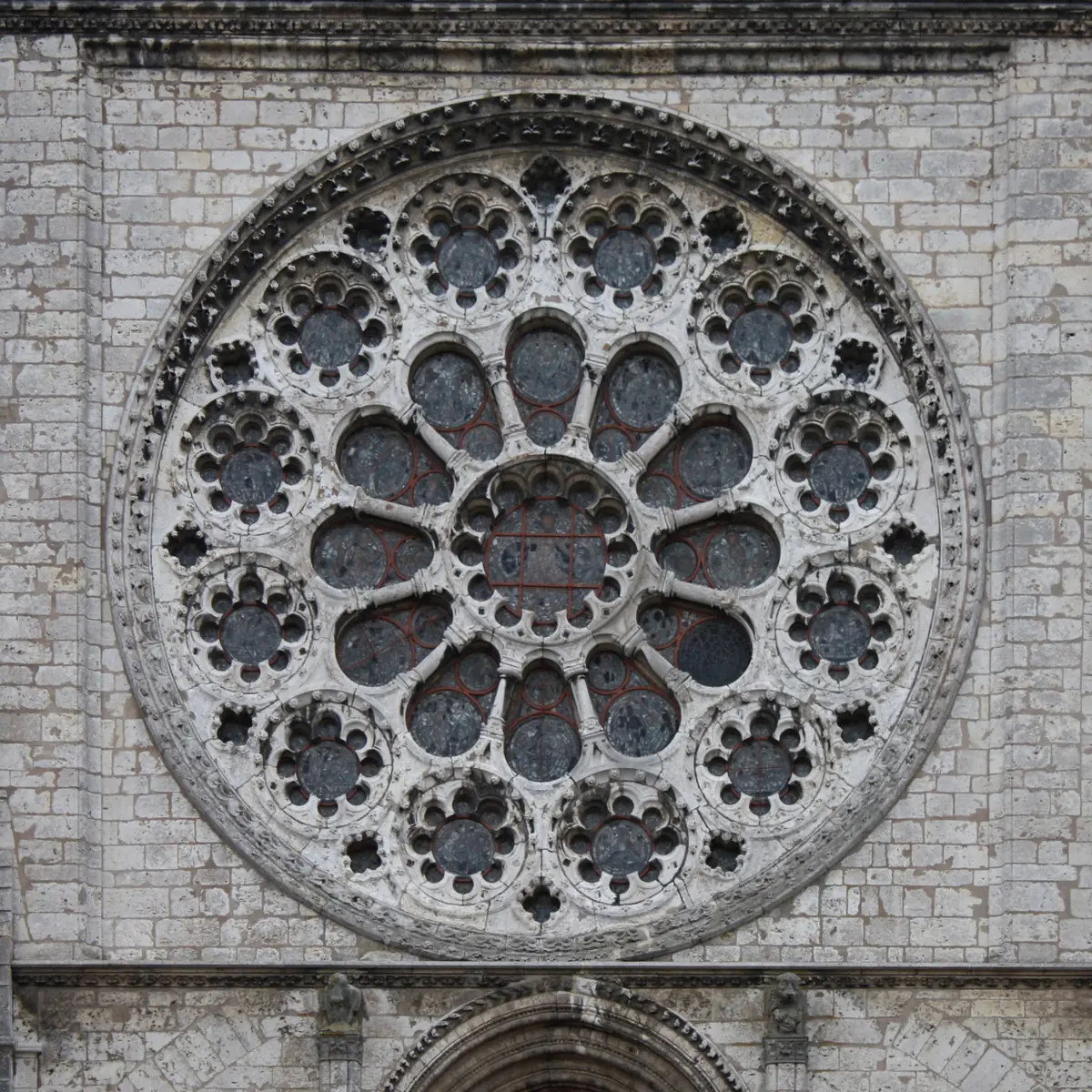
Image: Wikimedia Commons · CC BY 3.0 · Photo: Eusebius The west rose, from outside
Look closely. The west rose seen from the exterior, as a wheel of stone tracery set in the façade wall. The glass is not what this photograph is for; the design of the stone is. Compare its place on the west front in the wider view.


What to watch for
Look slowly- The Royal Portal. Notice the figures of kings and queens, and the Christ in majesty.
- The blue windows. Look for the color called Chartres blue.
- The labyrinth. It is in the nave floor and is open to pilgrims on certain days.
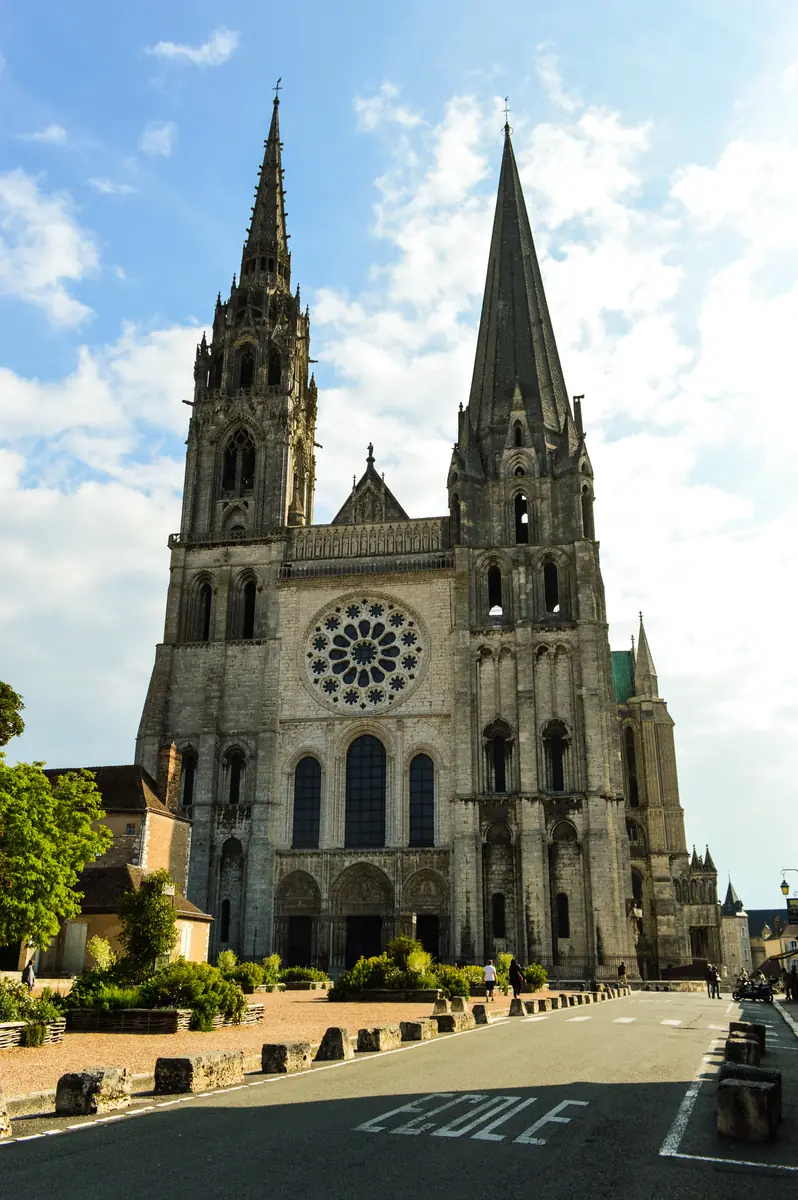
- Two spires. The towers are different because of a fire and later rebuilding.
Sources
Dates follow standard historical references and, where we quote a book, the wording of the edition hosted in this library. Where a tradition is not certain history, the page says so. Photographs and pictures are used only when the image itself is Public domain, CC0, or CC BY with a named credit. Each picture links to its source page with full licence details. Pictures taken before a site was damaged are labelled with their date.