Wonders & Monuments · Great monuments
The Great Wall
The long frontier walls of China, of many ages, still running over the northern mountains.
Still standing. Long sections still stand, especially Ming stone and brick work in the mountains north of Beijing. Much of the older rammed-earth line is worn to a ridge, and some famous stretches have been heavily rebuilt in modern times. The wall is not a single work of one reign.
What it is
The Great Wall is not one wall built at one time. Chinese states raised frontier defences over many centuries. Much of the stone and brick work that visitors now photograph north of Beijing belongs to the Ming dynasty, from the fourteenth to the seventeenth century, often on earlier lines. Other stretches are of rammed earth and are far more worn. To speak of the Wall as a single ancient monument is convenient, and it is not exact.
The nineteenth-century photographs on this page show the wall before modern mass tourism and before some later restorations. John Thomson photographed it in the 1860s and 1870s; a Russian expedition recorded a gate near Zhangjiakou in 1874. Those pictures are evidence of how the work then stood. Marco Polo, whose travels are in this library, describes the great wall of the khan’s palace at Cambaluc; he does not describe this frontier wall, and he is not quoted or linked here as if he did.
Why it matters
This is costly labour spent, over many reigns, on the defence of a frontier. The virtue to notice is perseverance, and the honesty to say that what we call one wall is the work of many hands and many centuries, some of it later repaired. Beauty here is the line of stone on the ridge, not a claim that every mile is original or complete.
Look closely
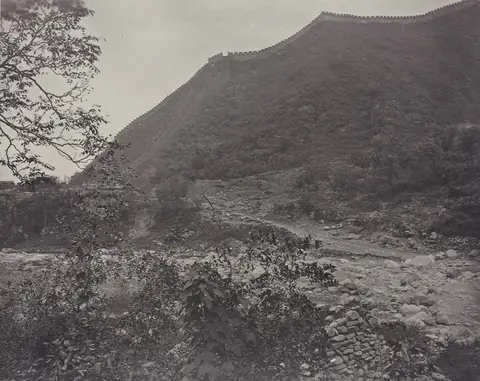
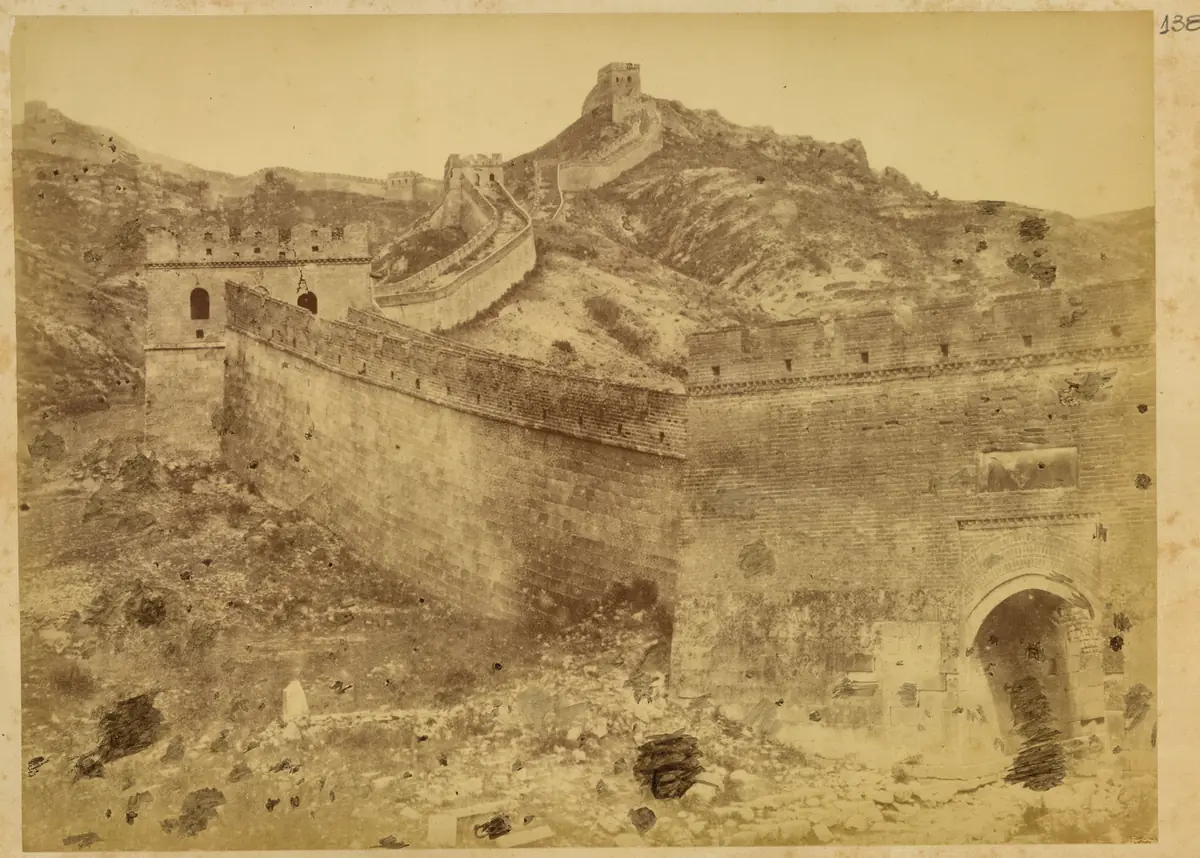
Image: Wikimedia Commons · CC0 (public domain) The Great Wall, photographed by John Thomson
Look closely. Thomson’s photograph shows a mountainous stretch of the wall, with towers and the curtain climbing the ridge. It is a nineteenth-century record, not a modern tourist view. The country is bare, and the line of the work is easy to follow with the eye.
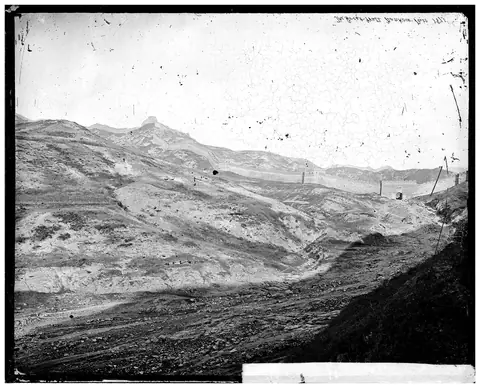
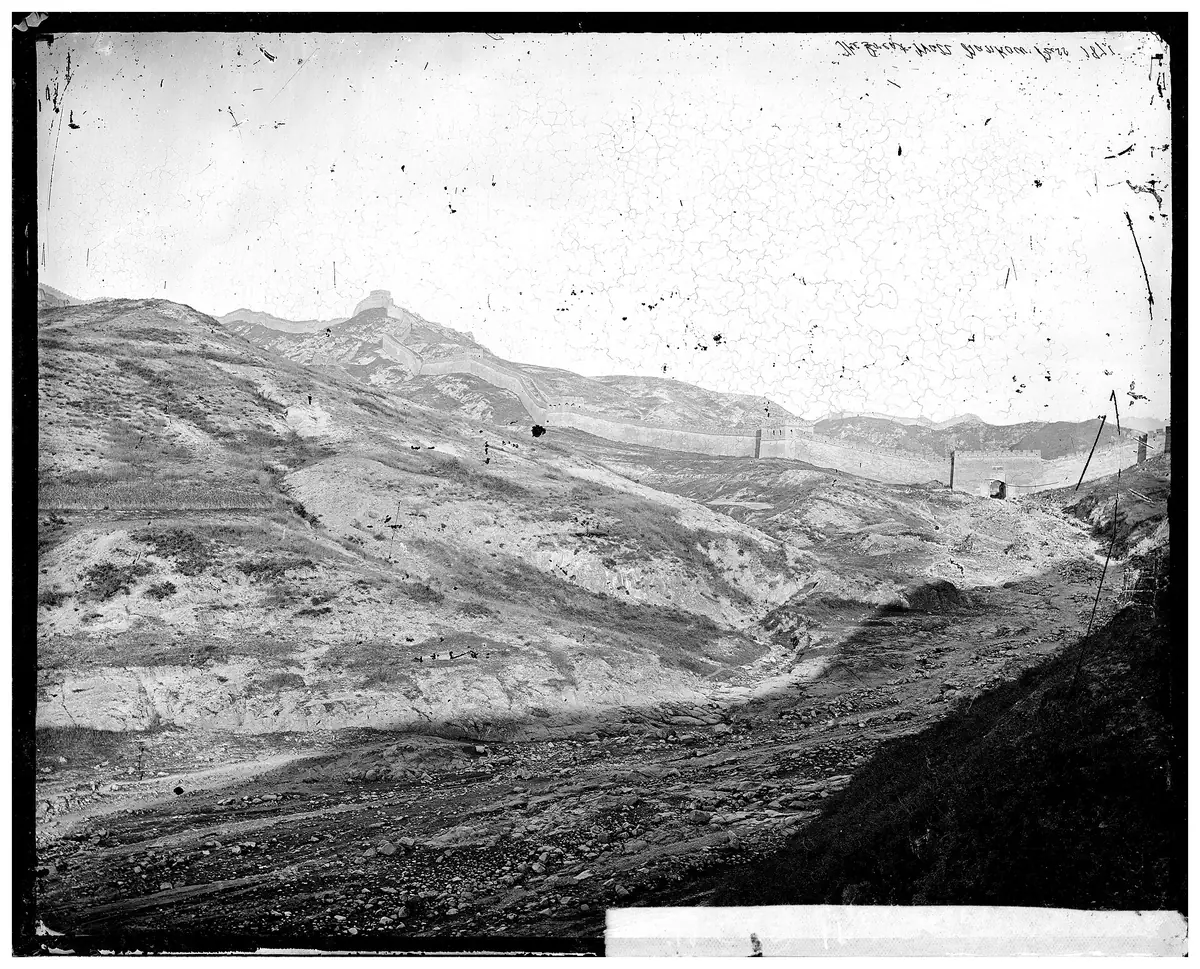
Image: Wellcome Collection · CC BY 4.0 · Photo: John Thomson; Wellcome Collection The wall across a hillside, 1871
Look closely. Another Thomson plate, looking up a stony valley to the wall running over the far ridge, with towers at intervals. The glass plate is cracked and worn in the sky, which is a fact of the photograph, not of the wall. The masonry on the hill is the subject.
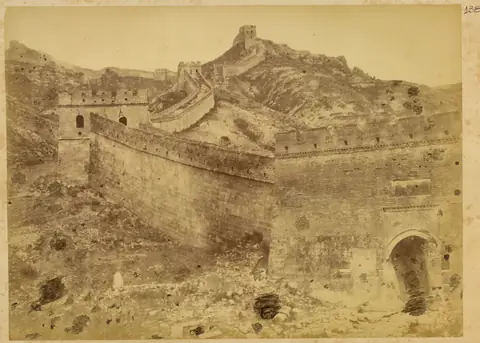
Image: Wikimedia Commons · Public domain The Great Wall near Zhangjiakou, 1874
Look closely. A photograph from a Russian expedition in 1874, near Zhangjiakou in Hebei, showing a gate and the wall in a mountain pass. It is an early record of a working frontier landscape, useful because it is not a later restoration view.
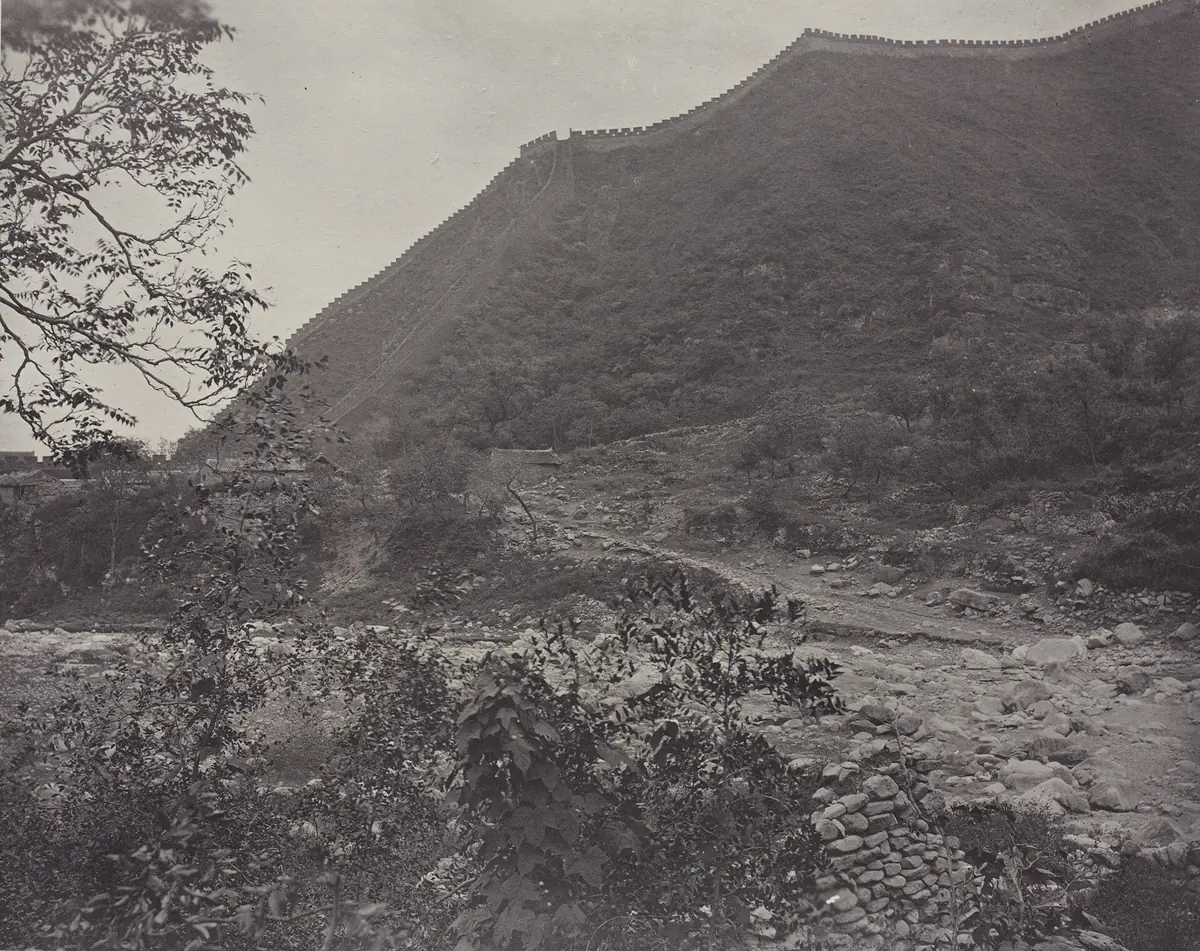


What to watch for
Look slowly- A line on the ridge. Notice how the wall follows the mountains and how towers mark the skyline.
- Many periods. Do not take every rebuilt brick face for Han or Qin work. Much of the famous masonry is Ming or later.
- Wear and repair. Nineteenth-century photographs show broken and weathered stretches, useful to compare with later restorations.
- Not a palace wall. Marco Polo’s “great wall” in this library is the wall of the khan’s palace, not this frontier.
- Scale in a landscape. The wall is impressive because of its length and its ground, not only because of a single gate.
Sources
Dates follow standard historical references and, where we quote a book, the wording of the edition hosted in this library. Photographs are used only when the photograph itself is Public domain, CC0, or CC BY with a named credit. Lost wonders are shown in later engravings and reconstructions, which are imaginings, not photographs of the original work. Each picture links to its source page with full licence details.