Wonders & Monuments · Seven Wonders
The Statue of Zeus at Olympia
Phidias’s colossal Zeus, seated in gold and ivory, once filling the temple at Olympia.
Lost. The statue itself is lost. Ancient writers say it was later taken to Constantinople and perished in a fire. The ruins of the temple that housed it can still be seen at Olympia, and the workshop of Phidias has been identified nearby.
What it is
The statue stood in the Temple of Zeus at Olympia, the sanctuary where the games were held. The temple itself was built in the fifth century BC; the statue, by the Athenian sculptor Phidias, was added around 435 BC. It was chryselephantine: a wooden core sheathed in ivory for the flesh and in gold for the drapery and ornaments. Zeus was shown seated, holding a figure of Victory and a sceptre, so large that if he had risen, later writers said, he would have taken the roof off the building.
We know the work from ancient descriptions and from coins of Elis, not from the statue itself. In late antiquity it was removed to Constantinople, and it is reported to have been destroyed in a fire there in the fifth century. At Olympia the temple is a ruin of fallen drums and broken bases. That is what a visitor can still walk among. The statue has to be imagined, and the old engravings should be read as later guesses, not as portraits.
Why it matters
The statue was a costly act of honour to God as the Greeks then named Him—the father of the gods, judge of oaths, and patron of the games. Skill, gold and ivory were spent not on a private ornament but on a figure meant to make worshippers feel the weight of majesty in a holy place. The ruin of the temple, and the total loss of the image, are a hard lesson in how even the most famous work can pass away, while the name of the maker and the place still teach courage in craft and reverence in looking.
Look closely
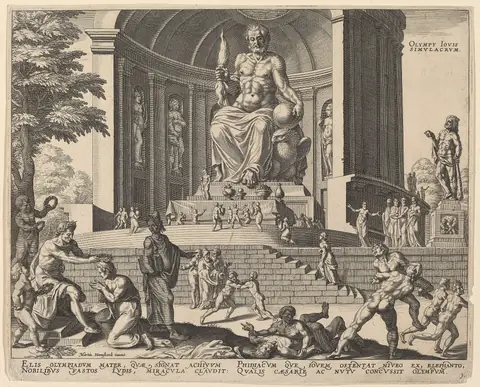
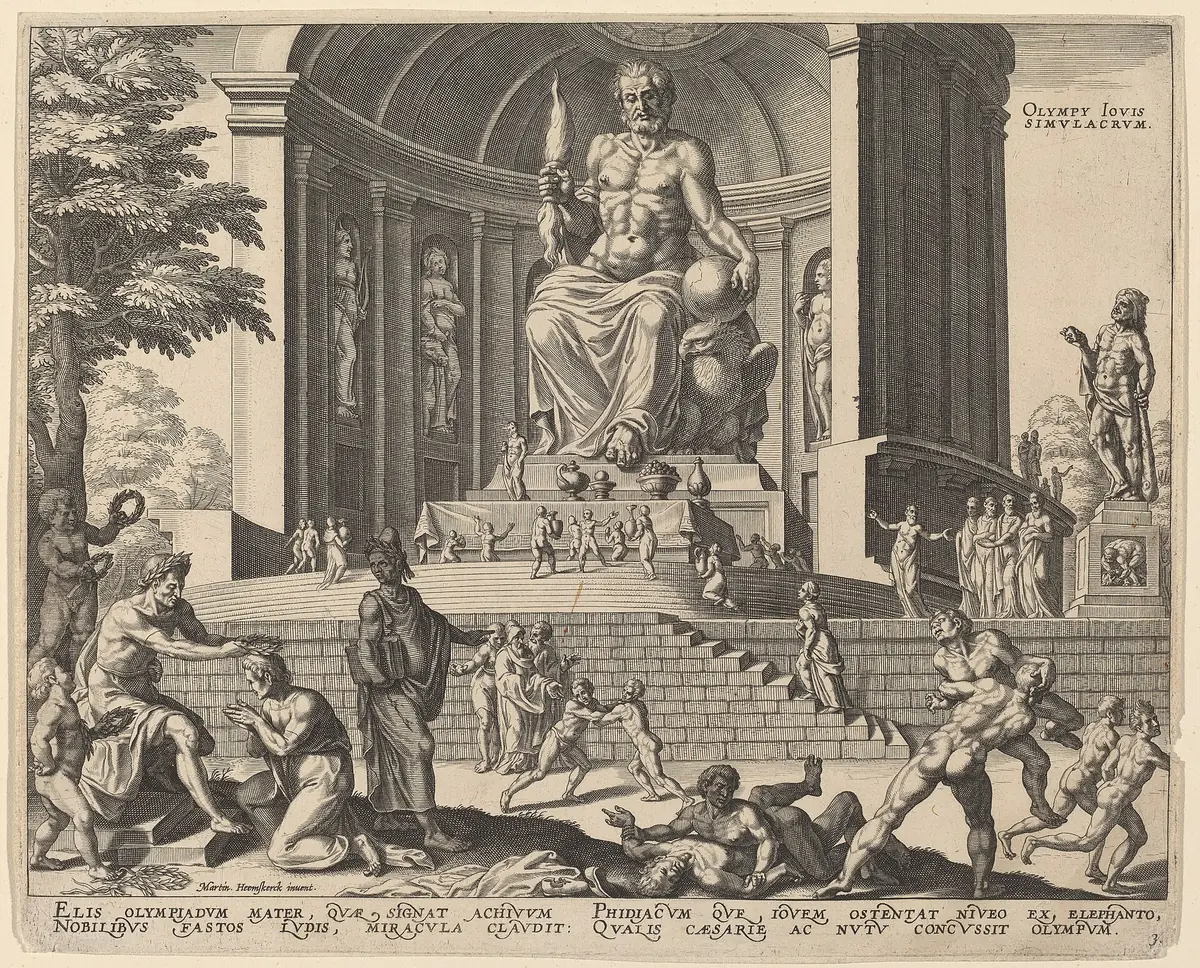
Image: Wikimedia Commons · CC0 (public domain) The Statue of Jupiter at Olympia, 1572
Look closely. Galle’s engraving after Heemskerck shows a vast seated god in a crowded, temple-like hall, with worshippers at a scale that makes the figure tower over them. The Latin title calls him Jupiter, the Roman name for Zeus. The architecture, the ornaments and the posture are a sixteenth-century invention. Look at the attempt to suggest overwhelming size, then remember that the real work is gone.
In the library: Phidias in Great Art
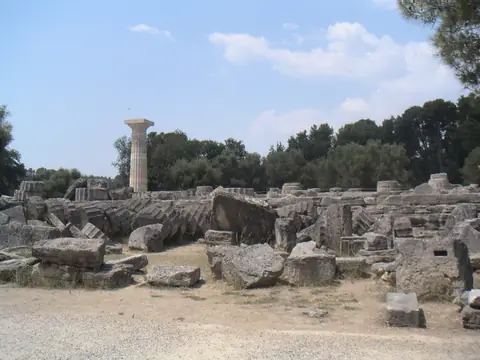
Image: Wikimedia Commons · CC BY 2.0 · Photo: Institute for the Study of the Ancient World The Temple of Zeus at Olympia
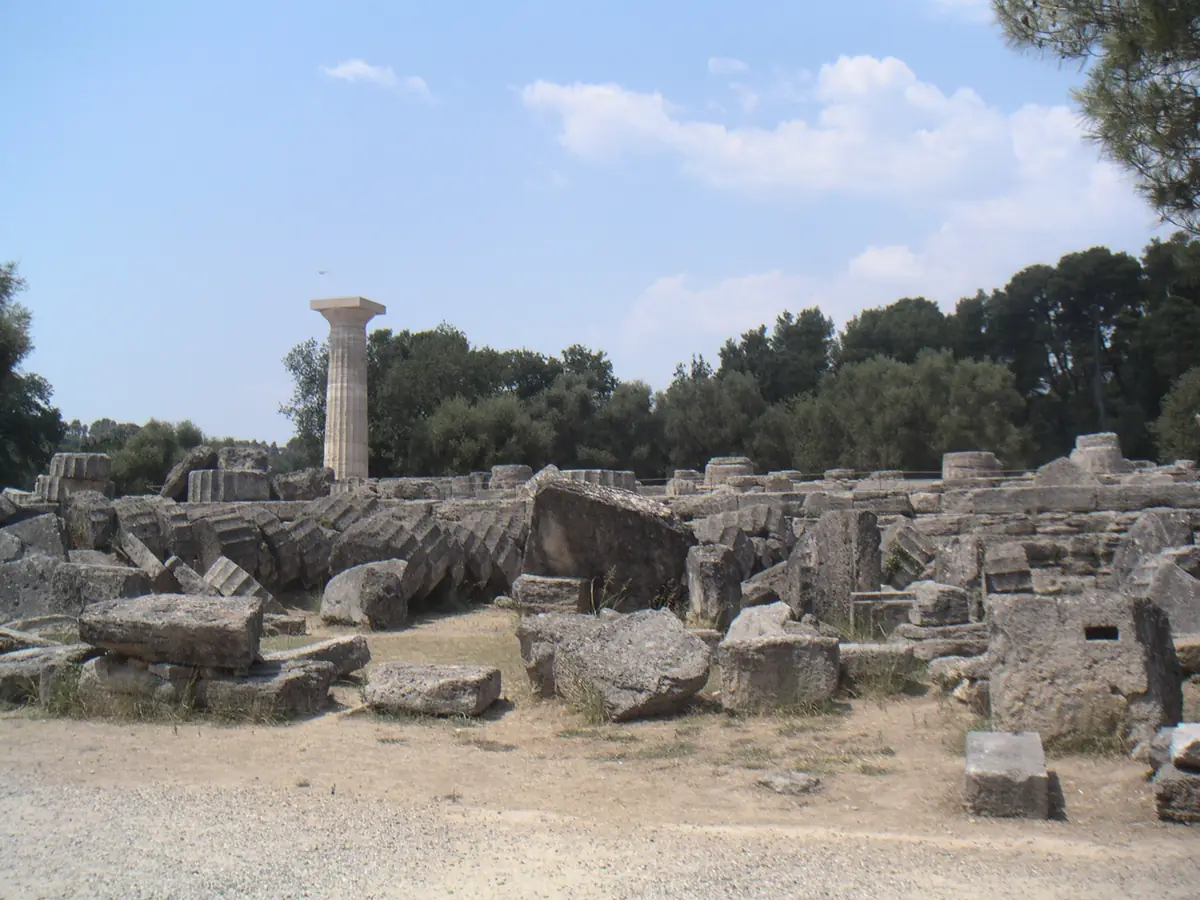
Look closely. Fallen column drums, a standing group of re-erected drums, and the open sanctuary floor: this is what remains of the temple that housed the statue. The wonder itself is not in the picture. Walk your eye along the line of the ruin and imagine the roofed cella in which a seated Zeus once seemed almost too large for the room.
In the library: Phidias in Great Art
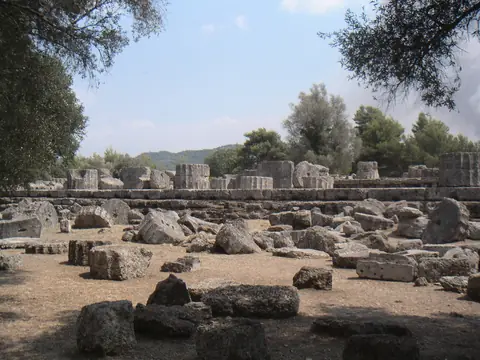
Image: Wikimedia Commons · CC BY 2.0 · Photo: Institute for the Study of the Ancient World Another view of the temple ruins
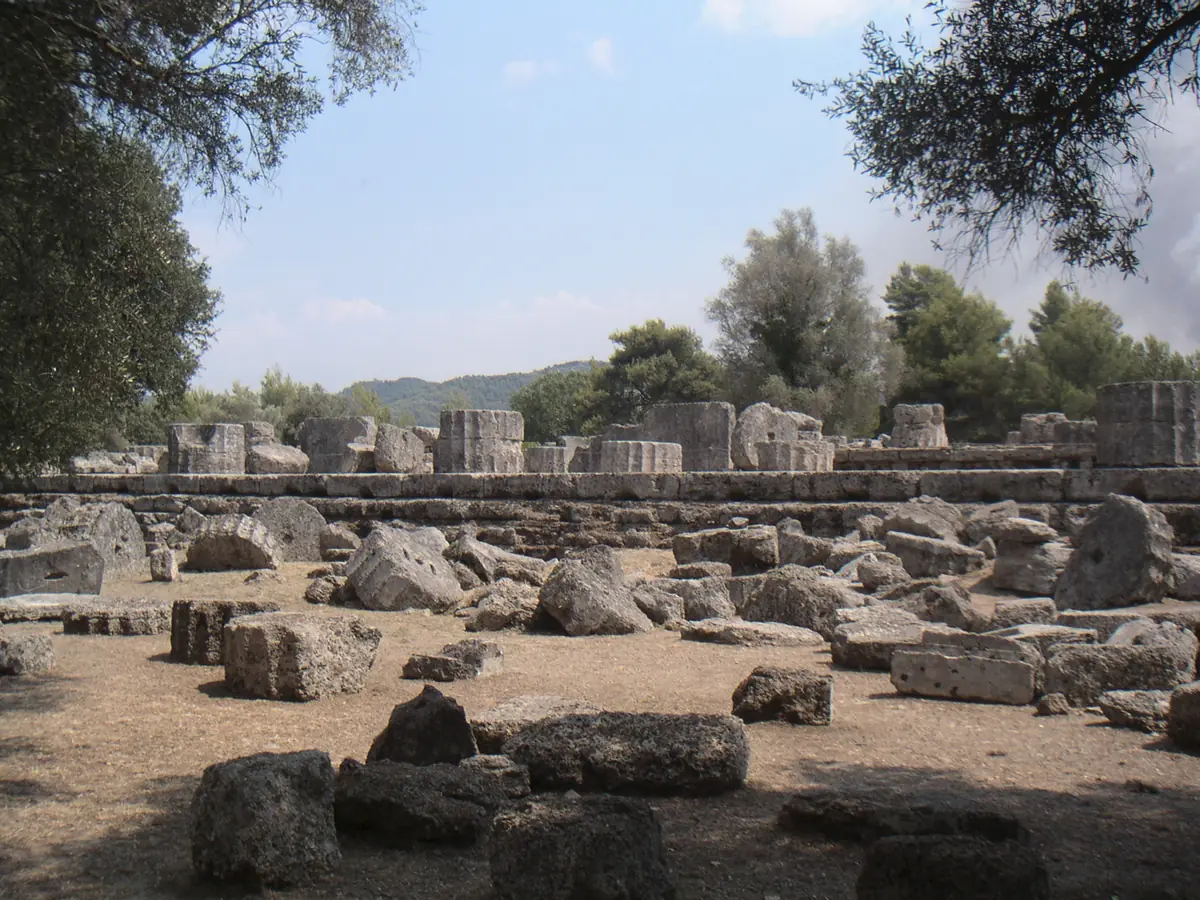
Look closely. From this angle the scattered drums and the surviving bases show the plan of a great Doric temple in pieces. Notice the size of a single drum compared with the people and trees. The statue is lost, but the site still teaches the scale of the sanctuary and the perseverance needed to raise, and later to study, such a building.


What to watch for
Look slowly- Statue and temple. The wonder was the image of Zeus. The stones at Olympia today are the house that held it.
- Gold and ivory. Chryselephantine work is a skin of precious materials over a core. Later pictures often turn it into ordinary stone or bronze.
- Seated, not standing. The scale was meant to fill the cella. A standing Zeus of that size would not have fitted the room.
- Phidias at Olympia. The workshop identified at the site helps anchor a famous name to a real place of work.
- Engravings are guesses. Heemskerck had never seen the statue. Use his plate as a Renaissance idea of majesty, not as evidence.
- What is gone. No photograph of the Zeus exists, because the statue was lost more than a thousand years before photography.
Sources
Dates follow standard historical references and, where we quote a book, the wording of the edition hosted in this library. Photographs are used only when the photograph itself is Public domain, CC0, or CC BY with a named credit. Lost wonders are shown in later engravings and reconstructions, which are imaginings, not photographs of the original work. Each picture links to its source page with full licence details.