Wonders & Monuments · Great monuments
Independence Hall
The old Pennsylvania State House, where the Declaration of Independence was adopted and the Constitution debated.
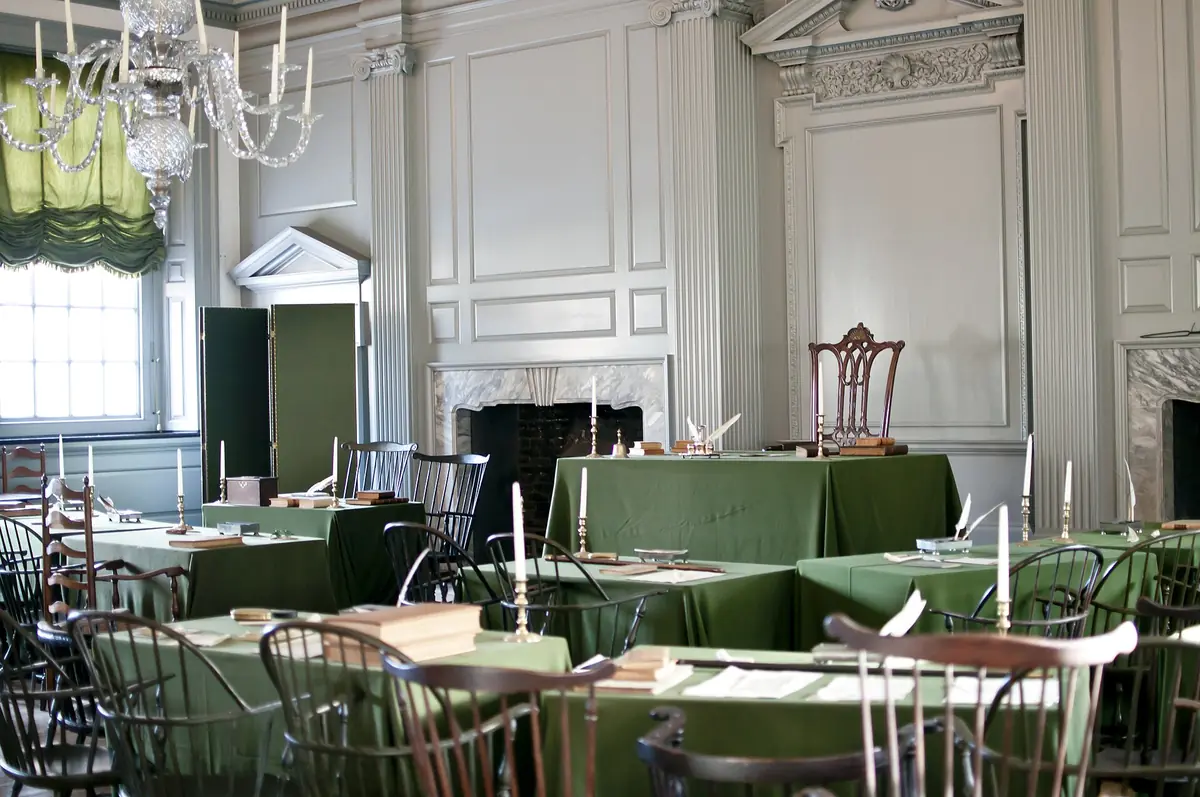
Still standing. The building still stands and is a national historic site. It has been repaired and restored more than once. The Assembly Room has been returned, as far as possible, to its late-eighteenth-century appearance.
Thomas Jefferson, in Great Lives · Benjamin Franklin, in Great Lives · George Washington, in Great Lives
What it is
Independence Hall, in Philadelphia, was built in the mid-eighteenth century as the State House of Pennsylvania. In that building the Second Continental Congress adopted the Declaration of Independence in 1776, and the Constitutional Convention met in 1787. The red-brick hall, with its later tower and steeple, faces Independence Square. Inside, the Assembly Room is the chamber most closely tied to those debates.
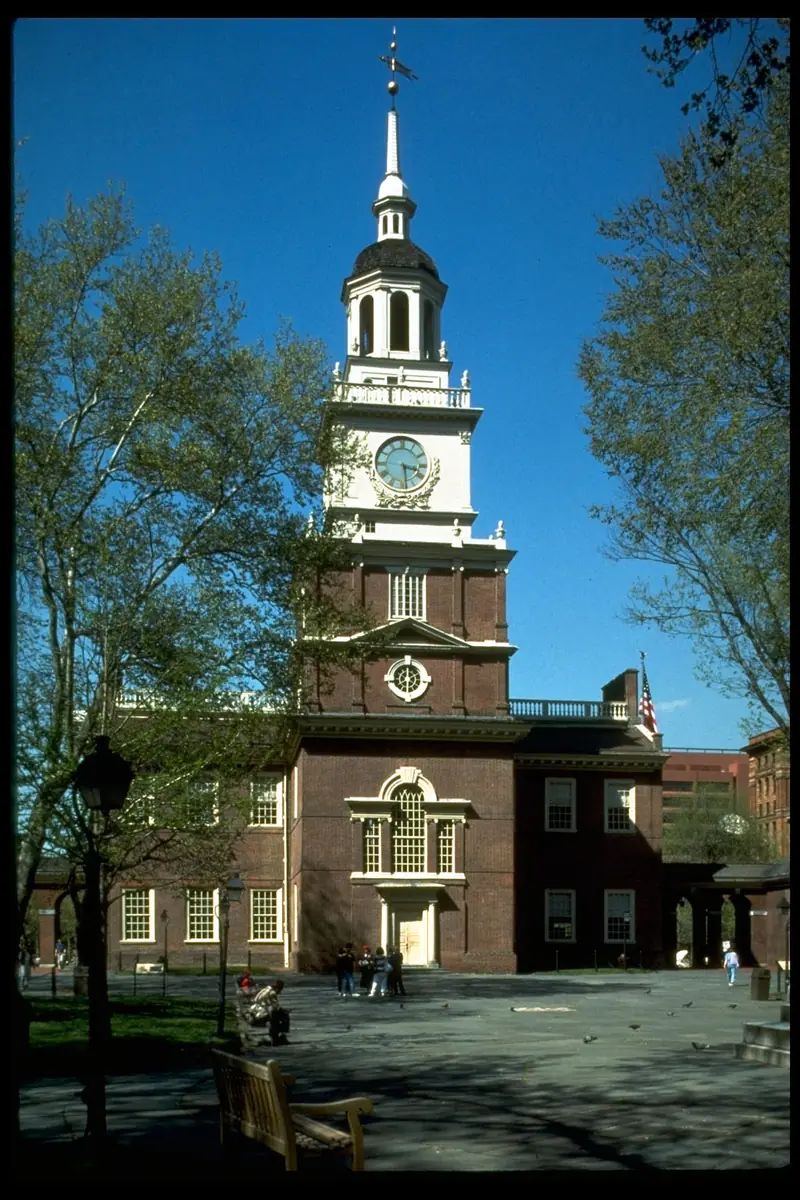
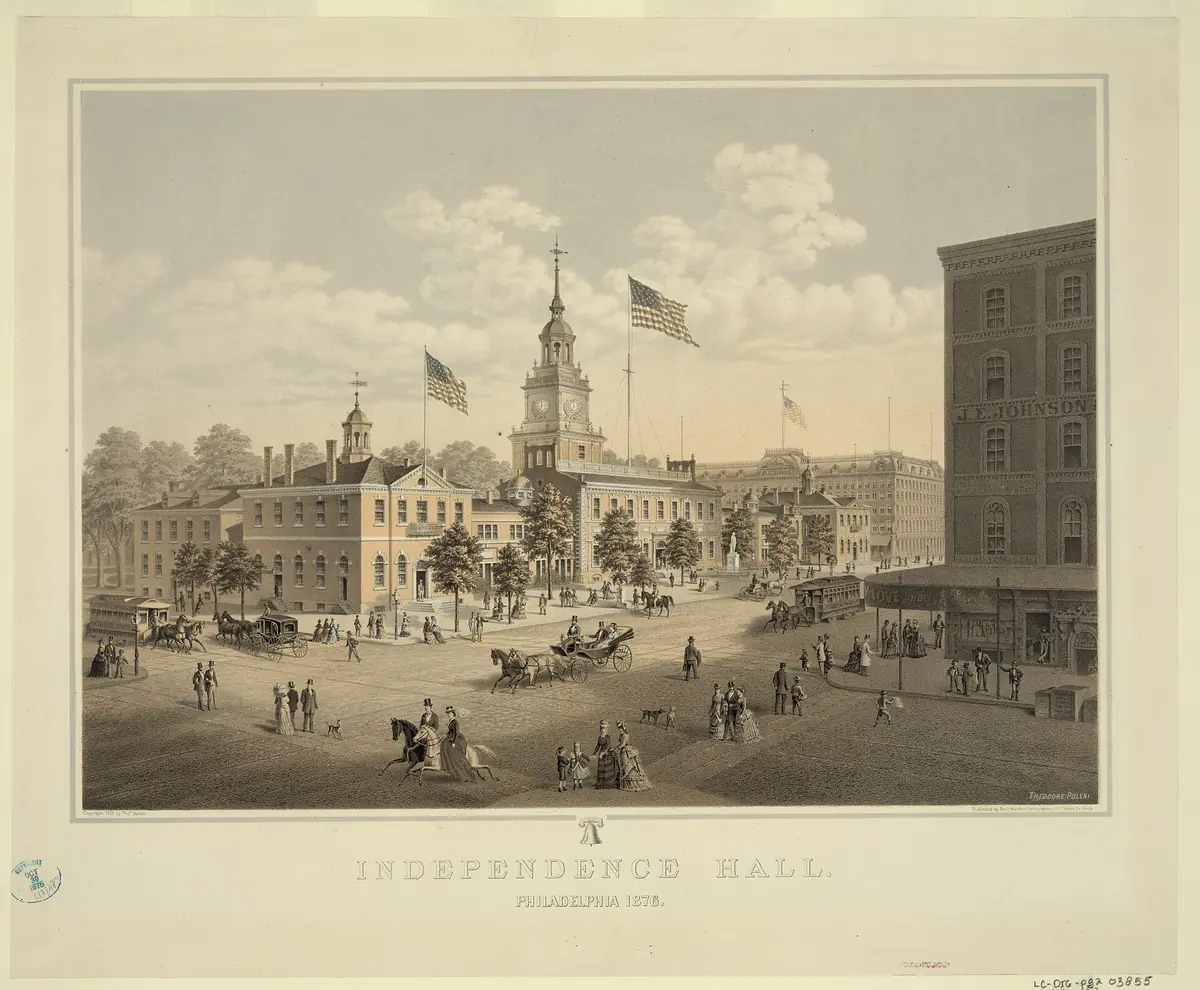
The building has had a long afterlife of repair, commemoration and restoration. The 1876 lithograph on this page shows the hall in the Centennial year, already a civic shrine. The National Park Service photographs show the south front as it later stood, and the Assembly Room arranged as a historic chamber. The Declaration and the Constitution are not quoted here as if they described the architecture; they were made in this house, and that is the point of the place.
Why it matters
This is a civic building, not a palace, in which costly arguments about liberty and law were carried through. The virtue to notice is civic courage and integrity: a people debating how they would be governed, in a room that still stands. Beauty here is plain brick, a modest tower, and a chamber kept for memory.
Look closely
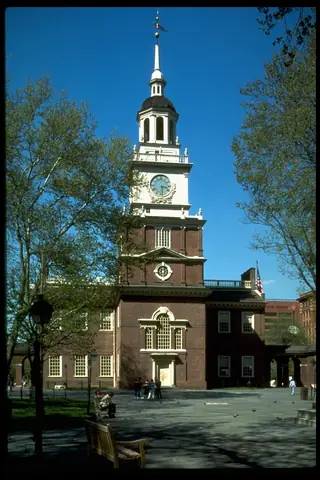
Image: Wikimedia Commons · Public domain The south front of Independence Hall
Look closely. A National Park Service photograph of the south façade and the tower, the view most people mean by Independence Hall. The brick, the white tower, and the modest scale of the building are all clear. This is a civic hall, not a palace front.
In the library: Thomas Jefferson, in Great Lives · Benjamin Franklin, in Great Lives
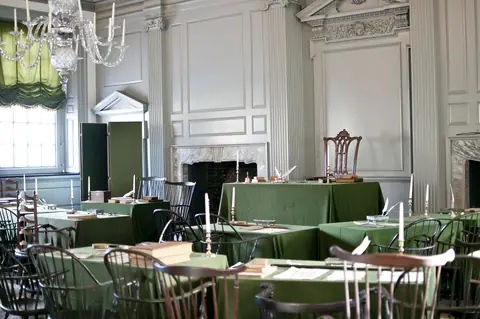
Image: Wikimedia Commons · Public domain The Assembly Room
Look closely. The Assembly Room, restored as a historic chamber, with tables, chairs and green cloth. This is the room in which the Declaration was adopted and the Constitution debated. Notice the plainness and the size: the work of founding was done in a room like a large committee hall.
In the library: George Washington, in Great Lives
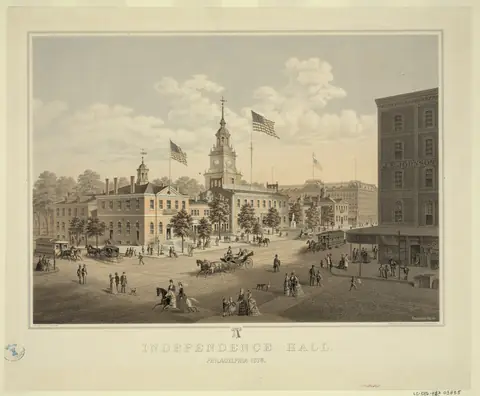
Image: Wikimedia Commons · Public domain (PD-Art) Independence Hall in the Centennial year, 1876
Look closely. A lithograph of the hall and the square in 1876, the hundredth year of the Declaration, with crowds, flags and the building already treated as a civic monument. It is a later celebration view, useful because it shows how the nation had begun to remember the house.


What to watch for
Look slowly- The south front and tower. The familiar view is the brick façade and the steeple on Independence Square, not a side wall on the street.
- The Assembly Room. This is the chamber of the Declaration and of the Convention. Look at its scale: it is a room, not a basilica.
- Restoration. Furnishings and the tower have been altered and restored. Historic views help you see the building as a later age presented it.
- A state house, then a shrine. It was built for a colony’s government. Its fame is what was done inside it.
Sources
Dates follow standard historical references and, where we quote a book, the wording of the edition hosted in this library. Photographs are used only when the photograph itself is Public domain, CC0, or CC BY with a named credit. Lost wonders are shown in later engravings and reconstructions, which are imaginings, not photographs of the original work. Each picture links to its source page with full licence details.