Wonders & Monuments · Great monuments
The Pantheon
Hadrian’s Roman temple-rotunda, with its concrete dome and open oculus still intact.
Still standing. The rotunda, portico and concrete dome still stand and have been used as a church since the seventh century. The interior decoration has been altered; the structure is ancient.
What it is
The Pantheon in Rome is the best-preserved great building of the ancient city. An inscription on the portico names Marcus Agrippa, who built an earlier temple on the site, but the rotunda and dome we see were rebuilt under the emperor Hadrian in the early second century. A great barrel of brick-faced concrete is roofed by a coffered dome, with a round opening — the oculus — at the summit. Rain and daylight come through that opening. The portico of granite columns stands in front of the circular hall.
In the seventh century the building was given as a church, which is a main reason it was not stripped for material as so many Roman temples were. The interior has been changed in later centuries, but the span of the dome and the simple geometry of the rotunda remain. Byron, visiting Rome, wrote of that sole aperture and of the building as despoiled yet perfect. His lines are in this library.
“Relic of nobler days, and noblest arts! Despoiled yet perfect, with thy circle spreads A holiness appealing to all hearts-- To art a model; and to him who treads Rome for the sake of ages, Glory sheds Her light through thy sole aperture;”
Why it matters
The virtue here is in the daring of the structure and in the fact that it still does its work: a single great room, lit from the sky, standing after eighteen centuries. Costly engineering was offered first to the gods of Rome and then to Christian worship. To look slowly is to feel the weight of the dome and the calm of the circle.
Look closely
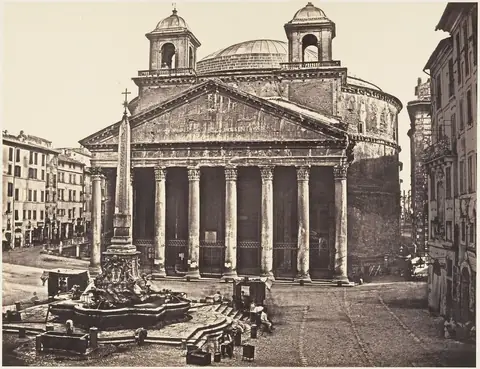
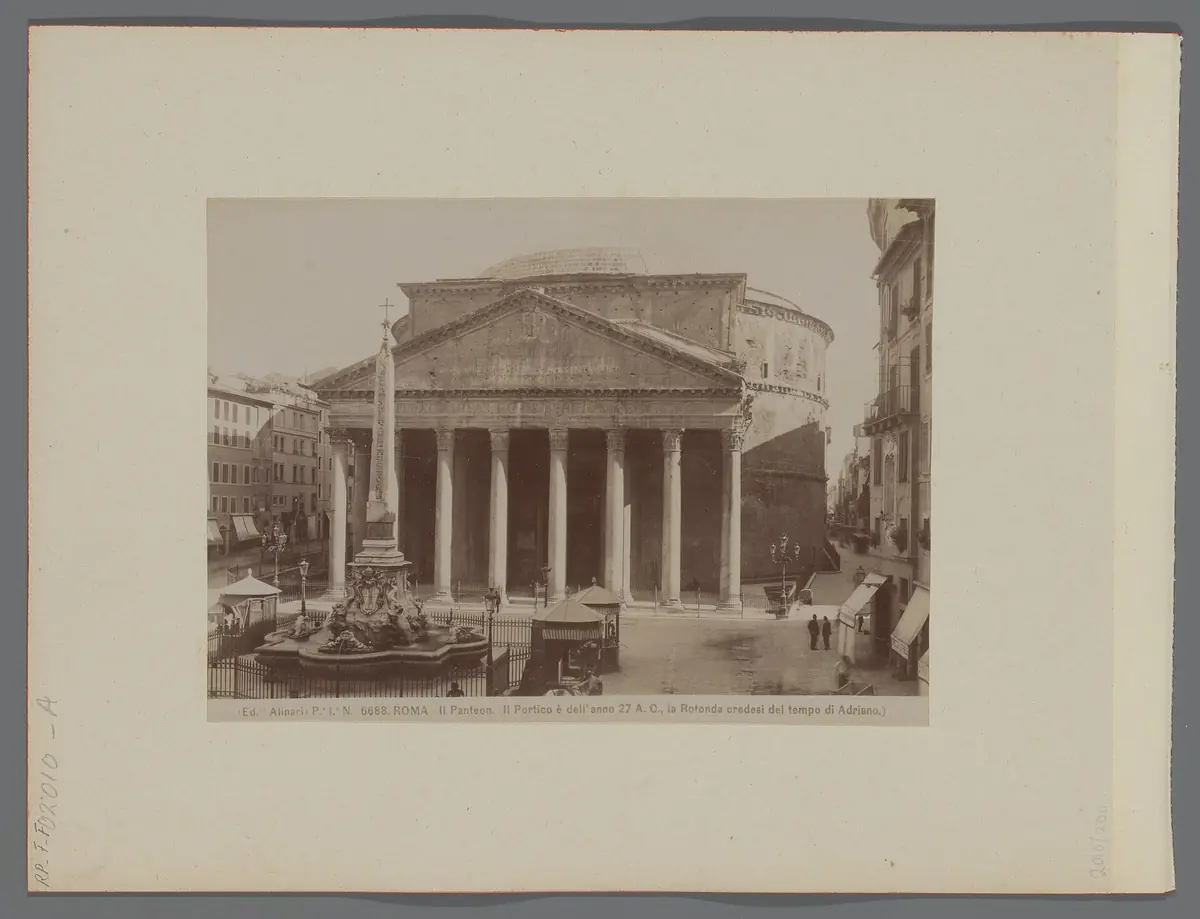
Image: Wikimedia Commons · CC0 (public domain) The Pantheon and the piazza
Look closely. A mid-nineteenth-century photograph of the portico and the piazza, with the fountain in the foreground and the dome rising behind the pediment. You can see how the temple front sits in the city, and how much of the rotunda is hidden until you go inside.
In the library: Byron, Childe Harold’s Pilgrimage
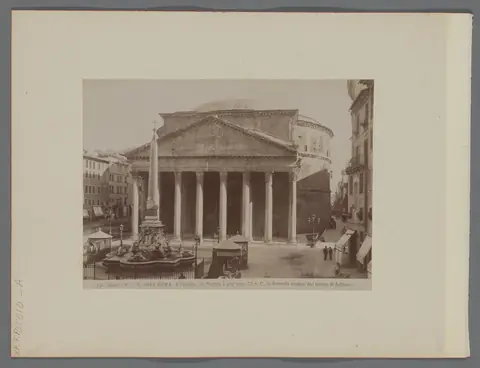
Image: Wikimedia Commons · CC0 (public domain) The portico
Look closely. A closer historic view of the portico and its granite columns. Notice the depth of the porch, the inscription on the entablature, and the way the later city still crowds the ancient front.
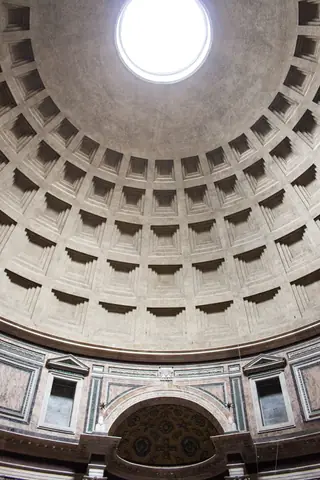
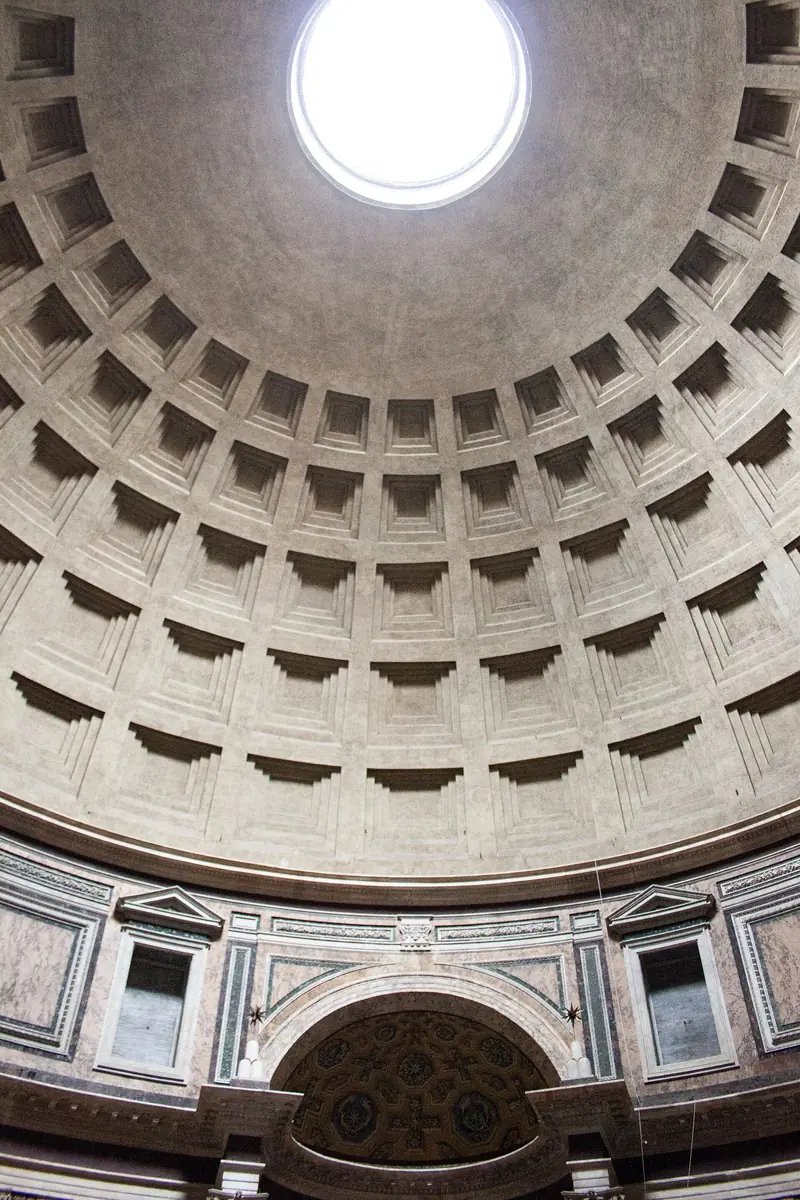
Image: Wikimedia Commons · CC0 (public domain) The dome and the oculus
Look closely. Looking straight up into the coffered concrete dome, with the circular oculus at the centre. The coffers recede in rings. This is the sole aperture Byron wrote of: the only window in the great roof, open to the sky.
In the library: Byron, Childe Harold’s Pilgrimage
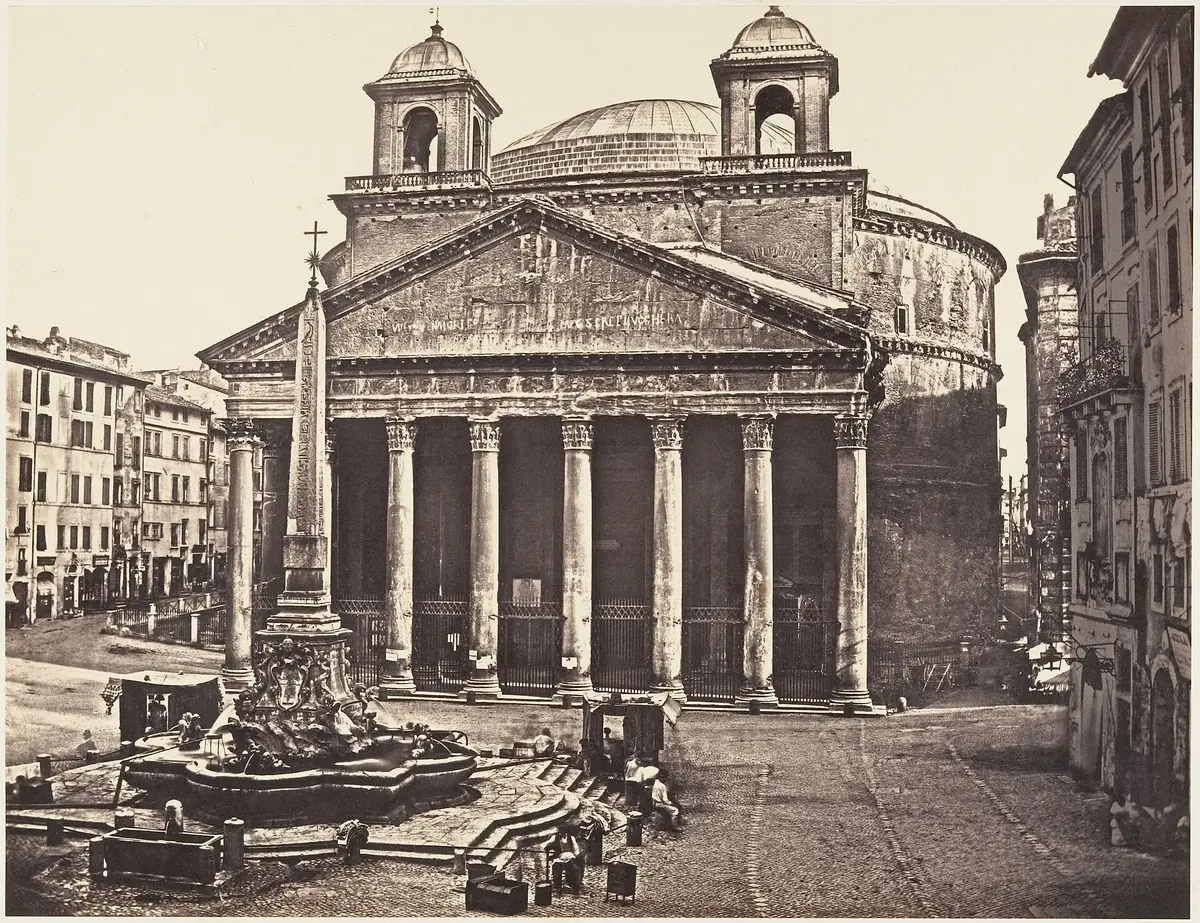


What to watch for
Look slowly- Portico and rotunda. The temple front of columns is joined to a circular hall. That joining is part of the design.
- The oculus. The dome is open at the top. Interior photographs taken looking up show the coffers stepping in toward that eye.
- Agrippa’s inscription. The portico still bears Agrippa’s name, though the present rotunda is Hadrian’s rebuild. The inscription is a fact of the façade, not a full history of the building.
- A temple, then a church. Continuous use helped the structure survive. Later fittings should not be mistaken for Hadrian’s decoration.
- Byron’s aperture. His poem in this library names the opening in the dome. Read the lines, then look at the photograph of the ceiling.
Sources
Dates follow standard historical references and, where we quote a book, the wording of the edition hosted in this library. Photographs are used only when the photograph itself is Public domain, CC0, or CC BY with a named credit. Lost wonders are shown in later engravings and reconstructions, which are imaginings, not photographs of the original work. Each picture links to its source page with full licence details.