Wonders & Monuments · Great monuments
The Sistine Chapel
The pope’s chapel at the Vatican, whose ceiling by Michelangelo is named here and shown in Great Art.
Still standing. The chapel still stands and is in use, including for papal conclaves. This page shows the building from the outside, and a historic print of its original exterior. The famous ceiling and the Last Judgment include unclothed figures and are not shown here; they are discussed on the Great Art page for Michelangelo.
Michelangelo, in Great Art · St Peter’s Basilica
What it is
The Sistine Chapel was built in the later fifteenth century for Pope Sixtus IV, as the pope’s chapel in the Vatican. From the outside it is a tall, plain, fortress-like hall, with high windows and a simple roof — not a domed church. Inside, the walls received a cycle of fifteenth-century frescoes, and in the early sixteenth century Michelangelo painted the ceiling with the story of Creation and the prophets and sibyls. Decades later he painted the Last Judgment on the altar wall.
Those frescoes are among the most famous pictures in the world, and many of their figures are unclothed. This companion does not show them. The photographs and the print on this page are of the chapel as a building, seen from the Vatican gardens and in a nineteenth-century engraving of its earlier exterior. For the ceiling and the Judgment, go to the Great Art page on Michelangelo, which names the work and is careful about what is shown.
Why it matters
The chapel is a room made for prayer and for the election of popes, later covered on the inside with painting of the highest ambition. The virtue to notice is the seriousness of that commission, and the restraint to look first at the building itself. Beauty here begins with a plain exterior that hides an interior of great cost and skill.
Look closely
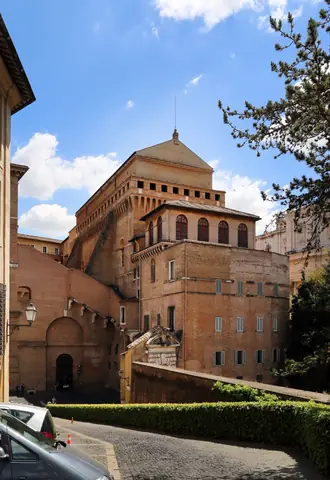
Image: Wikimedia Commons · CC BY 3.0 · Photo: Sailko The chapel from the Vatican gardens
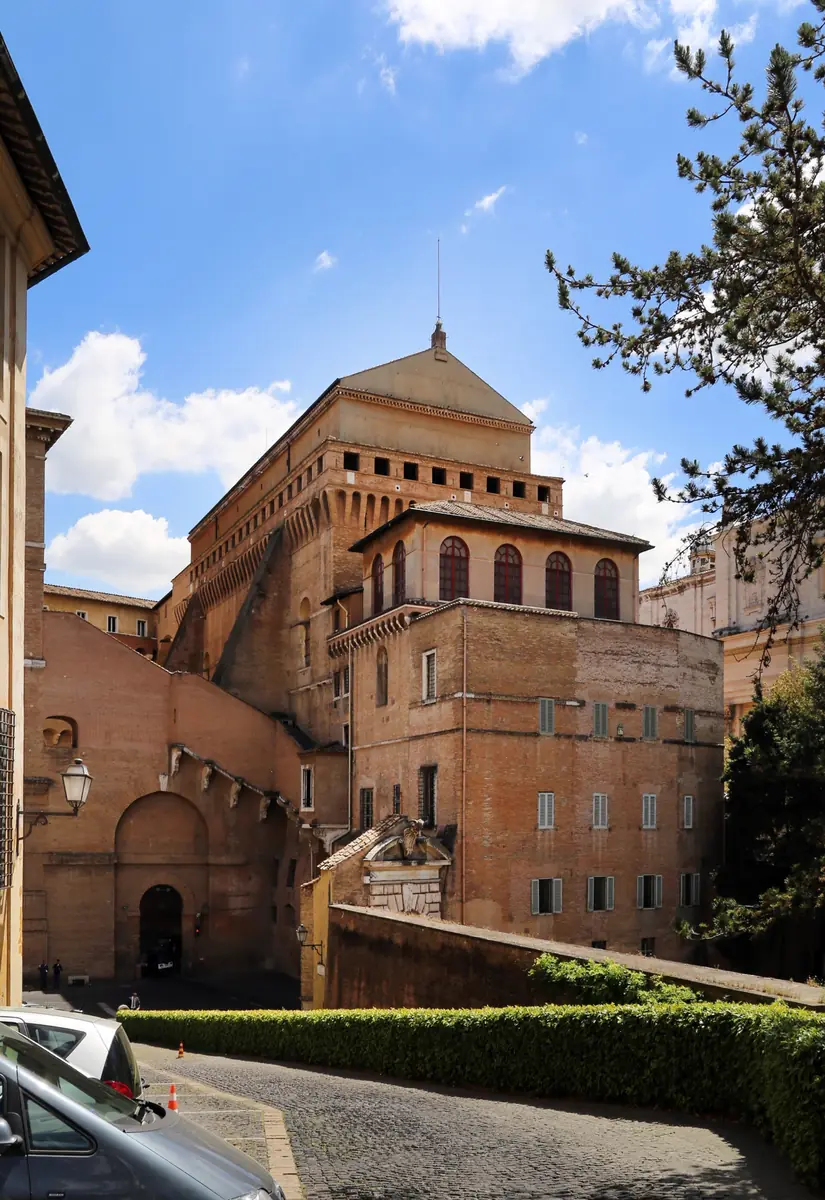
Look closely. The Sistine Chapel seen from near the Vatican gardens: a tall brick hall with a simple pitched roof and a row of high windows, rising behind later palace walls. Cars and a hedge in the foreground belong to the present day. The photograph is of the building, not of the frescoes inside.
In the library: Michelangelo, in Great Art · St Peter’s Basilica
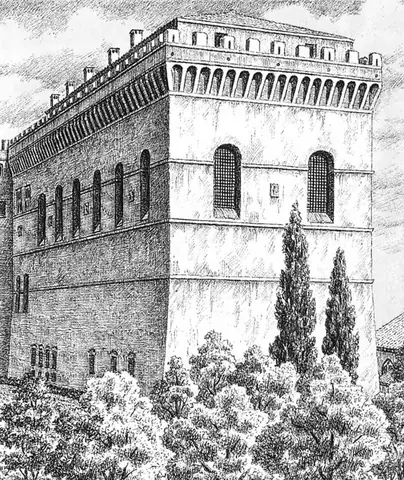
Image: Wikimedia Commons · Public domain (PD-Art) The chapel’s earlier exterior, in a later print
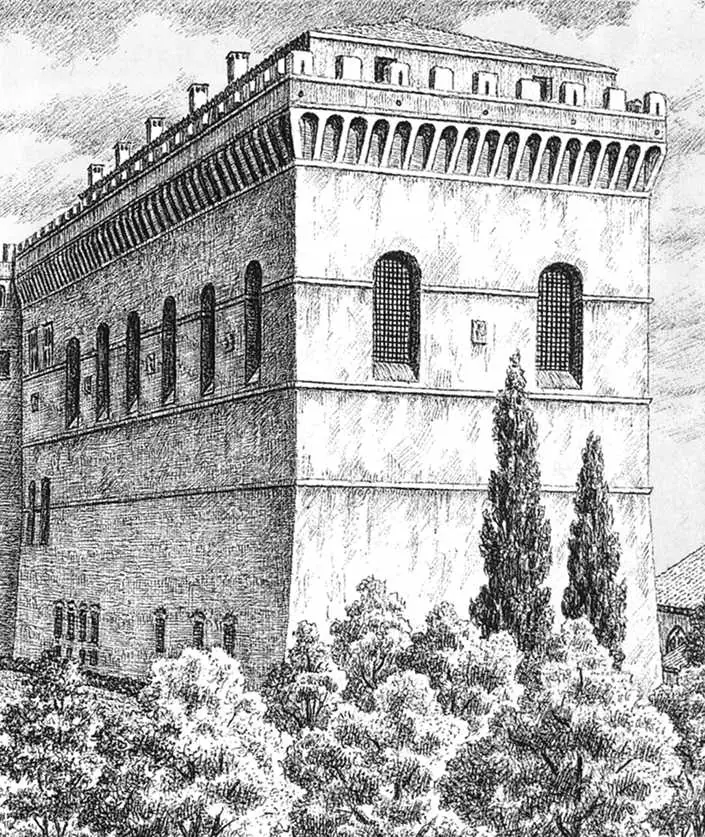
Look closely. A nineteenth-century engraving of the chapel as a tall, almost fortress-like hall among trees, with high windows and a crenellated upper storey. It is a later picture of an earlier appearance, not a photograph, and it is useful because it shows the same plain, high box that the gardens photograph still records.
In the library: Michelangelo, in Great Art


What to watch for
Look slowly- A plain exterior. The chapel looks almost like a keep. That is the building; the famous pictures are inside.
- What this page does not show. The ceiling and the Last Judgment include unclothed figures and are not illustrated here.
- A historic print. The nineteenth-century engraving is a later idea of the chapel’s earlier exterior, useful to compare with the photographs.
- Next to St Peter’s. The chapel stands in the Vatican palaces, not as a free-standing church in a piazza.
Sources
Dates follow standard historical references and, where we quote a book, the wording of the edition hosted in this library. Photographs are used only when the photograph itself is Public domain, CC0, or CC BY with a named credit. Lost wonders are shown in later engravings and reconstructions, which are imaginings, not photographs of the original work. Each picture links to its source page with full licence details.