Wonders & Monuments · Great monuments
Westminster Abbey
The Gothic abbey church in London where English and British monarchs are crowned, and many are buried.
Still standing. The abbey still stands and is in use. It is a church, a royal coronation church, and a place of tombs. The present Gothic fabric is mainly thirteenth-century and later; the familiar west towers are eighteenth-century.
Westminster Abbey, in Great Churches & Monasteries
What it is
Westminster Abbey is the great church beside the Palace of Westminster in London. An earlier abbey stood on the site; the present Gothic church was begun under Henry III in 1245, in a style close to the French rayonnant, and was finished in later campaigns. Henry VII added his fan-vaulted chapel at the east end in the early sixteenth century. The two west towers, which now dominate the front, were completed in the eighteenth century by Nicholas Hawksmoor. The church has long been the coronation church of the English and then the British monarchy, and a burial place of kings, queens, statesmen and writers.
The photographs here show the exterior and the choir, not the view from Westminster Bridge. Wordsworth’s sonnet on that bridge, which this library hosts, is about the city at dawn as seen from the river, not about the abbey, and it is not used on this page.
Why it matters
This is costly work offered to the glory of God, and then kept as a church of kings and of national memory. The virtue to notice is continuity: crowning, burial and daily worship in the same house. Beauty here is the Gothic interior and the long west front, including the later towers that now seem inevitable.
Look closely
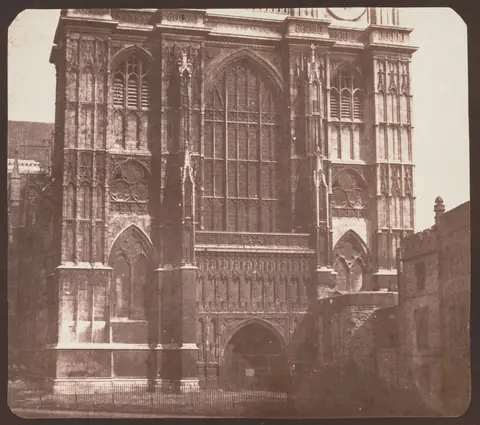
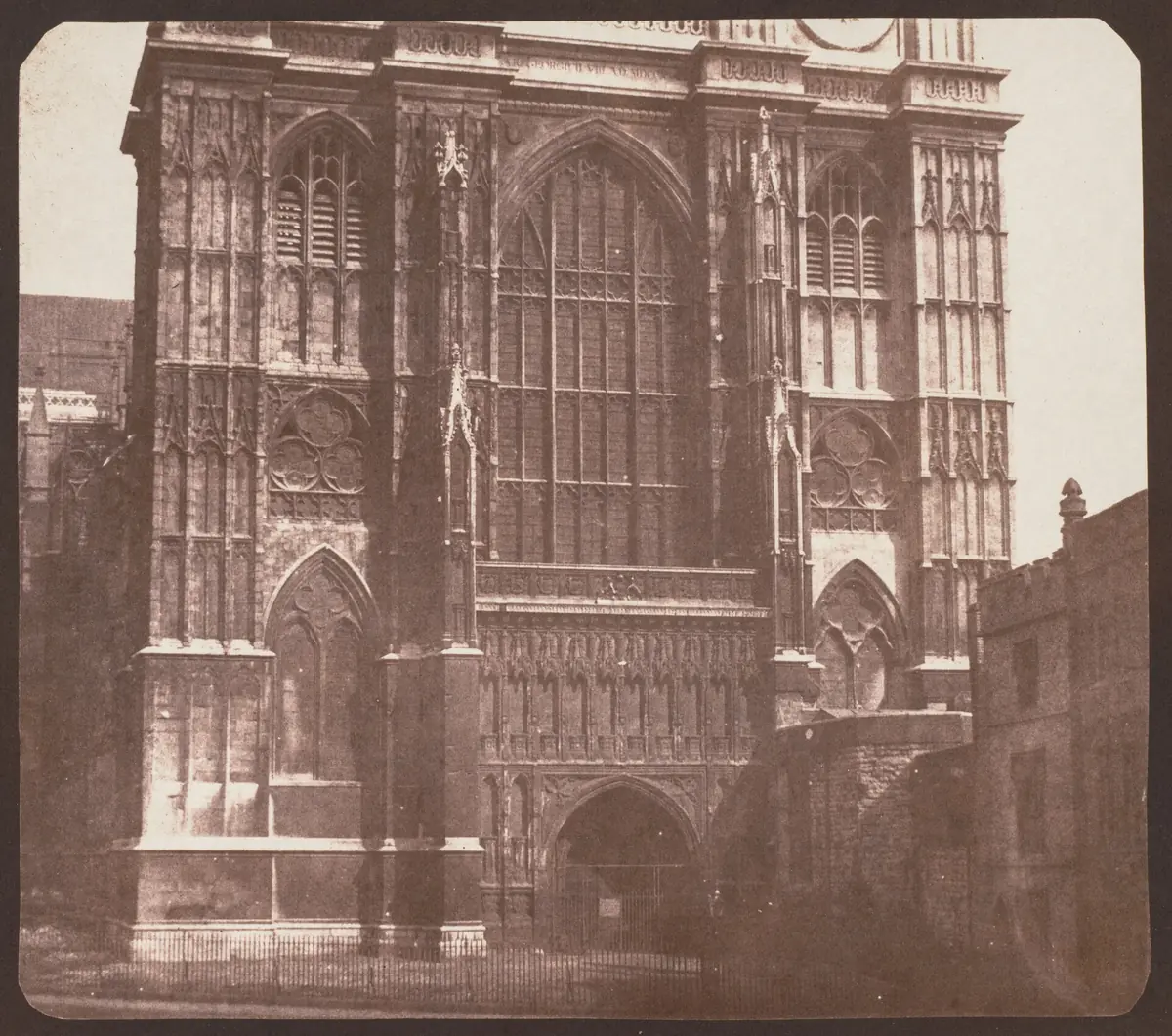
Image: Wikimedia Commons · CC0 (public domain) Westminster Abbey from the outside
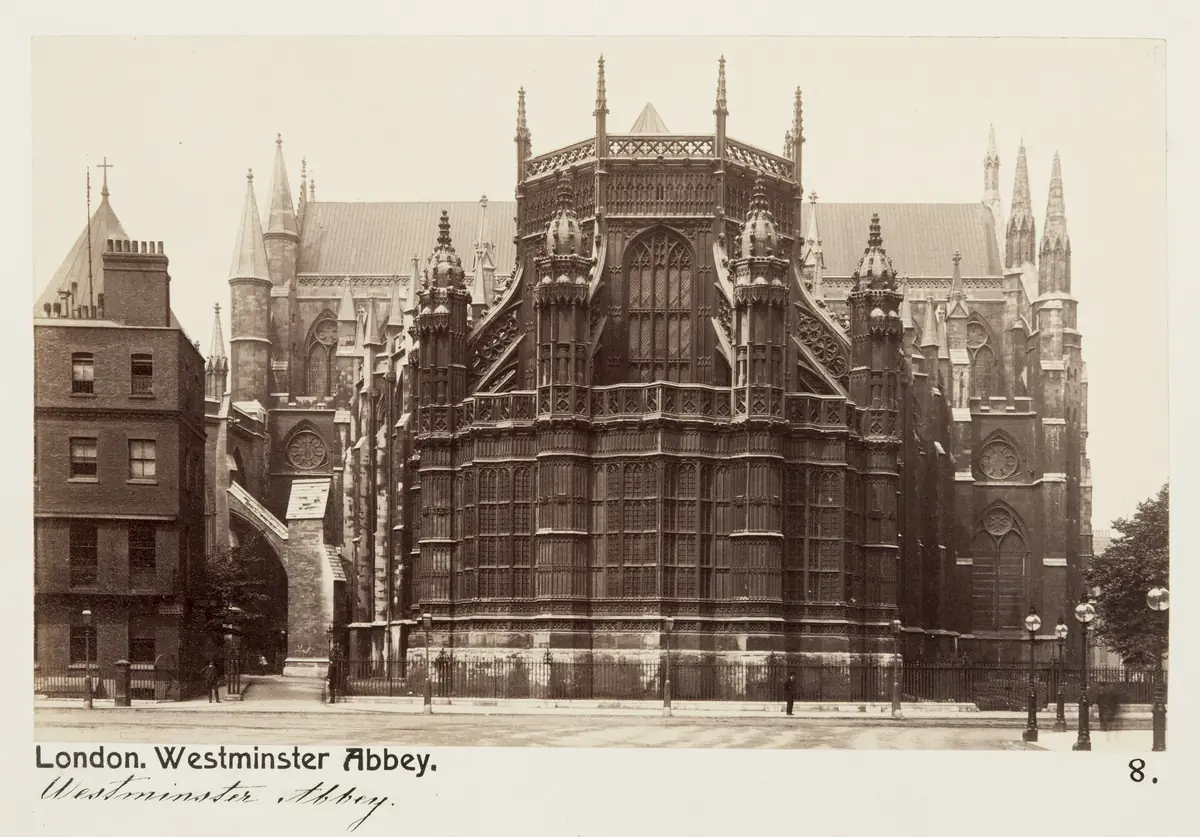
Look closely. An early photograph by Nicholas Henneman of the abbey’s exterior, with the Gothic body of the church and the later west towers. It is a mid-nineteenth-century record, useful because it shows the familiar silhouette before later cleaning and traffic changed the immediate setting.
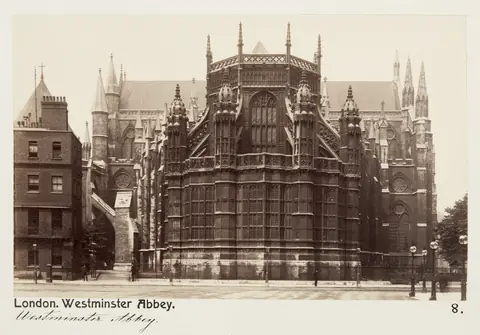
Image: Wikimedia Commons · Public domain The abbey in a historic photograph
Look closely. Another nineteenth-century photograph of the church from the outside. Compare the towers, the nave roof and the east end with Henneman’s view, and notice how much of the skyline is Gothic work with later completions.
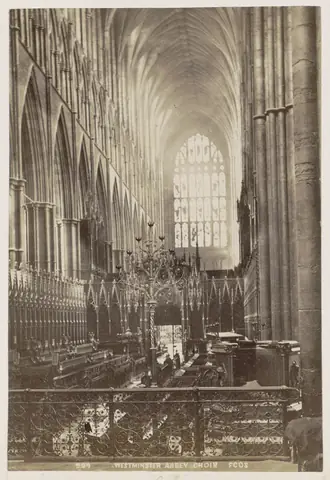
Image: Wikimedia Commons · CC0 (public domain) The choir of Westminster Abbey
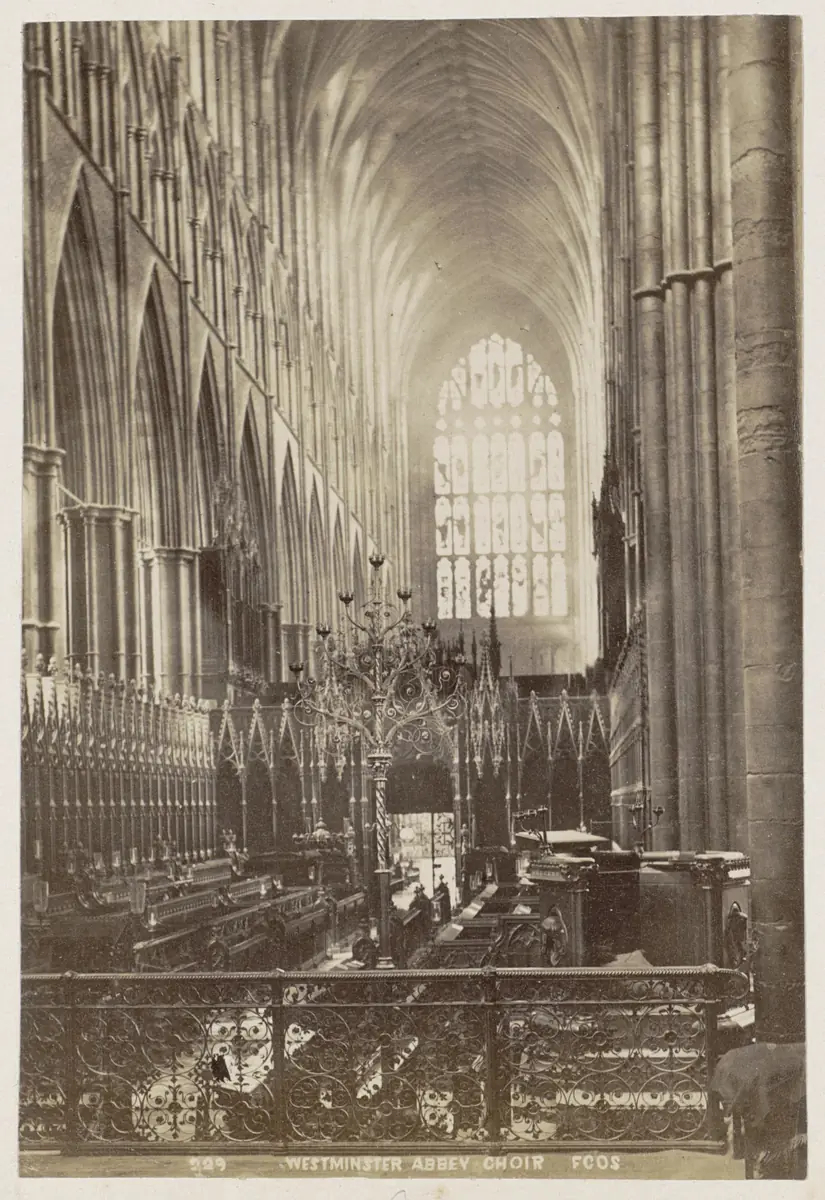
Look closely. A historic interior looking through the choir, with tall vaults, stalls and the depth of the church receding toward the east. This is the ceremonial heart of the abbey, the space in which coronations have been held. The photograph is of the architecture and the fittings as they then stood.

What to watch for
Look slowly- Medieval church, later towers. The west towers are eighteenth-century. They belong to the familiar front, not to Henry III’s first campaign.
- A coronation church. The choir and crossing have been the setting of coronations for centuries. Look at the interior as a place of ceremony as well as of prayer.
- Tombs and chapels. The abbey is crowded with later monuments. They are part of its history; they can also hide the medieval architecture.
- Not the bridge sonnet. The hosted poem composed upon Westminster Bridge is not a description of this church.
Sources
Dates follow standard historical references and, where we quote a book, the wording of the edition hosted in this library. Photographs are used only when the photograph itself is Public domain, CC0, or CC BY with a named credit. Lost wonders are shown in later engravings and reconstructions, which are imaginings, not photographs of the original work. Each picture links to its source page with full licence details.