Wonders & Monuments · Seven Wonders
The Temple of Artemis
The vast temple at Ephesus, famous through the Greek world and remembered in the Book of Acts.
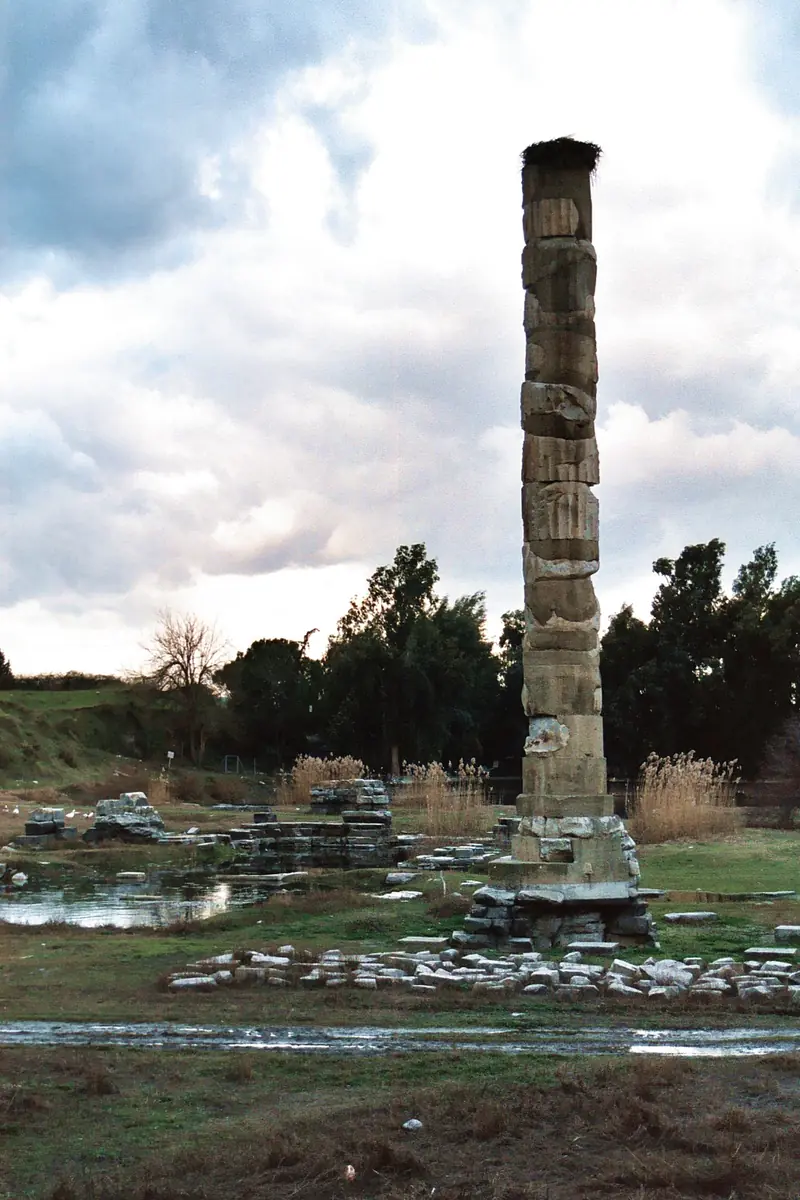
In ruins. The great temple is gone. Foundations and a single re-erected column mark the site in a low, once-marshy ground near Selçuk. Later buildings reused its stones.
What it is
The Temple of Artemis stood at Ephesus, a Greek city on the coast of Asia Minor. More than one temple was built on the same sacred site. The great archaic temple of the sixth century BC, to which King Croesus of Lydia contributed, already had a name for splendour. In 356 BC, according to a long tradition, a man named Herostratus burned it in order to be remembered. The temple was rebuilt on an even larger plan in the fourth century, and it is this later house of the goddess that ancient writers ranked among the wonders.
Artemis of Ephesus was not only the huntress of Greek poetry; at Ephesus she was a civic and sacred figure of great local honour. The King James Bible, following Latin usage, calls her Diana. In Acts 19, silversmiths who made shrines for the goddess raise a riot against the apostle Paul, and the city cries, for hours, that Diana of the Ephesians is great. The temple later fell into ruin in late antiquity; its stones were taken for other buildings. In the nineteenth century J. T. Wood uncovered the site. One column, pieced together from fragments, stands there today.
“Great is Diana of the Ephesians.”
Why it matters
The temple shows how much skill and treasure a city would spend on worship, and how fiercely a people might defend the honour of what they served. Acts 19 does not mock that zeal; it records it, and then shows the gospel entering the same city. For a Christian student the ruins are a place to remember both the beauty of costly offering and the turning of that city toward the apostles’ preaching. What remains is slight, so honesty about the ruin is part of the looking.
Look closely
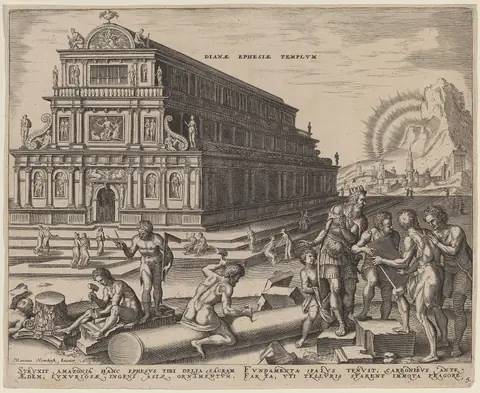
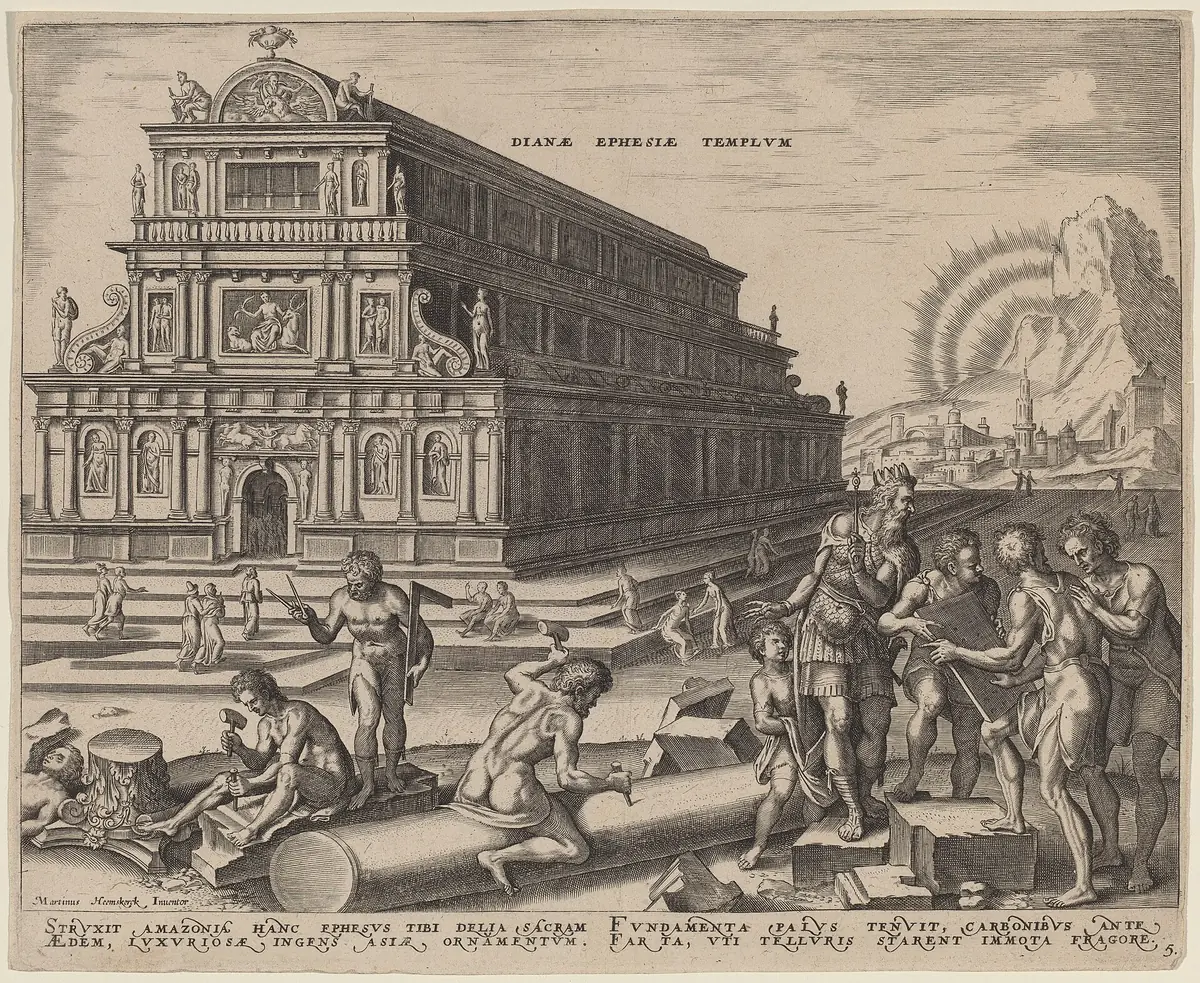
Image: Wikimedia Commons · CC0 (public domain) The Temple of Diana at Ephesus, 1572
Look closely. Galle after Heemskerck imagined a tall, richly columned shrine with processions at its base. It tells you how famous the temple remained in European memory, not how the stones stand now. Use it as a Renaissance picture of splendour, then turn to the excavation plan and the lone column.
In the library: The Bible (KJV), Acts 19 · Herodotus, The Histories
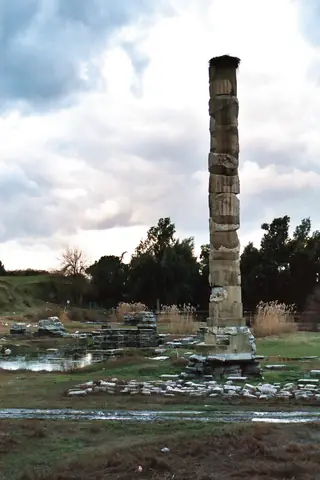
Image: Wikimedia Commons · CC BY 3.0 · Photo: Dguendel The standing column on the site
Look closely. This is what a visitor sees: one column, pieced together from fragments, rising from a low, watery site, with storks often nesting on the capital. The scale is modest beside the huge temple described by ancient writers. The honesty of the place is part of its force. Look at the drums, the isolated height, and the empty ground around it.
In the library: The Bible (KJV), Acts 19
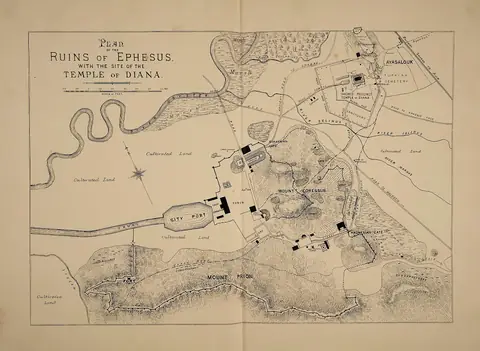
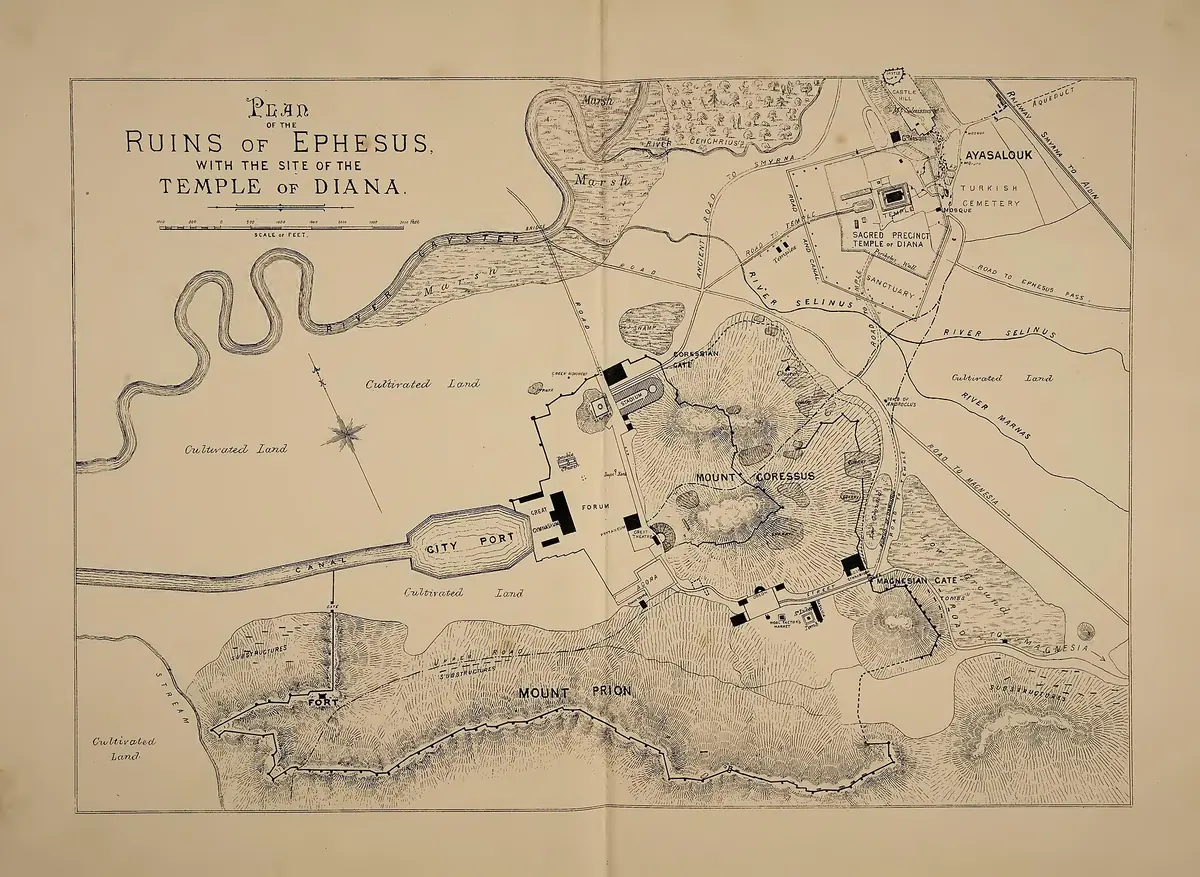
Image: Wikimedia Commons · Public domain (PD-Art) Plan of the ruins of Ephesus, with the Temple of Diana
Look closely. Wood’s plan marks the temple site in relation to the city, the river and the surrounding ruins. Find the label for the Temple of Diana and notice how it sits apart from the later civic core. The plate is a work of archaeological patience, made after years of digging, and it is one of the best ways to understand why a casual walk through Ephesus can miss the wonder altogether.
In the library: The Bible (KJV), Acts 19
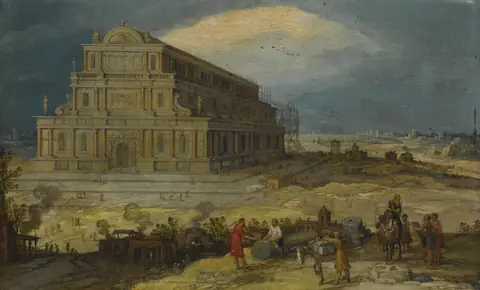
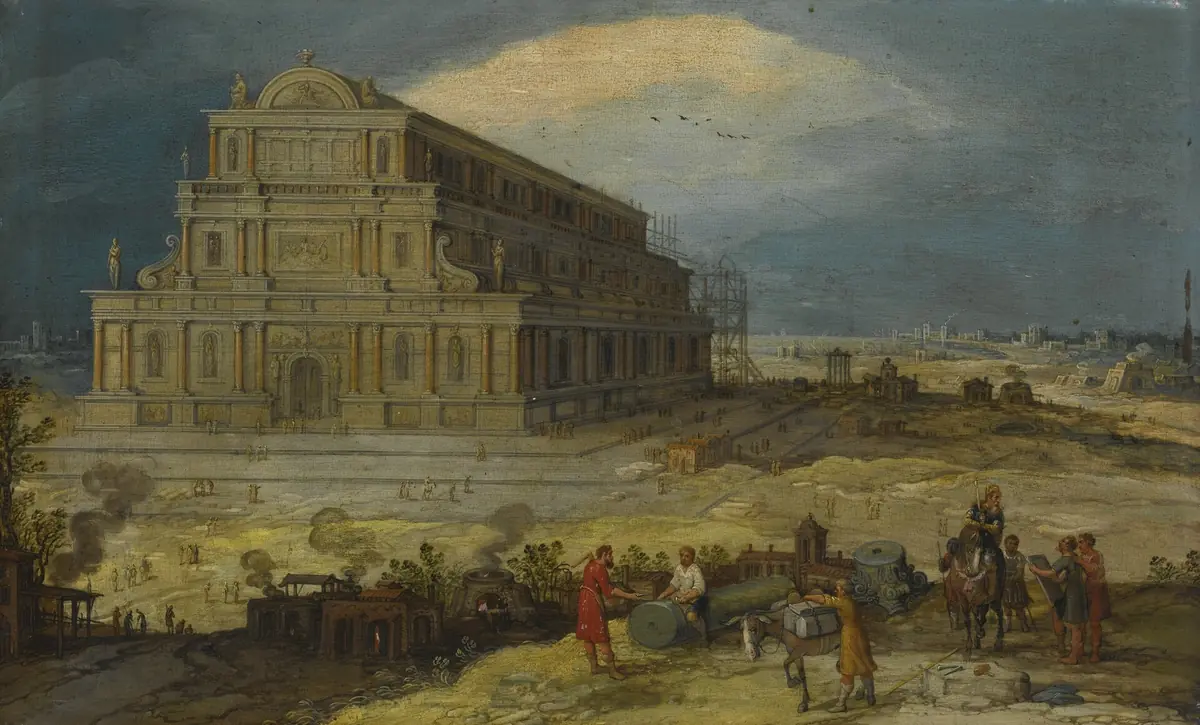
Image: Wikimedia Commons · Public domain (PD-Art) The building of the Temple of Artemis, imagined in the 16th century
Look closely. Van Cleve paints the temple as if it were going up in a busy European landscape of his own day, with scaffolding, labourers and a finished colonnade. It is a picture about building as a great public labour. It is not a document of Ephesus. Set it against Wood’s plan and the lone column, and the difference between invention and excavation is clear.


What to watch for
Look slowly- What remains. One re-erected column and the plan of the foundations: that is the site today, not a standing forest of marble.
- Diana in the English Bible. The King James Version uses the Latin name Diana for the Greek Artemis. The goddess and the place are the same.
- A civic cry. In Acts 19 the shout in the theatre is about worship, craft and the honour of the city, not a quiet lesson in a classroom.
- Rebuilding after fire. The wonder-temple is the one raised after the burning of 356 BC, larger than its already famous predecessor.
- Wood’s excavation. The nineteenth-century plan helps you locate the temple in the wider ruin of Ephesus, away from the later marble streets visitors often photograph first.
- Later pictures invent a complete building. Heemskerck and van Cleve give you a standing temple. The column in the marsh is the correction.
Sources
Dates follow standard historical references and, where we quote a book, the wording of the edition hosted in this library. Photographs are used only when the photograph itself is Public domain, CC0, or CC BY with a named credit. Lost wonders are shown in later engravings and reconstructions, which are imaginings, not photographs of the original work. Each picture links to its source page with full licence details.