Work record
The Gambler
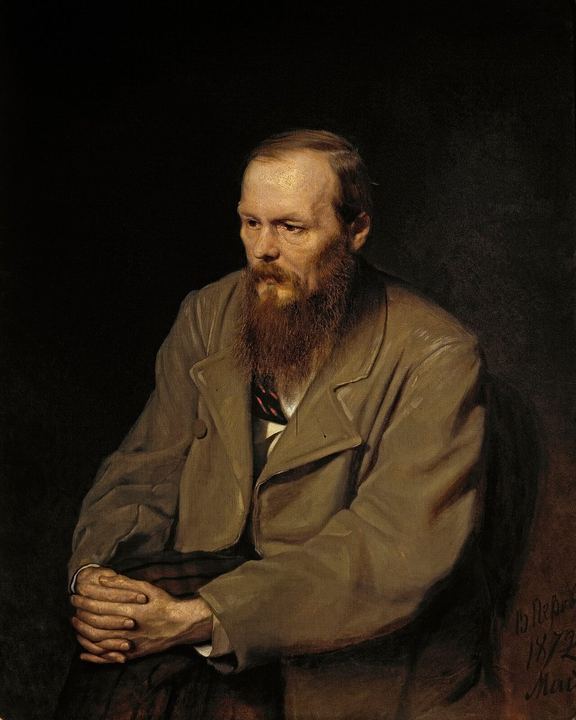
Fyodor DostoevskyThe Gambler by Fyodor Dostoevsky (1866)The Gambler is a short novel by Fyodor Dostoevsky, published in 1866.1866 · 19th Century · Novella · Russian
Abstract
Background. Racing a ruinous publishing deadline, Dostoevsky dictated this short book to a stenographer who soon became his wife, drawing on his own losses at German casinos and a troubled love affair. Resorts in the German states, crowded with Russian visitors, supply the setting, a fictional town the narrator calls Roulettenburg.
Plot. A tutor serving an indebted Russian general at a resort casino adores the general's proud stepdaughter, who uses him as an errand boy. The family's hopes rest on the death of a rich old aunt, but she turns up alive and squanders a fortune at the wheel. After one feverish night of winning, the tutor is spurned by the woman he loves, wastes his gains in Paris, and drifts from table to table.
Ideas. The narrative probes compulsion, the hope of instant transformation and the way money bends affection, honor and national pride. Its narrator's self-justifying confession invites both sympathy and skepticism. Sharply drawn national types, from a reserved Englishman to a polished French creditor, let the author satirize European manners and Russian pride.
Reception. Long read beside the author's letters about his own habit, the story inspired an opera by Prokofiev and several films, and remains a classic portrait of addiction to chance. Prokofiev's opera on the subject was first staged in Brussels in 1929.
Main characters
- Alexey Ivanovitch: Tutor and narrator
- Polina Alexandrovna: The General's stepdaughter
- Granny: Wealthy Moscow relative
- Mr. Astley: Reserved English friend

Summary
The Gambler is a short novel by Fyodor Dostoevsky, published in 1866. Dostoevsky, deep in debt and bound by a contract with the publisher Fyodor Stellovsky that threatened the rights to his future work, dictated it in about four weeks to a young stenographer, Anna Grigoryevna Snitkina, whom he married the following year. The novel draws on his own gambling at German spas and on his relationship with Apollinaria Suslova. The narrator, Alexey Ivanovitch, is a young Russian tutor in the household of a retired general staying at the spa town of Roulettenburg. The General is heavily in debt to a Frenchman, the Marquis de Grieux, and hopes to marry the fashionable Mademoiselle Blanche, whose interest depends on his expected inheritance from a rich elderly relative in Moscow, known as Granny. Alexey is in love with the General's stepdaughter, Polina Alexandrovna, who treats him with a mixture of intimacy and contempt and sends him to play roulette on her behalf. A reserved Englishman, Mr. Astley, watches events and befriends Alexey. Everyone awaits news of Granny's death, but she arrives at the hotel in person, carried in her chair, scorns the General's circle and throws herself into roulette. After an early win, she loses a large part of her fortune within days and returns to Moscow. The General's hopes collapse. Polina, humiliated by de Grieux, comes to Alexey's room at night; he rushes to the casino, wins about two hundred thousand francs and offers her money, which she throws in his face before leaving for Mr. Astley's care. Alexey goes to Paris with Mademoiselle Blanche, who spends his winnings and then marries the General. In the final chapters, set some time later, Alexey has become a wandering gambler, at times in debt and once imprisoned for it. Mr. Astley tells him that Polina loved him and gives him money, but Alexey intends to return to the tables, telling himself that tomorrow everything will change. The novel offers a close portrait of compulsion and of the Russian abroad, and its narrator's restless confession anticipates the psychological intensity of Dostoevsky's major novels.
Plot or Argument
- Chapters I–VIII: Roulettenburg
Alexey describes the General's indebted household, his passion for Polina, the Marquis de Grieux, Mademoiselle Blanche and Mr. Astley, and plays roulette at Polina's request.
- Chapters IX–XII: Granny arrives
The rich relative whose death everyone expects appears in person and loses much of her fortune at the tables.
- Chapters XIII–XV: The night of winning
Polina comes to Alexey; he wins a fortune at roulette, she rejects his money, and he leaves for Paris with Blanche.
- Chapters XVI–XVII: Afterward
Alexey, now a habitual gambler, meets Mr. Astley, learns that Polina loved him, and resolves to play again.
Characters
- Alexey Ivanovitch, protagonist
Young tutor and narrator, proud, impulsive and increasingly consumed by roulette.
- Polina Alexandrovna, major
The General's stepdaughter, whom Alexey loves; proud and unhappy.
- The General, major
Retired Russian general, deep in debt and infatuated with Mademoiselle Blanche.
- Granny (Antonida Vassilyevna Tarasyevitchev), major
The General's wealthy, imperious relative from Moscow, who gambles away much of her fortune.
- The Marquis de Grieux, major
French creditor of the General, polished and calculating.
- Mademoiselle Blanche, major
Fashionable Frenchwoman who pursues money and marries the General.
- Mr. Astley, major
Reserved English gentleman, a loyal friend to Alexey and Polina.
Lessons
The psychology of compulsion
Alexey describes the thrill of the wheel and his belief that one turn could change everything. The novel shows how risk can become a need.
- How does Alexey explain his attraction to roulette?
- When does he stop playing for a purpose and start playing for its own sake?
Money and relationships
Almost every relationship in the book depends on money, debts or inheritances. Students can trace how money shapes love and loyalty.
- Which characters change their behavior when Granny arrives?
- Is any relationship in the novel free from money?
Russians abroad
Alexey compares Russians, French, Germans and English. The novel uses a spa town to study national manners and pride.
- What does Alexey say about Russians and roulette?
- How fair are the novel's national portraits?
Context
In the mid-nineteenth century, casinos in German spa towns such as Wiesbaden, Bad Homburg and Baden-Baden drew wealthy travelers from across Europe, including many Russians. Dostoevsky gambled heavily at these resorts in the 1860s.
Composition
Under a contract with Stellovsky that required a new novel by 1 November 1866, Dostoevsky interrupted work on Crime and Punishment and dictated The Gambler to Anna Snitkina in October 1866. It was published that year in Stellovsky's edition of his works. Constance Garnett's translation appeared in The Gambler and Other Stories (Heinemann, 1914).
Reception
The novel has often been read alongside Dostoevsky's letters about his own gambling and his relationship with Suslova. It inspired Sergei Prokofiev's opera The Gambler and several films, and is a frequent point of reference in discussions of gambling addiction.
Comparisons
- The Double
Dostoevsky's earlier novella also follows a humiliated, proud narrator driven by forces he cannot control.
- Notes from Underground
Written two years earlier, Notes from Underground shares The Gambler's confessional voice and its interest in irrational desire.
- Crime and Punishment
Dostoevsky interrupted Crime and Punishment to write The Gambler; both explore money, pride and the urge to risk everything.
- Anna Karenina
Tolstoy's novel also portrays Russian society abroad and passion that overturns a life, on a much larger scale.
- Fathers and Sons
Turgenev's novel of the same decade offers another portrait of educated Russians and their relation to Europe.
- The Great Gatsby
Fitzgerald's novel also links love to money and a dream of transforming one's life at a single stroke.
Quotes
“The point is that—one turn of the wheel, and all will be changed”
“To-morrow, to-morrow it will all be over!”
For Students
A reading companion for classical Christian high school students. See the student guide.
Reading Guide
Watch for
- Alexey's shifting feelings toward Polina.
- How characters treat the General before and after Granny's arrival.
- Descriptions of the roulette tables and the sensations of play.
- Mr. Astley's role and his final conversation with Alexey.
Key terms and names
- Roulette
- A casino game in which players bet on where a ball will land on a spinning wheel.
- Spa town
- A resort built around mineral springs, often with a casino.
- Gulden
- A German currency used in the novel's resort.
- Inheritance
- Property expected on a relative's death, on which the General's plans depend.
- Stenographer
- A person who records speech in shorthand; Dostoevsky dictated the novel to one.
Seminar Questions
- Comprehension Why is the General waiting for news from Moscow?
- Comprehension What happens when Granny comes to Roulettenburg?
- Interpretation Why does Polina throw Alexey's money back at him?
- Interpretation What does Mr. Astley understand about Alexey that Alexey does not?
- Big Question Why do people take risks that they know may ruin them?
- Big Question Can love be separated from money and pride?
Faith Connections
- 1 Timothy 6:9-10 (Scripture)
Paul's warning that those who desire to be rich fall into temptation and 'many foolish and hurtful lusts' bears directly on the characters' pursuit of money.
- Blaise Pascal, Pensées (Great Conversation)
Pascal's wager uses the language of gambling to discuss what a person should stake a life on, a contrast to Alexey's bets.
Logic and Rhetoric
Central argument: Through a narrator who believes a single turn of the wheel can transform his life, the novel shows how a passion for chance can take the place of love, work and judgment.
Rhetorical device: confession. Alexey writes in the first person, alternately boasting and accusing himself, so that readers watch his rationalizations from within.
Debate: Resolved: Alexey's final resolution shows hope rather than self-deception.
Writing Prompts
Essay: Trace the stages by which Alexey becomes a gambler, and explain what the novel suggests about compulsion.
Comparison with Notes from Underground: Compare Alexey with the Underground Man as narrators who act against their own interests.
Medical Lens
The novel is an early literary study of compulsive gambling, showing escalating risk, chasing losses and the narrator's belief in a coming win, decades before gambling was described as a medical disorder.
- Chapters IX–XII
Granny's rapid losses at roulette despite warnings.
- Chapter XVII
Alexey's reflections on his life as a gambler and his intention to play again.
Creative Prompts
- Fiction
Write Polina's account of the night she comes to Alexey's room and what she thinks when he offers her money.
- Essay
Is Alexey's love for Polina the cause of his gambling or an excuse for it? Use evidence from the novel.
- Classroom
Chart how each character's behavior toward Granny changes over the course of her visit, and discuss what the chart shows.
Further Reading
- Notes from Underground, Fyodor Dostoevsky
- Dostoevsky: The Miraculous Years, 1865–1871, Joseph Frank
- Reminiscences, Anna Dostoevsky
- The Gambler (opera), Sergei Prokofiev
Verification notes
Full text of Constance Garnett's 1914 translation from Wikisource (The Gambler and Other Stories, Heinemann, 1914; transcription proofread against the scanned edition). Both quotations are exact substrings of the stored text.
No verification flags recorded.