Work record
The Double
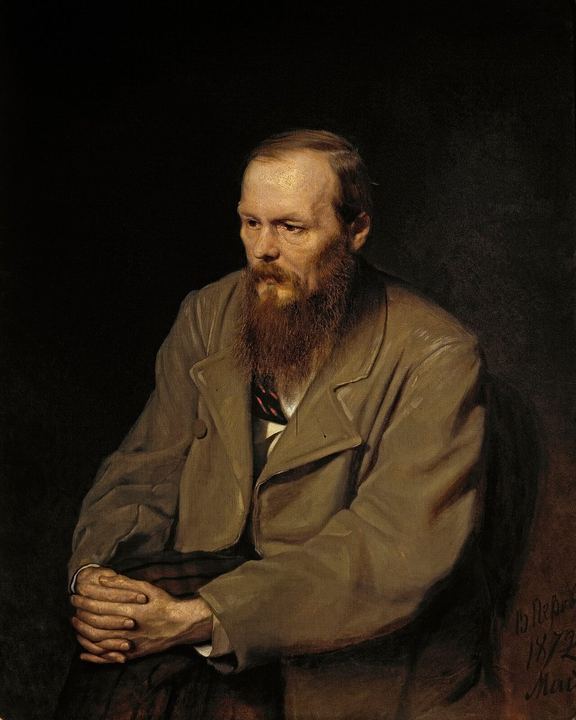
Fyodor DostoevskyThe Double: A Petersburg Poem; DvoynikThe Double by Fyodor Dostoevsky (1846)The Double is Fyodor Dostoevsky's second published work, a short novel that appeared in the journal Notes of the Fatherland in 1846, shortly after his debut with Poor Folk.Also known as: The Double: A Petersburg Poem · Dvoynik
1846; revised 1866 · 19th Century · Novella · Russian
Abstract
Background. Dostoevsky followed his acclaimed first book, Poor Folk, with this tale only weeks later in 1846, writing under the spell of Gogol's Petersburg stories and the German Romantic fascination with doubles. The subtitle, 'A Petersburg Poem', recalls Gogol's labeling of Dead Souls as a poem.
Plot. A nervous, touchy official who craves esteem is ejected from a ball he was not invited to. That same stormy night he encounters a stranger identical to himself, who the next morning joins his department. Charming where the original is awkward, the newcomer steals his work, his friends and his standing, until the hero, clinging to a supposed love letter, is led away by his physician before a crowd of onlookers.
Ideas. The tale studies a self split by humiliation and the craving for status, and leaves open whether the rival is real or the product of a disordered mind. Its repetitive, anxious narration makes the reader share the hero's confusion. The hero's speech, full of hesitations and self-reassurance, reveals his dread of being judged by others.
Reception. Early critics, including Belinsky, judged it tedious, and Dostoevsky revised it twenty years later. Modern readers value it as a forerunner of his great psychological fiction and of later stories of divided identity.
Main characters
- Yakov Petrovitch Golyadkin: Anxious government clerk
- Golyadkin junior: His exact likeness
- Dr. Krestyan Ivanovitch Rutenspitz: Golyadkin's physician
- Klara Olsufyevna: Daughter of his former patron

Summary
The Double is Fyodor Dostoevsky's second published work, a short novel that appeared in the journal Notes of the Fatherland in 1846, shortly after his debut with Poor Folk. Subtitled 'A Petersburg Poem', it follows Yakov Petrovitch Golyadkin, a titular councillor in a government office, through a few days in which his hold on reality gives way. Golyadkin wakes on a damp November morning, admires the money in his pocket-book, hires a carriage and livery for his servant Petrushka, and drives about the city in borrowed splendor. He visits his doctor, Krestyan Ivanovitch Rutenspitz, and speaks confusedly of enemies who wish him harm. That evening he tries to enter a birthday ball for Klara Olsufyevna, daughter of his patron, the state councillor Olsufy Ivanovitch, but he has not been invited; after slipping in and making a spectacle of himself, he is put out of the house. Walking home in a snowstorm along the Fontanka embankment, Golyadkin meets a man who looks exactly like him and follows him to his own lodgings. The next day this second Golyadkin is given a post in the same department. At first the newcomer appears humble and grateful, and Golyadkin takes him in and confides in him. Soon, however, 'Golyadkin junior' takes credit for his work, flatters their superiors, mocks him in public and wins the favor that the original cannot. Golyadkin writes letters of protest, imagines plots against him and reads a note he believes Klara has sent him as an invitation to elope. At the end he returns to Olsufy Ivanovitch's house, where the assembled guests watch as Krestyan Ivanovitch leads him to a carriage and drives him away, it is implied, to an asylum. The novel's narration stays close to Golyadkin's anxious thoughts, repeating his phrases and leaving the reader uncertain how much of the double is real. Contemporary critics, including Vissarion Belinsky, found it long and tedious, and Dostoevsky revised it in 1866. Later readers have seen it as an early study of divided identity and social humiliation, and Dostoevsky himself wrote that its idea was among the most serious he ever had.
Plot or Argument
- Chapters I–IV: The morning and the ball
Golyadkin drives about the city, consults Dr. Rutenspitz, and is turned away from Klara Olsufyevna's birthday celebration after forcing his way in.
- Chapters V–VII: The double appears
In a snowstorm Golyadkin meets his exact likeness, who is appointed to his office the next day and spends a friendly night at his lodgings.
- Chapters VIII–XI: Usurpation
Golyadkin junior steals credit for his work, humiliates him before colleagues and superiors, and seems to take his place in the world.
- Chapters XII–XIII: The letter and the carriage
Golyadkin waits to elope with Klara after a letter he believes she wrote, enters Olsufy Ivanovitch's house and is taken away by the doctor.
Characters
- Yakov Petrovitch Golyadkin, protagonist
Timid, proud titular councillor whose fears and humiliations take the form of a double.
- Golyadkin junior, antagonist
His exact likeness, who appears in his office and gradually displaces him.
- Krestyan Ivanovitch Rutenspitz, major
Golyadkin's doctor, who advises him to change his habits and at the end takes him away.
- Olsufy Ivanovitch, minor
State councillor and Golyadkin's former patron.
- Klara Olsufyevna, minor
Olsufy Ivanovitch's daughter, the object of Golyadkin's hopes.
- Andrey Filippovitch, minor
Head of Golyadkin's office section.
- Petrushka, minor
Golyadkin's sullen servant.
Lessons
Who is the double?
The novel never settles whether Golyadkin junior is real. Readers can consider how Dostoevsky uses uncertainty to show a mind under strain.
- What details suggest that the double is real, and which suggest he is imagined?
- Does it matter which is true?
Rank and humiliation
Golyadkin longs for respect in a world governed by rank and patronage. The double succeeds by flattery where he fails.
- How does the double win favor that Golyadkin cannot?
- What does the story suggest about ambition in a bureaucracy?
Narrative voice
The narrator repeats Golyadkin's phrases and follows his thoughts closely. Students can examine how style conveys anxiety.
- Find a passage where the narration echoes Golyadkin's own words.
- How does this style affect your sympathy for him?
Context
In the 1840s young Russian writers of the 'natural school', encouraged by the critic Vissarion Belinsky, wrote about the poor clerks and back streets of St. Petersburg in the manner of Gogol. The doppelgänger motif was familiar from German Romantic writers such as E. T. A. Hoffmann.
Composition
Dostoevsky wrote the novel in 1845 and published it in Notes of the Fatherland in February 1846, a few weeks after Poor Folk. He revised it substantially for an 1866 edition, removing some chapter summaries and shortening it. Constance Garnett's translation of the revised text appeared in The Eternal Husband and Other Stories (Heinemann, 1917).
Reception
Belinsky and others thought it overlong and repetitive, and the novel damaged Dostoevsky's early reputation. In 1877 Dostoevsky wrote that although the story had failed, its idea was serious. Twentieth-century critics, including Mikhail Bakhtin, gave it close attention, and it has been adapted for film.
Comparisons
- The Overcoat
Gogol's story of a poor Petersburg clerk is a direct ancestor of Golyadkin's world of rank, humiliation and the grotesque.
- Strange Case of Dr Jekyll and Mr Hyde
Stevenson's double divides one man into good and evil selves, while Dostoevsky's double seems to embody a man's social fears.
- Notes from Underground
Dostoevsky's later narrator shares Golyadkin's wounded pride and obsession with others' opinions, but speaks for himself.
- Nutcracker and Mouse-King
Hoffmann, whose tales popularized the doppelgänger, also blends the everyday with the uncanny, though for children in this story.
- The Metamorphosis
Kafka's clerk also undergoes a sudden, unexplained change that exposes his isolation at work and at home.
- The Gambler
Dostoevsky's later novella again follows a narrator driven by humiliation and compulsion, in a German spa rather than a Petersburg office.
- White Nights
Dostoevsky's sentimental story of a lonely Petersburg dreamer comes from the same early period.
Quotes
“The nocturnal visitor was no other than himself—Mr. Golyadkin himself, another Mr. Golyadkin, but absolutely the same as himself—in fact, what is called a double in every respect.”
“Good folks live honestly, good folks live without falsity, and they never have doubles.”
For Students
A reading companion for classical Christian high school students. See the student guide.
Reading Guide
Watch for
- Golyadkin's repeated phrases and self-justifications.
- The weather and the city at night.
- How the double behaves in public and in private.
- Dr. Rutenspitz's role at the beginning and the end.
Key terms and names
- Doppelgänger
- A double of a living person, often a sign of danger or division in Romantic fiction.
- Titular councillor
- A low rank in the Russian civil service.
- Natural school
- Russian writers of the 1840s who depicted urban poverty, following Gogol.
- Unreliable narration
- Narration that leaves the reader unsure what is real.
- Patronage
- The support of a powerful protector, on which Golyadkin depends.
Seminar Questions
- Comprehension Why is Golyadkin turned away from Klara Olsufyevna's party?
- Comprehension How does Golyadkin junior gain favor at the office?
- Interpretation What does the double have that Golyadkin lacks?
- Interpretation Why might Dostoevsky call the book 'A Petersburg Poem'?
- Big Question How much of a person's identity depends on how others see them?
- Big Question Can a society's demands divide a person against himself?
Faith Connections
- Romans 7:15-19 (Scripture)
Paul's description of a self divided against itself, doing what it hates, offers a moral and spiritual counterpart to Golyadkin's divided identity.
- Robert Louis Stevenson, Strange Case of Dr Jekyll and Mr Hyde (Great Conversation)
Stevenson's double divides a man into good and evil selves; comparing it with Dostoevsky shows different ideas of what a double represents.
Logic and Rhetoric
Central argument: By giving Golyadkin a successful copy of himself, the novel suggests that a man who lives entirely for rank and others' approval can be displaced by anyone who plays the game better, and that such a life threatens the self.
Rhetorical device: free indirect discourse. The narrator slides into Golyadkin's own words and repetitions, so that the reader experiences his anxiety from within.
Debate: Resolved: The double in Dostoevsky's novel is a hallucination.
Writing Prompts
Essay: Analyze how Dostoevsky uses repetition and point of view to portray Golyadkin's breakdown.
Comparison with Strange Case of Dr Jekyll and Mr Hyde: Compare the doubles in Dostoevsky and Stevenson. What does each double represent?
Medical Lens
The novel is an early and detailed literary portrait of persecutory delusion and disintegrating identity, told from close inside the patient's perspective, with a physician who advises 'cheerful company' and finally removes the patient to an institution.
- Chapter I
Golyadkin's confused consultation with Dr. Rutenspitz, in which he complains of enemies and the doctor prescribes a change of habits.
- Chapter V
The meeting with the double on the Fontanka in a snowstorm.
- Chapter XIII
Golyadkin is led away by the doctor, apparently to an asylum.
Creative Prompts
- Fiction
Write a short scene in which a character meets someone who has taken over part of their life. Keep the reader uncertain whether the other person is real.
- Essay
Argue whether Golyadkin junior is best understood as a real man, a hallucination or a symbol, using evidence from the text.
- Classroom
Trace Golyadkin's repeated phrases through one chapter and discuss what they reveal about his state of mind.
Further Reading
- Poor Folk, Fyodor Dostoevsky
- Problems of Dostoevsky's Poetics, Mikhail Bakhtin
- Dostoevsky: The Seeds of Revolt, 1821–1849, Joseph Frank
- The Double: A Psychoanalytic Study, Otto Rank
Verification notes
Full text of Constance Garnett's translation (first published 1917) from an Internet Archive transcription of the 1923 Macmillan printing; spelling and punctuation follow that file. Both quotations are exact substrings of the stored text.
- The Internet Archive text is a user-made transcription; minor typographical slips may remain.