Work record
Tanglewood Tales
1853 · 19th Century · Short Stories · English
Abstract
Background. After the success of A Wonder-Book, Hawthorne produced a second set of classical stories in the months before he sailed to his Liverpool consulship. He again hid behind the invented college youth Eustace Bright, casting himself merely as editor.
Content. The volume moves from Theseus in the Cretan maze to Hercules among a nation of finger-high warriors, from the long search for Europa that ends in the founding of Thebes to Ulysses on Circe's island, then to the abduction of Proserpina, and finally to the Argonauts' quest for the Fleece. Each story is complete in itself, though Medea and the dragon's teeth reappear in the last tale.
Method. In the preface Hawthorne admits that the myths contain much that is hideous and claims they can be purified by telling them as if from the world's childhood. He alters endings freely, keeping Ariadne at home and treating Pluto with sympathy, and speaks often to his listeners.
Themes. Filial love and loyalty, courage disproportionate to size, the beast that greed makes of a man, and the cycle of loss and return behind the seasons.
Significance. Together with its predecessor, it shaped how generations of American children first met Greek mythology and remains in print in many illustrated editions.
Main characters
- Eustace Bright: Williams College student credited with writing the tales
- Theseus: Prince of Athens who slays the bull-headed monster
- Ariadne: Cretan princess whose thread leads him out
- Antaeus: Earth-born giant and protector of the Pygmies
- Hercules: Hero who overthrows Antaeus and yields to the Pygmies
- Cadmus: Phoenician prince who founds a city from dragon's teeth
- Ulysses: Prudent king who frees his crew from Circe's sty
- Proserpina: Ceres' daughter, half-captive in Pluto's kingdom
- Jason: Centaur-taught captain of the Argonauts
- Medea: Sorceress who poisons in Athens and aids at Colchis

Summary
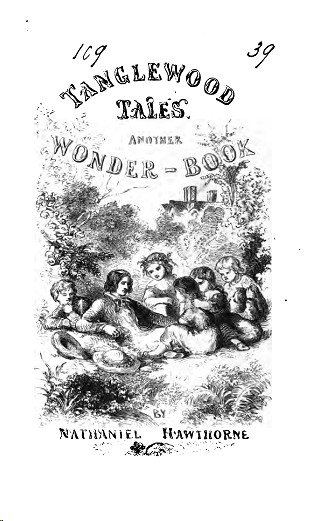
Tanglewood Tales is Nathaniel Hawthorne's second book of Greek myths retold for children, a sequel to A Wonder-Book for Girls and Boys. In a short introduction called The Wayside, Hawthorne pretends that the stories were written by his young friend Eustace Bright, a Williams College student who had told the first set to a group of children at Tanglewood in the Berkshires; Eustace visits Hawthorne's snowy Concord hillside with six new stories, and Hawthorne agrees to act as editor. The introduction explains the plan of the book: the old myths are to be told so that their cruel and gloomy parts fall away and the stories feel as if they came from the childhood of the world. Six tales follow. In The Minotaur, young Theseus lifts the great stone that hides his father's sword and sandals, travels to Athens clearing the road of robbers such as Procrustes, escapes a poisoned cup prepared by the enchantress Medea, and sails to Crete with the youths sent as tribute; the princess Ariadne gives him a silken thread to guide him through the labyrinth, he kills the Minotaur, but forgets to change his black sails, and his father Aegeus throws himself into the sea. Hawthorne has Ariadne refuse to leave her old father. The Pygmies tells of the friendly earth-born giant Antaeus and the tiny people who live around him, until Hercules arrives and defeats Antaeus by lifting him away from his Mother Earth; the Pygmies then attack the sleeping hero, who is so charmed by their courage that he leaves them in peace. The Dragon's Teeth follows Cadmus, his brothers Phoenix and Cilix, their friend Thasus and their mother Telephassa as they search the world for Europa, carried off by a white bull; one by one the searchers settle and found cities, Telephassa dies, and Cadmus follows a brindled cow, kills a dragon, sows its teeth, and with the five warriors who survive the battle of the armed men founds a city and marries Harmonia. In Circe's Palace, King Ulysses rescues his greedy shipmates, turned into swine by the enchantress Circe, with the help of Quicksilver and a snow-white flower, and restores King Picus from the shape of a woodpecker. The Pomegranate Seeds tells how Pluto carries off Proserpina, how Mother Ceres searches the world with a torch and makes the earth barren, and how Proserpina, who has eaten nothing for six months, is tempted at the last moment by a dry pomegranate and must spend six months of each year underground. The Golden Fleece follows Jason from the cave of Chiron the Centaur to the court of King Pelias, the building of the Argo, and the voyage of the heroes to Colchis, where the princess Medea helps him tame the brazen bulls, sow the dragon's teeth and put the dragon to sleep. The book was published in Boston by Ticknor, Reed and Fields in 1853 with illustrations by Hammatt Billings.
Virtues in this work
- Piety: Cadmus stays beside his grieving mother Telephassa until she dies on the road and buries her with his own hands.
- Fortitude: The tiny Pygmy stands on Hercules's palm and declares that his soul is as big as the hero's own.
- Temperance: Ulysses' greedy companions become swine at Circe's feast, while Ulysses, protected by the white flower, keeps his head.
- Friendship: Thasus, though no relation, walks with Telephassa until he is lame and keeps a bed ready for Europa all his life.
- Humility: King Picus, restored from a woodpecker, learns to think of himself as the upper servant of his people.
Plot or Argument
- The Wayside: Eustace Bright brings new stories
Hawthorne receives Eustace Bright at his Concord house, reads the six new tales, reports on the Tanglewood children, and explains how the old myths can be made fit for young listeners.
- The Minotaur
Theseus lifts the stone, journeys to Athens, survives Medea's poisoned goblet, slays the Minotaur with Ariadne's thread, and returns under black sails to find his father dead.
- The Pygmies
The giant Antaeus and his tiny friends live happily until Hercules wrestles Antaeus off the ground and kills him; the Pygmies declare war on the sleeping hero, who laughs and makes peace.
- The Dragon's Teeth
Cadmus and his family search for Europa; the others settle and Telephassa dies; at the oracle's word Cadmus follows a cow, slays a dragon, raises armed men from its teeth, and receives Harmonia as his wife.
- Circe's Palace
Ulysses' hungry companions are turned to swine; guided by Quicksilver and protected by a white flower, Ulysses masters Circe and restores his men and King Picus.
- The Pomegranate Seeds
Pluto steals Proserpina; Ceres searches with Hecate and Phoebus, nurses the baby Demophoon, and lets the crops fail until her daughter returns, bound to stay six months each year below.
- The Golden Fleece
Jason, Chiron's pupil, carries an old woman across a flood and loses a sandal, accepts Pelias's challenge, sails in the Argo with the heroes, and wins the Fleece at Colchis with Medea's magic.
Characters
- Eustace Bright, storyteller of the frame
A college student who tells myths to children and brings Hawthorne the new tales to edit.
- Theseus, hero of The Minotaur
A brave, loving son who proves his strength by lifting a stone and kills the Minotaur.
- Ariadne, princess of Crete
King Minos's tender-hearted daughter who guides Theseus with a silken thread and stays with her father.
- Medea, enchantress
Plots to poison Theseus in Athens; in the last tale a Colchian princess who helps Jason with her spells.
- Antaeus, giant
A huge, good-natured son of Mother Earth, beloved by the Pygmies, who grows stronger each time he touches the ground.
- Hercules, wandering hero
Defeats Antaeus and is won over by the courage of the Pygmies.
- Cadmus, searching brother
A faithful son and brother who follows a cow to found a city and teaches his children their letters.
- Telephassa, queen and mother
The mother of Europa, who searches for her daughter until she dies on the road.
- Ulysses, king of Ithaca
A wise and prudent leader who resists Circe's enchantment and rescues his men.
- Circe, enchantress
A beautiful sorceress who turns guests into beasts that match their natures.
- Proserpina, daughter of Ceres
A cheerful girl carried off by Pluto who refuses to eat in his palace until the last day.
- Jason, hero of The Golden Fleece
A prince raised by Chiron the Centaur who leads the Argonauts to Colchis.
Lessons
The monster within
When Theseus finds the Minotaur, Hawthorne stops the story to tell his young listeners that anyone who lets evil into his nature becomes a kind of Minotaur, lonely and an enemy to others. Circe's palace makes the same point comically: the greedy sailors become the pigs they already resembled.
- Why does Theseus feel pity for the Minotaur even while he fights it?
- Why do Ulysses' men turn into pigs and not into lions or birds?
- After they are changed back, why do the men still grunt sometimes?
Faithful to family
Cadmus stays with his weary mother when others stop searching, Thasus keeps a fire and a bed ready for Europa all his life, and Ariadne will not leave her old father even for Theseus. Hawthorne fills these tales with children who love and honor their parents.
- What does Thasus keep ready in his palace, and why?
- Why does Ariadne refuse to sail away with Theseus?
- How does Theseus show love for his father when they first meet?
Small in body, great in soul
The Pygmies are no bigger than a finger, yet they challenge Hercules himself. Hercules laughs, but he also honors their courage and goes away rather than hurt them. Courage is measured by the heart, not by size.
- What does Hercules ask the little Pygmy, and what does the Pygmy answer?
- Was Hercules right to call himself beaten?
Promises and small mistakes
Theseus forgets to change the black sails, and Proserpina tastes a few pomegranate seeds; both small lapses bring great sorrow. The tales show children that a promise or a rule can matter more than it seems at the time.
- What did Aegeus ask Theseus to do if he came home safe?
- Why does Proserpina finally taste the pomegranate, and what happens because of it?
Context
In the mid-nineteenth century American children usually met the Greek myths through school classics or dry handbooks. Hawthorne, who had already published A Wonder-Book for Girls and Boys (1851), set out to make the myths into lively fireside stories, using the Latin names then common (Ceres, Pluto, Proserpina, Ulysses) and calling Mercury by the playful name Quicksilver.
Composition
Hawthorne wrote the tales in 1853 at the Wayside in Concord, Massachusetts, the house he had bought the year before, and the introduction is set there. The book was published in Boston by Ticknor, Reed and Fields in 1853, illustrated by Hammatt Billings. That summer Hawthorne sailed for England to take up his post as consul at Liverpool.
Reception
Tanglewood Tales and A Wonder-Book became standard American children's introductions to Greek mythology and were often reprinted and illustrated, including a well-known edition with pictures by Edmund Dulac. Hawthorne's freedom with the myths was part of their appeal from the start; the introduction itself jokes about the scholar Mr. Pringle's disapproval.
Comparisons
- metamorphoses
Ovid tells the rape of Proserpina, Cadmus and the dragon's teeth, and Medea's magic for grown readers; Hawthorne takes the same stories and removes their violence and passion so that children can hear them.
- the-odyssey
Homer's Book X is the source of Circe's Palace; Hawthorne keeps Hermes' protective herb as Quicksilver's snow-white flower and adds the woodpecker King Picus from Roman legend.
- tales-from-shakespeare
Charles and Mary Lamb retold Shakespeare for children in prose a generation earlier; both books open grown-up classics to young readers while keeping some of the original language and wonder.
- black-ships-before-troy
Rosemary Sutcliff's retelling of the Iliad keeps the grimness of war, while Hawthorne deliberately softens his myths, so the two show very different ideas of what children should hear.
- the-scarlet-letter
Both books open with Hawthorne himself at home introducing the tale, the Custom-House in Salem in one and the snowy Wayside in Concord in the other.
- a-wonder-book
A Wonder-Book (1851) is the first of Hawthorne's two Greek myth collections, with Perseus, Midas, Pandora, the golden apples, Baucis and Philemon, and Bellerophon told by the student Eustace Bright; Tanglewood Tales (1853) continues the same plan with new myths.
Quotes
Frequently cited
“every human being who suffers any thing evil to get into his nature, or to remain there, is a kind of Minotaur, an enemy of his fellow-creatures, and separated from all good companionship, as this poor monster was.”
Frequently cited
“For each of those six pomegranate seeds you must spend one month of every year in King Pluto's palace.”
“Your body, my little friend, is about the size of an ordinary man's finger. Pray, how big may your soul be?”
“Everything else is a dream, save that.”
“lest there should be too much of the dragon's tooth in his children's disposition, used to find time from his kingly duties to teach them their A B C”
“When men once turn to brutes, the trifle of man's wit that remains in them adds tenfold to their brutality.”
“he felt himself merely the upper servant of his people, and that it must be his life-long labor to make them better and happier.”
“The good Chiron taught his pupils how to play upon the harp, and how to cure diseases, and how to use the sword and shield”
For Students
A reading companion for classical Christian high school students. See the student guide.
Reading Guide
Watch for
- The great stone in The Minotaur and what Theseus finds under it.
- Ariadne's silken thread and the little tugs Theseus feels in the dark labyrinth.
- The moments when the storyteller stops to speak straight to you, his listeners.
- Who stays loyal to whom in The Dragon's Teeth: Cadmus, Thasus, Phoenix, Cilix and their mother.
- Food in Circe's Palace and The Pomegranate Seeds: who eats too much, and who refuses to eat.
Key terms and names
- Labyrinth
- The maze built by Daedalus on Crete, with the Minotaur at its center.
- Minotaur
- A monster with a bull's head and a man's body, fed with young people sent from Athens.
- Pygmies
- A nation of tiny people, no taller than a finger, who live beside the giant Antaeus and fight wars with cranes.
- Quicksilver
- Hawthorne's merry name for the messenger god Mercury, who helps Ulysses and Proserpina.
- Golden Fleece
- The shining wool of a golden ram, hung on a tree in Colchis and guarded by a dragon.
- Oracle
- A place where the gods were thought to answer questions, like the voice that tells Cadmus to follow a cow.
Seminar Questions
- Comprehension How does Theseus find his way back out of the labyrinth?
- Comprehension Why must Proserpina go back to Pluto's palace for part of every year?
- Comprehension What happens to Ulysses' men when they drink Circe's wine, and how does Ulysses stay safe?
- Interpretation The storyteller says a person who lets evil into his heart becomes a kind of Minotaur. What do you think he means?
- Interpretation Hercules could have crushed the Pygmies. Why do you think he chose to leave them in peace?
- Interpretation Cadmus never finds his sister Europa. Was his long search wasted?
- Big Question What makes someone a true hero: being strong, being brave, or being good?
Faith Connections
- Exodus 20:12 (Scripture)
Honour thy father and thy mother. Theseus's joy at finding Aegeus, Cadmus's care for Telephassa and Ariadne's choice to stay with Minos all show children honoring their parents.
- Mark 7:21-23 (Scripture)
Jesus teaches that evil things come from within and defile a person. Hawthorne's warning that anyone who lets evil into his nature becomes a kind of Minotaur points in the same direction.
- Proverbs 23:20-21 (Scripture)
Solomon warns against gluttons and riotous eaters of flesh. Ulysses' greedy companions are turned into swine because they have already lived like them.
- Basil the Great, Address to Young Men on the Right Use of Greek Literature (Church Fathers)
Basil advised Christian students to gather from the pagan poets whatever teaches virtue, as bees take honey from flowers. Hawthorne's way of drawing lessons of courage, loyalty and self-control from Greek myths follows a similar path.
Logic and Rhetoric
Central argument: The old Greek myths contain both wonder and cruelty. Children delight in wonder and are harmed by needless cruelty. Therefore, Hawthorne argues in The Wayside, the storyteller should keep the wonder, let the cruel parts fall away, and tell the myths as stories of courage, loyalty and goodness.
Rhetorical device: direct address (apostrophe to the audience). In The Minotaur the narrator stops the fight to speak to his little people, telling them that anyone who lets evil stay in his nature becomes a kind of Minotaur.
Debate: Resolved: that Hawthorne was right to change the old myths to make them suitable for children.
Memory Work
Your body, my little friend, is about the size of an ordinary man's finger. Pray, how big may your soul be?
every human being who suffers any thing evil to get into his nature, or to remain there, is a kind of Minotaur, an enemy of his fellow-creatures, and separated from all good companionship, as this poor monster was.
Writing Prompts
Essay: Choose two heroes from the book, such as Theseus, Cadmus, Ulysses or Jason. Tell which one you think is the best hero and give three reasons from the stories.
Comparison with The Odyssey: Read or listen to the story of Circe in Homer's Odyssey, Book 10, and compare it with Circe's Palace. What did Hawthorne add or leave out, and why do you think he did it?
Medical Lens
Medicine is incidental but present in small, period-revealing touches. The introduction's chatty report on the Tanglewood children, who have come easily through scarlet fever, whooping cough and possibly measles, records the ordinary childhood epidemics of a New England family in the 1850s. Chiron is remembered as the teacher of Aesculapius and of the art of curing diseases. Poisons and drugs drive several plots: Medea's fatal drop in Theseus's goblet, Circe's enchanted wine, the snow-white flower that protects Ulysses, and Medea's sleeping potion for the dragon. Telephassa's slow decline on the road and Ceres' grief, which makes the whole earth barren and the cattle starve, give mythic shape to mourning; Aegeus's leap from the cliff is told gently but plainly.
- The Wayside (introduction)
Hawthorne reports which Tanglewood children have had scarlet fever, whooping cough, a measles-like eruption, and troublesome second teeth.
- The Minotaur
Medea prepares a poison so strong that a fly sipping from the goblet drops dead; later Aegeus, seeing the black sails, falls from the cliff.
- The Dragon's Teeth
Strangers think Telephassa is out of her mind with grief; she grows feeble and dies asking for a good long rest.
- The Pomegranate Seeds
Ceres in her grief withholds the harvest so that fields and cattle starve, while Proserpina refuses all food for six months in Pluto's palace.
- The Golden Fleece
Chiron teaches harp, war and the curing of diseases; at the end Medea drugs the dragon with a sleeping potion.
Listen to the book
Public-domain audiobook from LibriVox, read by Various volunteers. Recording: Tanglewood Tales on LibriVox (Internet Archive).
LibriVox recordings are volunteer readings released into the public domain. The reading may follow a different edition from the text in this library.
Creative Prompts
- Classroom
Make a labyrinth on paper or in the classroom with string, and let one child guide another through it while the rest of the class listens to the Minotaur chapter.
- Fiction
Write a new story for the Tanglewood children about a Greek hero Hawthorne did not include, told the way Eustace Bright would tell it.
- Poetry
Write a short poem in the voice of Ceres on the morning her torch goes out and the fields turn green.
- Dialogue
Act out the conversation between Hercules and the brave little Pygmy, then let the Pygmy tell his people what happened.
Further Reading
- A Wonder-Book for Girls and Boys, Nathaniel Hawthorne
The first volume, with Pandora, Midas, Perseus and the frame of the Tanglewood children.
- The Heroes, Charles Kingsley
Kingsley's 1856 retelling of Perseus, the Argonauts and Theseus for children.
- D'Aulaires' Book of Greek Myths, Ingri and Edgar Parin d'Aulaire
- The Golden Fleece and the Heroes Who Lived Before Achilles, Padraic Colum
Verification notes
Publication facts (Ticknor, Reed and Fields, Boston, 1853; illustrations by Hammatt Billings; introduction set at the Wayside) were checked at https://en.wikipedia.org/wiki/Tanglewood_Tales. Story contents and all quotations were checked by exact search against Project Gutenberg #976; the six tales are told without the between-story interludes of A Wonder-Book. Hawthorne departs from the classical myths in places, for example in having Ariadne stay on Crete; the record follows his version.
No verification flags recorded.