Work record
Little Lord Fauntleroy
1886 (serialized 1885-86) · 19th Century · Novel · English
Abstract
Background. Burnett, an English-born writer who grew up in Tennessee, wrote the story for St. Nicholas, the leading American magazine for young readers, setting republican and aristocratic manners side by side.
Plot. Told that his late father's brothers have died, Cedric leaves New York to live with a grandfather who scorns Americans and will not meet the boy's mother. Taking the old lord's generosity on trust, Cedric asks for mercy to a behind-hand farmer, crutches for a crippled child and new cottages for a fever-ridden lane, and the Earl, wishing to keep the boy's good opinion, grants them. A rival heir is produced by a woman claiming to be the widow of the eldest son, but a bootblack in New York knows her face, and the plot collapses.
Structure. Chapters alternate between the castle and the friends left behind in New York, so that the American threads tie off the English crisis.
Themes. Trust as a moral force, the duties of property, a mother's self-effacing influence, and a tired old man's late discovery of love.
Significance. A transatlantic bestseller, it fixed a famous image of boyhood in velvet and lace and showed Burnett's gift for stories in which a child heals a household, later developed in The Secret Garden.
Main characters
- Cedric Errol: Seven-year-old New Yorker who learns he is heir to an English earldom
- Mrs. Errol: His widowed mother, called Dearest, barred from the castle
- The Earl of Dorincourt: Cedric's proud, gouty grandfather, feared by his tenants
- Mr. Havisham: The Earl's lawyer and messenger
- Mr. Hobbs: Grocer who distrusts all aristocrats
- Dick Tipton: Bootblack friend whose recognition defeats an impostor
- Minna: Woman who falsely claims the title for her boy

Summary
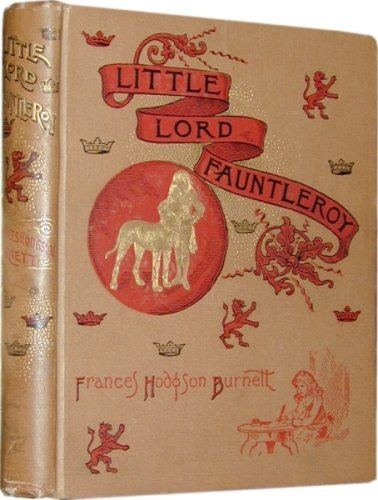
Cedric Errol is a curly-haired American boy of seven, living with his widowed mother in a modest side street of New York. He calls her Dearest, as his father did, and his best friends are Mr. Hobbs, the corner grocer who rails against earls as grasping tyrants, and Dick Tipton, a bootblack. One summer day Mr. Havisham, an English lawyer, arrives with astonishing news. Cedric's father, Captain Errol, was the youngest son of the Earl of Dorincourt, who cast him off for marrying an American. Both of the Captain's elder brothers, Bevis and Maurice, have now died, and Cedric is Lord Fauntleroy, heir to the earldom. The Earl, a gouty, bad-tempered old man of seventy who is hated by his tenants, sends for the boy but refuses to receive his mother; she is to live apart at Court Lodge near the castle. Mrs. Errol accepts for her son's sake and does not tell Cedric that his grandfather despises her. Before leaving, Cedric uses money the Earl has authorized to pay Bridget's rent while her husband Michael recovers from rheumatic fever, to buy out Dick's quarrelsome partner Jake, and to help an old apple-woman. At Dorincourt Cedric walks up to the Earl and his great dog Dougal without a trace of fear, thanks him for his kindness to Bridget and Dick, and takes it for granted that his grandfather is a good and generous man. Charmed in spite of himself, the Earl lets the boy write a letter forgiving the poor farmer Higgins his rent, gives him a pony, and, when Cedric describes the fever-ridden cottages of Earl's Court, orders them pulled down and rebuilt. The tenants begin to love the little lord and his mother, and the Earl finds himself growing fond of a child for the first time in his life. Then a woman named Minna appears, claiming to be the widow of Bevis and the mother of the true heir. The Earl, in agony at losing Cedric, goes to Court Lodge, apologizes to Mrs. Errol, and finds comfort in her company. In New York Dick sees Minna's picture in a newspaper and recognizes her as the wife of his own brother Ben. Dick, Ben and Mr. Hobbs cross to England, confront Minna at the Dorincourt Arms, and expose the fraud; Ben takes back his son Tom. The Earl brings Mrs. Errol to live at the castle, Cedric's eighth birthday is celebrated with a great party for the tenantry, and Mr. Hobbs sells his New York store to open a shop in the village. Burnett's story ran in St. Nicholas Magazine from November 1885 to October 1886 and was published as a book by Charles Scribner's Sons in 1886 with Reginald Birch's illustrations, whose velvet suit and lace collar set a fashion in boys' clothing.
Virtues in this work
- Charity: Cedric spends his first money as heir on Bridget's rent, Dick's business and the apple-woman, and later asks for crutches for the lame boy Hartle.
- Justice: He persuades the Earl to spare the farmer Higgins and to pull down the fever-ridden cottages of Earl's Court.
- Humility: When told he may lose the title, Cedric's only worry is whether he can still be his grandfather's boy.
- Friendship: Cedric never forgets Mr. Hobbs and Dick, and Dick's loyalty in turn saves his inheritance.
Plot or Argument
- Chapter I: A great surprise
Cedric, his widowed mother and their servant Mary live in a quiet New York street; Cedric talks politics with Mr. Hobbs at the grocery, and Mr. Havisham arrives to greet him as Lord Fauntleroy.
- Chapters II-III: Cedric's friends
Mr. Havisham explains the Earl's terms, Cedric tells Mr. Hobbs he will try to be a good earl, and with the Earl's money he helps Bridget and Michael, sets up Dick in business by buying out Jake, and says goodbye to his friends.
- Chapter IV: Crossing and arrival
On the voyage Mrs. Errol tells Cedric they will live in separate houses, and the old sailor Jerry entertains him with tall tales; at Court Lodge mother and son part, and Mr. Havisham reports to the angry, gouty Earl.
- Chapter V: The Earl and his grandson
Cedric meets the Earl and Dougal in the library, thanks him for his kindness, offers his shoulder for the gouty walk in to dinner, and falls asleep on the hearth beside the great dog.
- Chapter VI: Higgins
Dawson and the housekeeper show Cedric the rooms and toys prepared for him; the rector Mr. Mordaunt comes to plead for the farmer Higgins, and Cedric writes the Earl's order to spare him.
- Chapters VII-VIII: Church and the pony
The village crowds the church to see the little lord, who remembers his mother's wish that the world be better because he lived; Higgins thanks him, he learns to ride with the groom Wilkins, and he brings crutches to the lame boy Hartle.
- Chapter IX: Earl's Court
Riding with his grandfather, Cedric wonders how an earl learns about his people; after his mother visits the wretched cottages of Earl's Court, he asks the Earl to pull them down, and the old man, ashamed, agrees to talk it over.
- Chapter X: The claimant
Lady Lorridaile, the Earl's sister, visits and meets Cedric; at a great dinner party Cedric charms Miss Vivian Herbert; then Mr. Havisham tells the Earl that a woman claims her son by Bevis is the real Lord Fauntleroy.
- Chapters XI-XIII: News on both sides of the ocean
In New York Mr. Hobbs and Dick read Cedric's letters and the newspapers; at Dorincourt the Earl visits Mrs. Errol, confesses he is miserable, and asks to come again; Dick sees the claimant's picture and cries out that she is Minna, his brother Ben's wife.
- Chapters XIV-XV: Restoration and birthday
Mr. Havisham brings Dick and Ben to the Dorincourt Arms, where Minna is exposed and Ben takes his son Tom; the Earl invites Mrs. Errol to live at the castle, and Cedric's eighth birthday is kept with a great feast at which he thanks the tenants.
Characters
- Cedric Errol, Lord Fauntleroy, protagonist
Open-hearted American boy of seven who becomes heir to an English earldom and trusts everyone to be as good as he is.
- Mrs. Errol (Dearest), Cedric's mother
Young American widow whose gentleness and charity shape her son and win over the tenants and finally the Earl.
- The Earl of Dorincourt, grandfather
Proud, gouty, solitary old nobleman who disowned his son and is slowly softened by his grandson's faith in him.
- Mr. Havisham, family lawyer
Dry, careful English solicitor who brings Cedric to England and later unmasks the false claimant.
- Mr. Hobbs, grocer
New York storekeeper who despises aristocrats until his young friend becomes one, and who ends by settling in England.
- Dick Tipton, bootblack
Cedric's street friend, set up in business by him, who recognizes the claimant as his brother's wife.
- Mr. Mordaunt, rector
Parish clergyman who pleads for the poor tenants and watches the Earl change.
- Higgins, tenant farmer
Struggling farmer of Edge Farm whose rent Cedric persuades the Earl to forgive.
- Minna, claimant
American woman who passes off a boy as the son of Bevis and heir to the title.
- Ben Tipton, Dick's brother
Minna's real husband, a ranch hand from California, who reclaims his son Tom.
- Lady Lorridaile, great-aunt
The Earl's sister, Aunt Constantia, who loved Cedric's father and welcomes the boy and his mother.
- Dougal, the Earl's mastiff
Huge, ill-tempered dog who takes to Cedric at once.
Lessons
Trust that calls out goodness
Cedric believes from the first evening that his grandfather is kind, and thanks him for gifts the Earl gave only to buy the boy's loyalty. Because the child expects goodness, the old man begins, a little at a time, to supply it: Higgins is spared, crutches are made for Hartle, and Earl's Court is rebuilt. Burnett suggests that innocent trust can be a moral force.
- Why does the Earl let Cedric go on believing he is generous, even when it is not true?
- When the Earl says in Chapter IX that Cedric must be a better earl than he has been, what has he begun to see about himself?
- Is there anyone you could help to be better by expecting the best of them?
Power is for the people under it
Mrs. Errol teaches Cedric that a rich man must remember those who are not fortunate, and that an earl has power to help or harm everyone on his land. Cedric's questions about Newick and the tenants turn the estate from a source of rents into a household of people.
- What does Cedric see from his pony that makes him ask how an earl finds out about his people?
- Why had the Earl never done anything about Earl's Court before?
- How does Mr. Hobbs's idea of earls in Chapter I compare with what Cedric shows an earl can be?
A mother's quiet strength
Mrs. Errol gives up her son's daily company, never tells him that the Earl despises her, and spends her time visiting the sick and poor. Her restraint keeps the boy's love for his grandfather unspoiled and in the end wins the Earl's respect.
- Why does Mrs. Errol refuse to tell Cedric the reason she cannot live at the castle?
- What does the Earl discover about her when he finally visits Court Lodge?
Old friends are kept, not traded
Cedric does not forget Mr. Hobbs, Dick, Bridget or the apple-woman when he becomes rich. His loyalty to his poor friends is rewarded when Dick's sharp eyes save his inheritance.
- What does Cedric do for his New York friends before he leaves?
- How does the story repay his faithfulness to Dick?
Context
The novel contrasts republican America and aristocratic England in the 1880s. American readers were fascinated by English titles and country houses, while many, like Mr. Hobbs, scorned the very idea of hereditary rank. Burnett, who had lived in both countries, imagines an American-born heir who brings democratic friendliness into an English castle and an old lord who learns duty to his tenants. The story also reflects Victorian concern with rural housing and the fever that spread through damp, overcrowded cottages.
Composition
Burnett said the boy was suggested in part by her younger son, Vivian. The story was serialized in St. Nicholas Magazine from November 1885 to October 1886 and published in book form by Charles Scribner's Sons in 1886, with illustrations by Reginald Birch.
Reception
The book was an immediate bestseller in America and Britain and was translated widely. Birch's pictures of Cedric in black velvet with a lace collar and long curls inspired a fashion that many boys of the period remembered with dismay. Burnett's own stage version opened in 1888, after she won a court case in England against an unauthorized adaptation; the story was filmed several times, notably with Mary Pickford in 1921 and Freddie Bartholomew in 1936.
Comparisons
- a-christmas-carol
Both show a hard, solitary old man transformed late in life; Scrooge is changed by spirits and visions, the Earl by the daily company of a trusting child.
- heidi
Spyri's Alm-Uncle and Burnett's Earl are bitter grandfathers estranged from family and neighbors whom a grandchild brings back into charity and community.
- the-prince-and-the-pauper
Twain also moves a boy across the gulf between poverty and rank and lets him see how a ruler's power falls on the poor; both books end with a young lord resolved to govern mercifully.
- the-secret-garden
Burnett's later novel reverses the pattern: Mary Lennox arrives at a Yorkshire manor sour and is healed by others, whereas Cedric arrives already good and heals the household.
- pollyanna
Pollyanna's gladness and Cedric's trust are both childlike dispositions that change a grim adult and a whole town.
- a-little-princess
In A Little Princess Burnett reverses Cedric's rise: Sara Crewe falls from wealth to the attic at Miss Minchin's, and the story tests whether her generosity and good manners survive poverty.
Quotes
Frequently cited
“But only be good, dear, only be brave, only be kind and true always, and then you will never hurt any one, so long as you live, and you may help many, and the big world may be better because my little child was born.”
Frequently cited
“It was really a very simple thing, after all,--it was only that he had lived near a kind and gentle heart, and had been taught to think kind thoughts always and to care for others.”
“I'll have no grasping tyrants sittin' 'round on my cracker-barrels!”
“But if I have to be an earl, there's one thing I can do: I can try to be a good one.”
“when you are an earl, see to it that you are a better earl than I have been!”
“He would have filled my place better than I have filled it. I know that. He would have been an honor to the name.”
“when I am an earl, I am going to try to be as good as my grandfather.”
For Students
A reading companion for classical Christian high school students. See the student guide.
Reading Guide
Watch for
- Every time Cedric thanks the Earl for being kind, and what the Earl actually meant by the gift.
- Mrs. Errol's good-night words to Cedric, remembered during the church service in Chapter VII, and how he repeats them to the Earl.
- The Earl's gouty foot and how often he forgets it once Cedric arrives.
- Dick and Mr. Hobbs in New York, who seem to drop out of the story but come back to save it.
- The great dog Dougal, who growls at everyone but Cedric.
Key terms and names
- Earl
- A high English title of nobility. The Earl of Dorincourt owns the castle, the village of Erleboro and the farms around it, and Cedric will inherit them.
- Lord Fauntleroy
- The courtesy title used by the Earl's heir. It belonged first to Bevis, then to Cedric, and Minna claims it for her son.
- Tenant
- A farmer or cottager who rents land or a house from the Earl, like Higgins of Edge Farm.
- Earl's Court
- The worst end of the village, where the cottages leak and fever kills children, until Cedric asks his grandfather to rebuild it.
- Court Lodge
- The house near the castle where Mrs. Errol must live apart from her son.
- Dearest
- Cedric's name for his mother, the word his father always used for her.
Seminar Questions
- Comprehension What news does Mr. Havisham bring to Cedric and his mother in New York?
- Comprehension What does Cedric do with the money the Earl lets him spend before he leaves New York?
- Comprehension How do Dick and his brother Ben show that Minna's boy is not the real Lord Fauntleroy?
- Interpretation Cedric thinks his grandfather is the kindest man in the world. Is he wrong, or does he turn out to be right in a way?
- Interpretation Why does Mrs. Errol never tell Cedric that the Earl does not want her at the castle? Was that the right choice?
- Interpretation Why is Cedric calm when he hears he may not be Lord Fauntleroy after all?
- Big Question Can a child really change a grown-up? What did Cedric do, and what did the Earl have to do for himself?
Faith Connections
- Matthew 18:3 (Scripture)
Jesus tells his disciples they must become as little children. The Earl, who has spent seventy years quarreling with everyone, begins to change only when he lets a trusting child lead him.
- 1 Corinthians 13:4-7 (Scripture)
Paul says love thinks no evil and believes all things. Cedric's faith in his grandfather is a child's picture of that love, and the narrator names the same quality when the Earl admires the trustfulness which could never think evil.
- Luke 12:48 (Scripture)
To whom much is given, much is required. Mrs. Errol teaches Cedric that the rich and powerful must remember those on their land, and the rebuilding of Earl's Court puts that teaching into practice.
Logic and Rhetoric
Central argument: A child raised near a kind heart learns to think of others. Cedric brings that habit into a castle where no one has practiced it, and he expects his grandfather to share it. Because the Earl wants to be thought well of by the boy, he begins to act kindly, and acting kindly begins to change him. Therefore goodness can spread from the smallest and weakest person in a household to the most powerful.
Rhetorical device: anaphora. Mrs. Errol's blessing in Chapter VII repeats only be: only be good, only be brave, only be kind and true always, building a short list of virtues into one long hope (the book's third quote).
Debate: Resolved: The Earl changed because he loved Cedric, not because Cedric was good.
Memory Work
But only be good, dear, only be brave, only be kind and true always, and then you will never hurt any one, so long as you live, and you may help many, and the big world may be better because my little child was born.
But if I have to be an earl, there's one thing I can do: I can try to be a good one.
Writing Prompts
Essay: Choose three things Cedric asks his grandfather to do (for Higgins, for Hartle, for Earl's Court) and explain how each one changes the Earl a little more.
Comparison with A Christmas Carol: Compare how Scrooge and the Earl of Dorincourt are changed. Which change is more believable, and why?
Medical Lens
Illness sits at the edges of the story but shapes its moral world. The Earl suffers from what Mr. Havisham calls inflammatory gout, and his temper rises and falls with his foot; in Chapter IX the narrator remarks that his doctor was surprised to find him healthier once he had something to think of besides his pains, a Victorian view of mood and chronic illness that a modern reader can note without diagnosing. Fever runs through the book: Maurice died of fever in Rome, Michael has rheumatic fever in New York, the Higgins children have scarlet fever, and the damp, crowded cottages of Earl's Court breed fever that kills children. The rebuilding of Earl's Court reflects late-Victorian sanitary reform, which tied disease to drainage, damp and overcrowding. The lame boy Hartle and his crutches show the ordinary rural disability of the period, met by charity rather than medicine.
- Chapter V
The Earl sits with his gouty foot on a stool through his first evening with Cedric, and the boy offers his shoulder for the walk to dinner.
- Chapter VI
Mr. Mordaunt reports that Higgins's children have had scarlet fever and the doctor has ordered wine and nourishing food the family cannot afford.
- Chapter VIII
Cedric gives up his pony to the lame boy Hartle and later brings him a pair of crutches in the Earl's name.
- Chapter IX
Cedric describes Earl's Court, where houses are falling down, the rain comes in, and children die of fever; the narrator lists bad drainage, damp walls and leaking roofs.
- Chapter IX
The Earl's doctor finds his patient's health improving as the old man's interest in his grandson grows.
Listen to the book
Public-domain audiobook from LibriVox, read by Susan Umpleby. Recording: Little Lord Fauntleroy (version 2) on LibriVox (Internet Archive).
LibriVox recordings are volunteer readings released into the public domain. The reading may follow a different edition from the text in this library.
Creative Prompts
- Fiction
Write the letter Cedric might send Mr. Hobbs after his first week at Dorincourt Castle, in his own spelling and voice.
- Dialogue
Write the conversation between the Earl and Mrs. Errol on his second visit to Court Lodge, after he has admitted he is miserable.
- Classroom
Make a two-column chart of everything Cedric asks the Earl to do and what the Earl's real motive was each time.
- Essay
Mr. Hobbs begins by hating earls and ends by reading the Court news every morning. Explain what changed him and whether he is wiser at the end.
Further Reading
- The Secret Garden, Frances Hodgson Burnett
Burnett's Yorkshire novel of a sour child healed by a garden and friendship.
- A Little Princess, Frances Hodgson Burnett
A rich girl reduced to poverty keeps her inner nobility.
- The One I Knew the Best of All, Frances Hodgson Burnett
Burnett's memoir of her own childhood in Manchester and Tennessee.
- Waiting for the Party: The Life of Frances Hodgson Burnett, Ann Thwaite
Verification notes
All seven quotes were checked with Grep against content/texts/little-lord-fauntleroy.txt (Project Gutenberg #479) and appear verbatim with the file's double-hyphen dashes. Plot details, names (Higgins of Edge Farm, Hartle, Dawson, Mrs. Mellon, Wilkins, Lady Lorridaile, Miss Vivian Herbert, Ben and Tom Tipton, Minna) and chapter placement were checked against the same text, which divides the novel into fifteen numbered chapters. Serial dates in St. Nicholas, the Scribner publication, Reginald Birch's illustrations, and the main film versions are standard facts but were written from knowledge rather than checked online.
- St. Nicholas serialization running exactly November 1885 to October 1886.
- That Burnett's son Vivian was a model for Cedric, and the details of the 1888 English court case over an unauthorized stage adaptation (Burnett v. Seebohm) that preceded her own play.
- Film dates: Mary Pickford (1921) and Freddie Bartholomew (1936).