Work record
The Prince and the Pauper
1881 · 19th Century · Novel · English
Abstract
Background. Twain, then best known as a humorist, turned to Tudor chronicles and old London lore for his first historical fiction, subtitled A Tale for Young People of All Ages and dedicated to his daughters.
Plot. Identical in looks, a pauper from Pudding Lane and Henry VIII's heir swap garments in jest and are each taken for the other. At court Tom is thought deranged, inherits the throne when Henry dies, and judges cases with surprising sense. Edward, defended by the stranger Hendon, endures thieves, beggars, a murderous recluse, false arrest and a stolen inheritance. He reaches the Abbey in time to halt the coronation and proves his identity by naming the hiding place of the missing seal.
Structure. Chapters alternate between the two boys, one learning royal ceremony, the other learning the realm from below, until the threads join at Westminster.
Themes. Twain sets rank against merit and makes the Tudor penal code, with its whipping, branding, boiling and burning, the real antagonist. Friendship, mercy and the testing of identity run beside it.
Significance. Admired on publication as proof that Twain could write with restraint, the tale became a lasting favorite of the stage and screen, and its name now stands for any exchange of fortunes between rich and poor.
Main characters
- Tom Canty: Beggar's son who becomes king by mistake
- Edward Tudor: Prince of Wales, cast into the streets in rags
- Miles Hendon: Penniless soldier who befriends and defends the boy king
- John Canty: Violent thief and Tom's father
- Earl of Hertford: Royal uncle and future Lord Protector
- Humphrey Marlow: Whipping-boy who tutors Tom in court ways
- Hugh Hendon: Usurping younger brother at Hendon Hall
- The hermit: Crazed ex-monk who wants revenge on Henry's son

Summary
The Prince and the Pauper opens in London in October 1537, when two boys are born on the same day: Edward Tudor, longed-for son of Henry VIII, and Tom Canty, unwanted son of a thief in Offal Court, off Pudding Lane. Tom is beaten by his father John and his grandmother, but his gentle mother and sisters Nan and Bet love him, and the old priest Father Andrew teaches him reading, a little Latin, and tales of kings. Tom plays at being a prince until the alley boys half believe in him. Wandering to Westminster, he is cuffed by a guard at the palace gate; Prince Edward rescues him, feeds him, and in boyish fun the two trade clothes. Before a mirror they discover they are exact doubles. Edward runs out to punish the guard, is mistaken for the beggar, and is thrown into the street, while Tom, left in the prince's rags of silk, is taken for a prince gone mad. The dying Henry orders that no one speak of his son's distemper. Edward is dragged off by John Canty, who strikes down Father Andrew; Henry dies, and Tom is proclaimed King Edward VI. Edward is rescued at London Bridge by Miles Hendon, a ruined soldier returning home, who humors what he takes for the boy's madness and is knighted with the right to sit in the king's presence. Tom learns court manners with the help of the whipping-boy Humphrey Marlow, frees a man condemned to be boiled alive for a poisoning that was never proved, and spares a woman and her child accused of raising a storm by witchcraft. Edward, carried off by John Canty into a band of vagrants under the Ruffler, hears from Yokel and others how England's laws whip, crop, brand and hang the hungry. He escapes, shelters with peasant women, nearly has his throat cut by a mad hermit who blames Henry VIII for the loss of his abbey, is framed by the thief Hugo for stealing a pig, and goes with Hendon to Hendon Hall, where Miles's brother Hugh has taken his inheritance and his beloved Edith and denies knowing him. In prison Edward sees two Baptist women burned and swears to sweep away cruel laws. When Hendon takes the king's lashes in the stocks, Edward makes him an earl in his heart. Meanwhile Tom grows fond of royalty and, during the Recognition procession, denies his own mother. At Westminster Abbey the true king interrupts the coronation; Tom supports his claim, and Edward proves it by recalling where he hid the lost Great Seal, which Tom had been using to crack nuts. Edward is crowned, honors Hendon as Earl of Kent, makes Tom the King's Ward, and reigns mercifully. Twain wrote the novel in Hartford, dedicated it to his daughters Susie and Clara, and published it in December 1881 in Canada and England, with the American edition dated 1882.
Virtues in this work
- Friendship: Miles Hendon protects a boy he believes mad and takes his lashes in the stocks in Chapter XXVIII.
- Justice: Tom frees the man condemned for an unproved poisoning in Chapter XV after examining the evidence himself.
- Charity: Edward vows in prison to abolish the laws that maimed the old lawyer and burned the Baptist women, and keeps the vow as king.
- Humility: Edward, mocked as Foo-foo the First, learns to bear insult and to honor a ragged soldier as his true friend.
Plot or Argument
- Chapters I-III: Two births and the exchange
Tom Canty grows up in Offal Court, schooled by Father Andrew and beaten by John Canty. At the palace gate a guard strikes him; Edward takes him in, hears of his life, and the two exchange clothes and find they are identical.
- Chapters IV-VIII: The prince in the street, the pauper at court
Edward is thrown out, mocked by the Christ's Hospital boys, and seized by John Canty. Tom is examined by the King and the physicians, pronounced mad from over-study, coached by Hertford and St. John, and quizzed about the missing Great Seal.
- Chapters IX-XII: Guildhall and Miles Hendon
Father Andrew is struck down, the river pageant carries Tom to Guildhall, and news arrives that Henry VIII is dead. Edward proclaims himself king at the Guildhall gate and is saved from the mob by Miles Hendon, who tells his story and is knighted with the right to sit in the royal presence.
- Chapters XIII-XVI: Tom as king
Edward is lured from Hendon's lodging. Tom learns kingship from his whipping-boy Humphrey Marlow, rescues a man condemned to be boiled for an unproved poisoning, frees a woman and child accused of witchcraft, and survives a state dinner.
- Chapters XVII-XX: Tramps, peasants and the hermit
Among the Ruffler's vagrants Edward hears of men whipped, cropped and enslaved for begging, and is crowned Foo-foo the First in mockery. He escapes to two kind peasant women and then to a mad hermit who binds him and sharpens a knife to avenge the closing of the monasteries.
- Chapters XXI-XXIV: Hendon to the rescue
Hendon frees Edward from the hermit, Hugo frames the boy for stealing a pig, and Hendon bluffs a constable into letting the supposed thief escape.
- Chapters XXV-XXVIII: Hendon Hall, prison and the sacrifice
Hugh Hendon disowns his brother and the frightened Lady Edith denies him. In prison Edward sees two Baptist women burned and meets prisoners maimed for small crimes; in the stocks Hendon takes Edward's lashes.
- Chapters XXIX-XXXIII and Conclusion: Coronation and justice
Tom, used to royalty, denies his mother during the Recognition procession. At the Abbey Edward claims the crown, locates the Seal, and is crowned; he makes Hendon Earl of Kent and Tom the King's Ward. The Conclusion tells of Hugh's exile, Hendon's marriage to Edith, and Edward's merciful reign.
Characters
- Tom Canty, the pauper
A dreamy, kind-hearted boy of Offal Court who is mistaken for the prince and rules for a time as Edward VI.
- Edward Tudor, Prince of Wales, then King Edward VI
Henry VIII's son, proud and quick-tempered, who learns his people's sufferings while wandering England in rags.
- Miles Hendon, Edward's protector
A disinherited soldier who shelters the boy king, humors what he thinks is madness, and takes his whipping.
- John Canty, Tom's father
A drunken thief who drags Edward away and joins the vagrants under the name John Hobbs.
- Mrs. Canty, Tom's mother
A loving woman who suspects that the boy brought home is not her son.
- Father Andrew, old priest
Teaches Tom to read and fills his head with tales of royalty; struck down by John Canty.
- Henry VIII, the King
Dying and fierce, he insists that his apparently mad son will still reign.
- The Earl of Hertford, Edward's uncle, later Lord Protector
Guides Tom through court business and doubts him privately; becomes Duke of Somerset.
- Humphrey Marlow, the whipping-boy
Takes the prince's punishments for him and supplies Tom with court knowledge.
- Hugh Hendon, Miles's younger brother
Has seized the family estate and married Lady Edith by deceit.
- The Lady Edith, Miles's beloved
Forced by Hugh's threats to deny that she knows Miles.
- Hugo, young vagrant
A thief who tries to make Edward a beggar and frames him for stealing a pig.
- The hermit, mad former monk
Believes himself an archangel and plans to kill the son of the king who dissolved his monastery.
- Yokel, vagrant, once a farmer
Shows the scars left on him by the laws against beggars.
Lessons
A king must learn his people's pain
Edward begins as a generous but untested prince who has never been hungry, cold or beaten. On the road he is all three, and he meets men mutilated for begging and women burned for their faith. Twain's argument is that mercy in a ruler grows out of knowledge, and that Edward's merciful reign was made possible by what he suffered.
- What does Edward learn from Yokel's story in Chapter XVII?
- Why does Edward say in Chapter XXVII that kings should go to school to their own laws?
- Could Edward have learned the same lessons from books at the palace?
Loyalty that asks no reward
Miles Hendon believes the boy is mad, yet he protects him, feeds him, calls him Majesty, and finally takes his lashes in the stocks. His friendship is given before he knows it will be repaid. The novel honors faithfulness that serves the person in front of it, not the rank it expects.
- Why does Hendon go along with the boy's claim to be king?
- What does Edward think of Hendon's sacrifice in Chapter XXVIII?
- Is Hendon's request to sit in the king's presence a joke, a kindness, or both?
Clothes, rank and the self
When the boys trade clothes, the whole kingdom treats each according to his costume. Tom slowly grows into royal habits and even denies his own mother; Edward clings to his identity when no one believes him. The novel asks what part of a person is given by station and what part is his own.
- What does the mirror scene in Chapter III suggest about the difference between a prince and a pauper?
- Why does Tom deny his mother during the Recognition procession, and how does he feel afterward?
- Which boy changes more during the story?
Justice depends on honest evidence
As king, Tom questions the case of a man condemned to be boiled alive for poisoning and finds that no one saw poison given and that the case rests on doctors' guesses and a witch's prophecy. His plain common sense saves an innocent man. Twain shows that a cruel penalty joined to careless proof can destroy the innocent.
- What evidence was given against the prisoner in Chapter XV?
- How does Tom discover the man's innocence?
- Why does Tom's experience in Offal Court help him judge better than the lawyers?
Context
The story is set at the end of Henry VIII's reign and the start of Edward VI's in January 1547. Edward really was born in October 1537, succeeded at nine, and was governed first by his uncle Edward Seymour, Earl of Hertford, who made himself Duke of Somerset and Lord Protector. Tudor England punished vagrancy with whipping, branding and, under a short-lived 1547 statute, enslavement, while enclosure of farmland for sheep pasture drove many from the land. Twain draws on these facts and footnotes his sources, but the exchange of identities is invented, as his opening note frankly says.
Composition
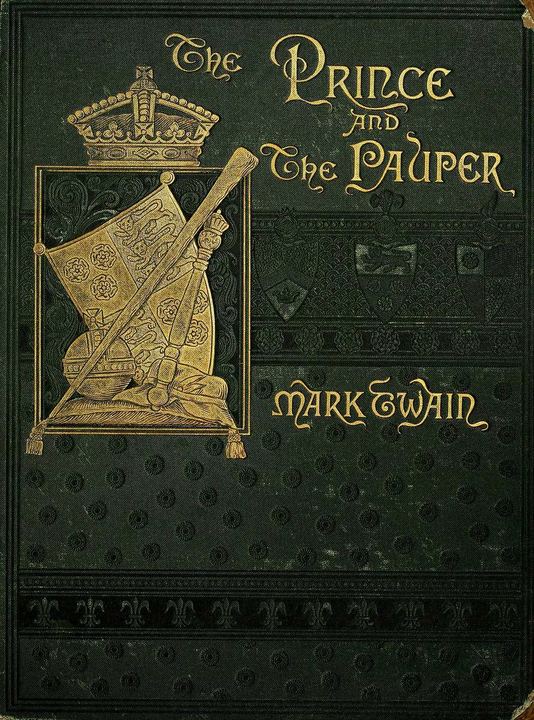
Twain worked on the book in Hartford from about 1877 to 1880, reading Tudor history and old accounts of London and its rogues, and attached notes citing Hume, Leigh Hunt's The Town and J. Hammond Trumbull's work on the Connecticut Blue Laws. Subtitled A Tale for Young People of All Ages and dedicated to his daughters Susie and Clara, it was published in December 1881 by Dawson Brothers in Montreal and Chatto and Windus in London, and by James R. Osgood in Boston in an edition dated 1882. The library text is the Project Gutenberg edition with Twain's notes.
Reception
The novel was well received by critics who had found Twain's earlier work too coarse, and it became one of his most widely read books, adapted for the stage in 1890 and often filmed and televised since. Its plot of exchanged identities has become proverbial.
Comparisons
- adventures-of-huckleberry-finn
Twain wrote the two books in the same years; both send a boy through a country's underside, and the King and the Duke in Huckleberry Finn are a comic shadow of Edward's claim to a crown no one believes.
- utopia
Yokel's story of farms turned to sheep ranges and beggars whipped and hanged echoes Raphael Hythloday's complaint in Book I of Utopia that sheep devour men and that thieves are hanged for want of bread, written a generation earlier in the same England.
- little-lord-fauntleroy
Burnett's poor American boy who becomes heir to an earl also moves between poverty and rank, and he too softens the heart of a powerful elder by his knowledge of the poor.
- henry-v
Shakespeare's king walks disguised among his soldiers the night before Agincourt; Edward is forced into the same position and learns what his subjects think of kings and laws.
- the-black-arrow
Stevenson's tale, published soon after, is another boy's adventure among outlaws and great lords of English history, with Richard of Gloucester in the part that Henry VIII and Hertford play here.
Quotes
Frequently cited
“It may have happened, it may not have happened: but it COULD have happened.”
Frequently cited
“it was crime to be hungry in England”
Frequently cited
“The world is made wrong; kings should go to school to their own laws, at times, and so learn mercy.”
“Thou hast the same hair, the same eyes, the same voice and manner, the same form and stature, the same face and countenance that I bear.”
“And so I am become a knight of the Kingdom of Dreams and Shadows!”
“Then how doth one know there was poison given at all?”
“Let him go--I will take his lashes.”
“The reign of Edward VI. was a singularly merciful one for those harsh times.”
For Students
A reading companion for classical Christian high school students. See the student guide.
Reading Guide
Watch for
- The mirror in Chapter III, where the boys see they are identical, and every later moment when clothes decide how someone is treated.
- How Edward's reactions change from rage at the palace gate to quiet tears in the stocks in Chapter XXVIII.
- Tom's judgments in Chapter XV and the common sense he brings from Offal Court.
- Twain's footnotes on Tudor laws, and how the vagrants' stories in Chapter XVII prepare Edward's promises in Chapter XXVII.
- Tom's denial of his mother in Chapter XXXI and what it reveals about the pull of power.
Key terms and names
- Offal Court
- The filthy alley off Pudding Lane where Tom's family lives in one crowded room.
- Whipping-boy
- A boy punished in the prince's place when the prince fails his lessons; Humphrey Marlow holds the post and helps Tom.
- The Great Seal
- The seal used to authorize the king's official acts, lost when Edward hides it and found again at the coronation.
- Ruffler
- The chief of a band of vagrants and thieves, among whom John Canty takes Edward.
- King's Ward
- The honored title Edward gives Tom at the end, with a place at Christ's Hospital and a special costume.
- Recognition procession
- The procession through London on the eve of the coronation, in which Tom throws largess and denies his mother.
- Lord Protector
- The title taken by Edward's uncle Hertford to govern for the child king.
Seminar Questions
- Comprehension How do Tom and Edward come to exchange places, and why does no one believe either of them afterward?
- Comprehension Who is Miles Hendon, and why has he been away from Hendon Hall?
- Comprehension How does Edward prove at the coronation that he is the true king?
- Interpretation Why does Tom free the condemned man in Chapter XV, and what does the scene show about him?
- Interpretation Why does Hendon's whipping move Edward more than any earlier rescue?
- Interpretation Why does Twain have Tom deny his mother so close to the end of the book?
- Big Question Must a person suffer in order to rule others justly?
- Big Question How much of who we are is given by our clothes, our station and the way others treat us?
Faith Connections
- Hebrews 4:15 (Scripture)
Christians confess a King who was touched with the feeling of our infirmities. Edward becomes a merciful ruler because he has shared his subjects' hunger, cold and shame.
- Luke 22:54-62 (Scripture)
Peter denies Jesus and weeps bitterly when he remembers. Tom's denial of his mother in Chapter XXXI, followed by shame and tears, follows the same pattern of fear, betrayal and repentance.
- Philippians 2:5-8 (Scripture)
Paul describes one who was in the form of God taking the form of a servant. Edward's exchange of royal robes for rags is involuntary, but it teaches him the humility the passage praises.
- Augustine, City of God V.24 (Church Fathers)
Augustine describes the happy Christian emperor as one slow to punish and ready to pardon. Edward's resolve to sweep away cruel laws fits that portrait of a ruler.
Logic and Rhetoric
Central argument: A ruler judges justly only if he knows the lives his laws touch. Edward, raised in a palace, does not know them; by losing his rank he suffers hunger, injustice and cruel punishment and meets those who suffer worse. Therefore his wanderings, though unjust to him, make him the merciful king the Conclusion praises.
Rhetorical device: dramatic irony. Throughout Chapters XII-XXVIII Hendon humors what he takes for the king's madness while the reader knows every claim is true, most pointedly in the Kingdom of Dreams and Shadows line in Chapter XII.
Debate: Resolved: that Tom Canty would have made a better king than Edward.
Memory Work
The world is made wrong; kings should go to school to their own laws, at times, and so learn mercy.
Let him go--I will take his lashes.
Writing Prompts
Essay: Trace Edward's education from the palace gate in Chapter III to the prison in Chapter XXVII and argue which experience changes him most.
Comparison with Utopia: Compare Yokel's story in Chapter XVII with Raphael Hythloday's complaint about sheep, thieves and hanging in Book I of Utopia. What does each writer think is wrong with English justice?
Medical Lens
Madness is the novel's running misunderstanding: Tom's true account of himself is read by the court and its physicians as a distemper caused by over-study and confinement, and Henry VIII prescribes sport and rest and forbids talk of it on pain of death, while everyone in the streets reads Edward's claims the same way. Mrs. Canty tests the boy she suspects is not her son by startling him in his sleep and watching for Tom's habitual gesture of throwing his hand before his eyes, palm outward, which never comes. The hermit is drawn as a true case of religious mania, an ex-monk who believes himself an archangel and plots murder. Chapter XV offers a small study in Tudor forensic medicine: a man is condemned because doctors testified that only poison could cause death with spasms and retching, though no poison was seen or found, and Twain shows how such opinion combined with prophecy to convict. The dying Henry, with his faintness and thirst, the tortures of the stocks, lash and branding iron, and the starvation of vagrants complete a background picture. These are period representations, not clinical portraits.
- Chapter V
The court and physicians examine Tom in Latin and French and Henry VIII declares him mad from over-study.
- Chapter X
Mrs. Canty tests whether the boy is really Tom by startling him awake and watching for his old gesture.
- Chapter XV
A man is condemned to be boiled alive for poisoning on the doctors' word about the symptoms; Tom examines the evidence and frees him.
- Chapter XX
The mad hermit, believing himself an archangel, binds the sleeping king and sharpens a knife.
- Chapter XVII
Yokel tells how his mother, who nursed the sick, was burned as a witch when a patient died, and how his children starved.
Listen to the book
Public-domain audiobook from LibriVox, read by Various volunteers. Recording: Prince and the Pauper (Version 4 - Dramatic Reading) on LibriVox (Internet Archive).
LibriVox recordings are volunteer readings released into the public domain. The reading may follow a different edition from the text in this library.
Creative Prompts
- Classroom
Stage the mirror scene of Chapter III and the coronation scene of Chapter XXXII with the same two actors, and discuss what has changed in each boy.
- Essay
Who is the better ruler while he wears the crown, Tom or Edward? Use Chapters XV and XXVII.
- Fiction
Write Miles Hendon's account of his travels with the boy king, as he might tell it to Lady Edith after the coronation.
- Dialogue
Write the conversation between Tom and his mother on the evening after the Recognition procession.
Further Reading
- A Connecticut Yankee in King Arthur's Court, Mark Twain
Twain's later and darker satire on monarchy, church and law in old England.
- Personal Recollections of Joan of Arc, Mark Twain
His other long historical romance.
- Mark Twain: A Biography, Albert Bigelow Paine
- Edward VI, Jennifer Loach
A modern life of the boy king.
Verification notes
Plot, names and chapter locators were checked against the attached Gutenberg text, including the poisoning case and witchcraft case (Chapter XV), Yokel's speech (Chapter XVII), the hermit (Chapter XX), the burnings and the earless lawyer (Chapter XXVII), the stocks (Chapter XXVIII), the denial of the mother (Chapter XXXI) and the nut-cracking Seal (Chapter XXXII). First-publication details (Dawson Brothers, Montreal, and Chatto and Windus, London, 1881; Osgood, Boston, 1882) were confirmed at https://en.wikipedia.org/wiki/The_Prince_and_the_Pauper and the Mark Twain Project site. The 1547 vagrancy statute is standard Tudor history. Quotes were checked against the attached text.
- Exact span of composition (usually given as 1877-1880) and the date of the first stage adaptation (1890).