Great Churches & Monasteries · Greece & Byzantium
Chora Church
A small church in Constantinople with the greatest set of late Byzantine mosaics and frescoes.
Still standing. The church stands. It was a mosque from the 1500s, a museum from the 1950s, and in 2020 it was returned to use as a mosque, with visiting arrangements that have changed since then.
Hagia Sophia · Daphni Monastery
What it is
The name Chora means 'the country'. The original church stood outside the walls of Constantine's city and, after Theodosius II built a new wall, stood inside it. The present church was rebuilt around 1077 by Maria Dukaina, the mother-in-law of the emperor Alexios I Komnenos. In the early fourteenth century the statesman and scholar Theodore Metochites, who was a minister of the emperor Andronikos II, paid for its repair and redecoration. The mosaics and frescoes he commissioned, completed about 1320, are among the best of the late Byzantine period.
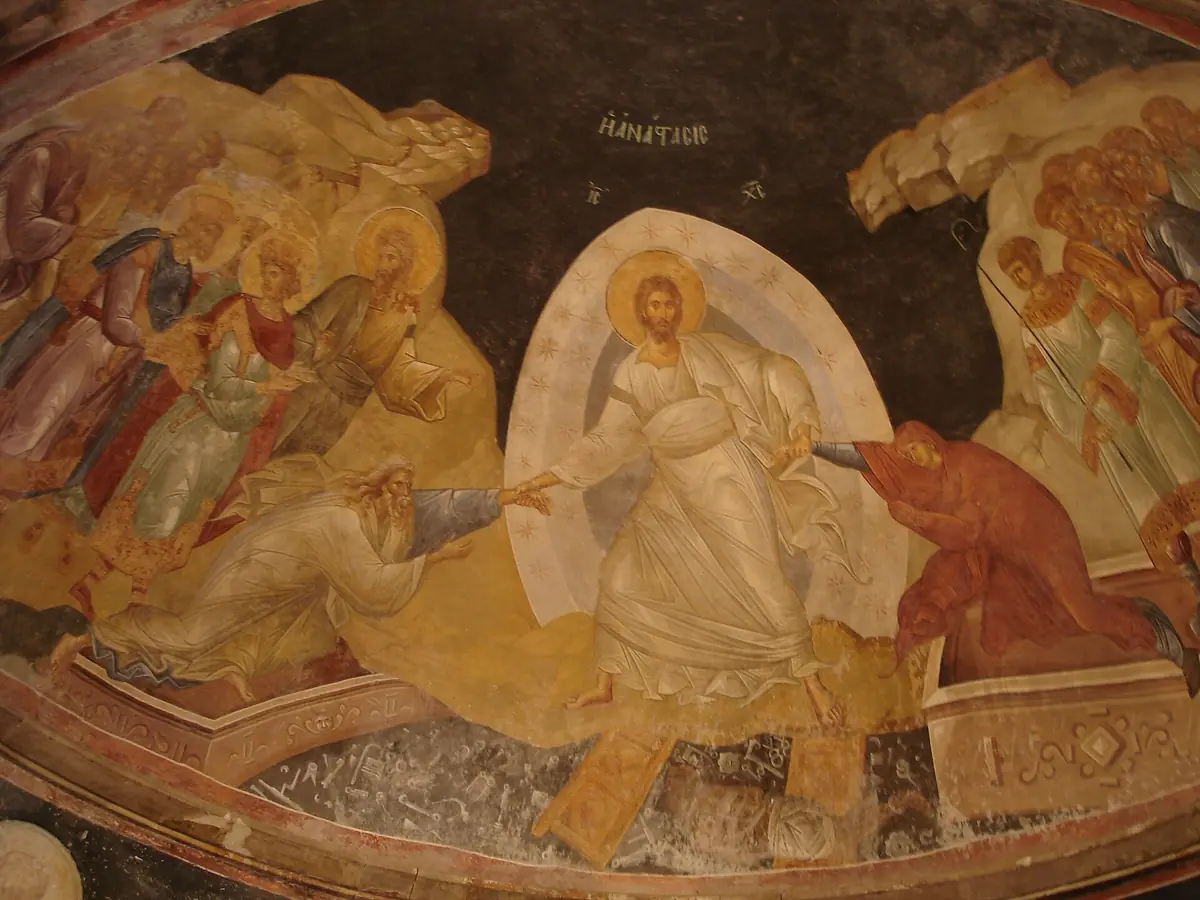
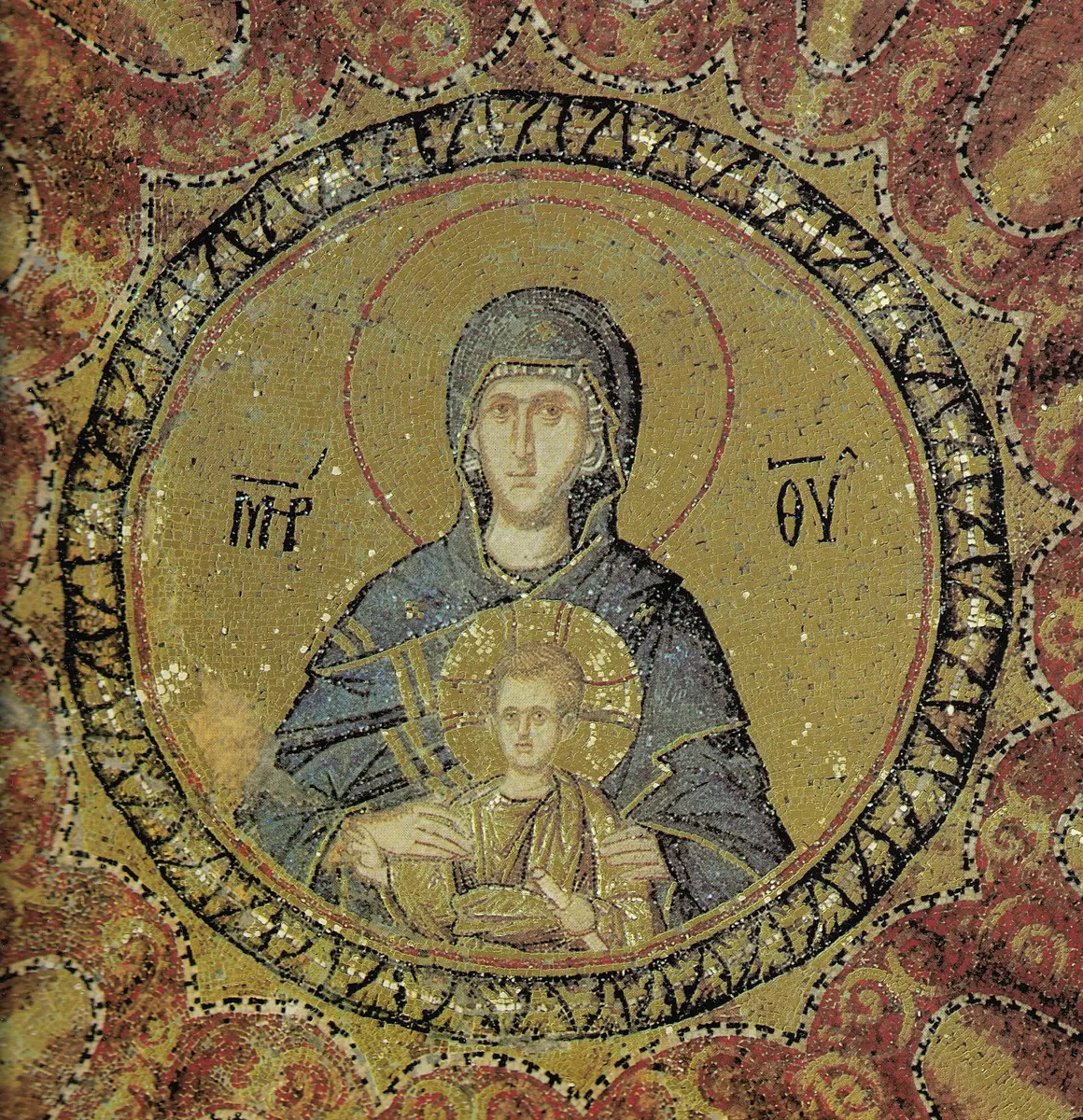
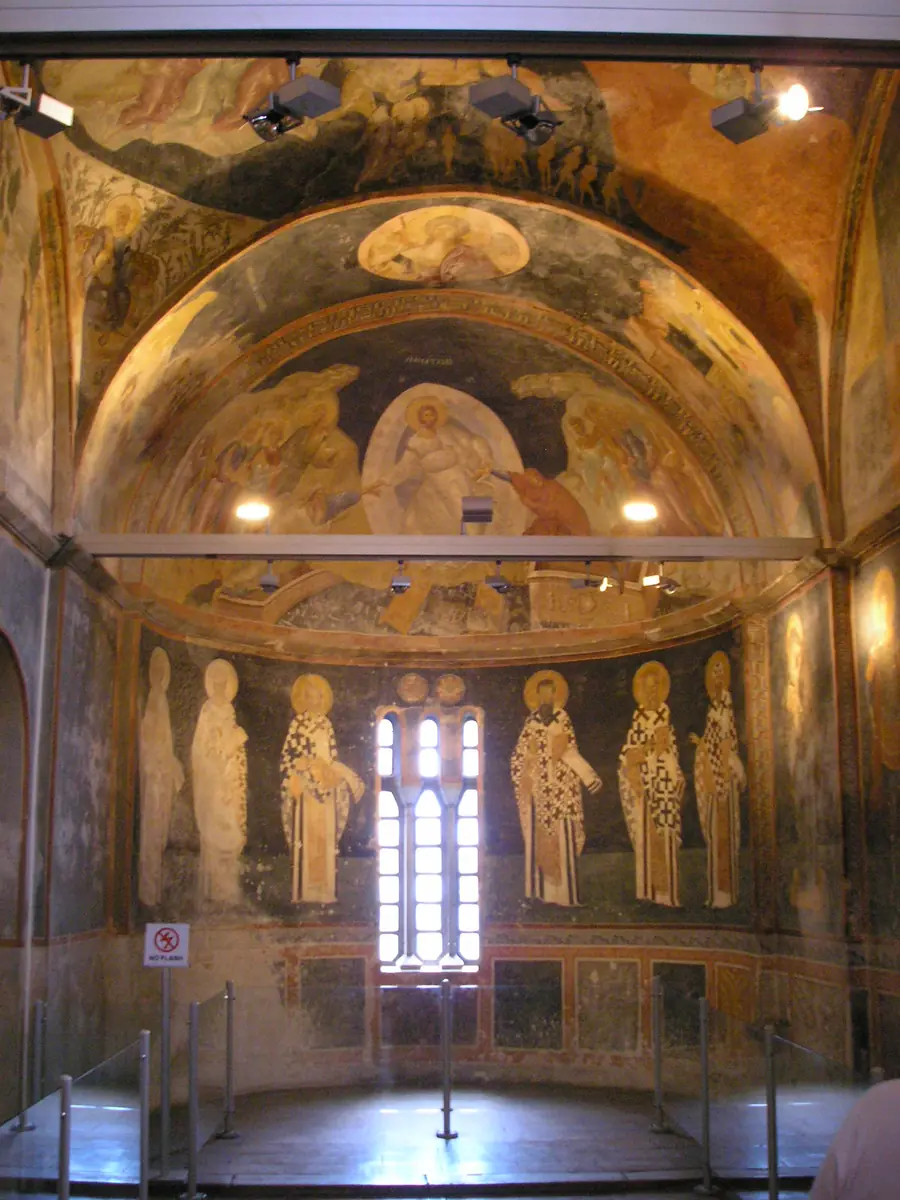
They tell the life of the Virgin and of Christ in cycles on the walls of the narthex and nave. In the side chapel, the parekklesion, the apse holds a fresco of the Anastasis, the resurrection, in which Christ lifts Adam and Eve from their tombs. Metochites appears in a mosaic over the door, offering a model of the church to Christ. After the Ottoman conquest the church was turned into a mosque, around 1511. In the twentieth century the Byzantine Institute of America cleaned and restored the mosaics, and the building opened as a museum.
Why it matters for a classical Christian student
The Anastasis fresco at Chora is the Orthodox image of Easter, in which Christ breaks the gates of death and raises Adam. A classical Christian student can read it beside the creed's line that he descended to the dead and rose again, and beside 1 Peter. Metochites is also a reminder that a scholar and statesman gave his wealth to a church. The virtues are generosity and humility before the work of God.
Look closely
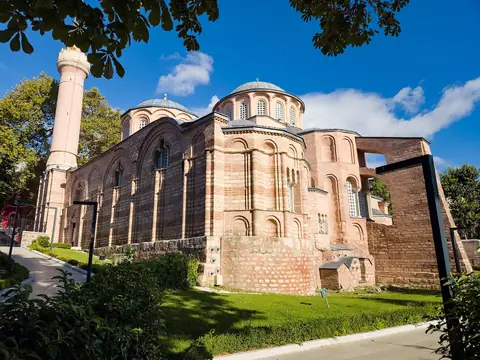
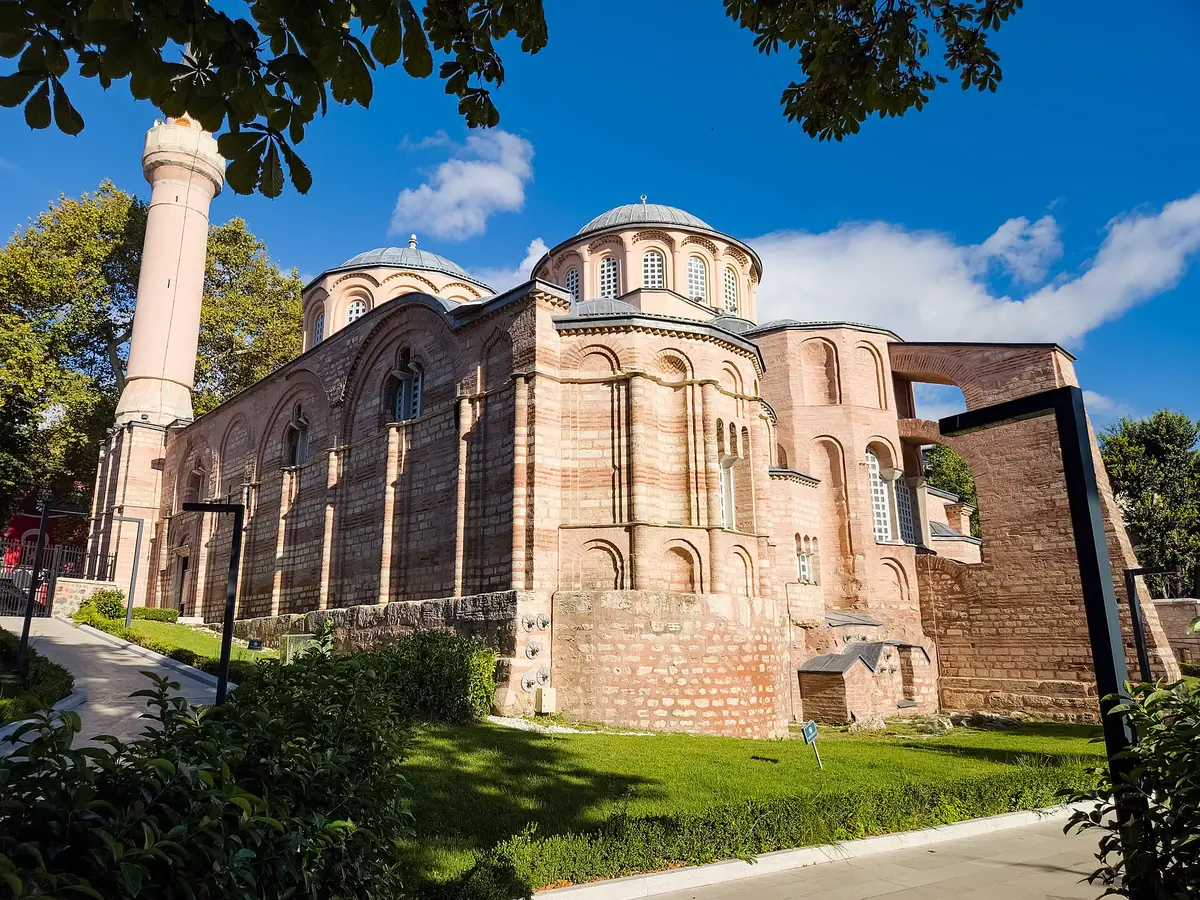
Image: Wikimedia Commons · Public domain The church today
Look closely. The exterior shows domes and courses of brick and stone, with a minaret added when the building became a mosque. The outer parts of the building were built at different times.
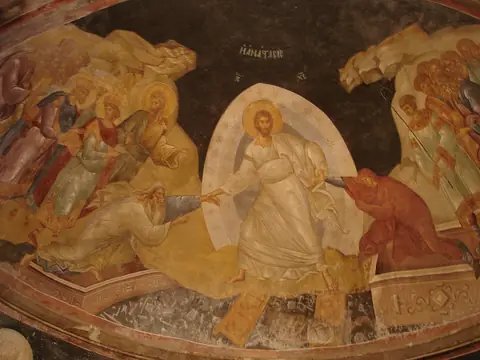
Image: Wikimedia Commons · Public domain The Anastasis fresco
Look closely. Christ pulls Adam and Eve from their tombs, with the broken gates of death beneath his feet. This fresco fills the apse of the side chapel and was painted in the early fourteenth century.
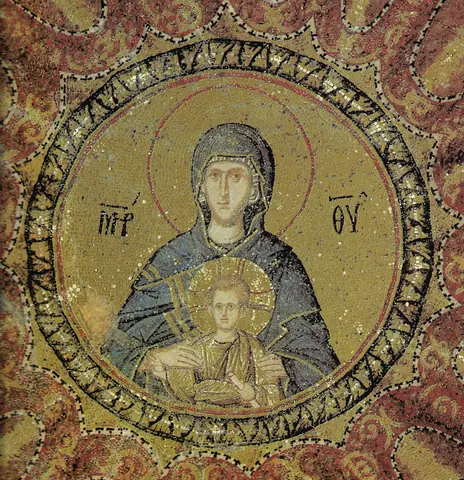
Image: Wikimedia Commons · Public domain (PD-Art) The Virgin and Child in a mosaic
Look closely. A mosaic of the Virgin and the Christ Child in a round frame. The gold background and the careful stone cubes give the figure a quiet dignity.
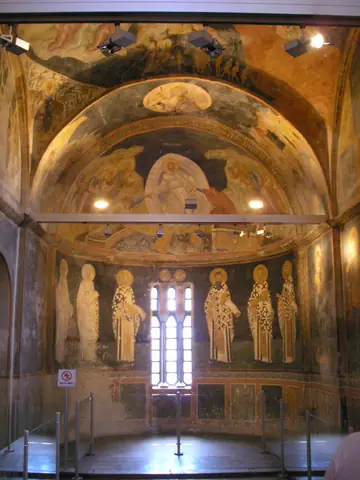
Image: Wikimedia Commons · Public domain The interior
Look closely. A view of the interior shows a vaulted space with painted figures standing on either side of a window, and the gold of mosaics above.


What to watch for
Look slowly- The Anastasis. Look at the way Christ takes Adam by the wrist.
- The donor mosaic. Metochites offers the church to Christ in the narthex.
- The life of the Virgin. The cycle begins with her birth and childhood.
- Changing use. Check the current rules before planning a visit.
Sources
Dates follow standard historical references and, where we quote a book, the wording of the edition hosted in this library. Where a tradition is not certain history, the page says so. Photographs and pictures are used only when the image itself is Public domain, CC0, or CC BY with a named credit. Each picture links to its source page with full licence details. Pictures taken before a site was damaged are labelled with their date.