Great Churches & Monasteries · Greece & Byzantium
Daphni Monastery
A small Byzantine church near Athens with a stern and majestic Christ in the dome.
Still standing. The monastery church stands, with its famous mosaics. A severe earthquake in 1999 closed the site for a long restoration.
What it is
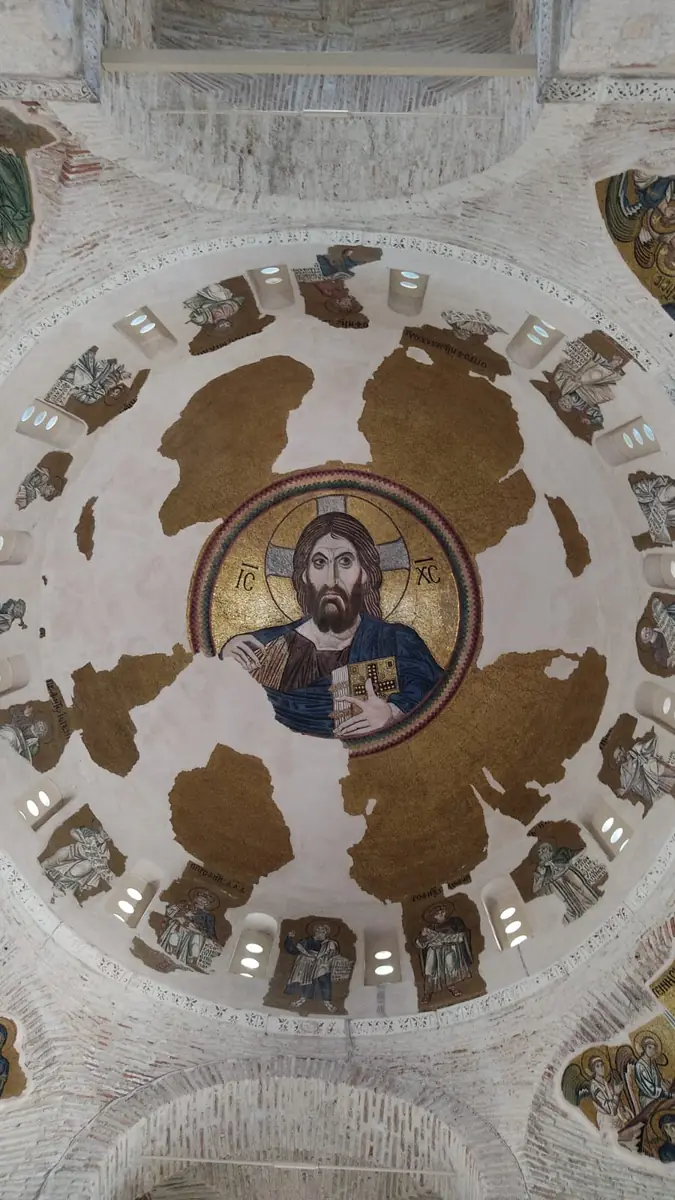
Daphni stands on the sacred way from Athens to Eleusis, on a spot where an old shrine of Apollo, whose sacred tree was the laurel (daphne), had stood. A church was built there in the sixth century, and in the eleventh century the Byzantines built a new monastery church with a dome on an octagonal plan. In its dome is a great bust of Christ Pantokrator, 'Ruler of All', surrounded by prophets, and below are scenes of the life of Christ and the Virgin, all in gold mosaic.
After the Fourth Crusade, in the early thirteenth century, the monastery was given to Cistercian monks from France. Their rule lasted until 1458. The Ottomans used the buildings for various purposes, and the monastery was damaged by the earthquake of 1999 and restored. It is on the World Heritage list with Hosios Loukas and Nea Moni of Chios. Visitors should check the current opening.
Why it matters for a classical Christian student
The Pantokrator at Daphni has shaped how many people picture Christ. The classical Christian student can read the mosaic with the creed in mind, because it shows the ruler of all and the one who judges and saves. The changing owners of the monastery, Greek monks and French Cistercians, also remind us of the divisions and wars within Christendom.
Look closely
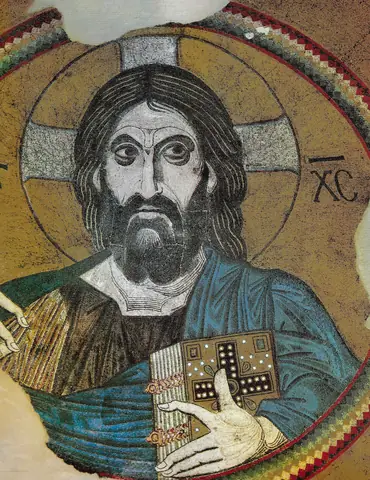
Image: Wikimedia Commons · Public domain (PD-Art) Christ Pantocrator in the dome
Look closely. A mosaic of Christ Pantocrator, the ruler of all, with a book in his left hand, fills the dome of the church. The face is large and stern. It is the best known work at Daphni.
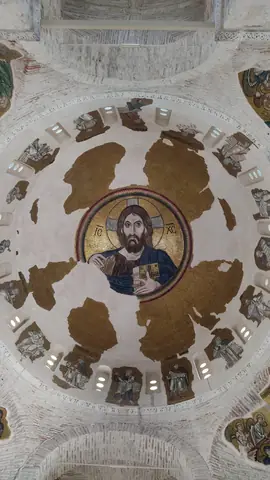
Image: Wikimedia Commons · CC0 (public domain) The dome from below
Look closely. The view from below shows the dome with the mosaic of Christ at its crown. Notice how much of the mosaic around it has been lost over the centuries.
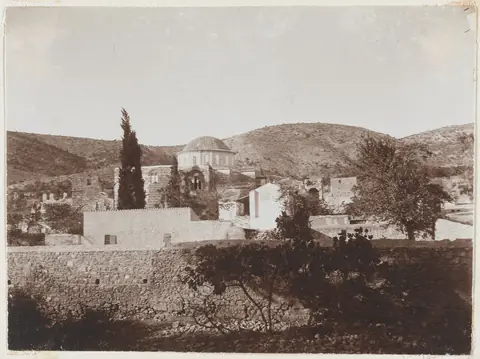
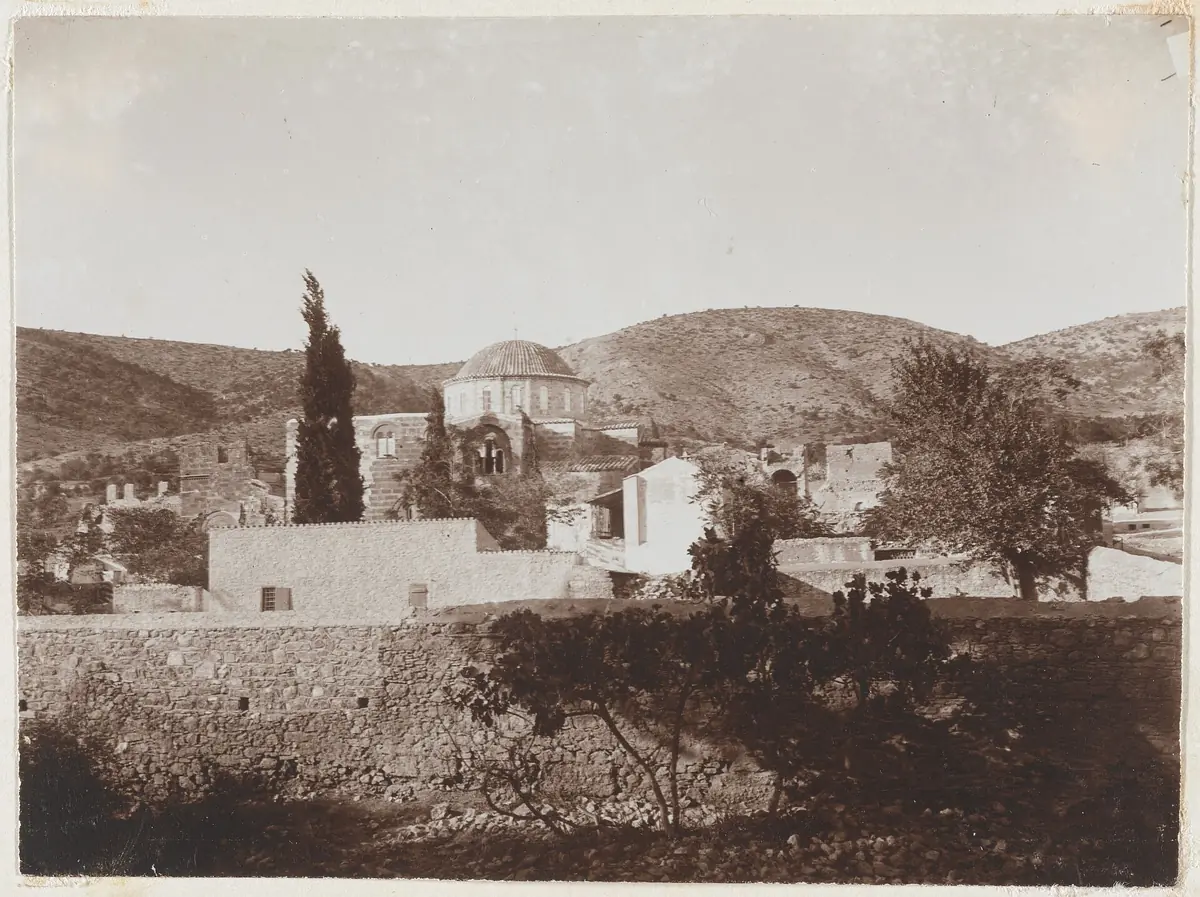
Image: Wikimedia Commons · CC0 (public domain) The monastery in 1898
Look closely. A photograph from 1898 shows the monastery in its landscape, among low hills with a few trees.
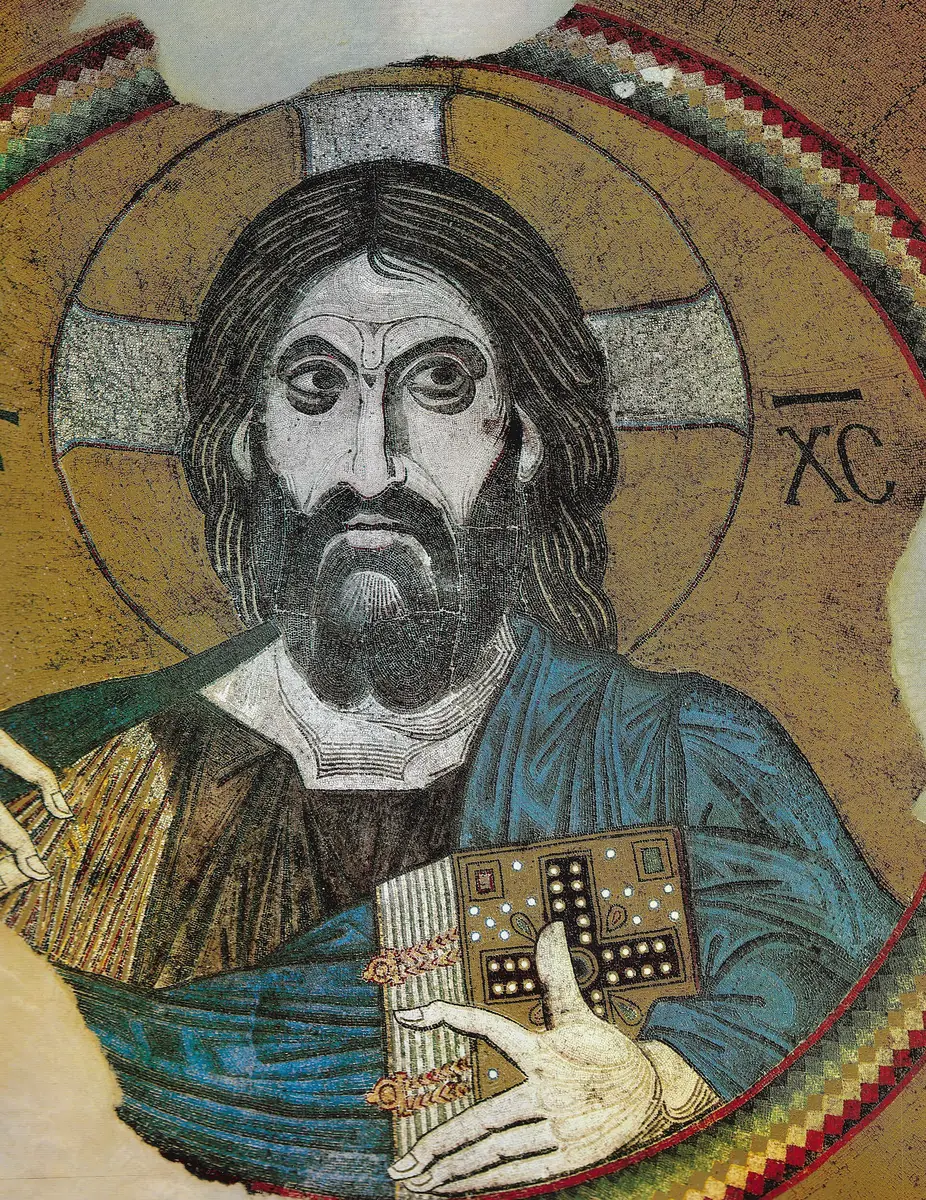


What to watch for
Look slowly- The face in the dome. Look at the eyes and the raised hand.
- The mosaic scenes. The Nativity, Baptism, Transfiguration, and Crucifixion are in the lower areas.
- Cistercian traces. The pointed arches in the narthex were added by the French monks.
- Restoration. The site's closure was long; notice how the work has been described.
Sources
Dates follow standard historical references and, where we quote a book, the wording of the edition hosted in this library. Where a tradition is not certain history, the page says so. Photographs and pictures are used only when the image itself is Public domain, CC0, or CC BY with a named credit. Each picture links to its source page with full licence details. Pictures taken before a site was damaged are labelled with their date.