Great Churches & Monasteries · Western Europe
Cluny Abbey
Once the largest church in Christendom, the abbey of Cluny survives only as a fragment of its great church.
In ruins. Most of the abbey was destroyed after the French Revolution, when its great church was sold and pulled down for stone. Parts of the south transept and some buildings remain.
Monte Cassino · Durham Cathedral
What it is
In 910 William, Duke of Aquitaine, gave land at Cluny to a community of monks, and placed them directly under the pope instead of under a local bishop or lord. Under a line of long-lived abbots, Odo, Odilo, and Hugh of Semur, Cluny became the head of a network of hundreds of monasteries that followed its customs, with a splendid round of daily worship. Its monks were known for the length and beauty of their liturgy and for their charity to the poor.
Abbot Hugh began the third church, called Cluny III, in 1088. It was consecrated in 1130 by Pope Innocent II and was the largest church in Christendom until the rebuilding of St Peter's in Rome. Bernard of Clairvaux, writing about 1125, criticized the wealth of the Cluniac houses and called for simpler monasteries and championed the plainer way of the Cistercians. The abbey was sold after the Revolution, and by 1823 most of the church had been pulled down for stone. Part of the south transept remains.
“Idleness is the enemy of the soul.”
Why it matters for a classical Christian student
Cluny asks a question that Christians have asked many times: how much splendor is fitting for the worship of God? The monks of Cluny believed in giving the best to God, and Bernard believed in plain strength. The classical Christian student can read both sides, and also learn from the long reform movement that came from this house. The virtue to notice is the balance of beauty and simplicity.
Read alongside
- The Rule of St Benedict: The Rule that the Cluniac monks followed.
Great Lives connected here
- Benedict of Nursia, in Great Lives: Cluny lived under Benedict's Rule and made its observance the center of its reform.
- Bernard of Clairvaux, in Great Lives: Bernard criticized the splendor of Cluniac houses and championed the plainer Cistercian life.
Look closely
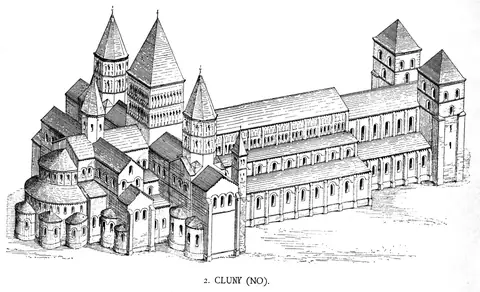
Image: Wikimedia Commons · Public domain (PD-Art) The abbey church of Cluny reconstructed
Look closely. A reconstruction drawing shows the great abbey church with its long nave, two transepts, many towers and a ring of chapels around the east end. Compare it with the fragment that survives.
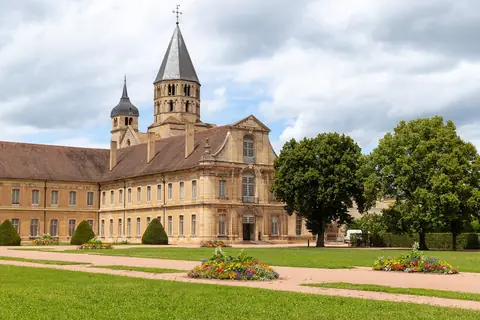
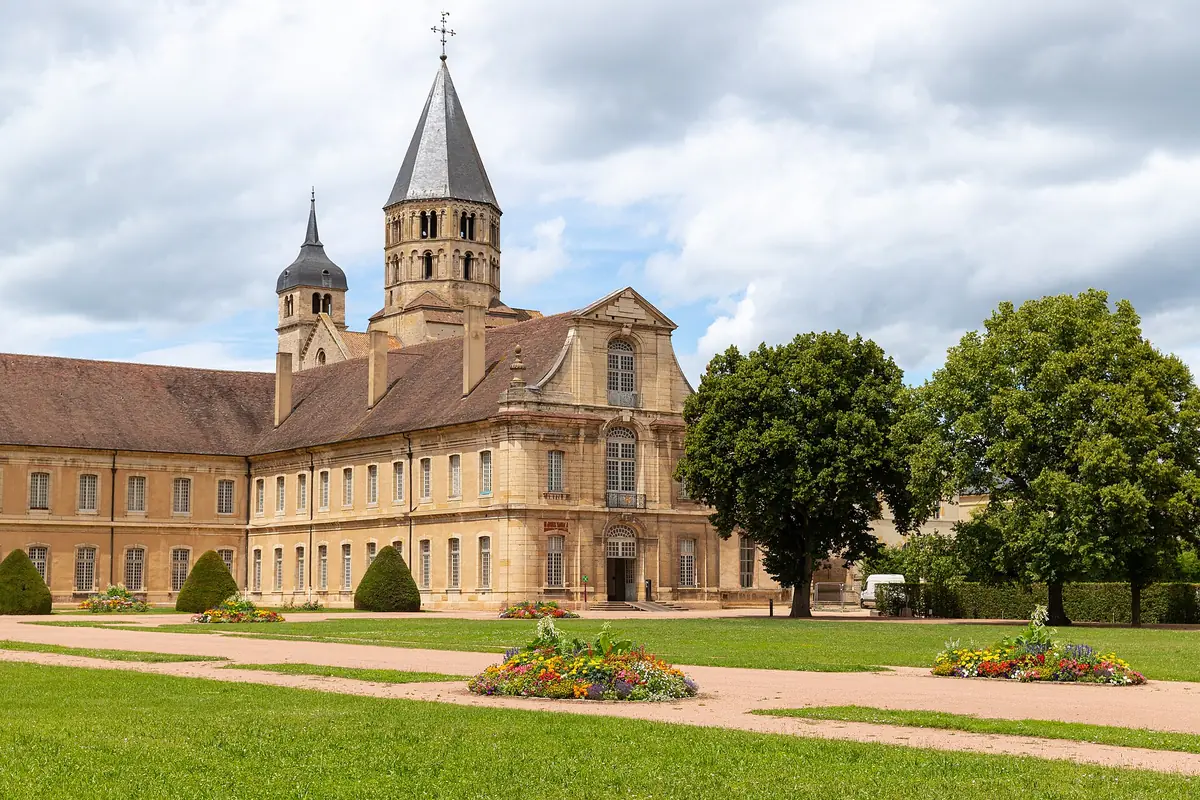
Image: Wikimedia Commons · CC BY 2.0 · Photo: dronepicr The surviving transept
Look closely. The one remaining arm of the great church's transept stands with an octagonal tower. The rest of the building was pulled down after the French Revolution.
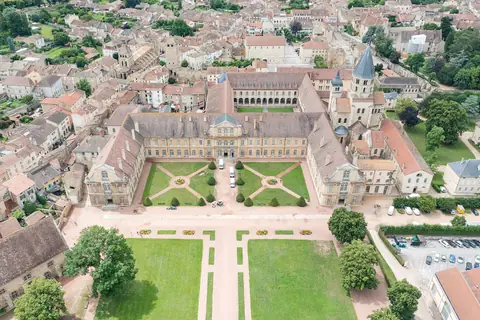
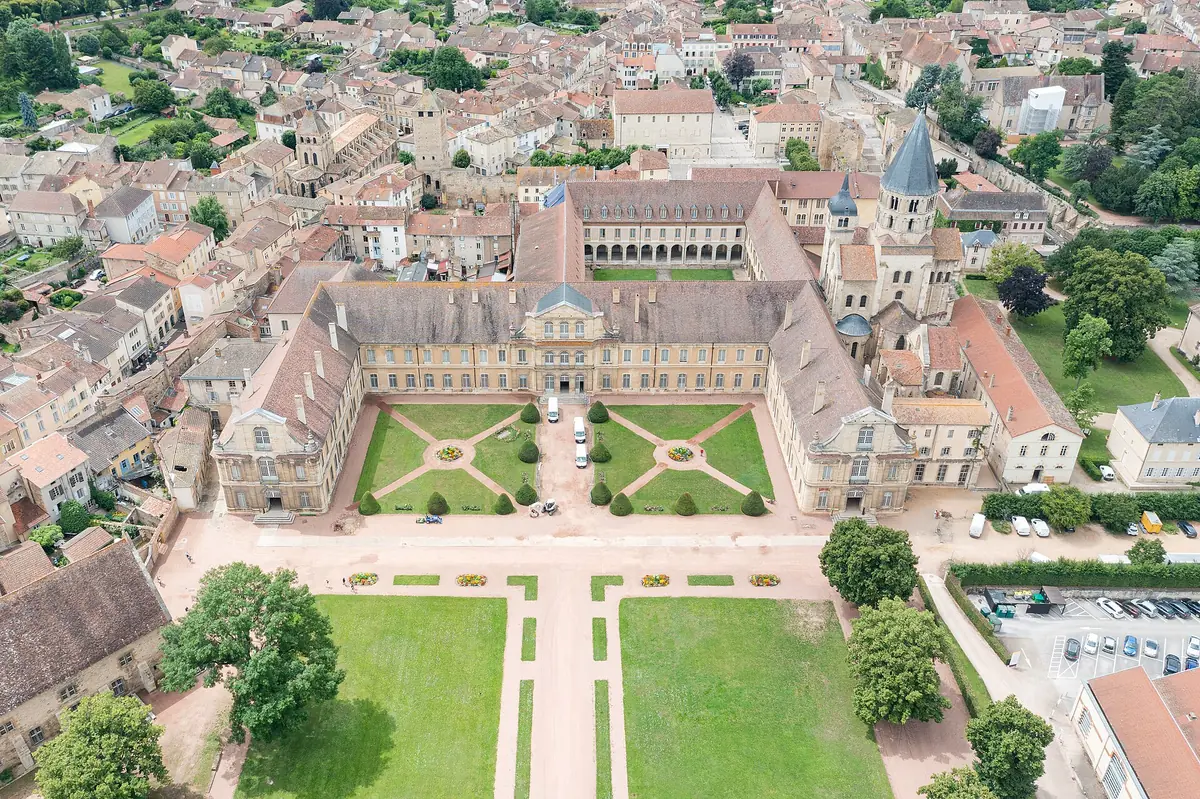
Image: Wikimedia Commons · CC BY 2.0 · Photo: dronepicr Cluny from the air
Look closely. From above you can see the buildings that remain of the monastery. Much of the great church stood on ground that is now open.
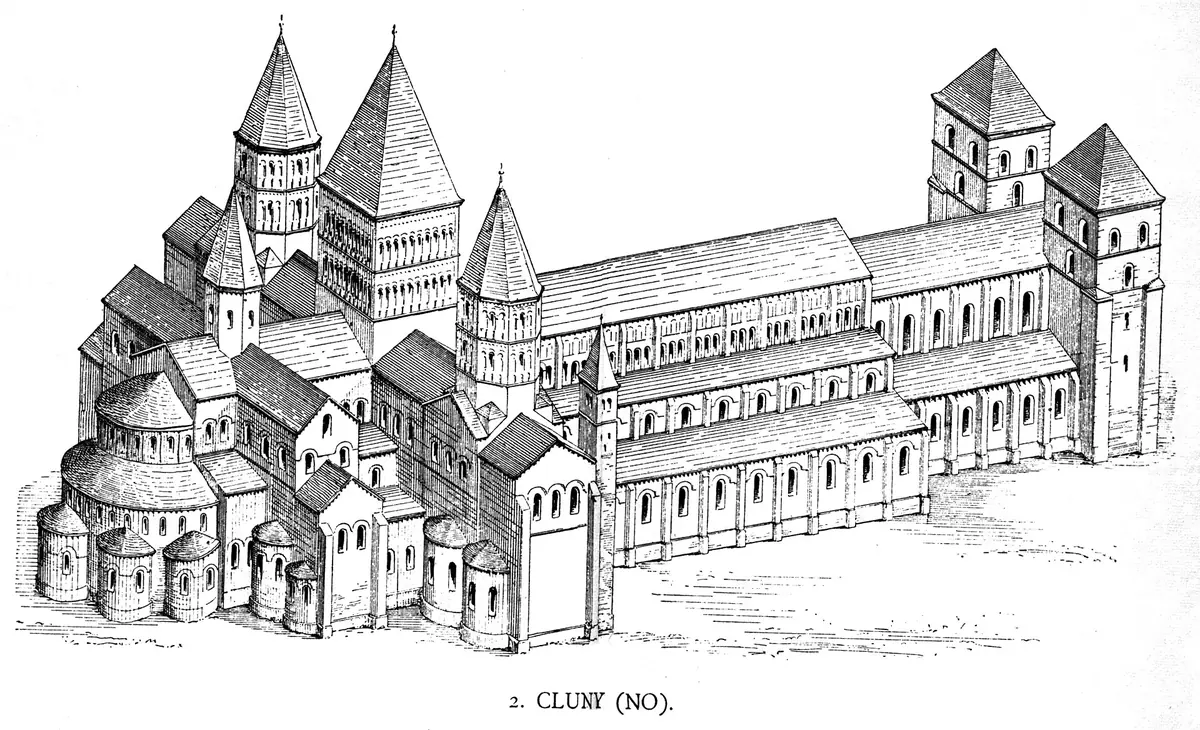


What to watch for
Look slowly- The surviving transept. It gives a sense of the height of the old church.
- The tower. The Clocher de l'Eau-Bénite rises over the transept.
- The plan. Look at a drawing of the old church to see how large it was.
- The two views. Compare the Cluniac and Cistercian approaches to beauty.
Sources
Dates follow standard historical references and, where we quote a book, the wording of the edition hosted in this library. Where a tradition is not certain history, the page says so. Photographs and pictures are used only when the image itself is Public domain, CC0, or CC BY with a named credit. Each picture links to its source page with full licence details. Pictures taken before a site was damaged are labelled with their date.