Great Churches & Monasteries · Western Europe
Canterbury Cathedral
The mother church of English Christianity, where Augustine landed, Becket fell, and pilgrims came for centuries.
Still standing. The cathedral stands and is the mother church of the Church of England and the Anglican Communion. The shrine of Thomas Becket, destroyed in 1538, is marked by a candle and an empty space.
Westminster Abbey · Durham Cathedral
What it is
In 597 Augustine, sent by Pope Gregory the Great, landed in Kent with a band of monks. King Æthelberht of Kent, whose Frankish queen Bertha already worshiped in the Roman church of St Martin outside the city, received them and was baptized. Augustine was given a church in Canterbury, which became his cathedral, and a monastery nearby. The Norman archbishop Lanfranc rebuilt the cathedral after a fire in 1067, and Anselm and others enlarged the church. After another fire in 1174, William of Sens rebuilt the choir in the new Gothic style.
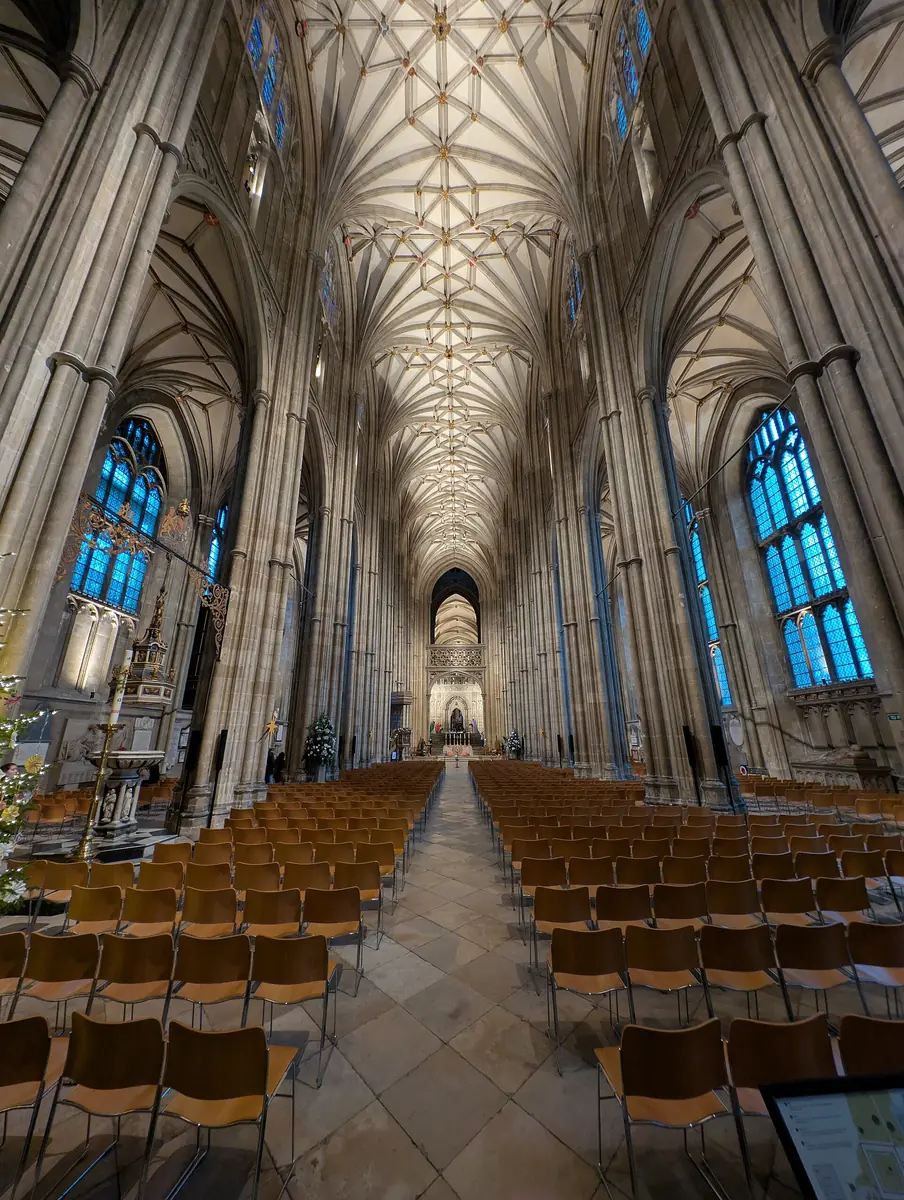
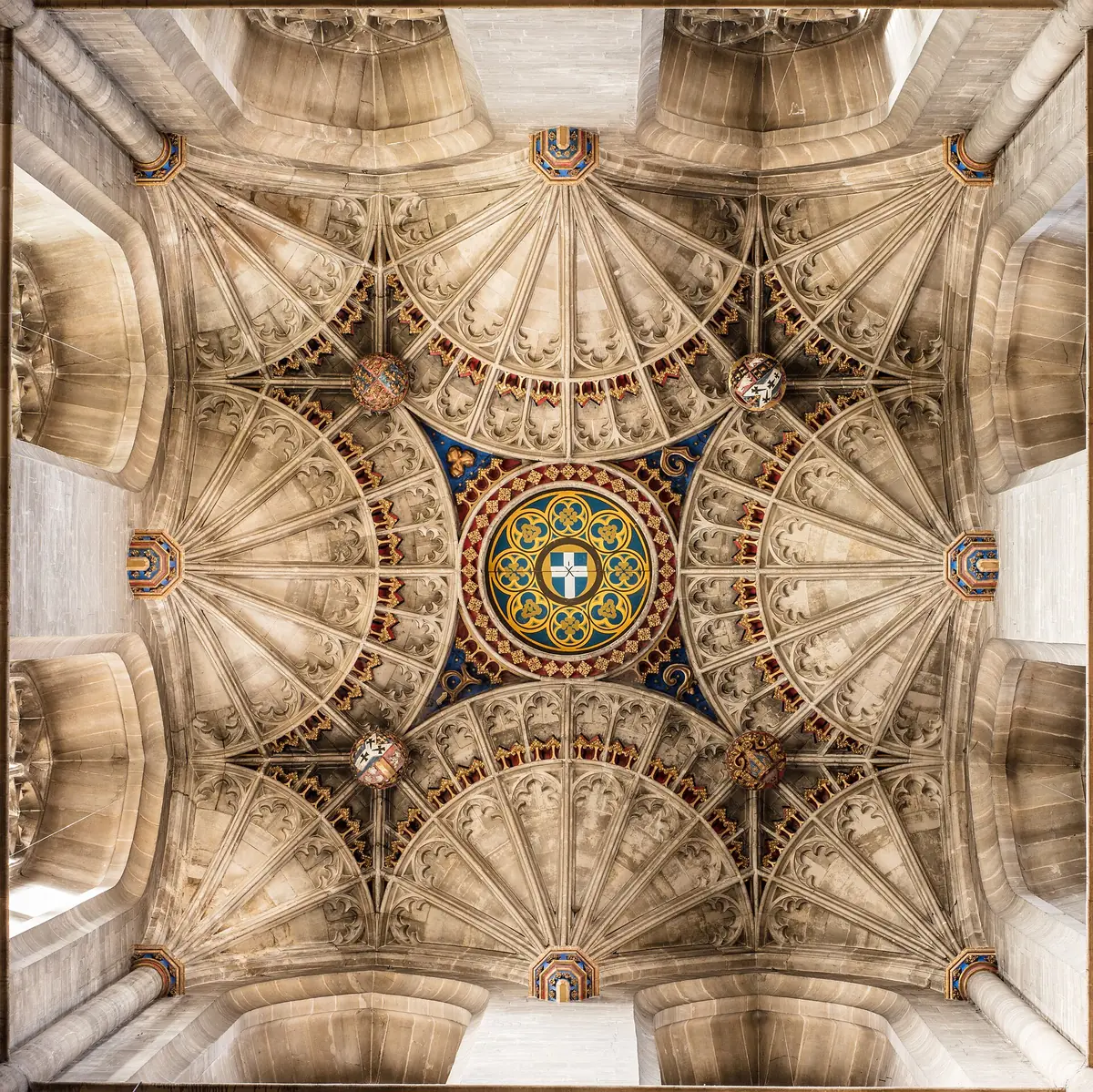
On 29 December 1170 four knights of Henry II killed Archbishop Thomas Becket in the north-west transept, and soon pilgrims came to his tomb. Chaucer's pilgrims are on their way to it. Henry II did penance at the shrine in 1174. Henry VIII's commissioners destroyed the shrine in 1538 and Becket's name was struck from the books. The nave was rebuilt in the late fourteenth century in the Perpendicular style, and the central tower, called Bell Harry, was finished in the 1490s. The cathedral was damaged by bombing in 1942.
“There was on the east side of the city, a church dedicated of old to the honour of St. Martin”
Why it matters for a classical Christian student
Canterbury tells the whole story of English Christianity: a mission from Rome, a martyr who defied a king, a pilgrimage, and the break of the Reformation. A classical Christian student can read the same place with Bede, with the accounts of Becket's death, and with Chaucer. The virtues to notice are courage in the case of Becket and humility in the case of the king. The student should also consider how the English church was reformed and how different Christians have remembered those events.
Read alongside
- Ecclesiastical History of the English People: Bede tells of Augustine's mission and the first church of Canterbury.
- St. Thomas Becket and the Canterbury Miracles: Edward Grim, who was present, and Benedict of Peterborough tell of Becket's death and the miracles at his tomb.
- The Canterbury Tales: Chaucer's pilgrims are bound for Canterbury.
Great Lives connected here
- Gregory the Great, in Great Lives: Gregory the Great sent Augustine and his companions to England in 596.
- Thomas Becket, in Great Lives: Becket was murdered in the cathedral on 29 December 1170, and his shrine drew pilgrims for 350 years.
- Henry II of England, in Great Lives: Henry II did public penance at Becket's tomb in 1174.
- Anselm of Canterbury, in Great Lives: Anselm was archbishop of Canterbury from 1093 to 1109.
- Stephen Langton, in Great Lives: Stephen Langton, archbishop from 1207, presided at the translation of Becket's relics in 1220.
- Thomas Cranmer, in Great Lives: Cranmer was archbishop of Canterbury from 1533 until his deposition in 1553 and death in 1556.
- Henry VIII, in Great Lives: Henry VIII ordered the destruction of Becket's shrine in 1538.
- Geoffrey Chaucer, in Great Lives: Chaucer's Canterbury Tales tells of pilgrims on their way to Becket's shrine.
Look closely
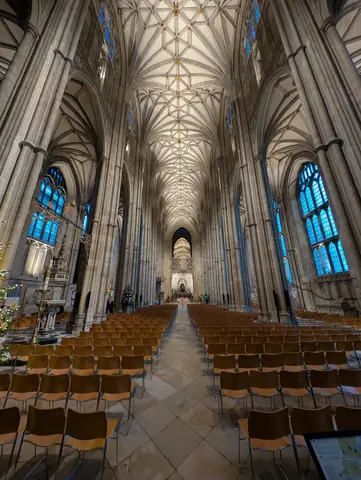
Image: Wikimedia Commons · CC0 (public domain) The nave
Look closely. The nave was rebuilt in the late fourteenth century in the Perpendicular style, with tall, slender piers and a lofty vault. Notice how the lines draw the eye up and to the east.
In the library: Thomas Becket, in Great Lives
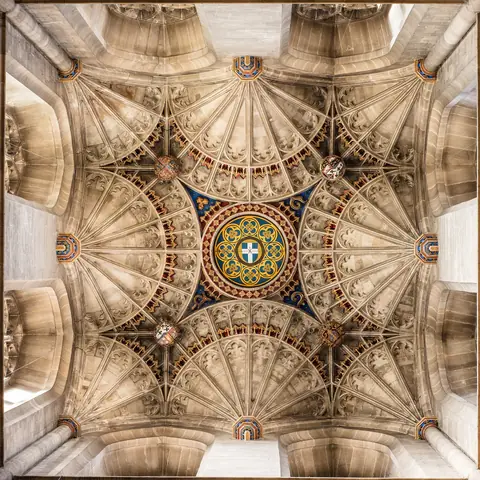
Image: Wikimedia Commons · CC0 (public domain) The vault under Bell Harry
Look closely. Looking up into the central tower, the fan vault of the crossing spreads like a star. The tower was finished in the 1490s.
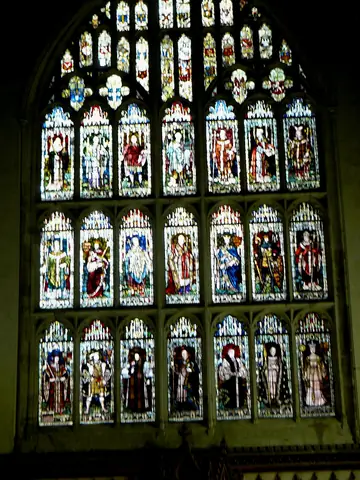
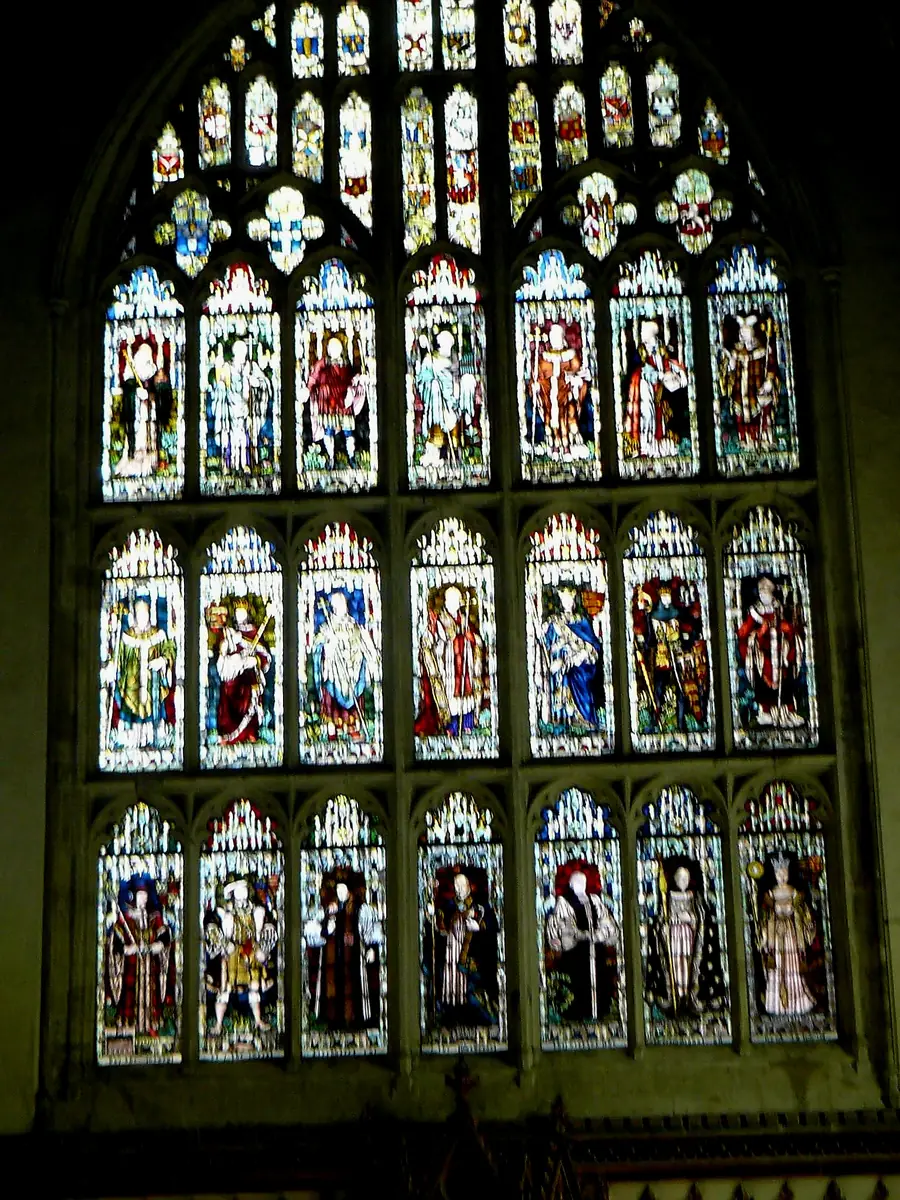
Image: Wikimedia Commons · CC0 (public domain) A stained glass window
Look closely. A large window is filled with rows of figures in colored glass. Stained glass in the cathedral includes windows from the twelfth and thirteenth centuries that tell the story of Becket's miracles.
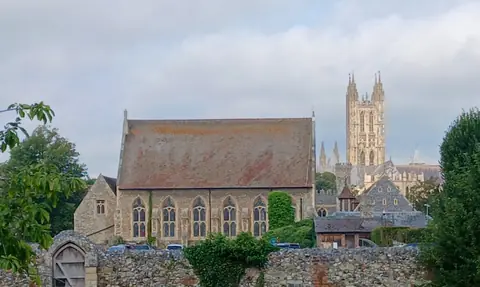
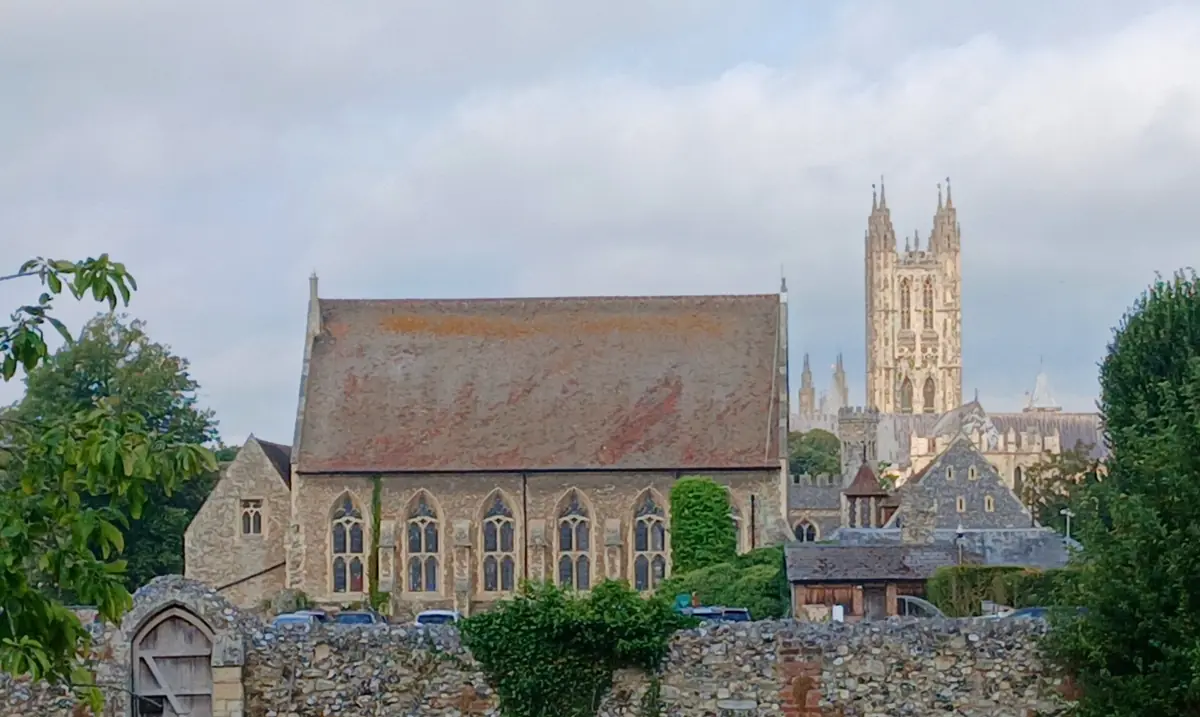
Image: Wikimedia Commons · CC0 (public domain) The cathedral towers over the city
Look closely. The towers of the cathedral rise behind the older buildings of the city. Notice how the church dominates the town.


What to watch for
Look slowly- The place of the martyrdom. A memorial marks the spot in the north-west transept.
- The Trinity Chapel. The empty place of Becket's shrine lies behind the high altar.
- The stained glass. Some windows from the thirteenth century tell Becket's miracles.
- Bell Harry. The central tower was built in the late fifteenth century.
Sources
Dates follow standard historical references and, where we quote a book, the wording of the edition hosted in this library. Where a tradition is not certain history, the page says so. Photographs and pictures are used only when the image itself is Public domain, CC0, or CC BY with a named credit. Each picture links to its source page with full licence details. Pictures taken before a site was damaged are labelled with their date.