Great Churches & Monasteries · Greece & Byzantium
Hosios Loukas
A Byzantine monastery in the Greek mountains with some of the finest golden mosaics of the eleventh century.
Still standing. The monastery stands, with its two main churches and their mosaics. The original dome decoration has been lost.
Daphni Monastery · Chora Church
What it is
Luke of Steiris, a hermit who died about 953, was revered in his lifetime for his holiness and his gifts of prophecy. His disciples built a monastery around his tomb in the hills of central Greece, and in the early eleventh century they raised the great church, the Katholikon, beside a smaller church of the Virgin. The building has a plan with a dome on eight piers, galleries, and marble-clad walls. Its interior is covered with gold mosaics of Christ, the Virgin, the apostles, and saints.
The mosaics and frescoes belong to the art of the Macedonian period of the Byzantine empire. The original mosaic in the dome was lost in an earthquake, but mosaics of the Virgin, saints, and scenes from the Passion survive on the walls and in the narthex. A crypt beneath the church holds the saint's tomb and frescoes. The monastery was damaged and repaired over the centuries and is now home to a small community and visited by pilgrims.
Why it matters for a classical Christian student
Hosios Loukas is a place to learn that Christian art from Byzantium aims at the presence of the saints more than at likeness. A classical Christian student can ask what it means to depict Christ in gold and to treat the walls of a church as a book. The virtue is reverent beauty. The founder, a simple hermit, is a reminder that the great mosaics honor a man known for humility and prayer.
Look closely
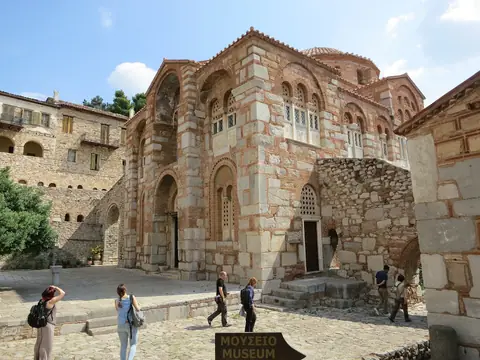
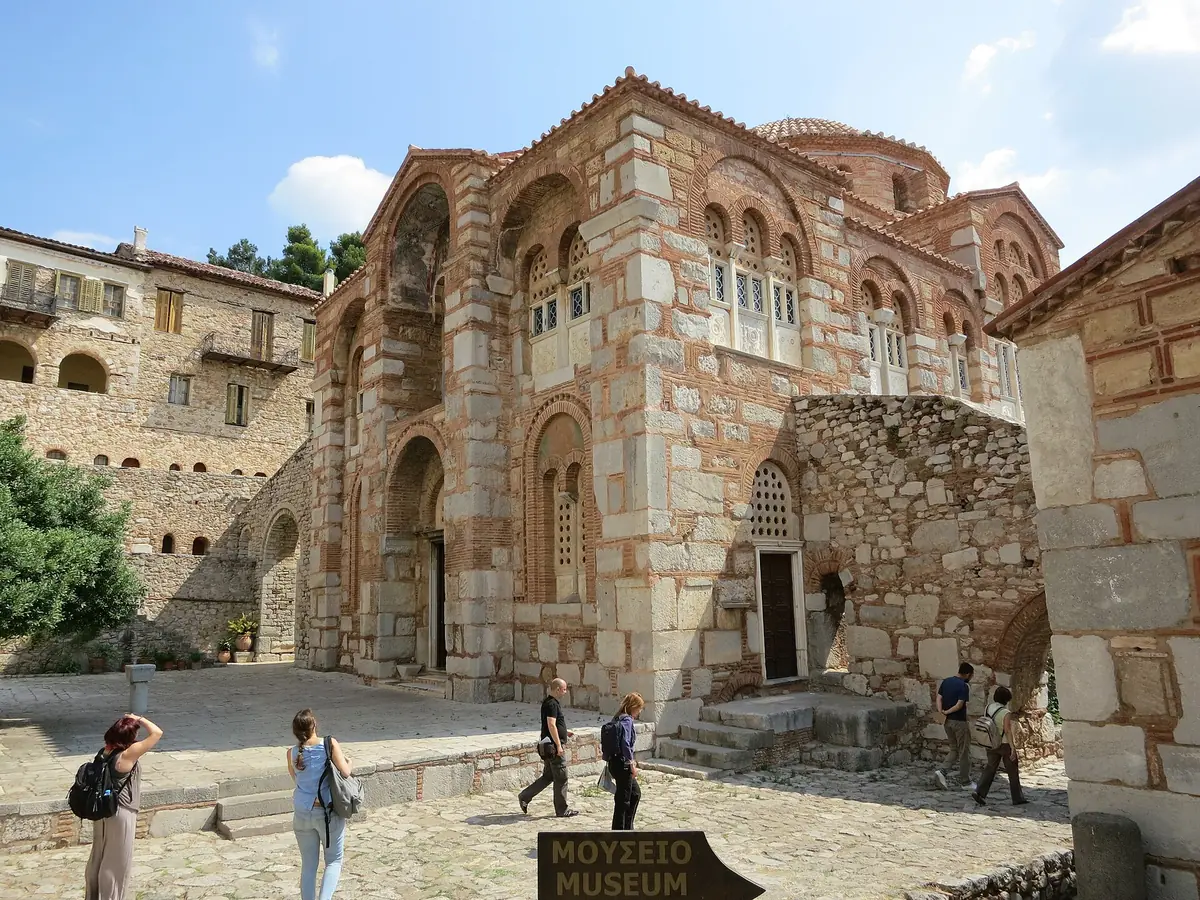
Image: Wikimedia Commons · CC BY 2.0 · Photo: bradhostetler The two churches
Look closely. A view from the courtyard shows the outer walls of the church, built in courses of stone and brick, with arched windows and carved stone details. Two churches stand side by side here, the Theotokos church and the katholikon, which holds the tomb of Saint Luke.
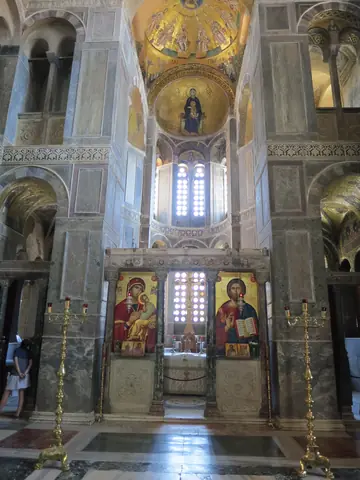
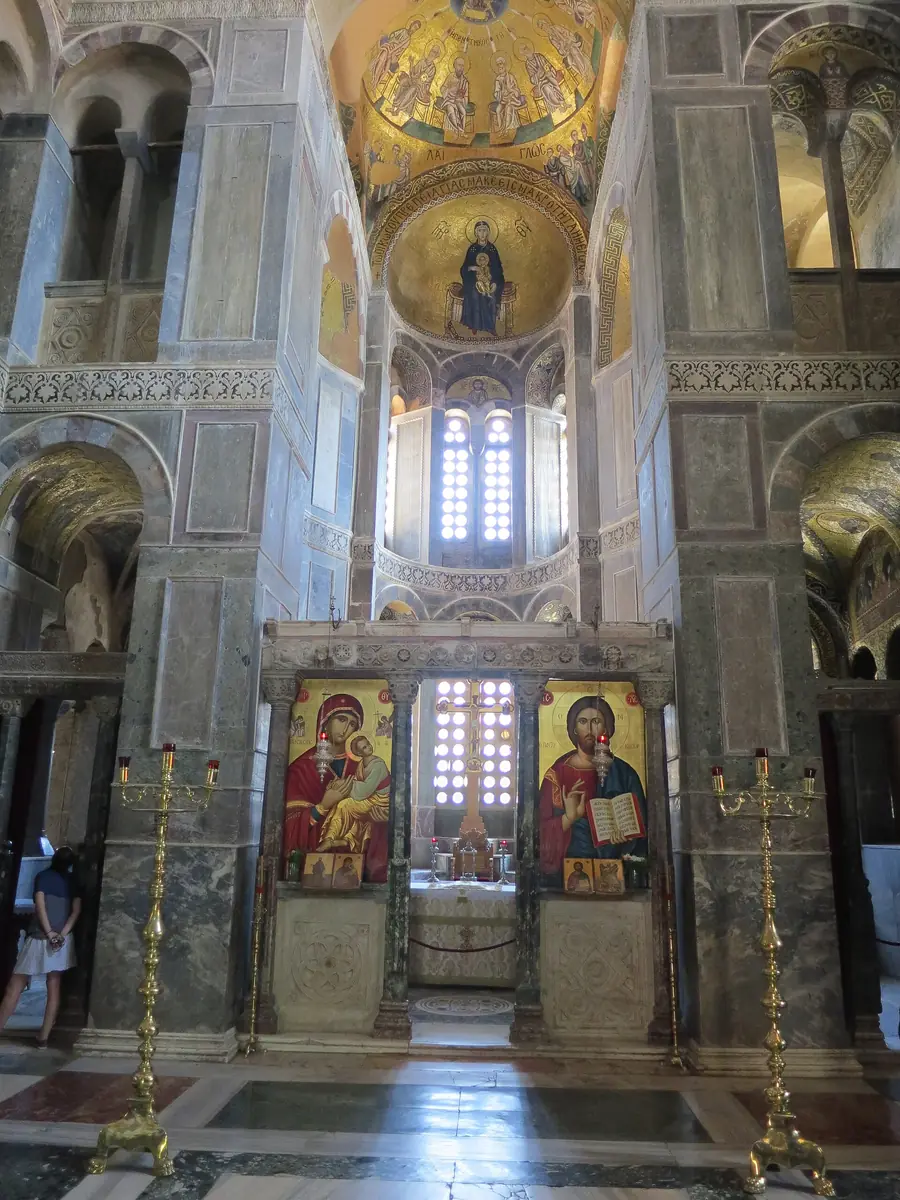
Image: Wikimedia Commons · CC BY 2.0 · Photo: bradhostetler The interior of the katholikon
Look closely. The interior of the katholikon is lined with marble below and decorated with gold mosaics above. Notice the screen of icons in front of the sanctuary and the gold of the apse beyond.
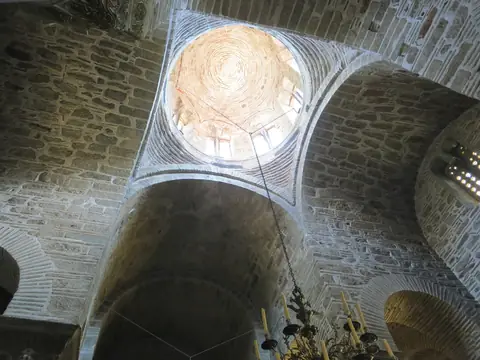
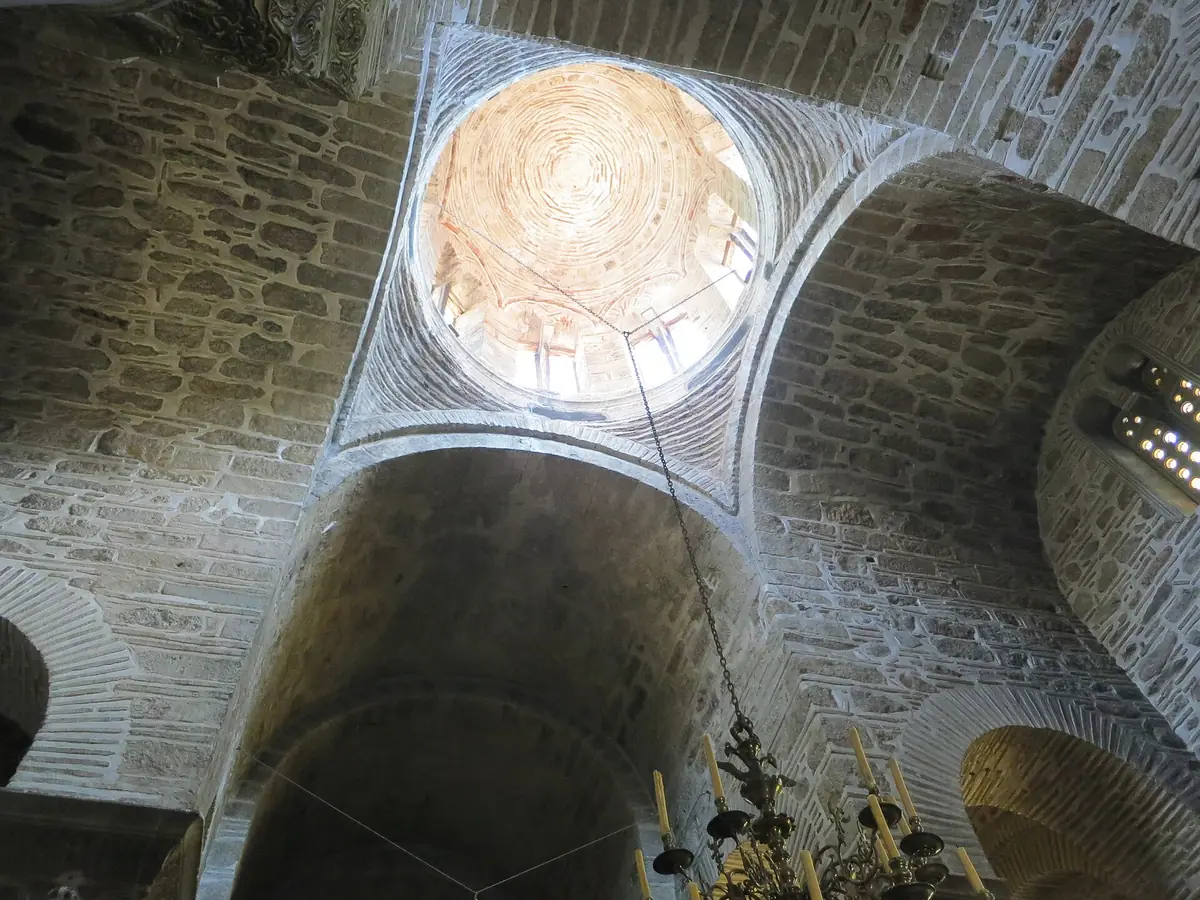
Image: Wikimedia Commons · CC BY 2.0 · Photo: bradhostetler The dome
Look closely. Looking up, the dome rests on arches over the crossing of the church, and light comes in through the ring of windows at its base.
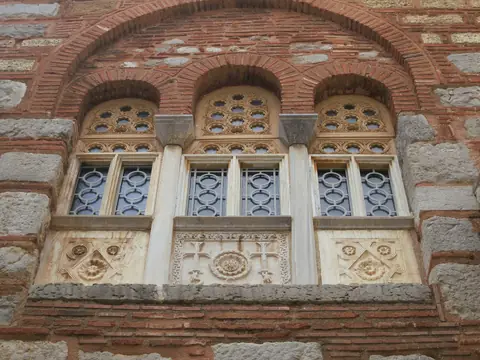
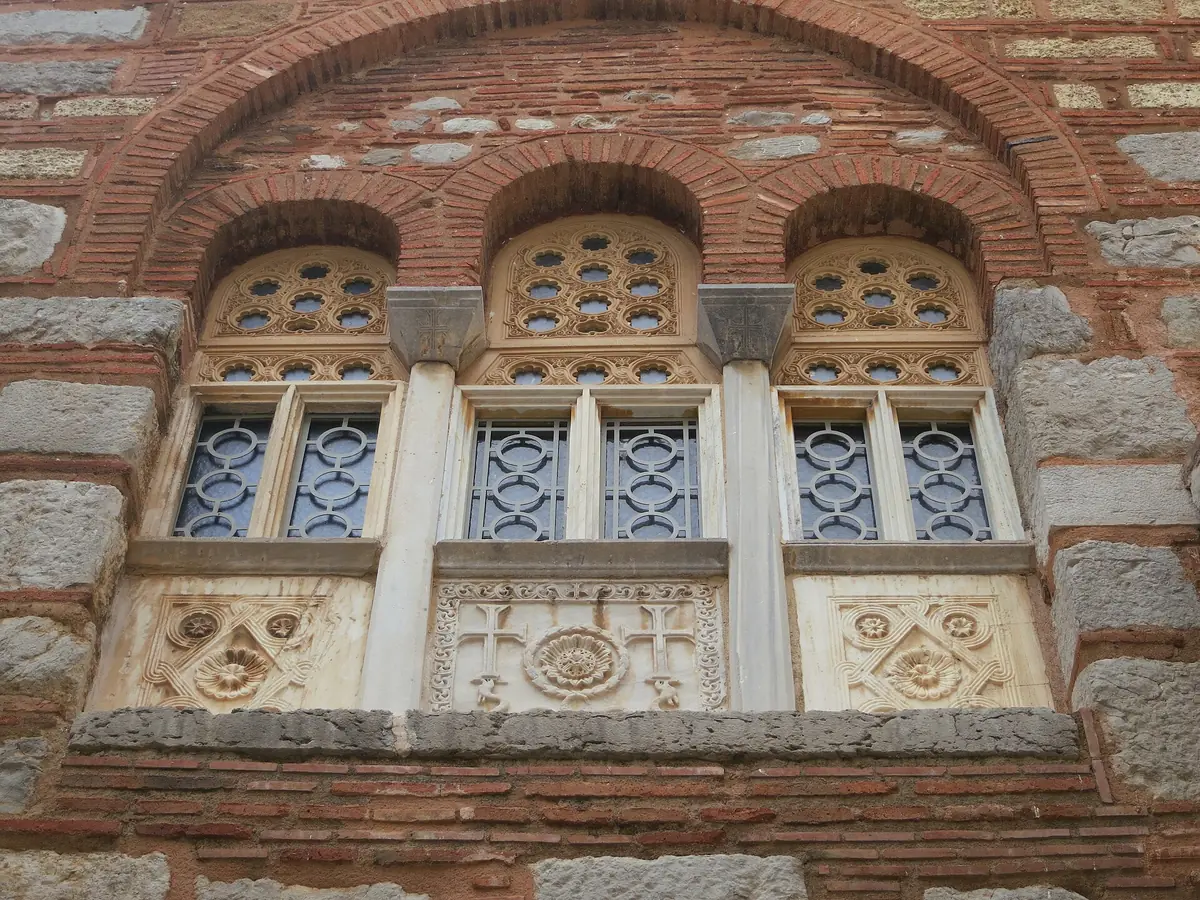
Image: Wikimedia Commons · CC BY 2.0 · Photo: bradhostetler A triple window
Look closely. A window with three openings, framed by arches of brick and decorated with panels of carved stone. The pattern of brick and stone is distinctive.


What to watch for
Look slowly- The gold tesserae. Notice how the light moves across the mosaic surface.
- The Katholikon and the small church. The two buildings stand side by side.
- The crypt. The frescoes and the saint's tomb are below.
- The lost dome. Think about what the original dome mosaic would have shown.
Sources
Dates follow standard historical references and, where we quote a book, the wording of the edition hosted in this library. Where a tradition is not certain history, the page says so. Photographs and pictures are used only when the image itself is Public domain, CC0, or CC BY with a named credit. Each picture links to its source page with full licence details. Pictures taken before a site was damaged are labelled with their date.