Great Churches & Monasteries · Holy Land & Middle East
Geghard Monastery
A monastery cut partly out of a cliff in an Armenian gorge, named for the spear said to have wounded Christ.
Still standing. The monastery stands and is still used for worship. Part of it is cut out of a cliff face, and it has been repaired many times.
Etchmiadzin Cathedral · Lalibela
What it is
Geghard, 'the spear', takes its name from a relic that was kept here for centuries, the spear said to have pierced the side of Jesus at the cross. According to tradition it was brought to Armenia by the apostle Thaddeus. It is now in the museum of the cathedral at Etchmiadzin. The monastery was reportedly founded in the fourth century by Gregory the Illuminator beside a sacred spring in a cave, and it was burned by raiders in the tenth century and rebuilt.
The main church, the Kathoghike, was built in 1215 under the princes Zakare and Ivane Zakarian. Beyond it, chapels and tombs are carved out of the mountain, with domes, columns, and carved crosses cut into the living rock, and dated by inscriptions to the thirteenth century. The walls of the site are covered with khachkars, the memorial crosses that the Armenian church carved by the thousand. The monastery and the upper Azat Valley are on the World Heritage list.
Why it matters for a classical Christian student
The cut-rock chapels of Geghard show that Armenian craftsmen worked in stone with great skill and with an eye for the sacred. The student should compare it with Lalibela, where Ethiopian craftsmen did something similar, and with other cave churches. The virtue to notice is the labor of faith offered to God in difficult and hard materials. The relic of the spear also prompts a question about the way Christians have remembered Christ's sufferings in objects.
Look closely
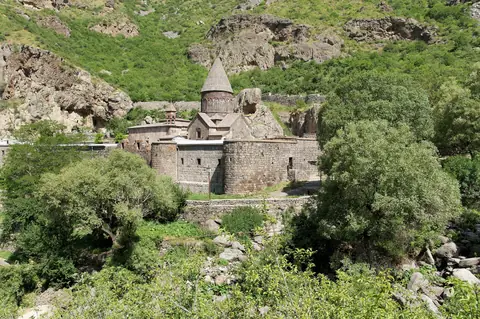
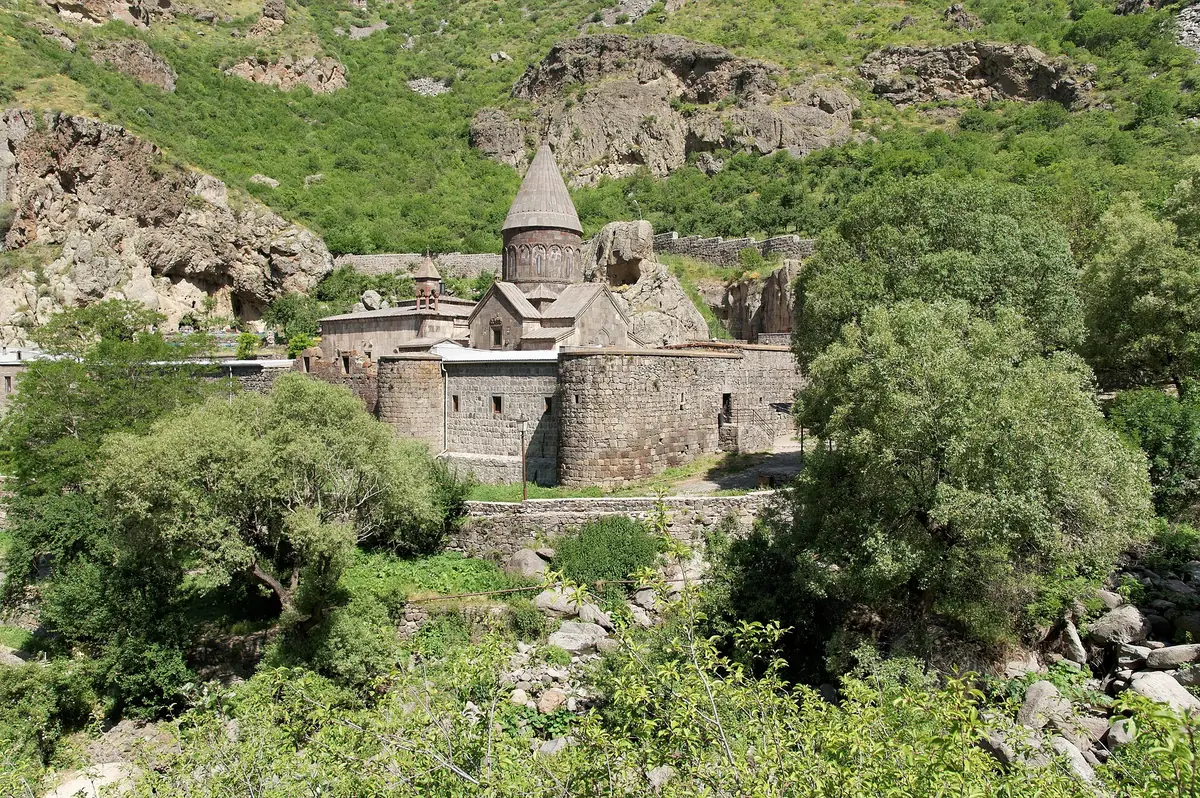
Image: Wikimedia Commons · CC BY 4.0 · Photo: Vyacheslav Argenberg The monastery in its gorge
Look closely. The monastery stands in a valley beside rock cliffs. The main church is built of dark stone, and chapels are cut into the rock behind it.
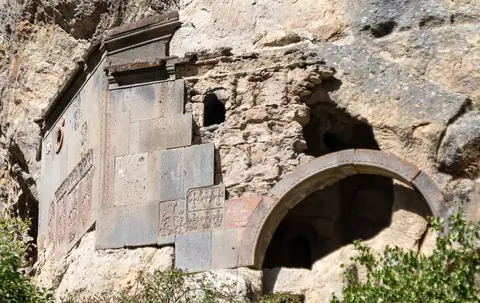
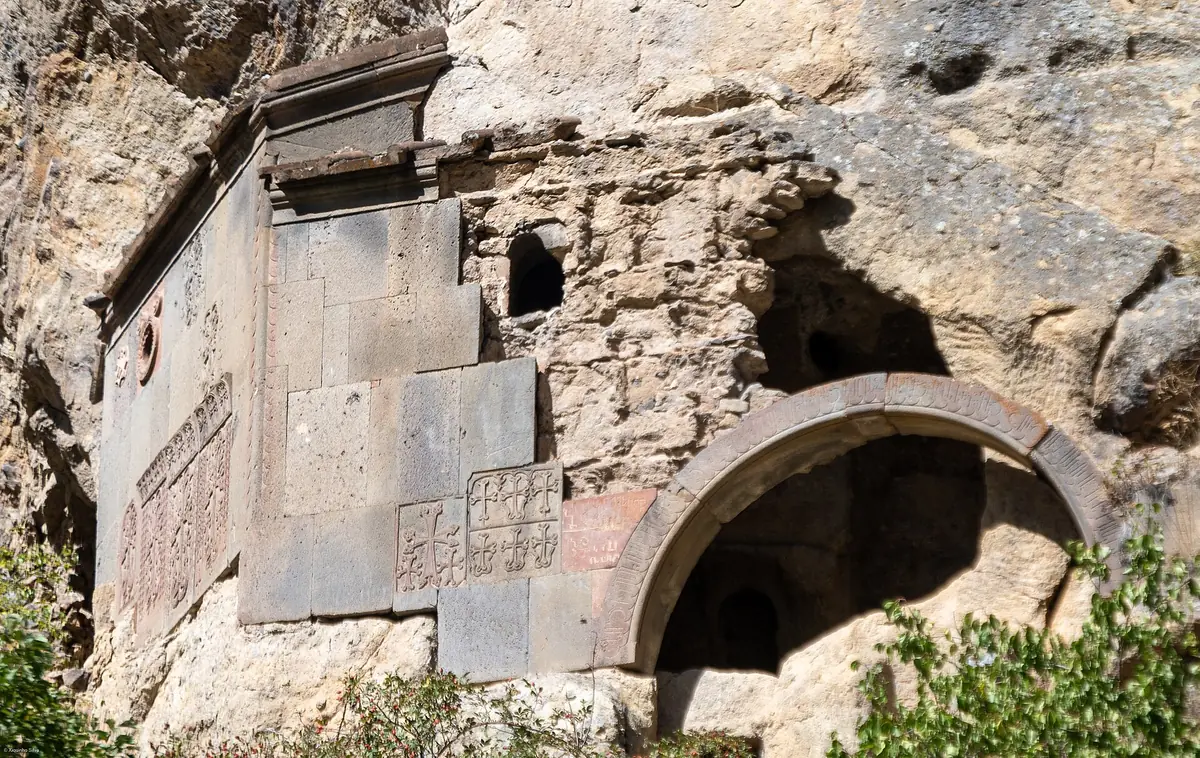
Image: Wikimedia Commons · CC BY 4.0 · Photo: xiquinhosilva A chapel cut into the rock
Look closely. Some of the chapels are carved out of the cliff. Notice the carved entrance and the rock vault above.
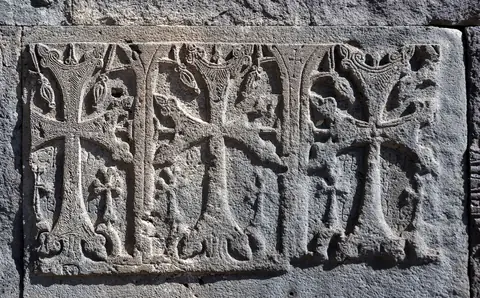
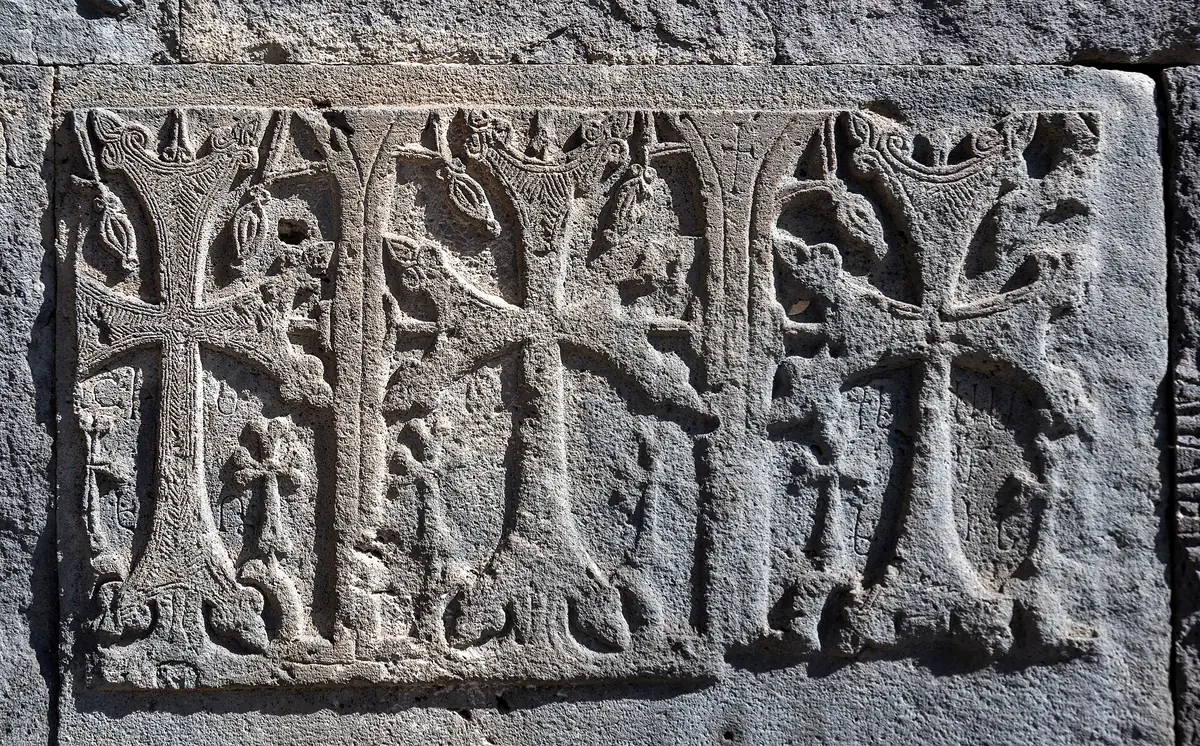
Image: Wikimedia Commons · CC BY 4.0 · Photo: xiquinhosilva A carved cross-stone
Look closely. A khachkar is a carved stone cross, a form that is special to Armenia. Notice the crosses within crosses, and the patterns of vines and plaits around them.


What to watch for
Look slowly- The cut-rock chapels. The upper chapel has a carved dome and is known for its acoustics.
- The khachkars. Each carved cross is different.
- The spring. A sacred spring still rises in the cave church.
- Cliff and wall. Compare the built church with the cave church beside it.
Sources
Dates follow standard historical references and, where we quote a book, the wording of the edition hosted in this library. Where a tradition is not certain history, the page says so. Photographs and pictures are used only when the image itself is Public domain, CC0, or CC BY with a named credit. Each picture links to its source page with full licence details. Pictures taken before a site was damaged are labelled with their date.