Great Churches & Monasteries · Greece & Byzantium
Meteora
Monasteries built on top of tall pillars of rock in central Greece.
Still standing. Six monasteries are still occupied by monks or nuns, out of about two dozen that stood in the sixteenth century. Visitors now climb steps cut in the rock.
What it is
Above the plain of Thessaly stand towers of sandstone, some more than 300 meters high. Hermits made their cells in the caves of these rocks from about the eleventh century. In the fourteenth century, when the Byzantine and Serbian rulers of the region were at war, monks began to build on the summits. Athanasios the Meteorite founded the Great Meteoron, the largest, in the middle of the century, and his foundation was enriched by a Serbian-born ruler of Thessaly who became a monk, Joasaph. Over the next two centuries as many as two dozen monasteries were built on the rocks.
For centuries the monks climbed by ladders and were hauled up in nets and baskets. Steps were cut into the rock in the 1920s. Six monasteries remain: the Great Meteoron, Varlaam, Roussanou, St Nicholas Anapausas, the Holy Trinity, and St Stephen. Several are decorated with frescoes by painters of the Cretan school in the sixteenth century. The site is a World Heritage site for its cultural and natural value.
“The LORD is my rock, and my fortress, and my deliverer”
Why it matters for a classical Christian student
Meteora shows how far monks went to find quiet, and how steadily their life was kept. The student can set it beside Mount Athos and Debre Damo. The virtue is perseverance. Supplies came up on ropes, and each stone of the monasteries had to be carried or hauled. The question to ask is how a life of prayer and a life of labor supported one another in such a place.
Read alongside
- The Bible: Psalm 18 calls the Lord a rock and a fortress.
Look closely
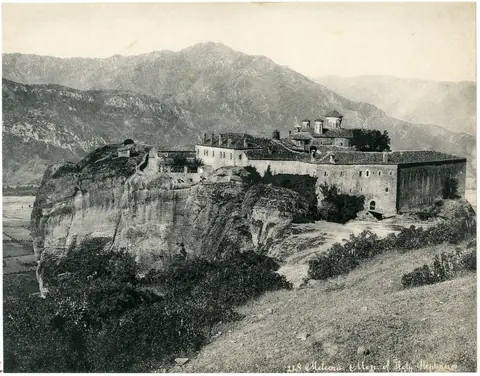
Image: Wikimedia Commons · Public domain (PD-Art) Agios Stefanos on its rock
Look closely. An old photograph shows the monastery of Agios Stefanos perched on top of a sandstone pillar. Notice the sheer rock below and the lack of a path.
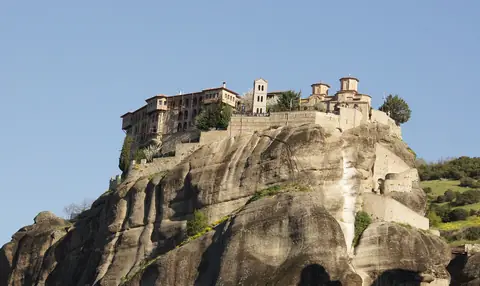
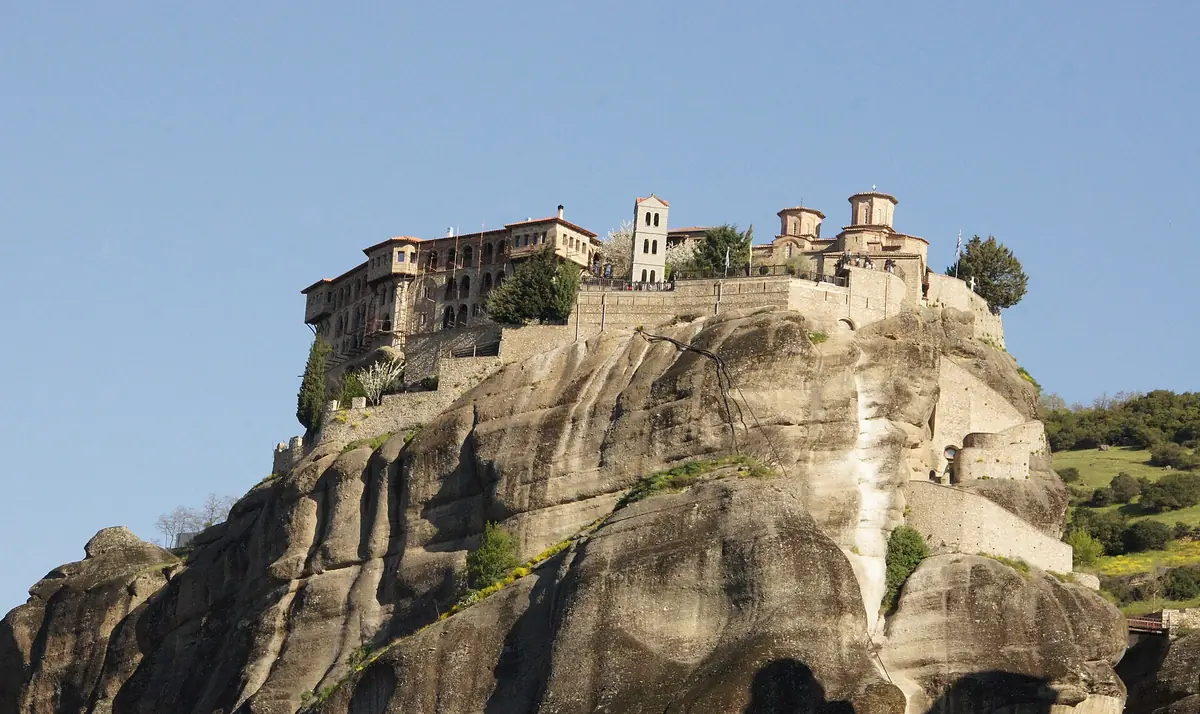
Image: Wikimedia Commons · CC BY 2.0 · Photo: rob Stoeltje from loenen, netherlands The Monastery of Varlaam
Look closely. Varlaam is built on top of a rock peak, and its buildings stand at the very edge. Until steps were cut into the rock in the 1920s, visitors were reached by long ladders and a rope net.
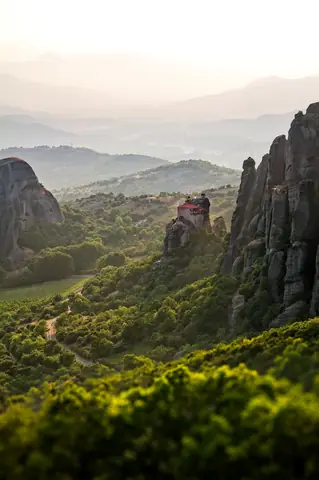
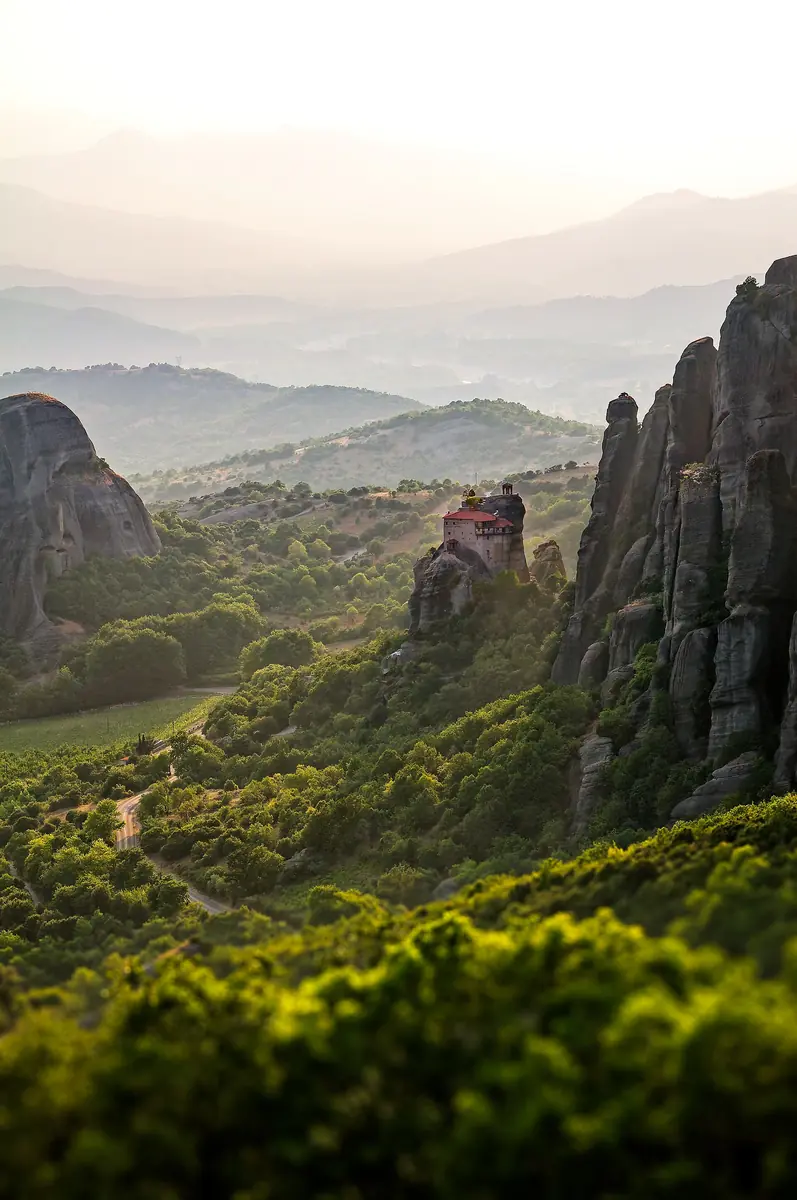
Image: Wikimedia Commons · CC BY 4.0 · Photo: Laurens R. Krol The rocks above the plain
Look closely. The sandstone pillars rise from the plain of Thessaly, and some of them carry monasteries. Notice the scale of the rocks and the forest at their feet.
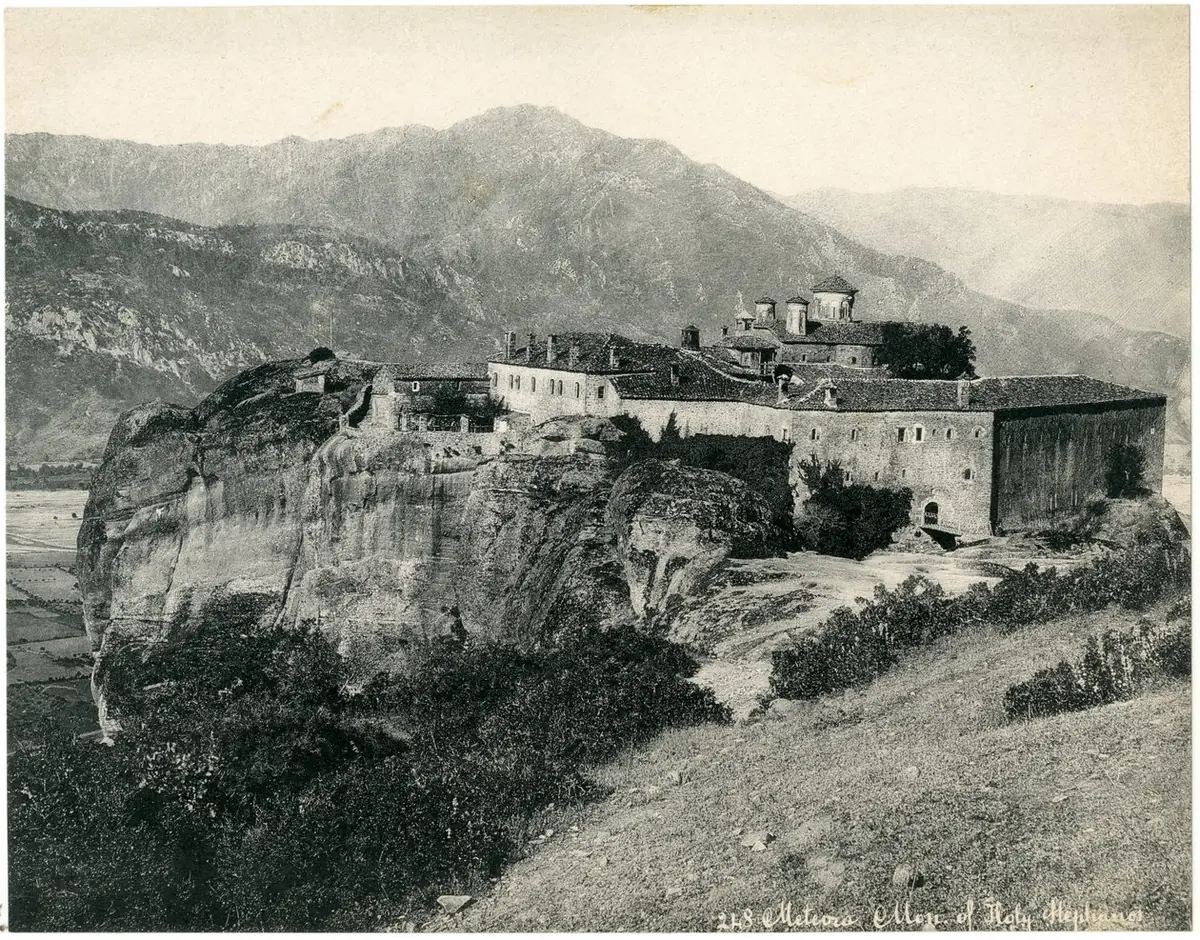


What to watch for
Look slowly- The rock and the wall. Notice where the monastery wall ends and the cliff begins.
- The winch and the net. Some monasteries keep the old hoists.
- Sixteenth-century frescoes. The painting of the saints' martyrdoms is vivid and strong.
- A living community. Several are now home to nuns.
Sources
Dates follow standard historical references and, where we quote a book, the wording of the edition hosted in this library. Where a tradition is not certain history, the page says so. Photographs and pictures are used only when the image itself is Public domain, CC0, or CC BY with a named credit. Each picture links to its source page with full licence details. Pictures taken before a site was damaged are labelled with their date.