Great Churches & Monasteries · Eastern Europe & Russia
Rila Monastery
The great monastery of the Bulgarian people, in a mountain valley where a hermit settled in the tenth century.
Still standing. The monastery stands in its mountain valley and is a working community. A fire in 1833 destroyed most of the earlier buildings, and the present complex dates largely from the following decades.
Sucevița Monastery · Mount Athos
What it is
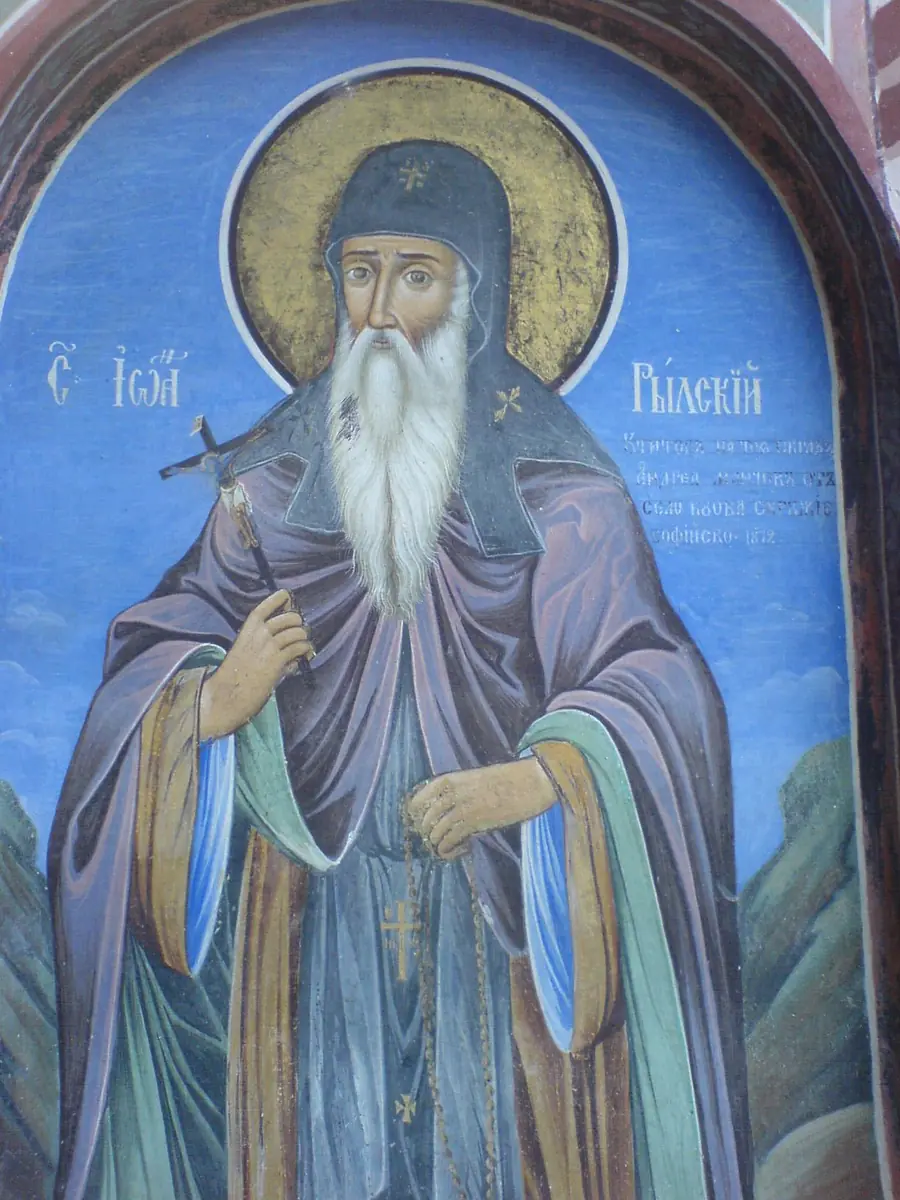
Ivan of Rila was a hermit who lived in the mountains of southwestern Bulgaria in the first half of the tenth century. Disciples gathered around him, and after his death in 946 they built a monastery near his cave. The monastery was rebuilt and enlarged in later centuries. Hrelyo, a local nobleman who became a monk, built a stone tower in 1334–1335, which still stands and is the oldest part. The monastery was important through the Ottoman centuries, when it was one of the places that kept the Bulgarian language and church tradition alive.
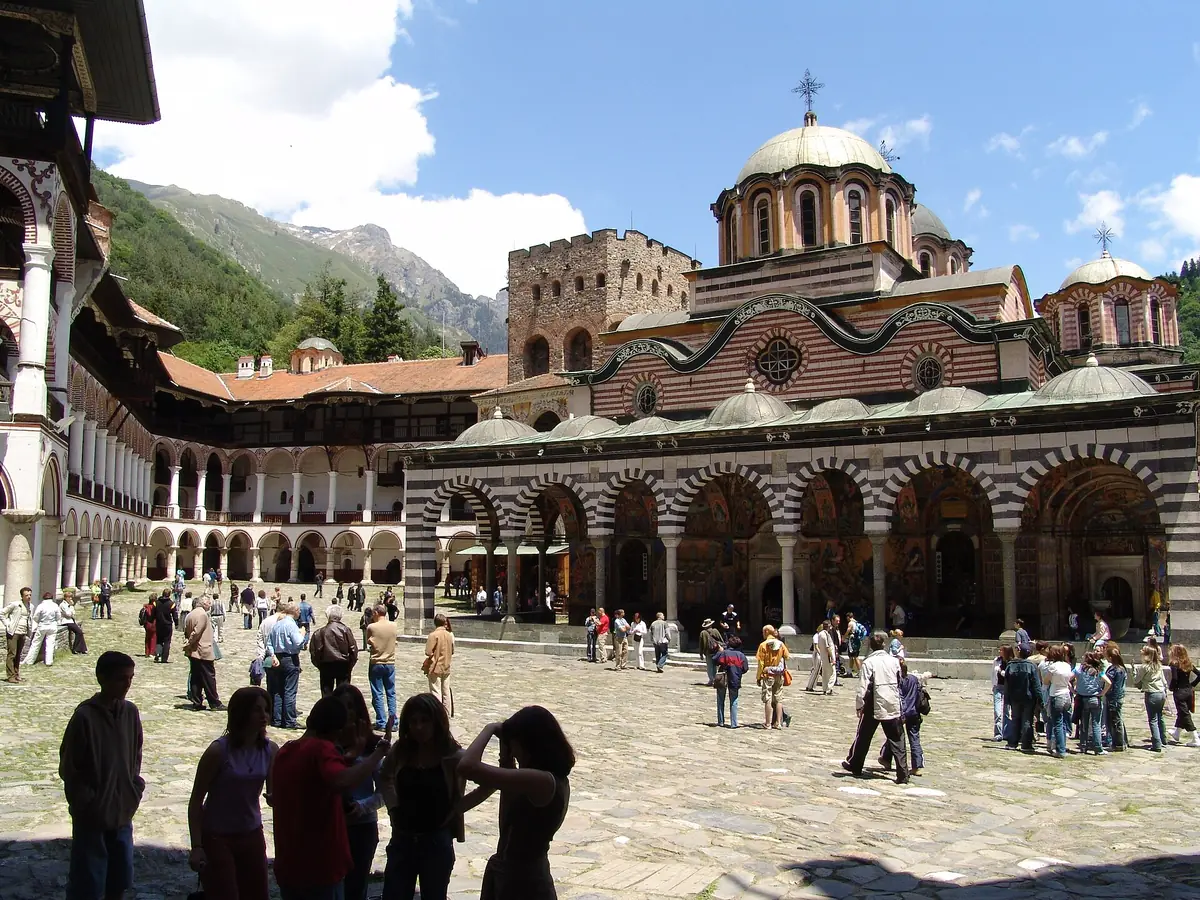
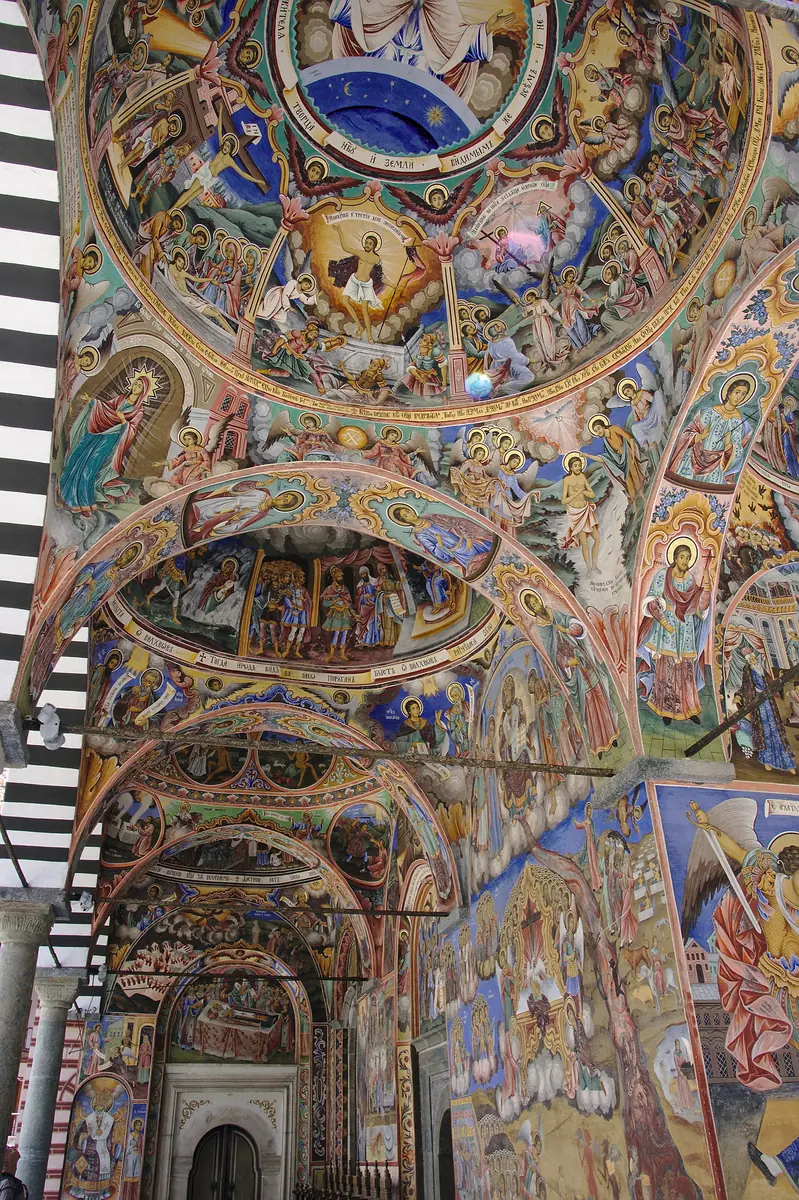
A fire in 1833 burned most of the buildings, and the monks rebuilt in the following years with money from donors across Bulgaria. The main church of the Nativity of the Virgin, built in 1834–1837, has domes and arcades, striped walls, and frescoes by Bulgarian painters of the National Revival, including Zahari Zograf. The monastery lies in a forested valley, with a four-story residential block built around a courtyard. It was inscribed on the UNESCO list in 1983.
Why it matters for a classical Christian student
Rila is a reminder that a monastery can serve a whole nation as a school and refuge. The classical Christian student can see here how the church kept a people's language and memory through a long period of foreign rule. The virtue is faithful stewardship. Donors across Bulgaria paid to rebuild it, and its monks passed on a trust that was larger than themselves.
Look closely
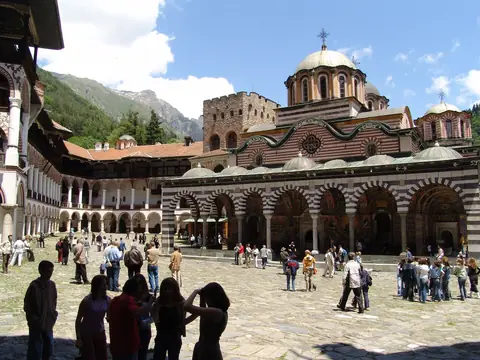
Image: Wikimedia Commons · CC BY 2.5 · Photo: Nenko Lazarov The courtyard and the church
Look closely. The church stands in the middle of a court enclosed by four wings with arcades. Notice the stripes of dark and light stone and the rows of wooden balconies above.
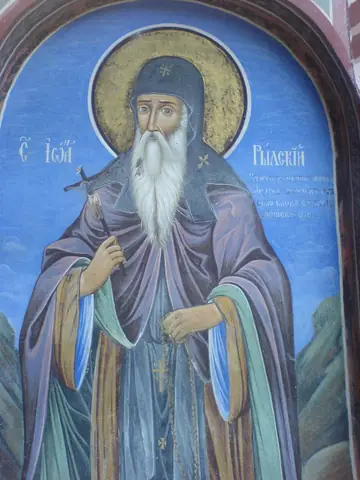
Image: Wikimedia Commons · Public domain Saint Ivan of Rila
Look closely. A fresco shows Ivan, the hermit who founded the monastery in the tenth century, as an old monk with a long beard. The Bulgarian church honors him as its patron saint.
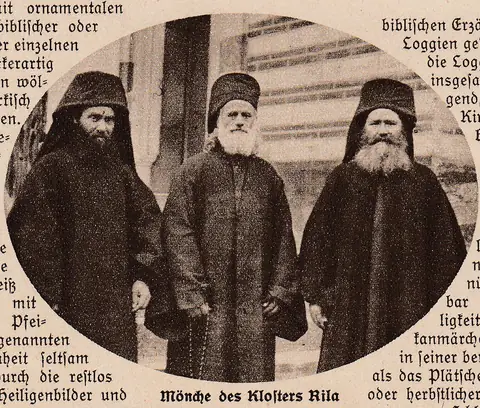
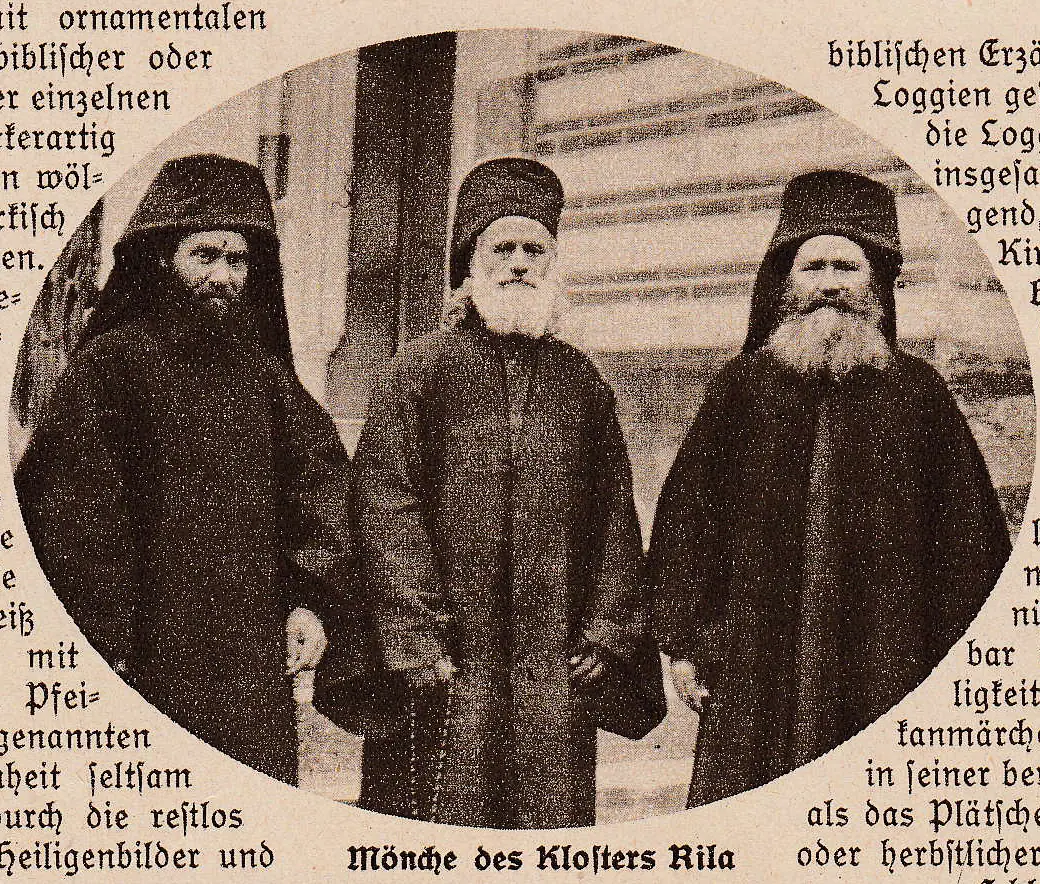
Image: Wikimedia Commons · Public domain (PD-Art) Monks of Rila in 1927
Look closely. Three monks stand in black robes and tall caps, in a newspaper illustration from 1927. The monastery has been a place of prayer for more than a thousand years.
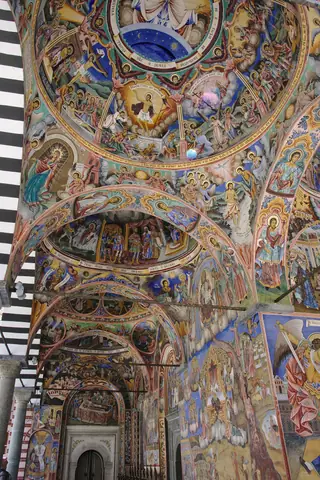
Image: Wikimedia Commons · CC BY 4.0 · Photo: Alexander Klink The painted porch
Look closely. The arcade of the church is covered with wall paintings from the nineteenth century. Look up at the ceilings, where every arch and vault is painted.


What to watch for
Look slowly- Hrelyo's tower. The medieval stone tower stands in the courtyard.
- The striped arcades. The black and white banding of the church walls is a distinctive feature.
- The frescoes. Zahari Zograf and others painted scenes of heaven and hell.
- The mountains. The valley setting is part of the experience.
Sources
Dates follow standard historical references and, where we quote a book, the wording of the edition hosted in this library. Where a tradition is not certain history, the page says so. Photographs and pictures are used only when the image itself is Public domain, CC0, or CC BY with a named credit. Each picture links to its source page with full licence details. Pictures taken before a site was damaged are labelled with their date.