Great Churches & Monasteries · Eastern Europe & Russia
Sucevița Monastery
A fortified convent in the Carpathian foothills whose church is painted outside with scenes from the Bible and the saints.
Still standing. The monastery stands, with its walls, towers, and painted church. It is a working convent of nuns and a World Heritage site as one of the Painted Churches of Moldavia.
What it is
The church of the Resurrection at Sucevița stands inside high walls with corner towers, built to protect it from raiders. It was built in the 1580s and 1590s by the family of the Movilă princes, who ruled Moldavia and Wallachia. The family chose to cover the outside of the church with frescoes, in the tradition of the painted churches of Bukovina. Painters worked on the exterior walls around 1595 and 1596, in colors dominated by green, covering the walls under the broad eaves of the roof.
The paintings tell the Bible's story and the lives of saints to people who could not read. On the north side is the Ladder of Divine Ascent, in which monks climb a ladder to heaven, based on the book of John Climacus, and are pulled down by devils if they fail. Other walls hold the Tree of Jesse, the genealogy of Christ, and scenes from the Akathist hymn to the Virgin. The monastery is on the UNESCO list of the Painted Churches of Moldavia.
Why it matters for a classical Christian student
The frescoes are a visual Bible, designed to be read by passers-by. A classical Christian student should look at how the artists tell a story and a moral, and compare the Ladder of Divine Ascent with Jacob's ladder and with Dante's climb. The virtue is perseverance in the struggle, which is the main lesson of the Ladder. The place also shows how Orthodox Christians in a land at the edge of the Ottoman world kept their faith and art.
Look closely
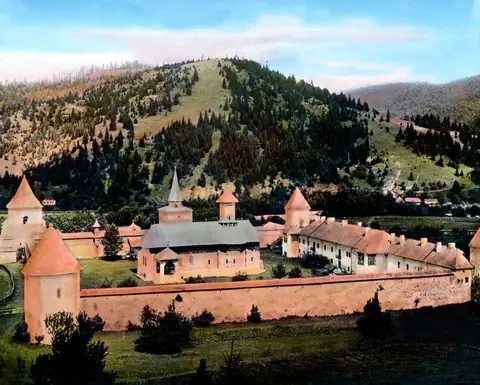
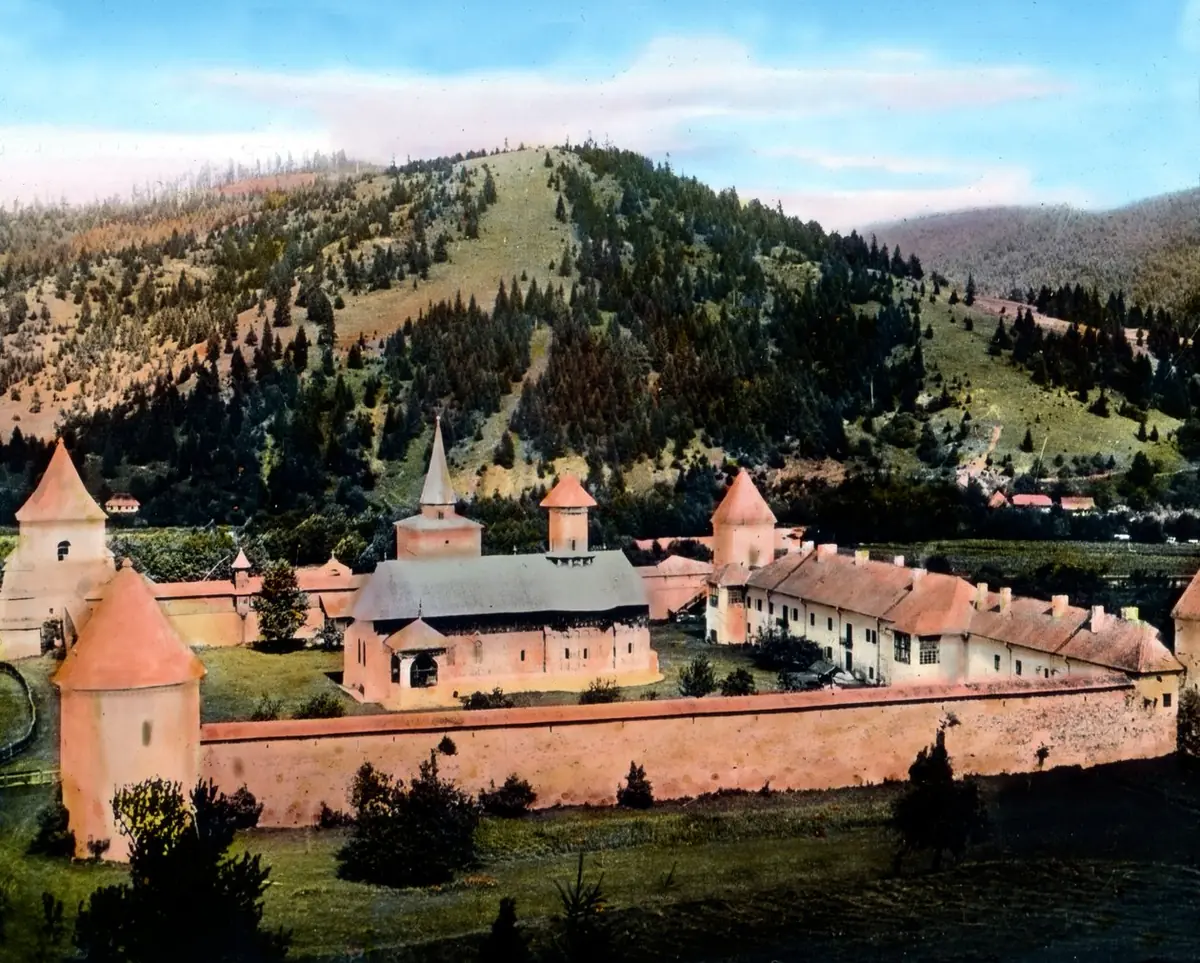
Image: Wikimedia Commons · Public domain (PD-Art) The fortified monastery
Look closely. A colored photograph shows the monastery in its mountain valley, with high walls and corner towers around the court. The walls and the church were built in the years around 1600, and the walls protected the community.
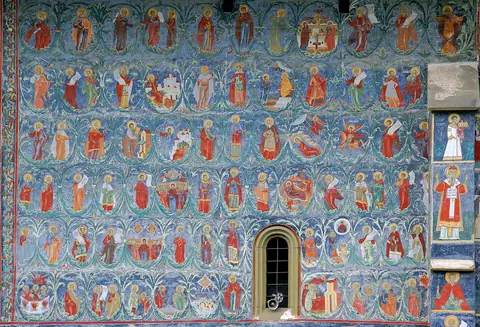
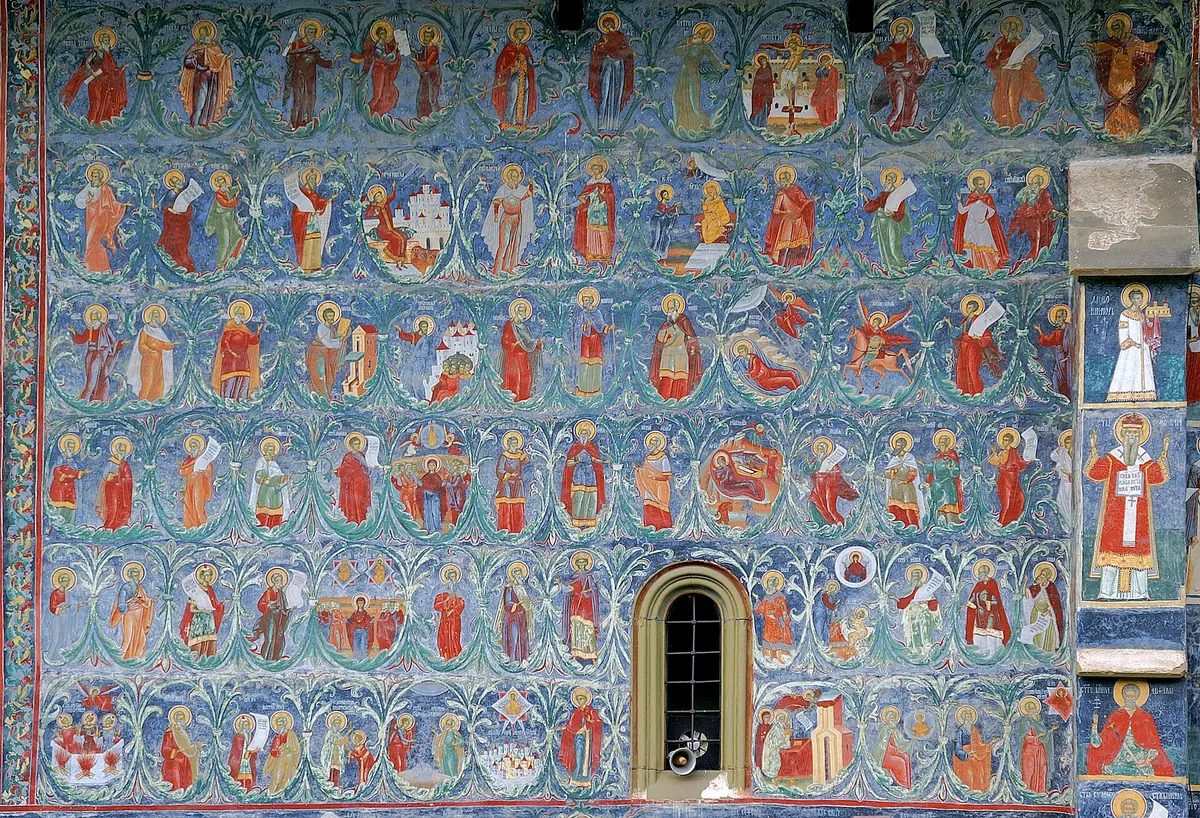
Image: Wikimedia Commons · Public domain The painted south wall
Look closely. The outside of the church is painted from the ground up with rows of figures on a blue ground. Painting the outside walls is a special feature of the churches of Moldavia, and the pictures tell the stories of the Bible and of the church.
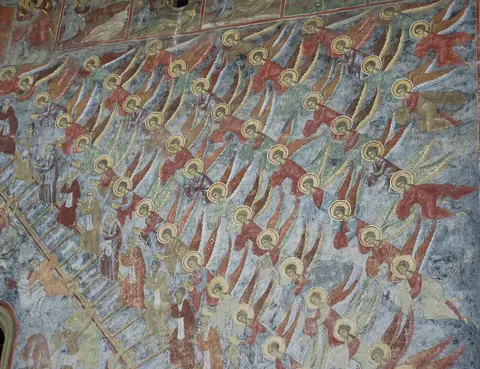
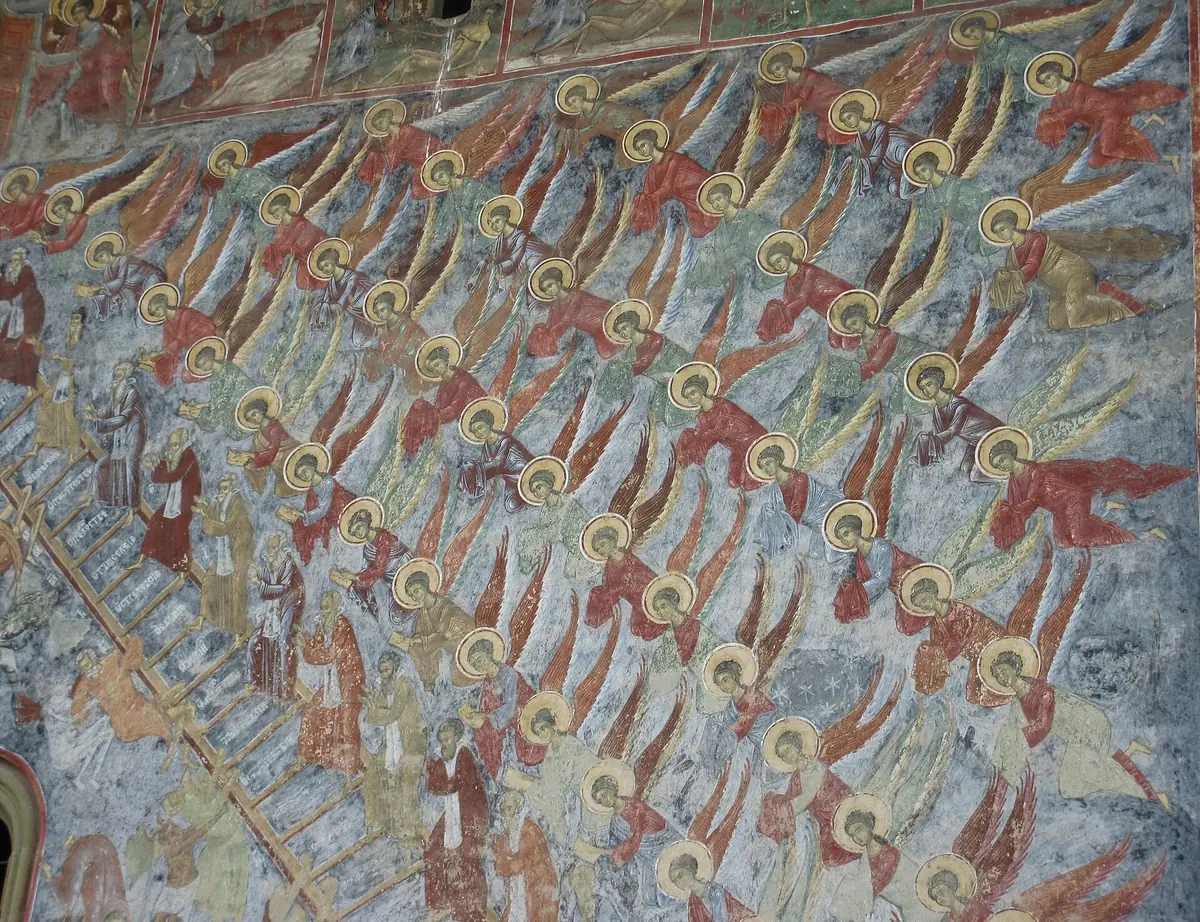
Image: Wikimedia Commons · Public domain Painted figures on the exterior
Look closely. A detail of the painted wall shows many figures, many with wings, moving in diagonal rows across the surface. Notice how the colors have lasted over four centuries in the open air.
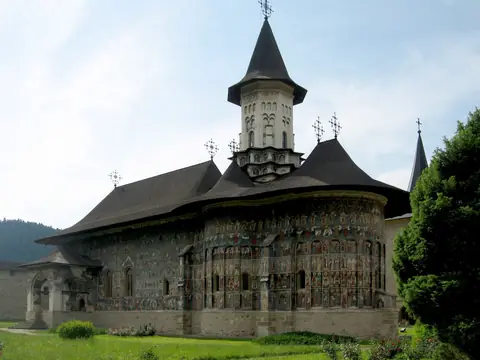
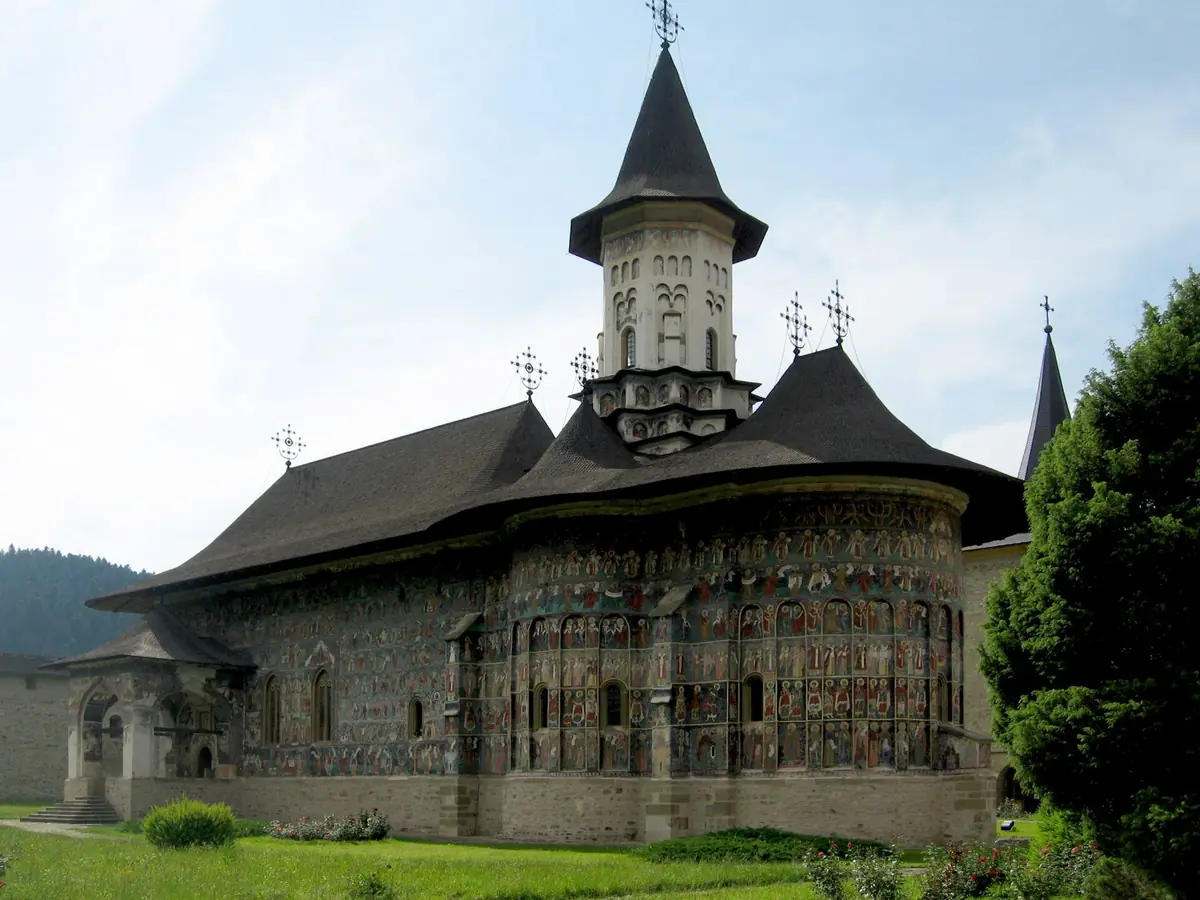
Image: Wikimedia Commons · CC BY 2.5 · Photo: Cezar Suceveanu The Church of the Resurrection
Look closely. The church has a broad, steep roof and a tall central tower. Compare its form with the churches of Constantinople and Kyiv.


What to watch for
Look slowly- The Ladder. Count how many monks reach the top, and look at the devils.
- The Tree of Jesse. Kings and prophets appear on the branches.
- The eaves. The roof was built wide to protect the paintings from rain.
- The walls and towers. The convent was a fortress.
Sources
Dates follow standard historical references and, where we quote a book, the wording of the edition hosted in this library. Where a tradition is not certain history, the page says so. Photographs and pictures are used only when the image itself is Public domain, CC0, or CC BY with a named credit. Each picture links to its source page with full licence details. Pictures taken before a site was damaged are labelled with their date.