Great Churches & Monasteries · Western Europe
Seville Cathedral
The largest Gothic cathedral, raised on the site of a great mosque, and the resting place of Christopher Columbus's tomb.
Still standing. The cathedral stands and is the largest Gothic cathedral by volume. Its bell tower, the Giralda, was the minaret of the earlier mosque.
Santiago de Compostela · Cologne Cathedral
What it is
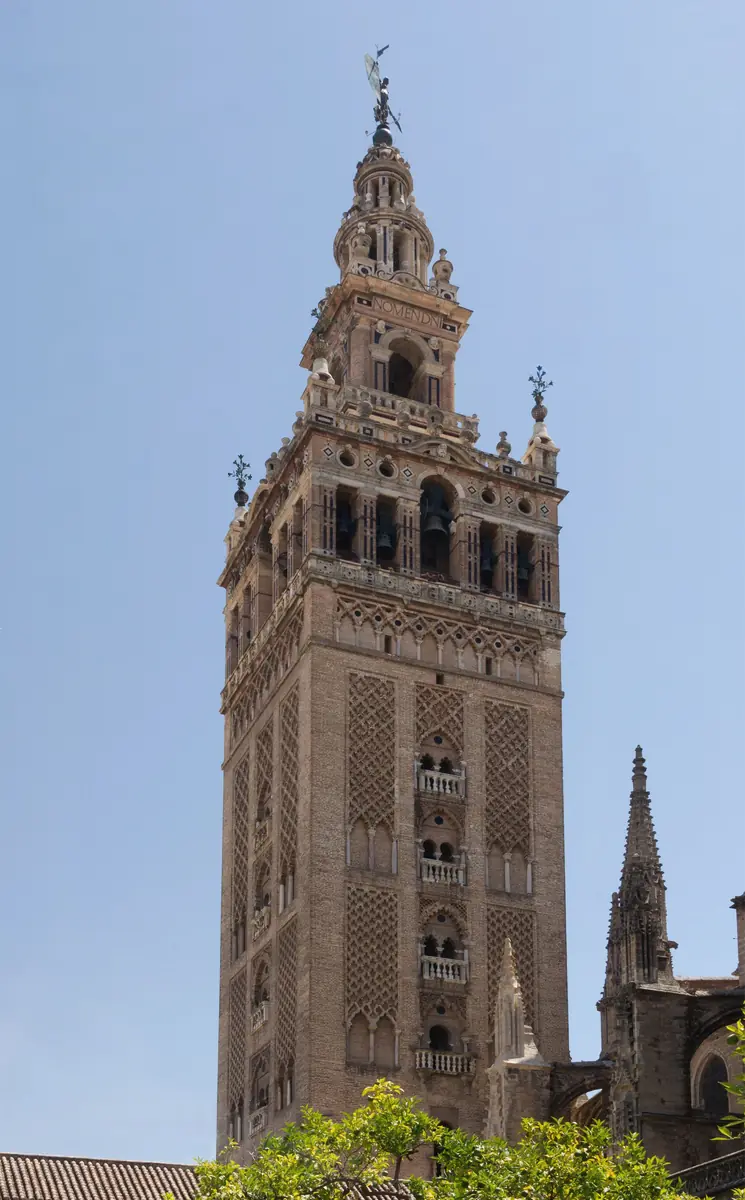
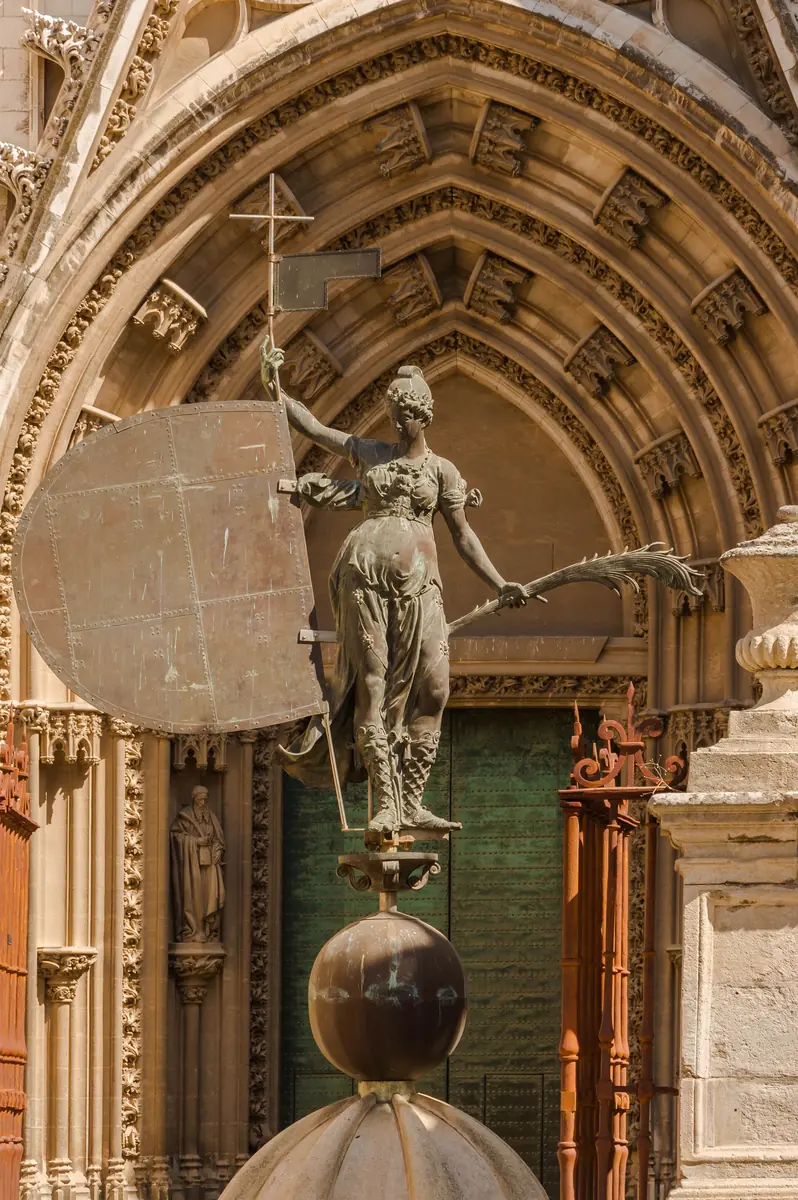
Seville was taken from the Muslims in 1248 by King Ferdinand III of Castile, and the Great Mosque, built by the Almohads in the late twelfth century, was used as a church. In 1401 the cathedral chapter decided to build a new church on the site, and work continued until 1506. The result was the largest Gothic cathedral in the world by volume. Of the old mosque, the Patio de los Naranjos (Court of Oranges) and the minaret survived. The minaret, the Giralda, was built in 1184–1198, and in 1558–1568 it was given a Renaissance belfry crowned by a bronze statue called the Giraldillo.
Inside, the main altarpiece, begun by Pierre Dancart in 1482, is one of the largest gilded altarpieces in the world. The cathedral also holds the body of Ferdinand III, the king who took the city, and a monumental tomb of 1899 that holds remains identified as those of Christopher Columbus. Both Seville and Santo Domingo have claimed them. A DNA test in 2006 found that bones in the Seville tomb are consistent with those of his brother Diego, but the question has not been fully settled. The cathedral's library, the Biblioteca Colombina, preserves the books of Columbus's son Hernando.
“Honour and majesty are before him: strength and beauty are in his sanctuary.”
Why it matters for a classical Christian student
Seville Cathedral gives a student a concrete picture of how a city and its faith changed hands, and of the layers that remain in a single place: a Muslim minaret now the bell tower of a Christian church. The classical Christian student should look at it honestly, noting both what was built and what was displaced, and noticing the great ambition and beauty of the late medieval builders. The words of the Psalm, 'strength and beauty are in his sanctuary', fit the intention of those who gave so much.
Read alongside
- Childe Harold's Pilgrimage: Byron's Canto I speaks of Seville: 'Fair is proud Seville'.
- The Bible: Psalm 96 speaks of strength and beauty in the sanctuary.
Great Lives connected here
- Christopher Columbus, in Great Lives: A monumental tomb in the cathedral holds remains identified as Columbus's, though Santo Domingo makes a rival claim.
Look closely
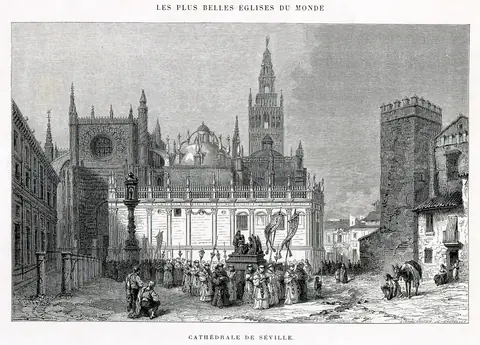
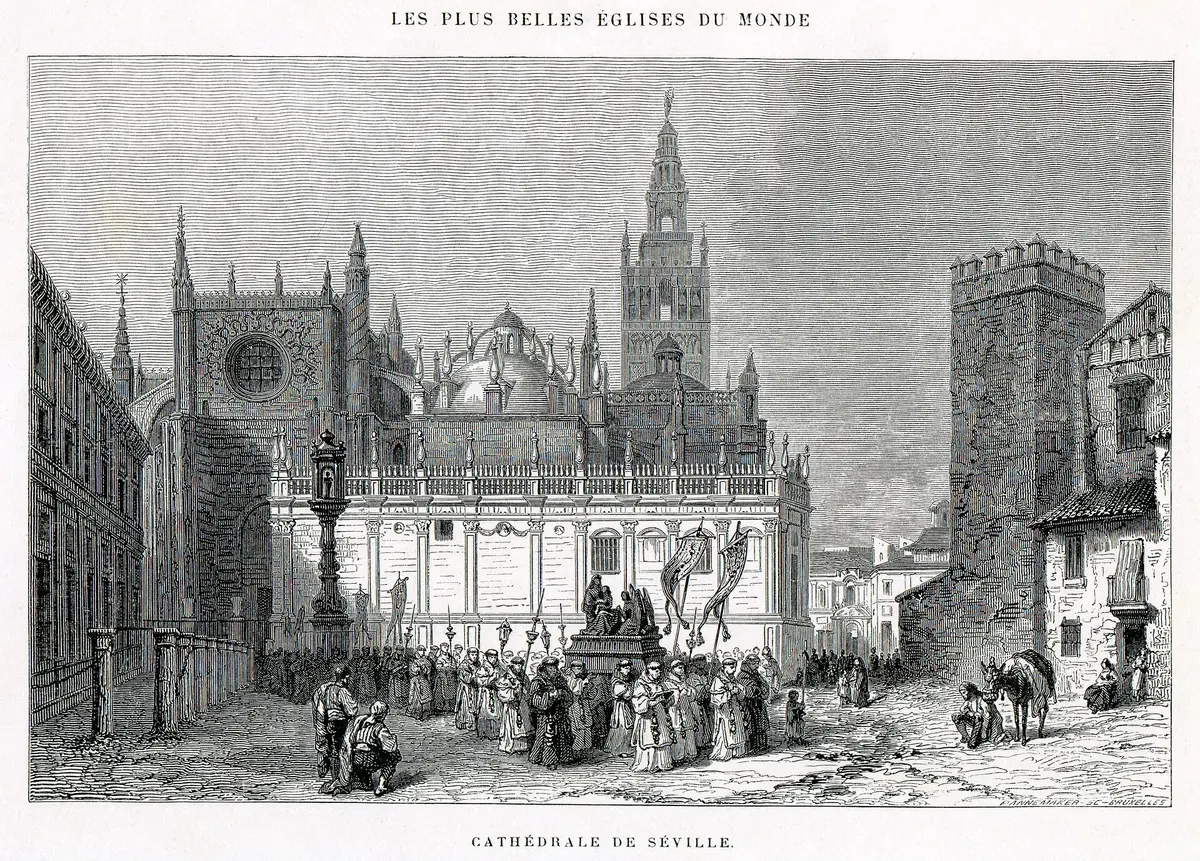
Image: Wikimedia Commons · Public domain (PD-Art) The cathedral in 1857
Look closely. An engraving shows the cathedral with the Giralda beside it and a crowd in the street. Notice how the bell tower dominates the skyline.
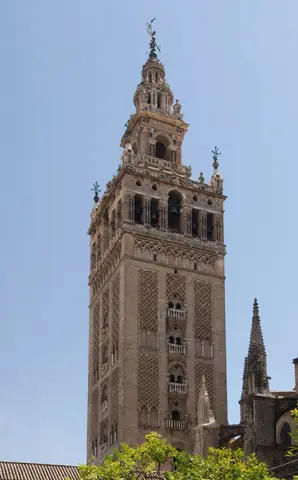
Image: Wikimedia Commons · CC0 (public domain) The Giralda
Look closely. The lower part of the tower is the brick minaret of the twelfth-century mosque, with patterns of shallow arches. The belfry above was added in the sixteenth century.
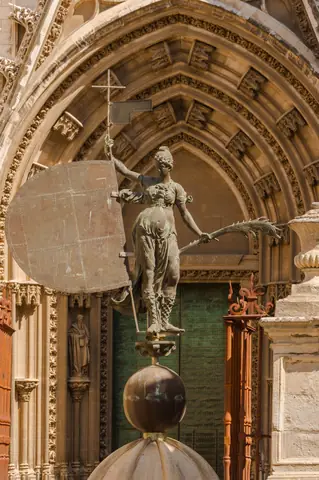
Image: Wikimedia Commons · CC0 (public domain) The Giraldillo
Look closely. This is a copy of the bronze weather vane statue, called the Giraldillo, which stands on top of the Giralda. The original was made in 1568 and represents Faith.
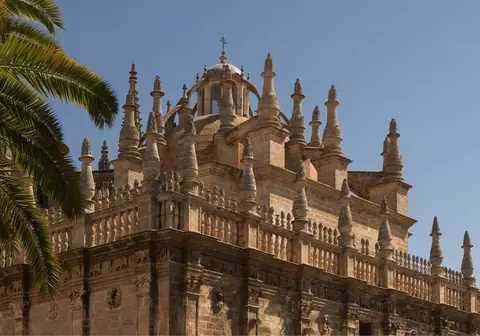
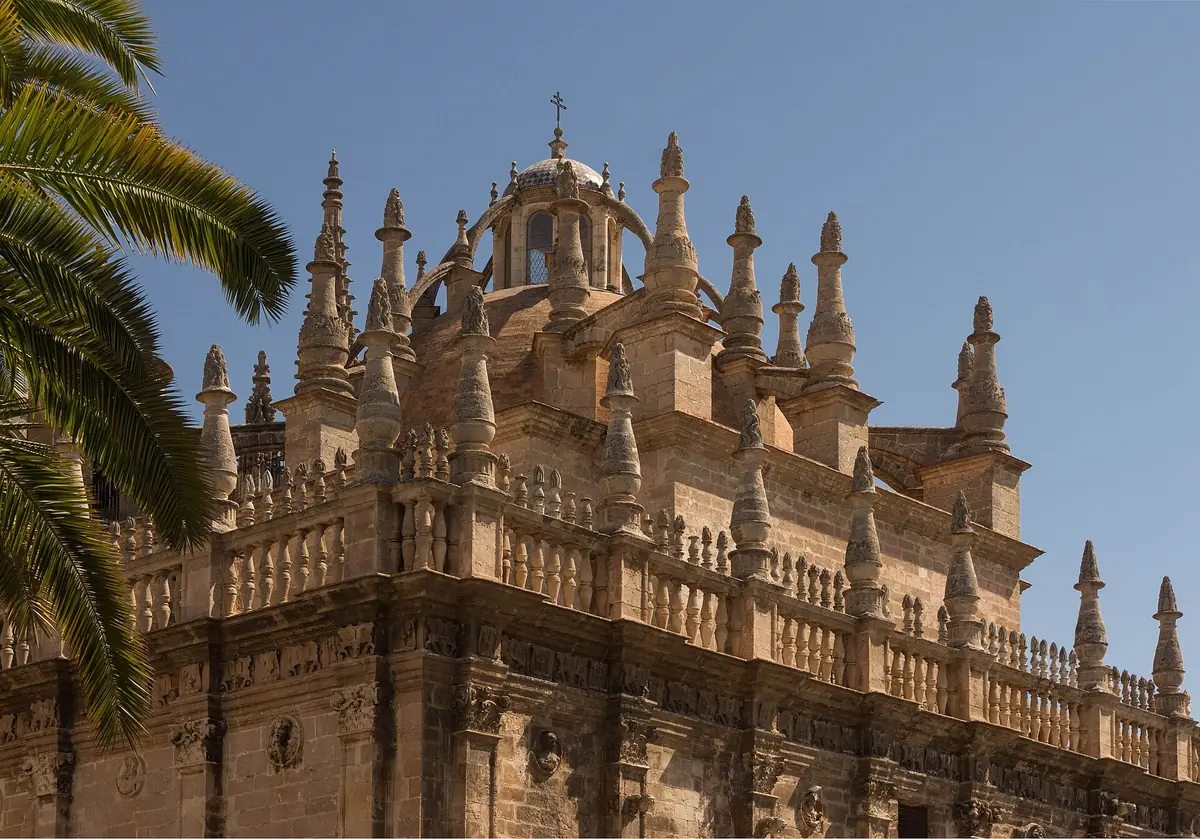
Image: Wikimedia Commons · CC0 (public domain) Pinnacles and balustrades
Look closely. The roofline of the cathedral is crowded with pinnacles, pointed arches and carved balustrades.


What to watch for
Look slowly- The Giralda. Climb the ramp inside and notice the minaret's brick patterns.
- The Patio de los Naranjos. The orange court is a surviving part of the mosque.
- The main altarpiece. Gilded and carved with scenes from the life of Christ.
- The Columbus tomb. Four bearers carry the casket, each representing a kingdom of Spain.
Sources
Dates follow standard historical references and, where we quote a book, the wording of the edition hosted in this library. Where a tradition is not certain history, the page says so. Photographs and pictures are used only when the image itself is Public domain, CC0, or CC BY with a named credit. Each picture links to its source page with full licence details. Pictures taken before a site was damaged are labelled with their date.