Great Churches & Monasteries · Western Europe
Santiago de Compostela Cathedral
The pilgrim cathedral over the tomb traditionally held to be the apostle James's, at the end of the Camino.
Still standing. The cathedral stands and is the goal of the Camino de Santiago, which is still walked by hundreds of thousands of pilgrims each year.
Cologne Cathedral · Canterbury Cathedral
What it is
The New Testament says that Herod Agrippa put James the brother of John to death with the sword, about AD 44. A later tradition, first written down in Spain, says that his body was carried to Galicia, and that about 813 a hermit named Pelayo found his tomb, guided by lights in the sky. King Alfonso II of Asturias built a small church over the place, and a town grew around it. The name Compostela is often explained as coming from the Latin for 'field of the star'. In 997 al-Mansur of Córdoba sacked the town and carried off the cathedral's bells, but left the tomb alone.
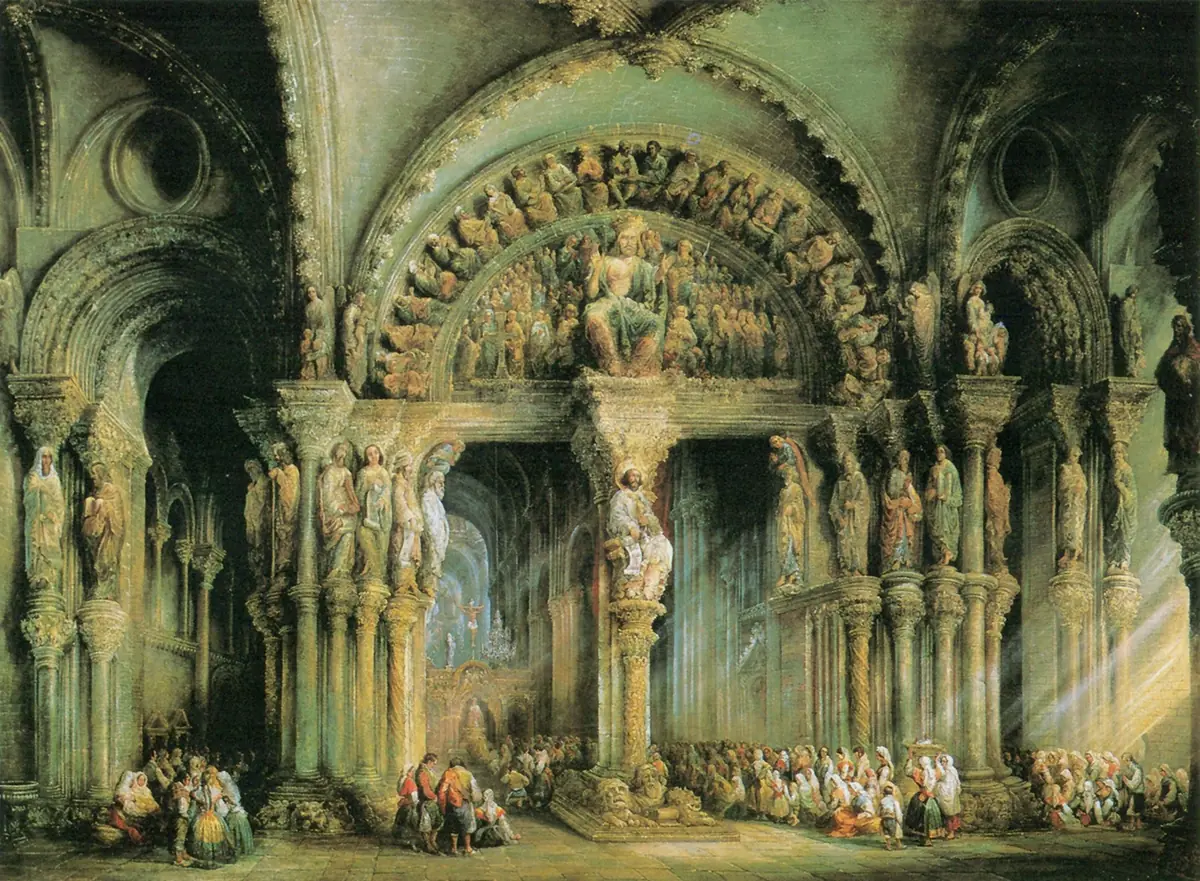
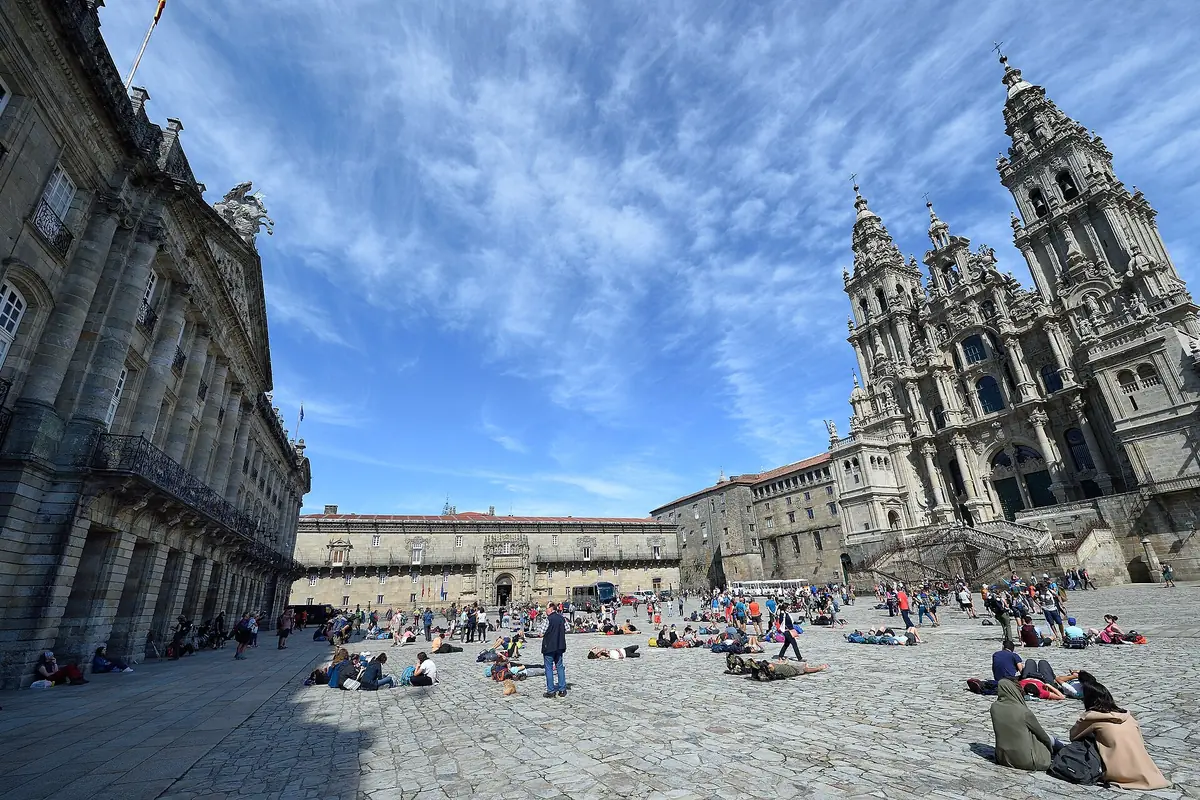
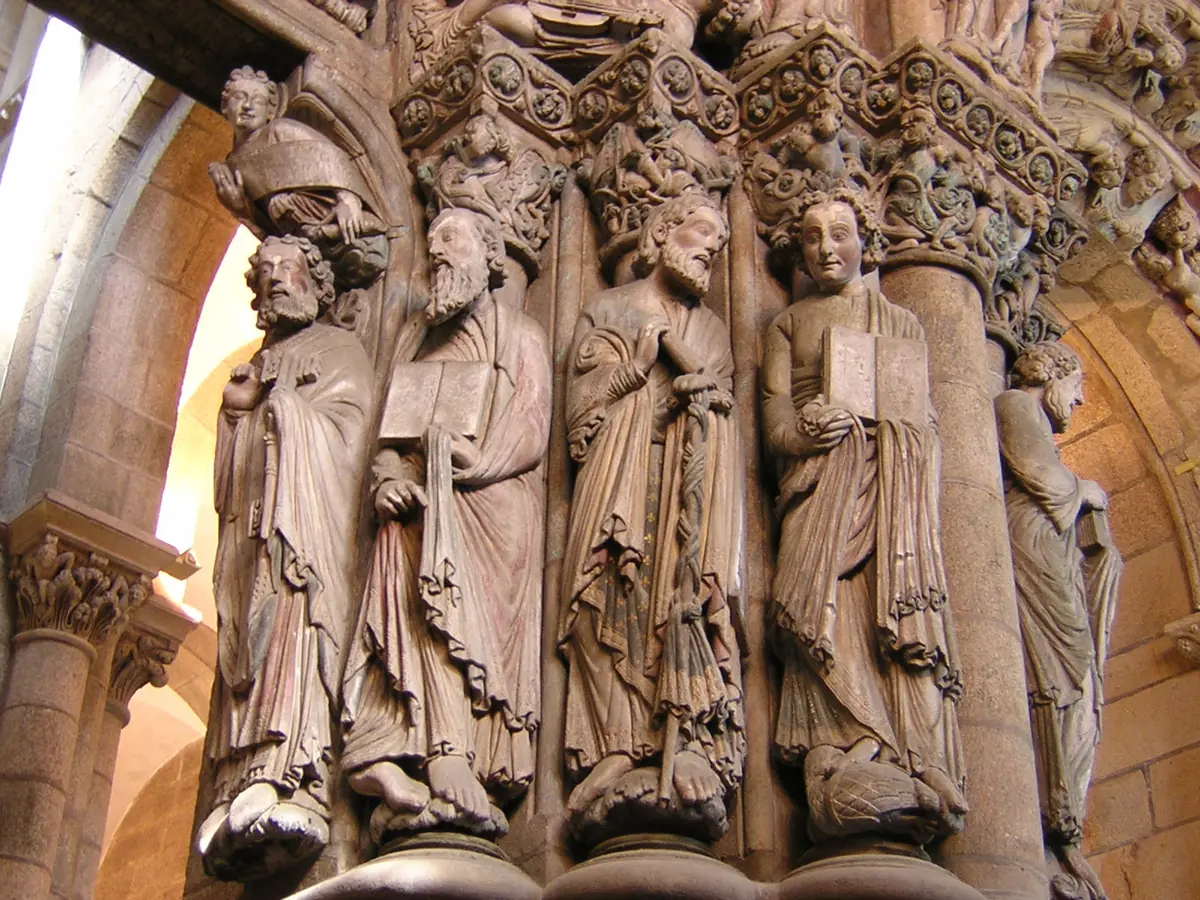
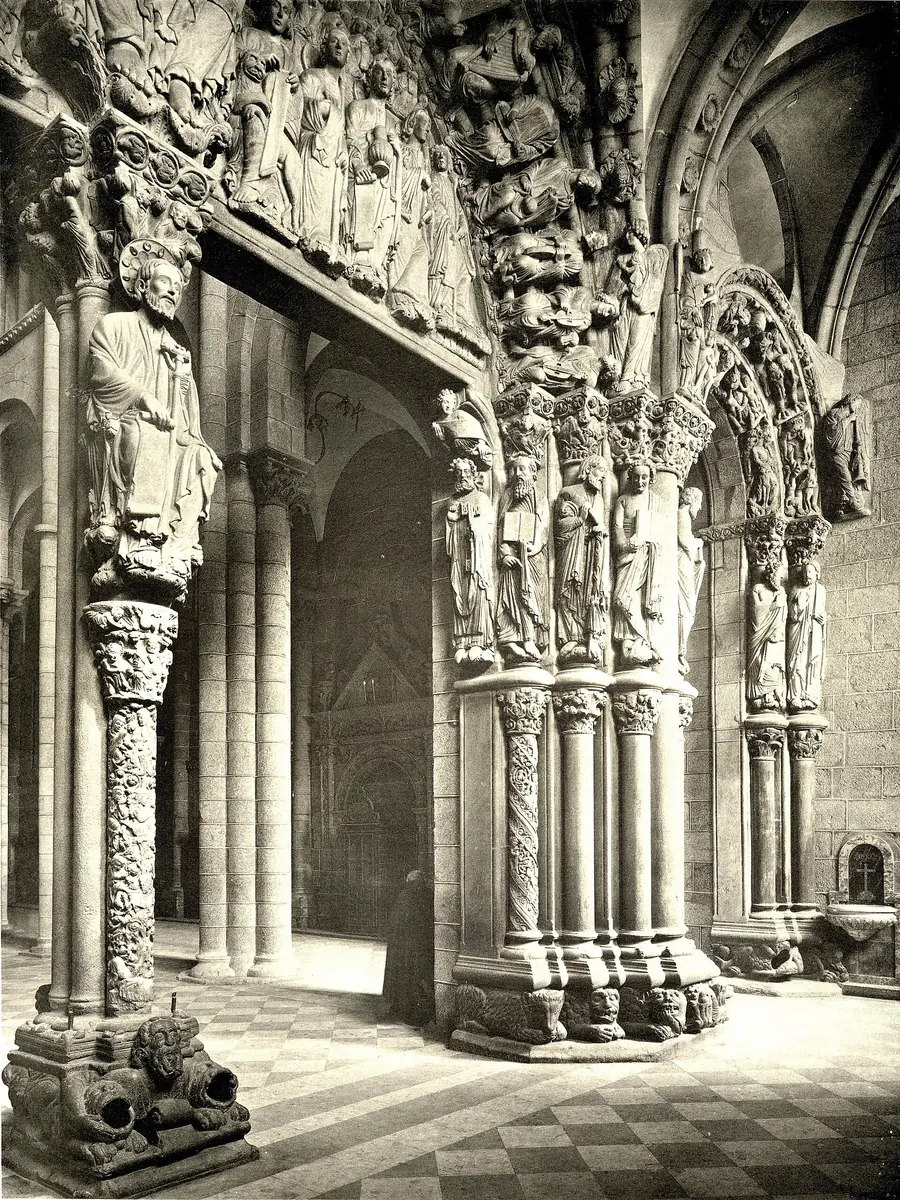
The present Romanesque cathedral was begun in 1075 under Alfonso VI. The Pórtico de la Gloria, carved by Master Mateo, was finished in 1188, and the cathedral was consecrated in 1211. The great west front, the Obradoiro façade, was built in the Baroque style in 1738–1750. Pilgrims came from all over Europe along routes called the Way of St James, and the twelfth-century Codex Calixtinus served as a guide. The huge censer, the botafumeiro, is swung through the transept on certain feast days.
“And he killed James the brother of John with the sword.”
Why it matters for a classical Christian student
Pilgrimage is a form of faith in motion: the pilgrim leaves his home, bears hardship, and arrives at a place of prayer. A classical Christian student can read about it in the Canterbury Tales, where Chaucer's Wife of Bath has been to Compostela, and consider the difference between a tour and a pilgrimage. The student should also read the plain biblical account of James, the first of the twelve apostles to be martyred. The tomb is a matter of tradition rather than certain history, and the honest student can say so.
Read alongside
- The Canterbury Tales: Chaucer's Wife of Bath has been 'in Galice at Saint James'.
- The Bible: The death of James is told in Acts 12.
Great Lives connected here
- James, son of Zebedee, in Great Lives: James was executed by Herod Agrippa about AD 44. Tradition holds that his remains rest at Santiago.
Look closely
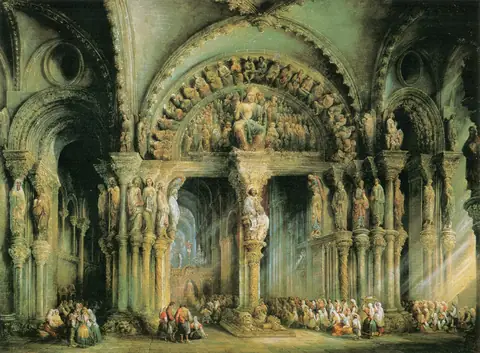
Image: Wikimedia Commons · Public domain (PD-Art) The Pórtico de la Gloria in 1849
Look closely. A painting shows the Romanesque portal inside the west front of the cathedral, with pilgrims gathered before it. Notice the figures on the columns and the sculpted arch.
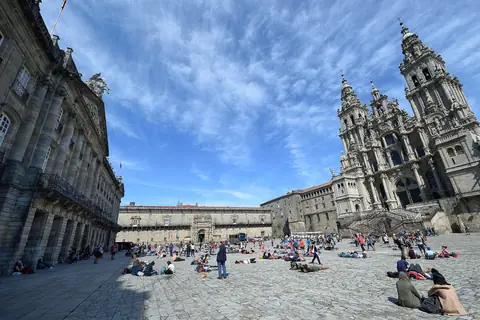
Image: Wikimedia Commons · CC BY 3.0 · Photo: Tim Adams The Obradoiro front over the square
Look closely. Pilgrims rest in the great square before the Baroque front of the cathedral. Many of them have walked for days or weeks to reach this place.
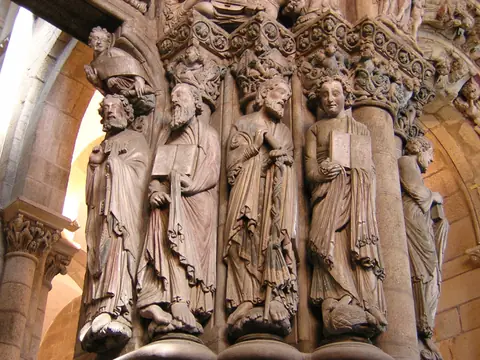
Image: Wikimedia Commons · CC BY 2.0 · Photo: pedronchi Apostles on the Pórtico
Look closely. Statues of apostles stand against the columns of the portal. These sculptures were carved by Master Mateo's workshop in the late twelfth century.
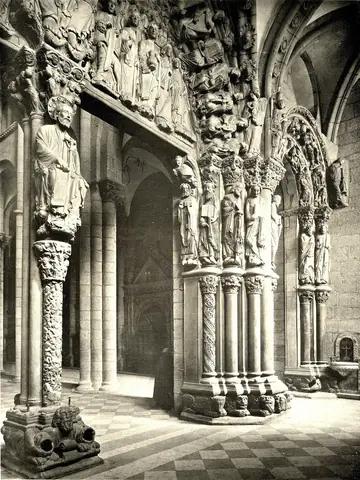
Image: Wikimedia Commons · Public domain (PD-Art) The Pórtico in 1892
Look closely. A photograph from 1892 shows the three doors and the carved columns of the Romanesque portico.


What to watch for
Look slowly- The Pórtico de la Gloria. The Romanesque portal of Master Mateo.
- The Obradoiro façade. The Baroque west front over the great square.
- The botafumeiro. The censer swings from the transept ceiling.
- The scallop shell. It is the sign of the pilgrim of St James.
Sources
Dates follow standard historical references and, where we quote a book, the wording of the edition hosted in this library. Where a tradition is not certain history, the page says so. Photographs and pictures are used only when the image itself is Public domain, CC0, or CC BY with a named credit. Each picture links to its source page with full licence details. Pictures taken before a site was damaged are labelled with their date.