Great Churches & Monasteries · Western Europe
Cologne Cathedral
The Gothic cathedral built over six centuries to house the shrine of the Three Kings.
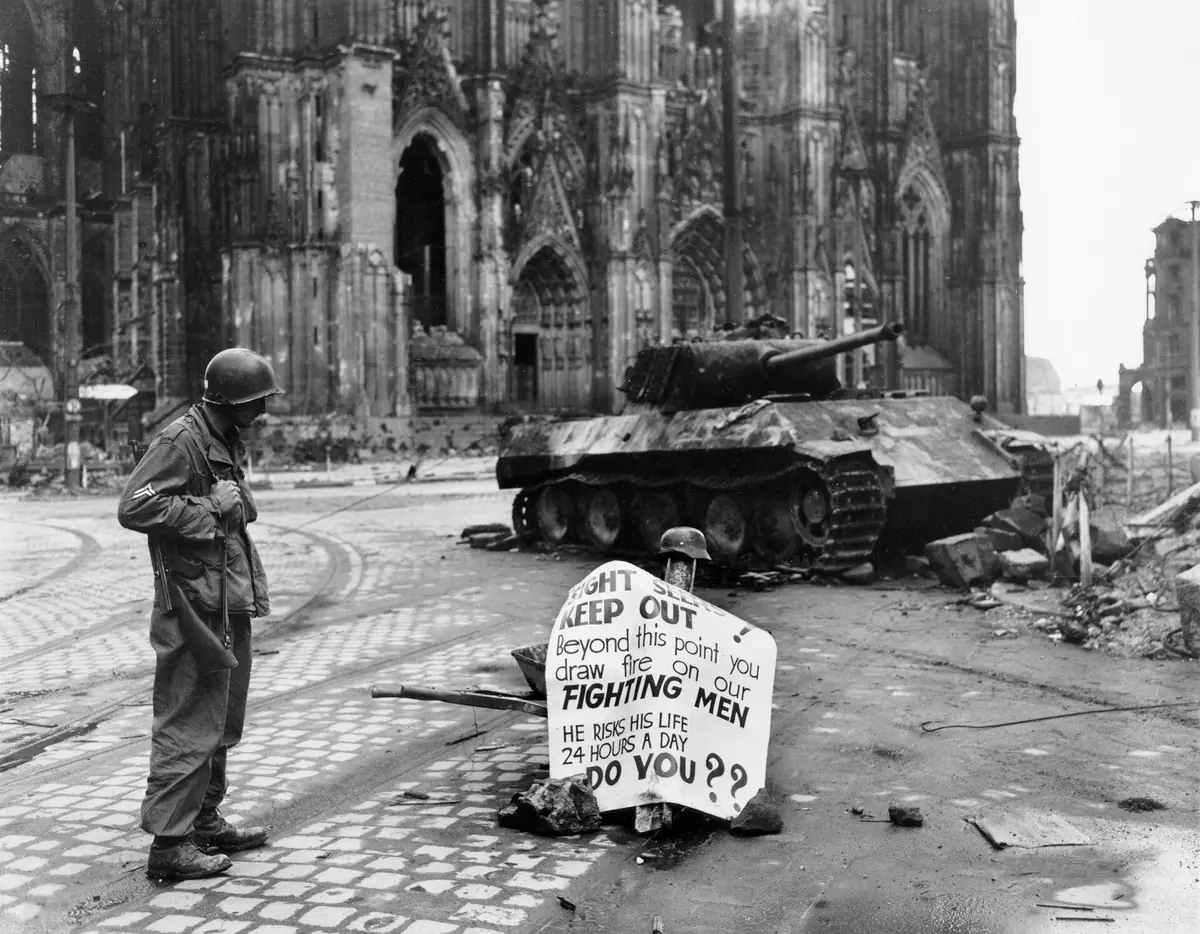
Still standing. The cathedral stands. It survived heavy bombing of the city in the Second World War, with damage that was repaired over the following decades.
Santiago de Compostela · Notre-Dame de Paris
What it is
In 1164 Rainald of Dassel, archbishop of Cologne, brought to the city the relics said to be those of the three Magi, the wise men of the Gospel of Matthew, after the emperor Frederick Barbarossa took Milan. The relics were placed in a great gold shrine, made about 1190–1220 and associated with the goldsmith Nicholas of Verdun. Pilgrims came in great numbers, and the old cathedral was too small. Archbishop Konrad von Hochstaden laid the foundation stone of a new Gothic church on 15 August 1248, with a plan drawn in the French style.
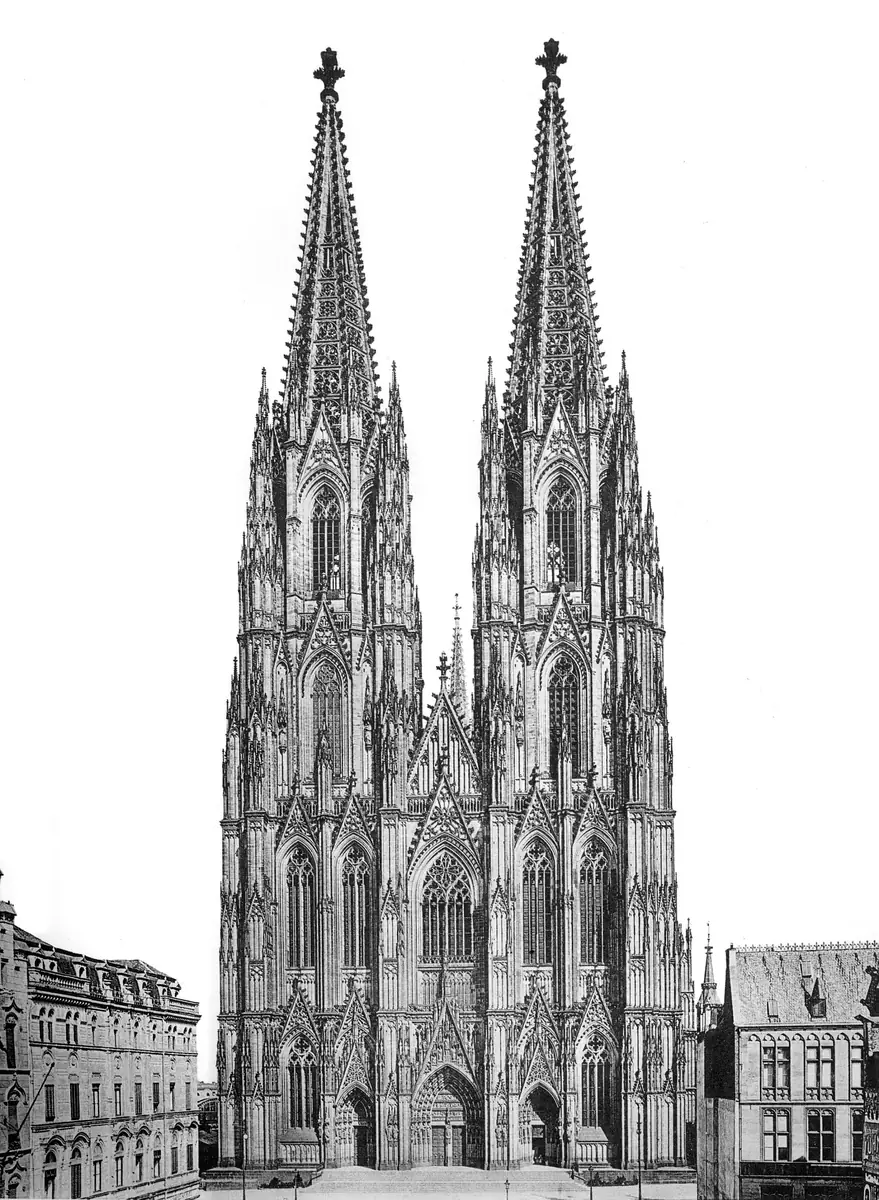
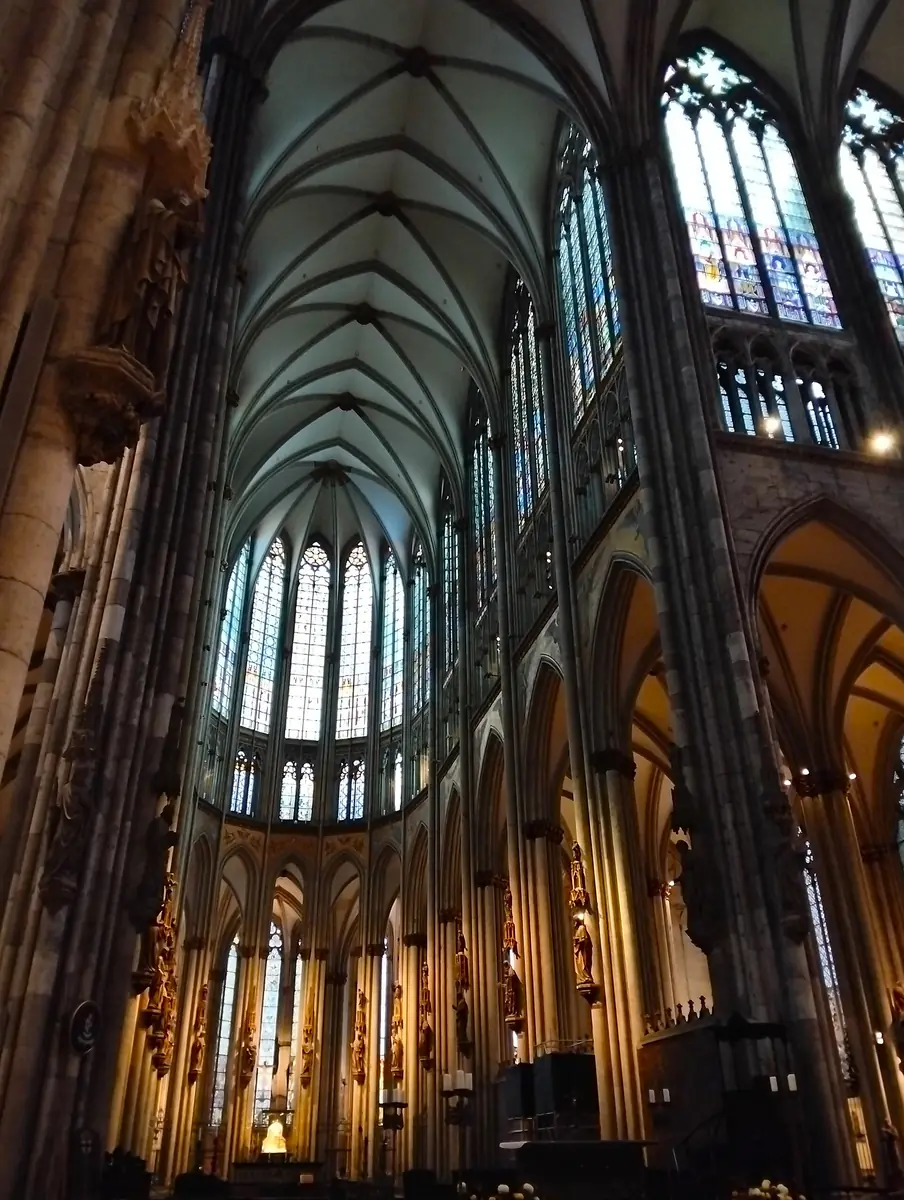
The choir was consecrated in 1322. Work continued slowly, and about 1473 it stopped, with the south tower unfinished and a wooden crane standing on top of it for centuries. In the early nineteenth century the original medieval drawings were found, and building resumed in 1842 on the old plan. The cathedral was completed in 1880, and for a few years it was the tallest building in the world, at about 157 meters. In the Second World War the city around it was heavily bombed, and the twin spires remained among the ruins. The Gero Cross, carved about 970, is among the oldest surviving large crucifixes in the West.
“and when they had opened their treasures, they presented unto him gifts; gold, and frankincense and myrrh.”
Why it matters for a classical Christian student
Cologne Cathedral shows a long loyalty to a plan. People began it knowing they would not see it finished, and six hundred years later their successors completed it to the old design. A classical Christian student can learn from the Gospel account of the Magi, who traveled far to worship a child, and ask why travelers and pilgrims have always been drawn to such places. The virtue is perseverance across generations.
Read alongside
- The Canterbury Tales: Chaucer's Wife of Bath has been 'in Galice at Saint James, and at Cologne'.
- The Bible: The visit of the Magi is in Matthew 2.
Great Lives connected here
- Thomas Aquinas, in Great Lives: Aquinas studied in Cologne under Albert the Great from about 1248, the year the foundation stone was laid.
- Hildegard of Bingen, in Great Lives: Hildegard preached at Cologne in 1160, a few years before the Magi relics arrived.
Look closely
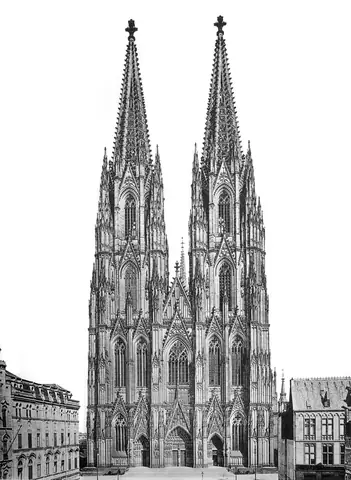
Image: Wikimedia Commons · CC0 (public domain) The west front
Look closely. Two openwork spires rise from the west front. The towers were designed in the Middle Ages and built in the nineteenth century. Notice the tall, narrow lines and the dense carving.
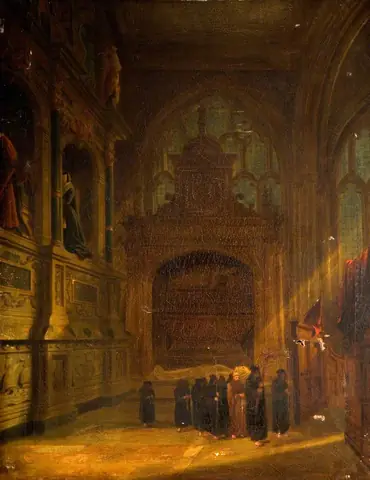
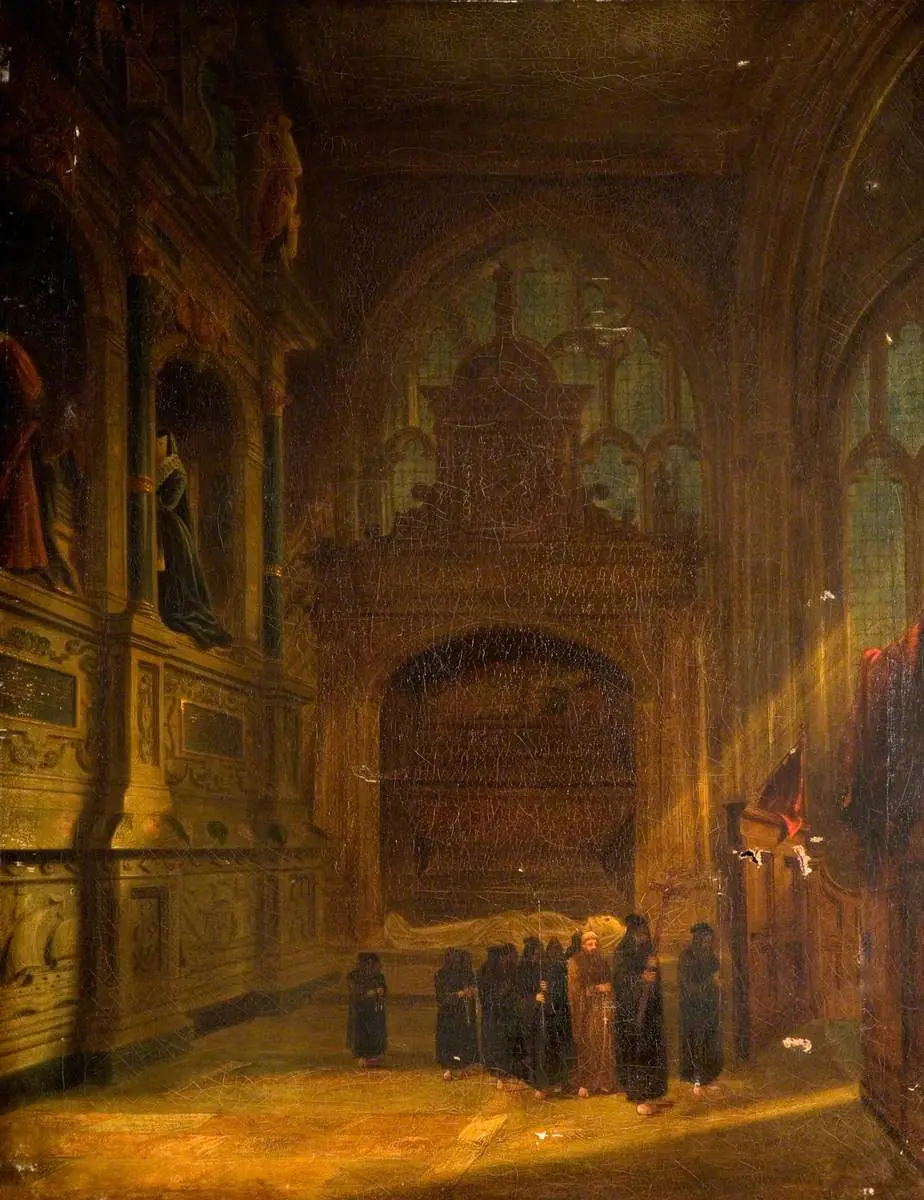
Image: Wikimedia Commons · Public domain (PD-Art) The interior in 1838
Look closely. A painting by David Roberts shows the interior of the cathedral with small figures and shafts of light. Notice the scale of the building as the figures are dwarfed by it.
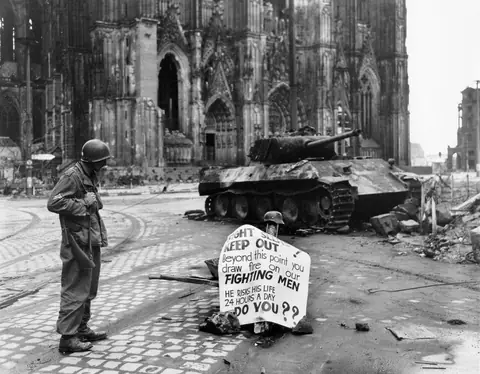
Image: Wikimedia Commons · Public domain Cologne in April 1945
Look closely. A soldier reads a warning sign in a street of ruins, with a tank and the cathedral behind. The cathedral was damaged but remained standing among the ruins of the city.
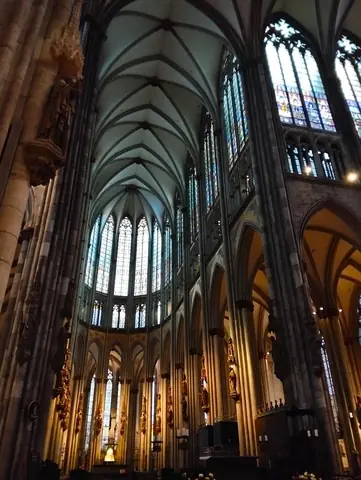
Image: Wikimedia Commons · CC BY 4.0 · Photo: MOs810 The choir
Look closely. The tall choir rises in slender piers and stained glass windows. The choir was consecrated in 1322.


What to watch for
Look slowly- The twin spires. They rise about 157 meters.
- The Shrine of the Three Kings. A gold reliquary behind the high altar.
- The Gero Cross. A carved crucifix from about 970.
- The medieval plan. Compare the drawings of the 1300s with the finished building.
Sources
Dates follow standard historical references and, where we quote a book, the wording of the edition hosted in this library. Where a tradition is not certain history, the page says so. Photographs and pictures are used only when the image itself is Public domain, CC0, or CC BY with a named credit. Each picture links to its source page with full licence details. Pictures taken before a site was damaged are labelled with their date.