Great Art · Nineteenth and twentieth century
Gutzon Borglum
The sculptor of Mount Rushmore, and of civic bronzes that still stand in Washington and Chicago.
His life
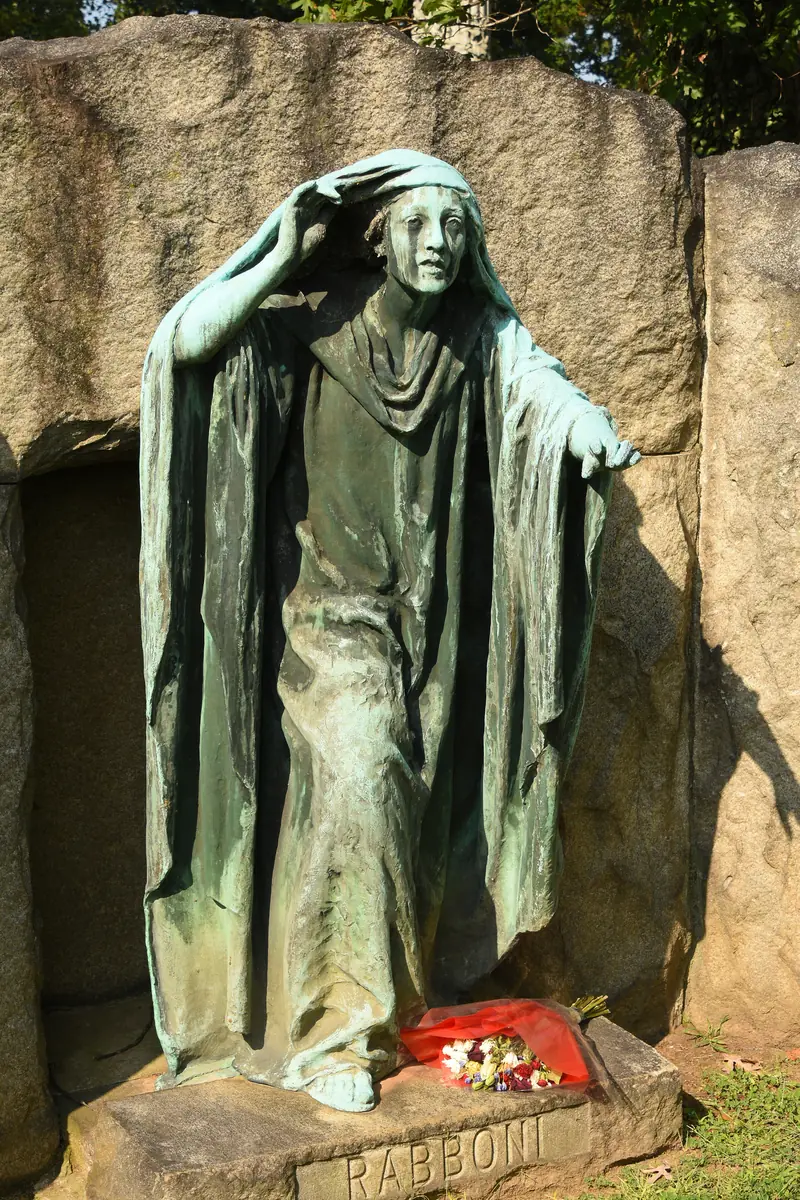
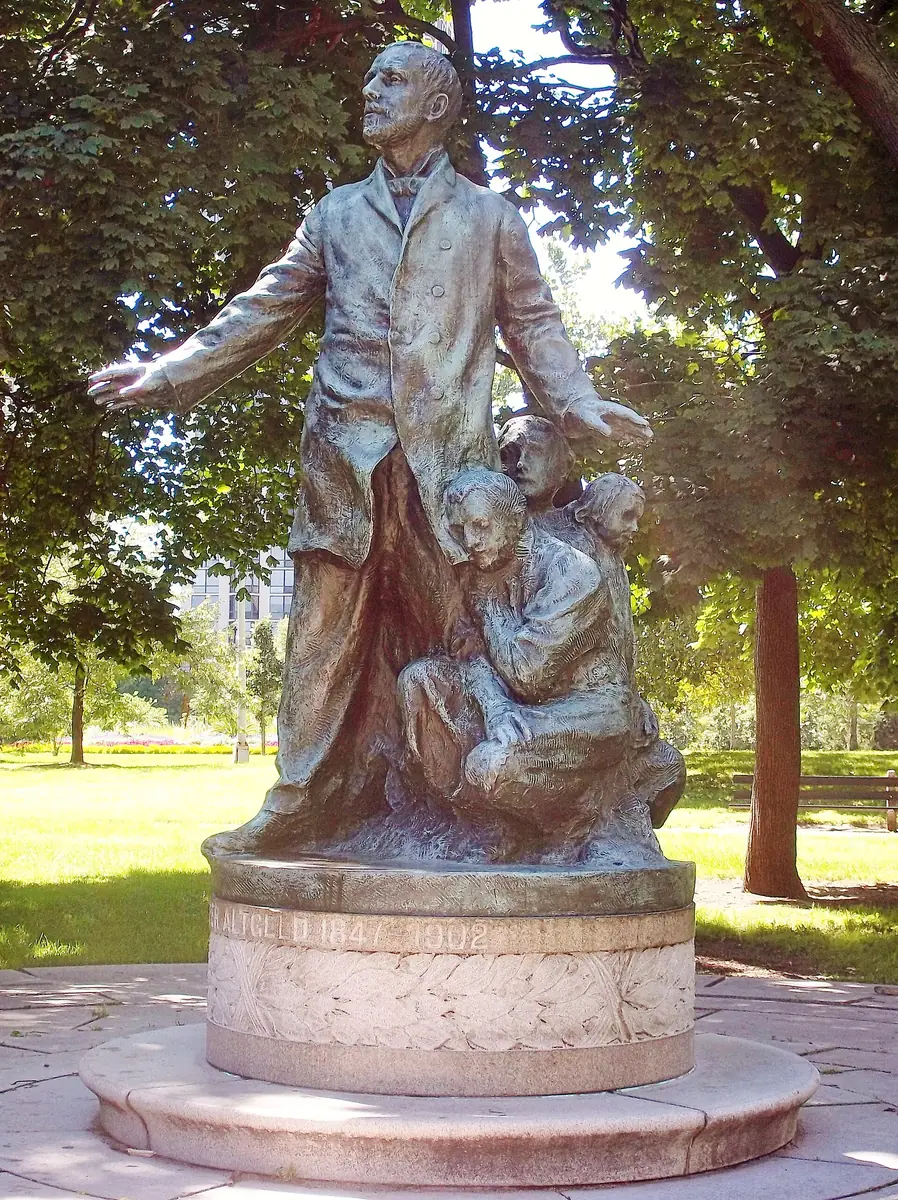
Borglum was born in the Idaho Territory, trained as a painter and sculptor, and studied in Paris before he came home to make large public work in the United States. He modeled a colossal Lincoln head, the equestrian General Sheridan at Sheridan Circle in Washington, the mourning figure called Rabboni in Rock Creek Cemetery, and a monument to Governor John Peter Altgeld in Chicago. In Newark he made The Wars of America, a great bronze group of soldiers and civilians (it is mentioned here; the views we had of it were not used, because they included bare-chested figures). The work that took the rest of his life was Mount Rushmore, where he and his son Lincoln directed the carving of Washington, Jefferson, Lincoln, and Theodore Roosevelt in the granite of the Black Hills.
The gift is public scale. Whether the subject is a single rider, a shrouded woman at a tomb, or four presidents in a mountain, the forms are meant to be read from a distance and still hold when you come close enough to see the tool marks in the stone or the bronze.
Key sculptures
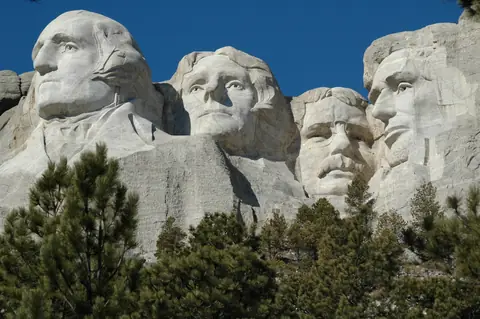
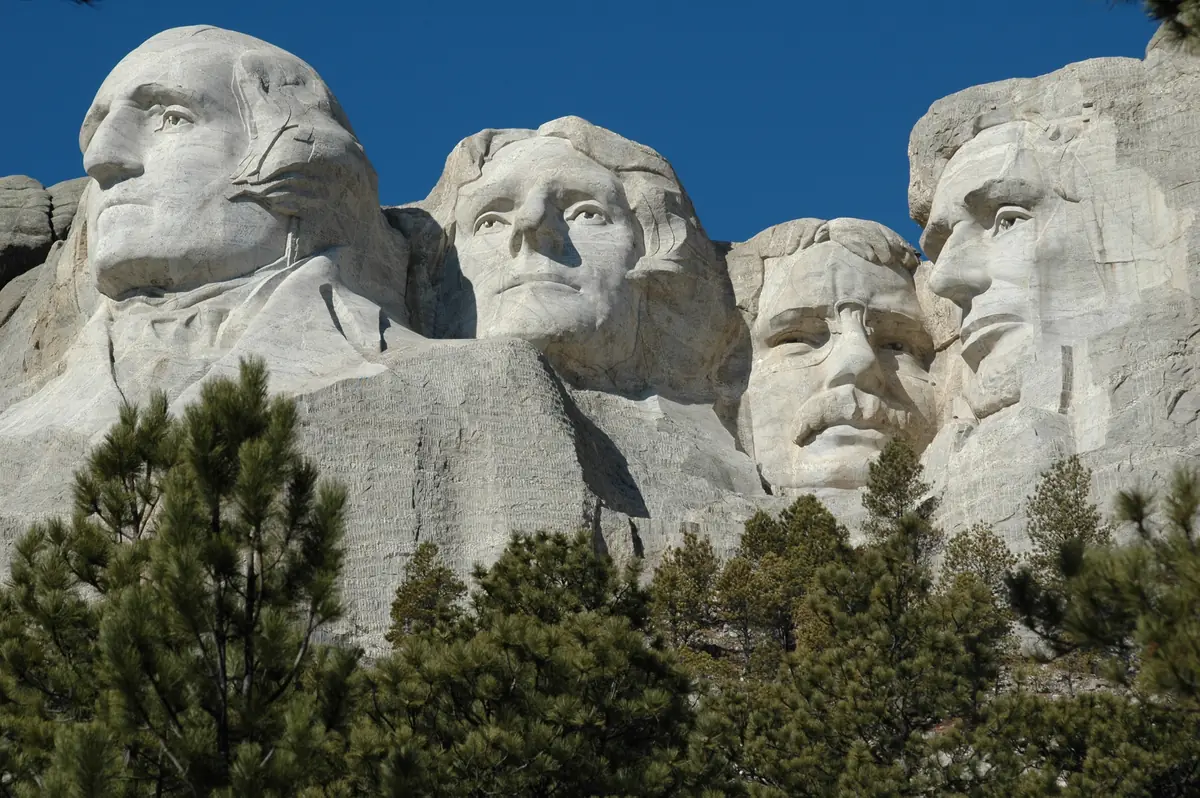
Image: Wikimedia Commons · Public domain Mount Rushmore
Look closely. The four presidential heads as seen from the Presidential Trail, under a clear sky, with pines in the foreground. Look at the order of the faces — Washington, Jefferson, Roosevelt, and Lincoln — and at how each head is carved from the same granite cliff, with the rock below them still rough.
In the library: George Washington · Thomas Jefferson · Abraham Lincoln
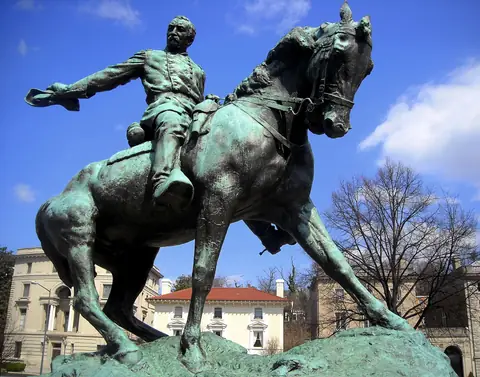
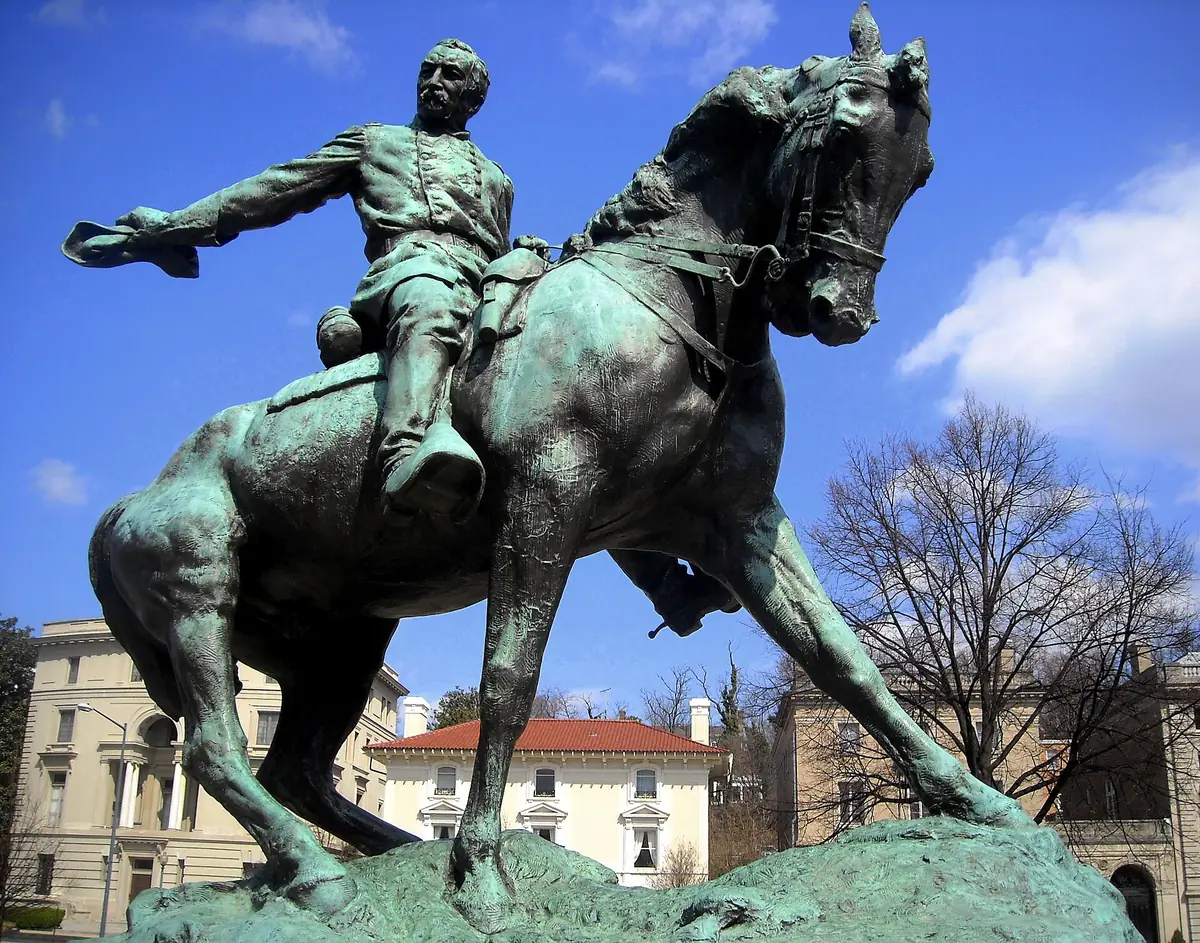
Image: Wikimedia Commons · Public domain General Philip Sheridan
Look closely. The bronze rider at Sheridan Circle: the general in uniform, his hat flung out in one hand, the horse turning and gathering itself on a rocky base. Look at the twist of the animal under him and at how the rider sits the turn rather than sitting still as a portrait on a pedestal.
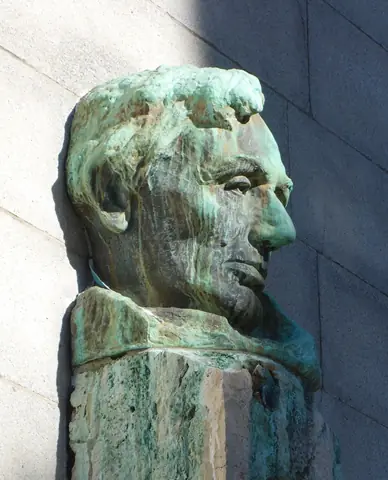
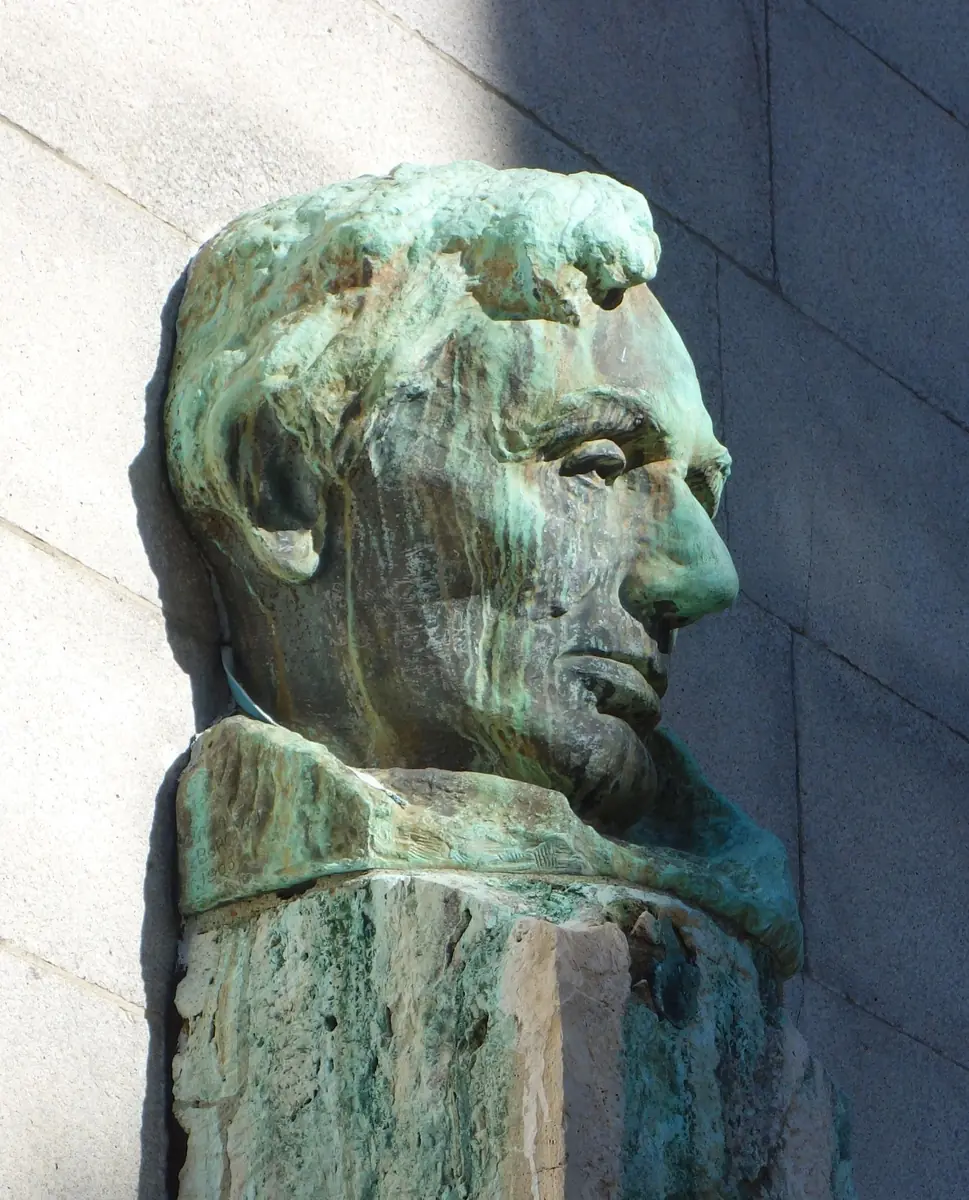
Image: Wikimedia Commons · CC0 (public domain) Abraham Lincoln (Sather Tower)
Look closely. A bronze head of Lincoln in profile, set against the stone of Sather Tower, the surface weathered green, the lower part still rough like unfinished rock. Look at the brow and the beard and at how little of a bust there is — almost only a face emerging from a block.
In the library: Abraham Lincoln · The Gettysburg Address · Lincoln's Second Inaugural Address
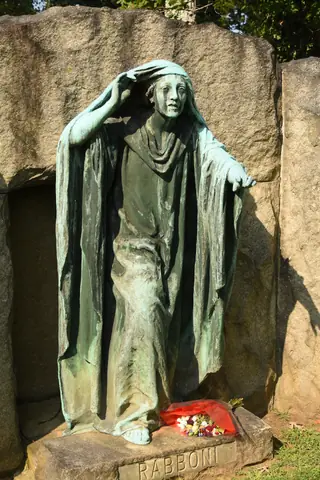
Image: Wikimedia Commons · CC BY 2.0 · Photo: Amaury Laporte Rabboni
Look closely. The bronze woman at the tomb, fully draped, one hand lifting her veil, the other extended, a bouquet laid at her feet, the word Rabboni cut in the base. Look at the turn of the body out of the rock niche, and at the hooded drapery that is also a gesture of recognition.
In the library: The Bible (KJV) · Mary Magdalene · Jesus Christ
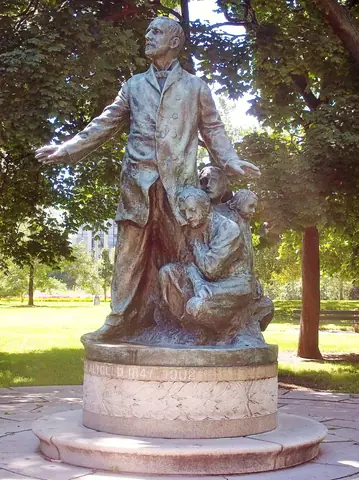
Image: Wikimedia Commons · Public domain Governor John Peter Altgeld
Look closely. The standing bronze of the governor in a long coat, arms open, with three smaller figures crouched at his feet, the name and dates cut in the stone base. Look at the sheltering pose, which is not a point or a speech so much as a stance, and at how the smaller figures are gathered under his coat rather than lined up as allegories.


What to watch for in Gutzon Borglum
Look slowly- Four faces in living rock. At Rushmore, look at how the heads are not stuck on the mountain but carved out of it, with the granite around them left as cliff.
- A horse that is already turning. Sheridan's mount twists under him as he waves his hat; the rider and the animal are one motion.
- A Lincoln head without a full body. The bronze at Berkeley is almost only a face and a rough collar of stone, like a fragment of a mountain.
- A woman who has just turned. Rabboni lifts her veil and steps from the rock, the word of greeting cut in the base.
- A governor who shelters others. Altgeld stands in a long coat, his arms open, with three figures gathered at his feet.
For older students
These famous works include nudity, so they are named here but not shown. Teachers and parents can decide when to look at them together.
- The Aviator, 1918–1919, The University of Virginia, Charlottesville. A winged male figure in bronze, unclothed except for a strap. It is named here but not shown.
Dates and collections follow the holding museums and Wikidata. Images of paintings are photographs of public-domain pictures from Wikimedia Commons or museum open-access releases; photographs of sculpture are used only when the photograph itself is Public domain, CC0, or CC BY with a named credit. Each picture links to its source page with full licence details.