Great Art · Medieval
Cimabue
The Florentine who began to lead Italian painting out of the stiff Byzantine manner, and who, the story says, found the boy Giotto drawing in a field.
His life
Cimabue, whose ordinary name was Cenni di Pepo, was a Florentine painter and mosaicist working in the later 1200s. A later story, told by Giorgio Vasari, says that he came upon a shepherd boy named Giotto drawing a sheep on a rock and took him as a pupil. Whether or not every detail of the tale is true, it shows how the next generation remembered Cimabue: as the master who opened the way. He worked in Florence, Pisa, Arezzo and Assisi, painting large Madonnas on gold grounds and painted crucifixes for churches, and he made mosaics in the apse of Pisa Cathedral.
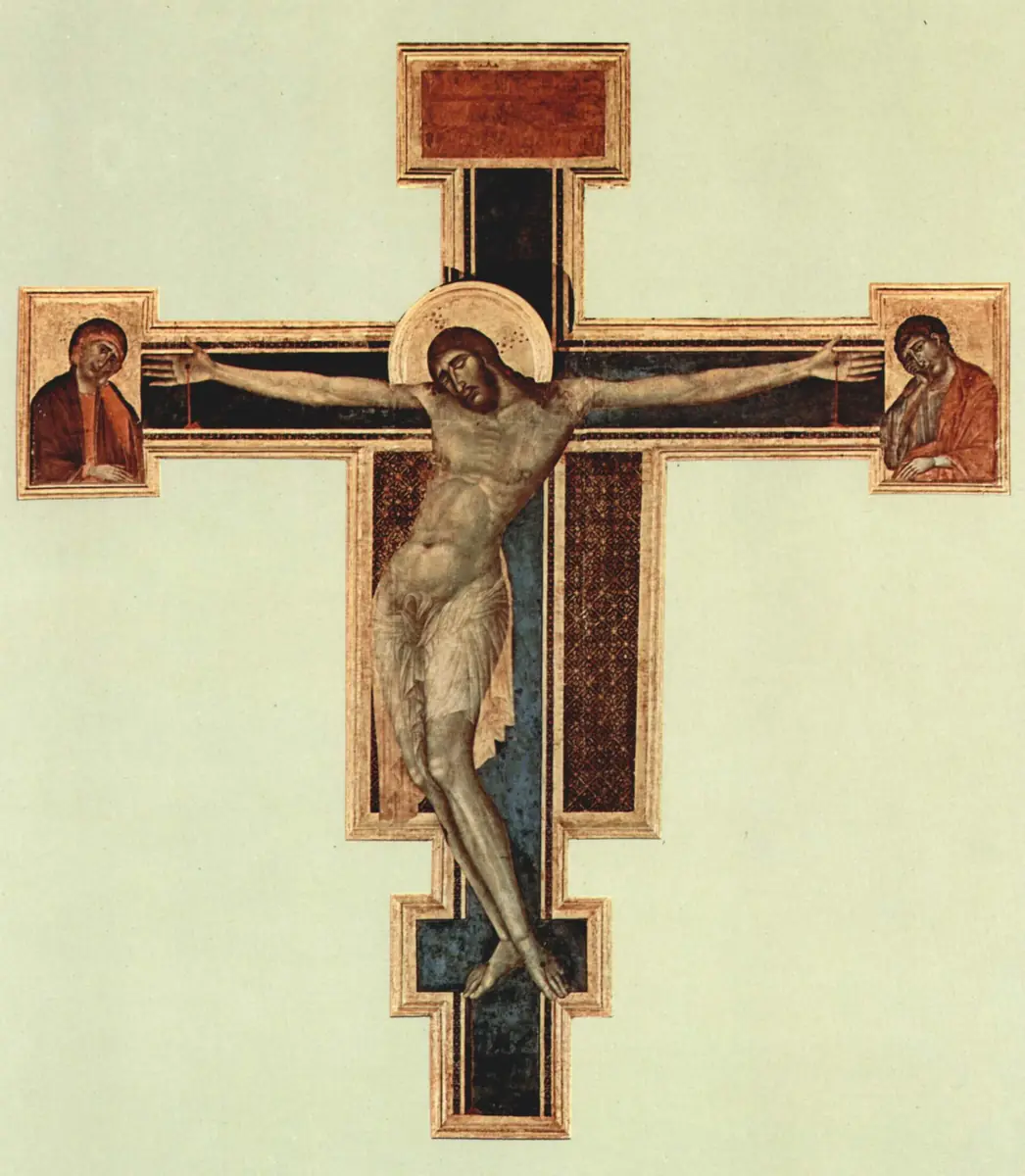
His figures still stand against gold, in the old manner, but their faces begin to show weight and feeling, and the drapery starts to fall like real cloth. In 1302 he was in Pisa, working on the cathedral mosaic, and he died that year. The Santa Croce Crucifix, badly damaged by the flood of 1966, is a reminder that these pictures have had to be guarded as well as admired. His gift was a first step: he kept the dignity of the older style and, by the gift of God, began to make painted people look as if they could breathe.
“by the will of God, in the city of Florence, in the year 1240, there was born, to give the first light to the art of painting, Giovanni, surnamed Cimabue”
Key works
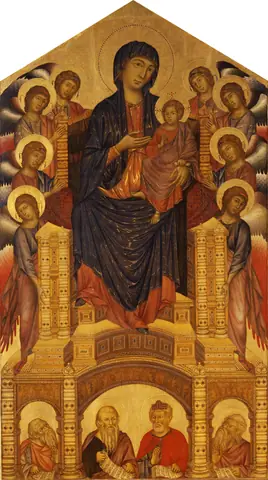
Image: Wikimedia Commons · Public domain (PD-Art) Santa Trinita Maestà
Look closely. Mary sits on a carved wooden throne with the Child on her lap, and rows of angels press in on either side, their wings making a patterned hedge of colour. Below, four prophets look out from arches as if from windows. Look at how the throne has real steps and architecture, even while the background remains gold.
In the library: The Bible (KJV) · Mary, mother of Jesus · Jesus Christ · Vasari, Lives of the Artists
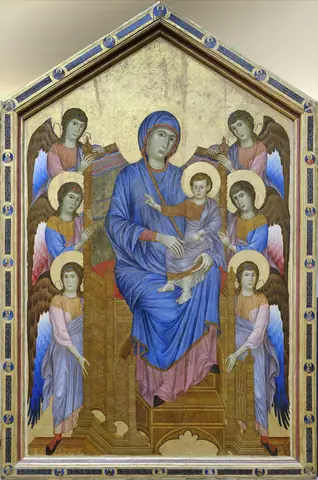
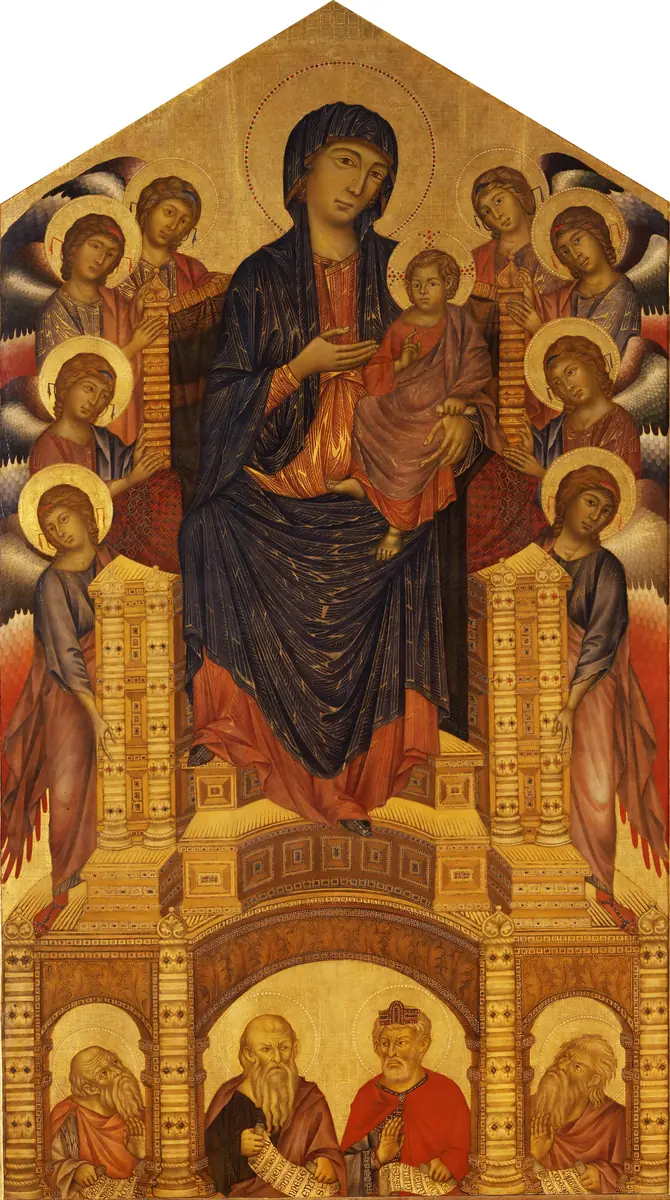
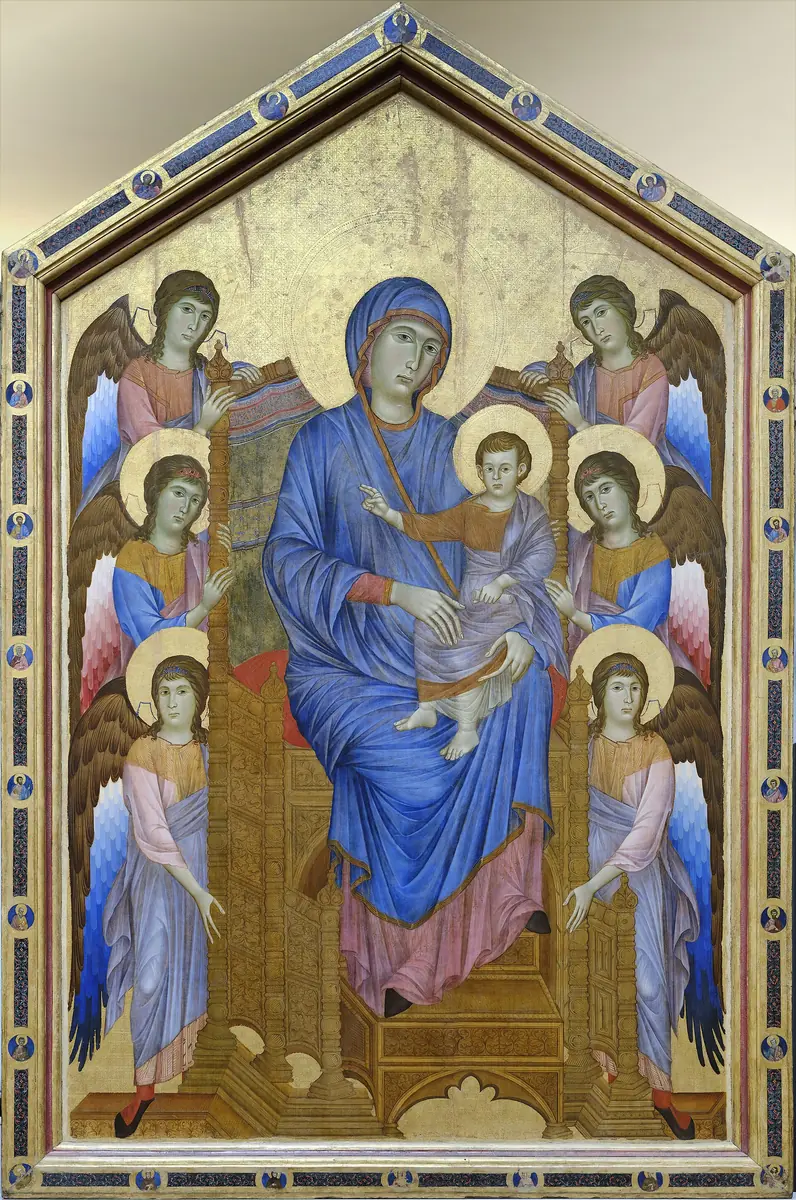
Image: Wikimedia Commons · Public domain (PD-Art) The Madonna and Child in Majesty, known as the Louvre Maestà
Look closely. Six angels hold up and surround the throne, three on each side, their faces quietly alike and their hands careful on the wooden frame. The Child raises two fingers in blessing. Compare this slightly earlier Maestà with the Santa Trinita panel in Florence, and then with Giotto's Ognissanti Madonna, to see the step from Cimabue to his pupil.
In the library: The Bible (KJV) · Mary, mother of Jesus · Giotto
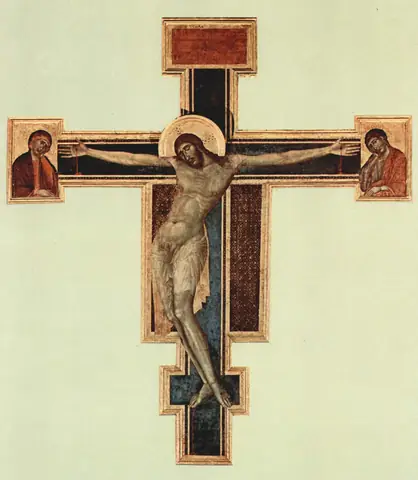
Image: Wikimedia Commons · Public domain (PD-Art) Crucifix (Santa Croce)
Look closely. Christ hangs on a shaped cross, with Mary and John in small panels at the ends of the arms. The painted surface is scarred and incomplete: the flood that filled Santa Croce in 1966 blistered the paint and took much of the lower body. The damage is part of what you are looking at; it teaches how costly it is to keep such a work.
In the library: The Bible (KJV) · Jesus Christ · Mary, mother of Jesus
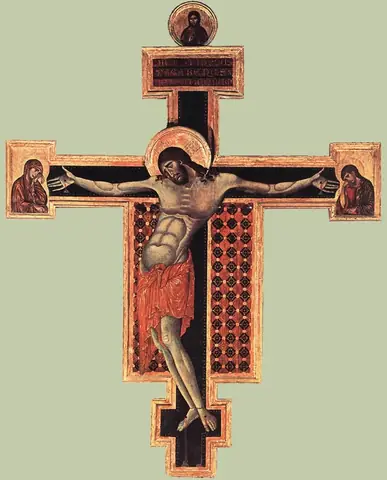
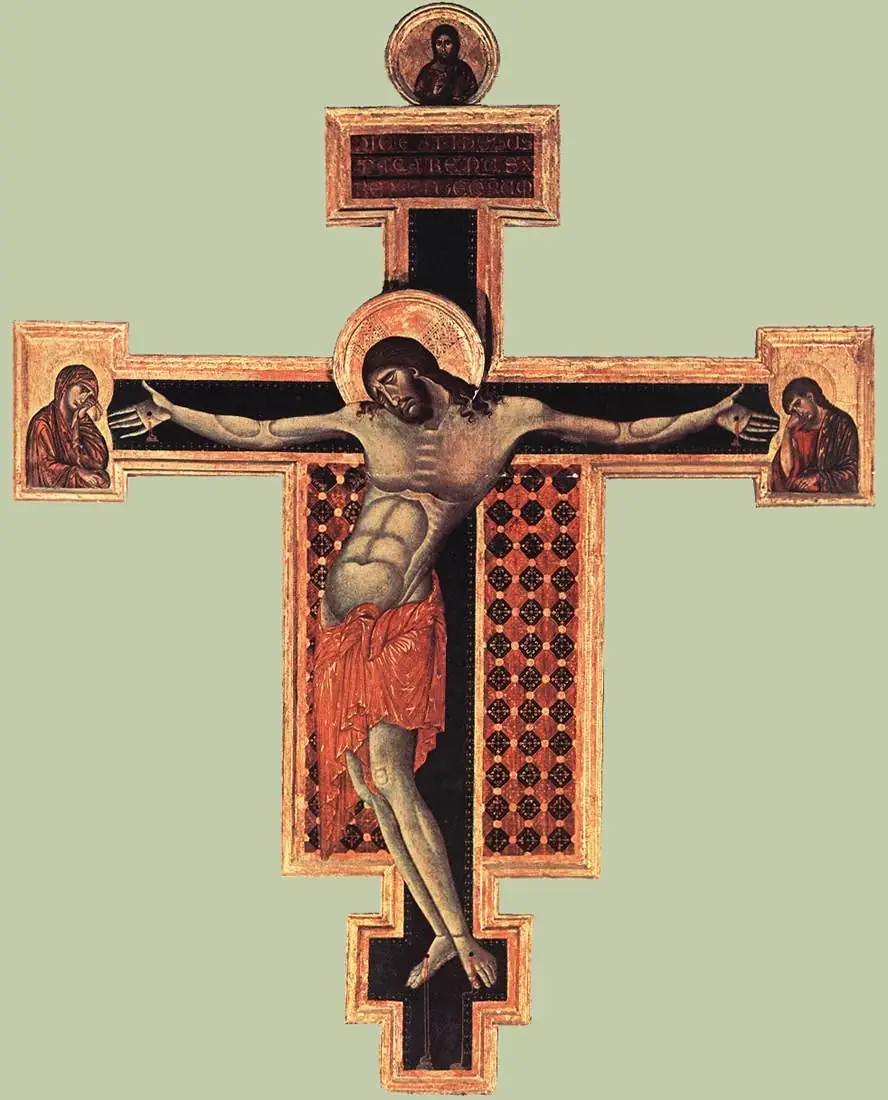
Image: Wikimedia Commons · Public domain (PD-Art) Crucifix (San Domenico, Arezzo)
Look closely. This earlier crucifix is better preserved than the one in Florence. Christ's body still follows the older, slightly curved type, but the face is beginning to show pain and rest at once. At the ends of the arms, Mary and John grieve in small panels, and a small roundel sits above the inscription at the top of the cross.
In the library: The Bible (KJV) · Jesus Christ
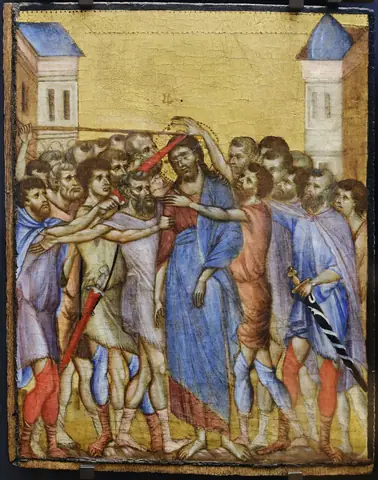
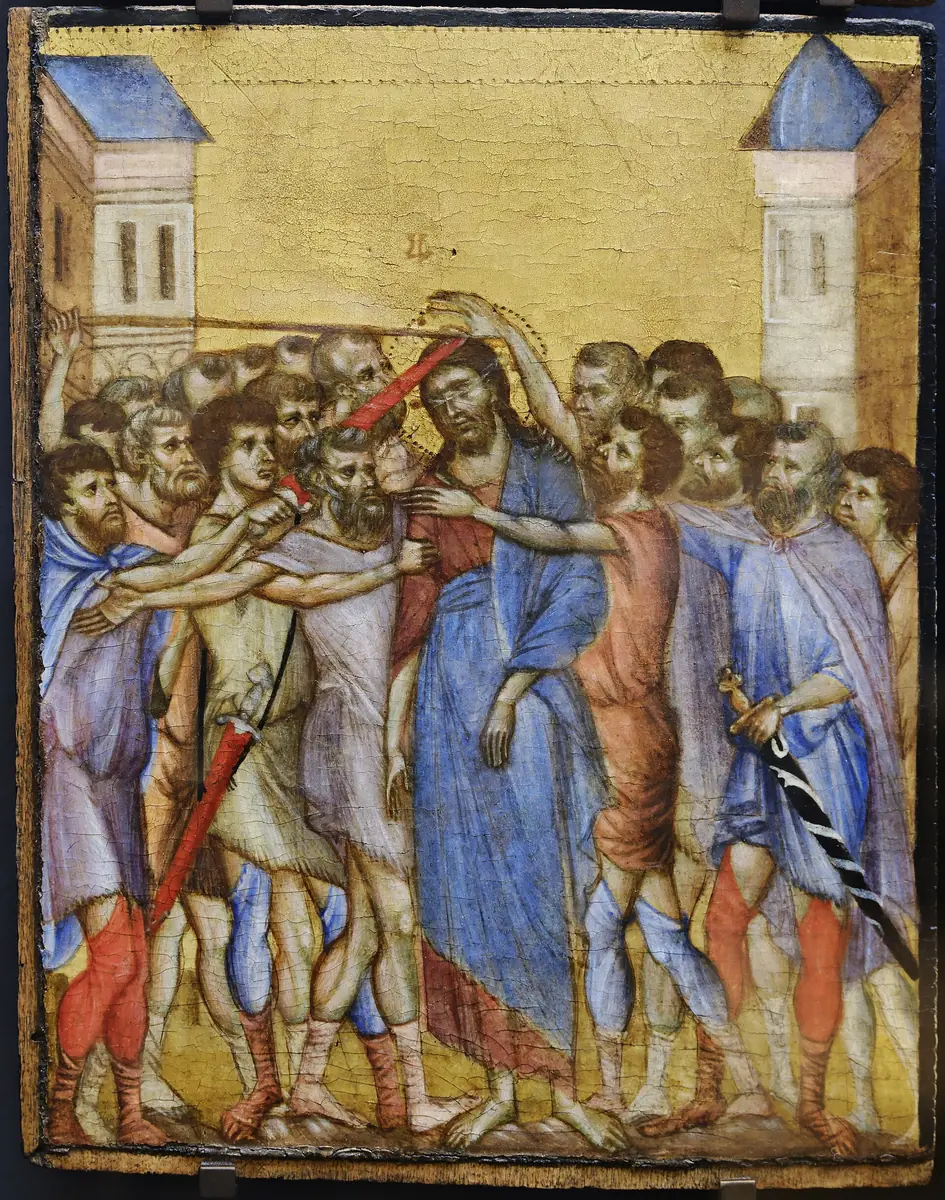
Image: Wikimedia Commons · Public domain (PD-Art) The Mocking of Christ
Look closely. Christ stands at the centre, calm, while the men who mock him lean in from both sides. This small panel belongs with the Flagellation at the Frick Collection; together they once formed a diptych. The picture was recognised only in 2019, after it came to light in a house in northern France, and the Louvre later acquired it.
In the library: The Bible (KJV) · Jesus Christ
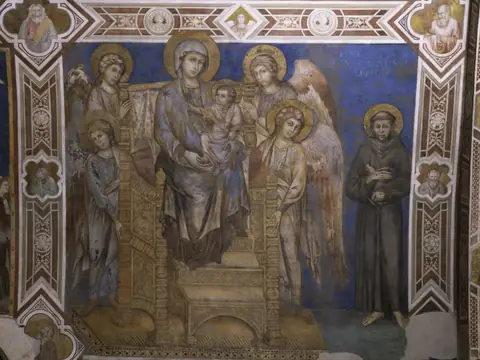
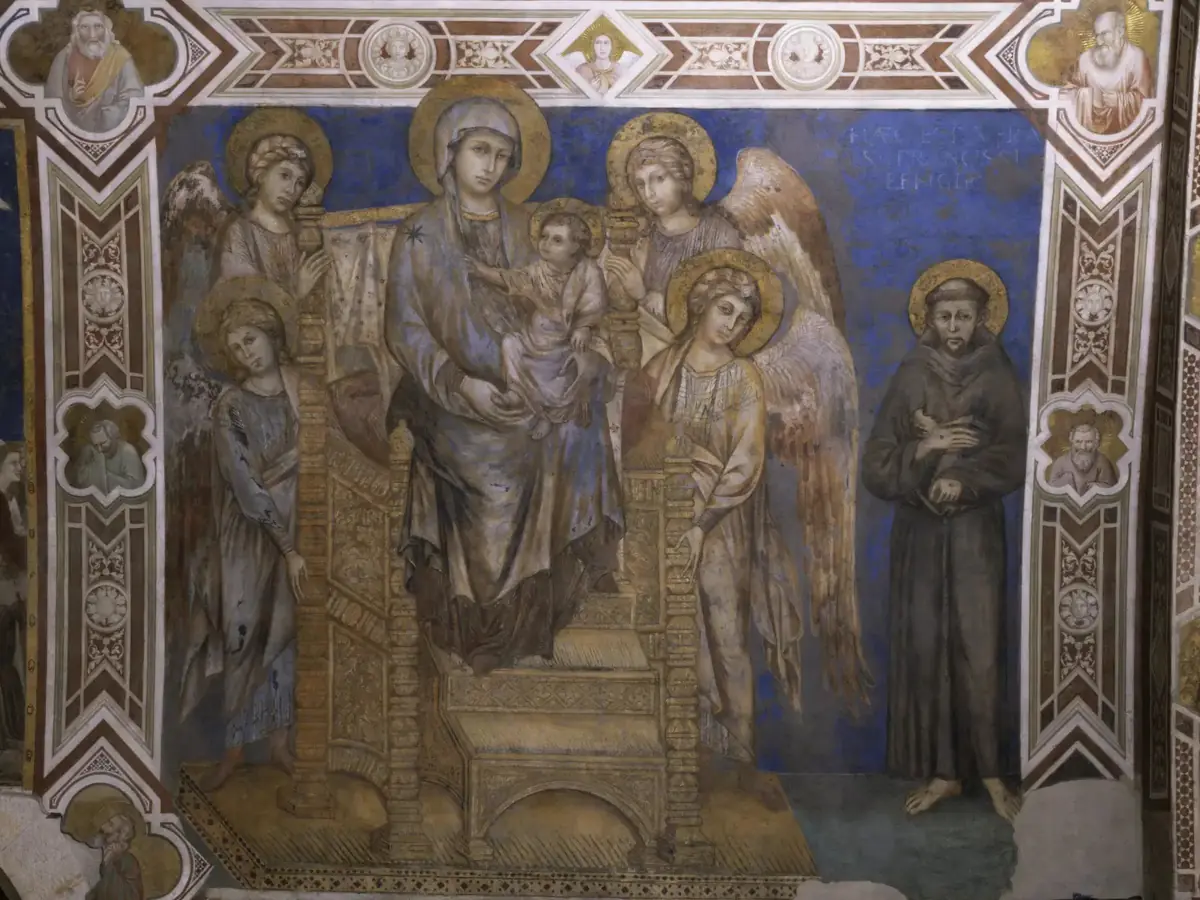
Image: Wikimedia Commons · Public domain (PD-Art) Madonna Enthroned with the Child, Saint Francis and Four Angels
Look closely. In the Lower Church at Assisi, Mary and the Child sit among four angels, and Saint Francis stands small at the side of the throne, as if he has just been admitted to the court of heaven. Look at his humble scale next to the Madonna, and at the fresco's place on a wall still used for prayer.
In the library: The Bible (KJV) · Mary, mother of Jesus · Francis of Assisi · Early Franciscan Sources
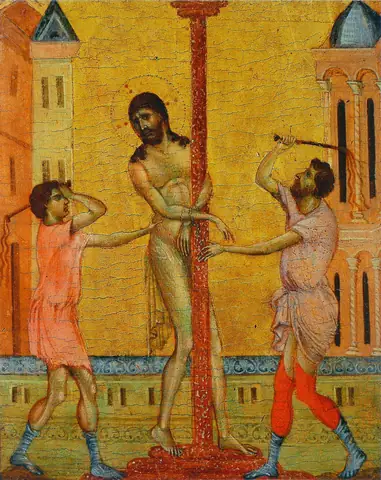
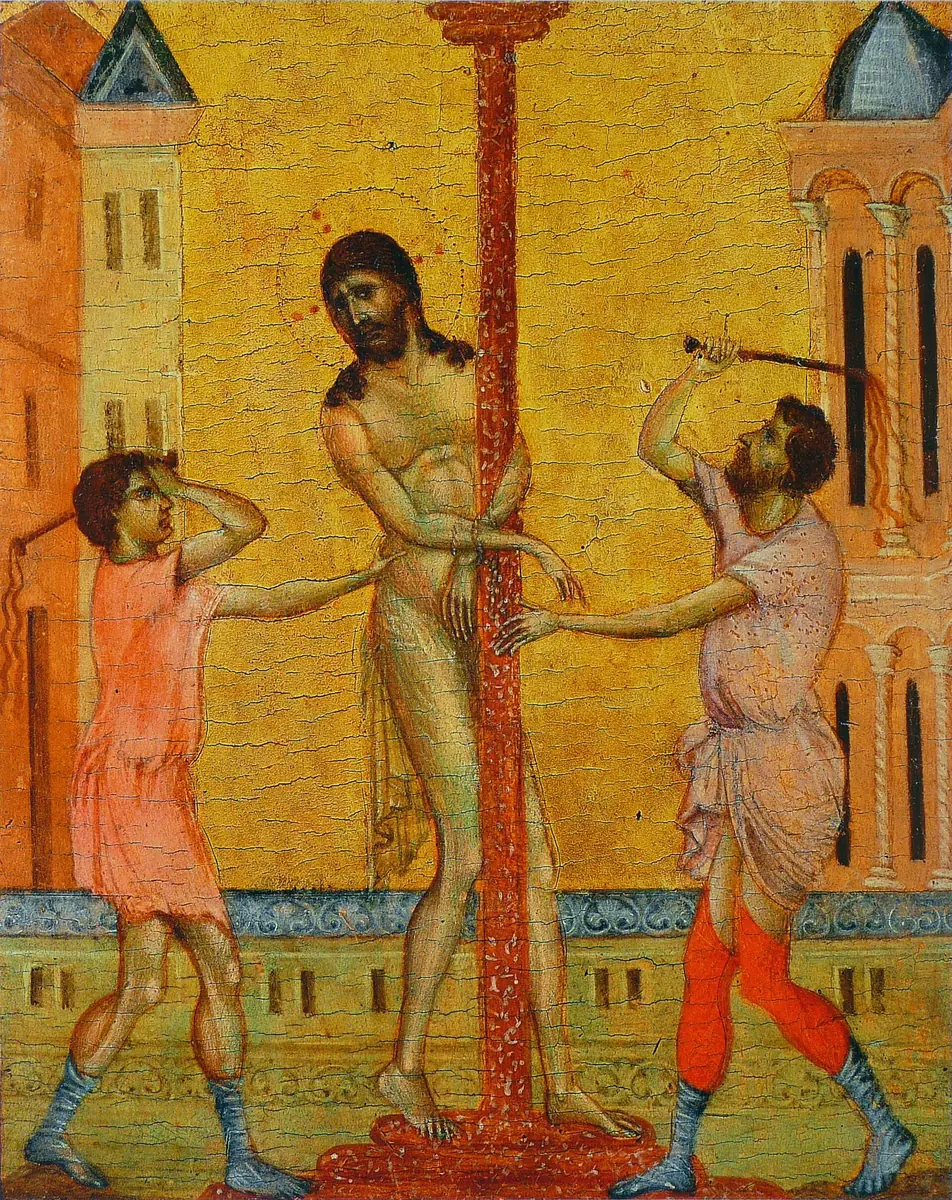
Image: Wikimedia Commons · Public domain (PD-Art) The Flagellation of Christ
Look closely. Christ is bound to a slender pillar while two men raise their whips. The gold ground is punched with a delicate pattern, and the bodies already have more weight than in older Byzantine panels. Pair this with the Louvre Mocking of Christ, its companion from the same small diptych.
In the library: The Bible (KJV) · Jesus Christ


What to watch for in Cimabue
Look slowly- Gold, and then the faces. The background is still a field of gold, but look for cheeks, eyes and hands that begin to have weight.
- Drapery like cloth. Folds start to fall over knees and arms instead of remaining a flat pattern.
- The painted crucifix. Christ hangs on a shaped wooden cross; compare the earlier, better-preserved Arezzo crucifix with the flood-damaged one in Florence.
- Angels stacked in rows. In the great Madonnas, angels are still arranged in tiers; count them and see how each head turns.
- A teacher and a pupil. Look at Cimabue beside Giotto and ask what has changed in the faces and the space.
Dates and collections follow the holding museums and Wikidata. Images of paintings are photographs of public-domain pictures from Wikimedia Commons or museum open-access releases; photographs of sculpture are used only when the photograph itself is Public domain, CC0, or CC BY with a named credit. Each picture links to its source page with full licence details.