Great Art · Medieval
Giotto
The Florentine who gave painted figures weight, tears and tenderness, and opened the way to the Renaissance.
His life
Giotto grew up in the countryside near Florence. A story told later by Giorgio Vasari says the painter Cimabue found him as a shepherd boy drawing one of his sheep on a rock and took him as a pupil. Whatever the truth of the tale, Giotto became the most admired painter of his age. Before him, Italian painting mostly followed the flat, golden Byzantine manner. Giotto painted people who stand on real ground, cast their weight, and show grief, surprise and love on their faces.
His masterpiece is the cycle of frescoes in the Scrovegni Chapel in Padua, finished around 1305: the lives of Mary and of Christ told in panels, so that anyone who walked in, whether or not they could read, could follow the Gospel story. Giotto was a working craftsman with a family and a busy shop, and late in life Florence made him chief architect of its cathedral; the bell tower he designed is still called Giotto's Campanile. His gift was attention. He looked hard at how people actually move when they mourn or embrace, and he spent that gift on telling the old story plainly and beautifully.
“he alone, although born among inept craftsmen, by the gift of God revived that art, which had come to a grievous pass”
Key works
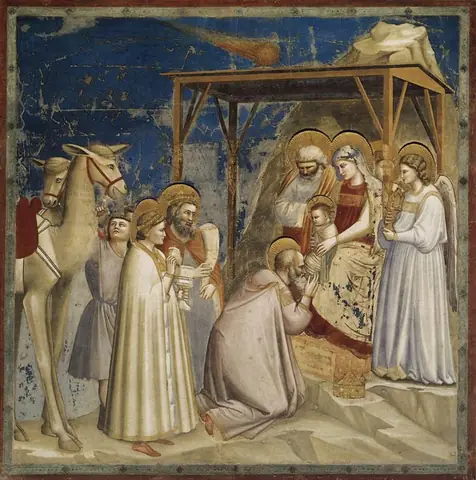
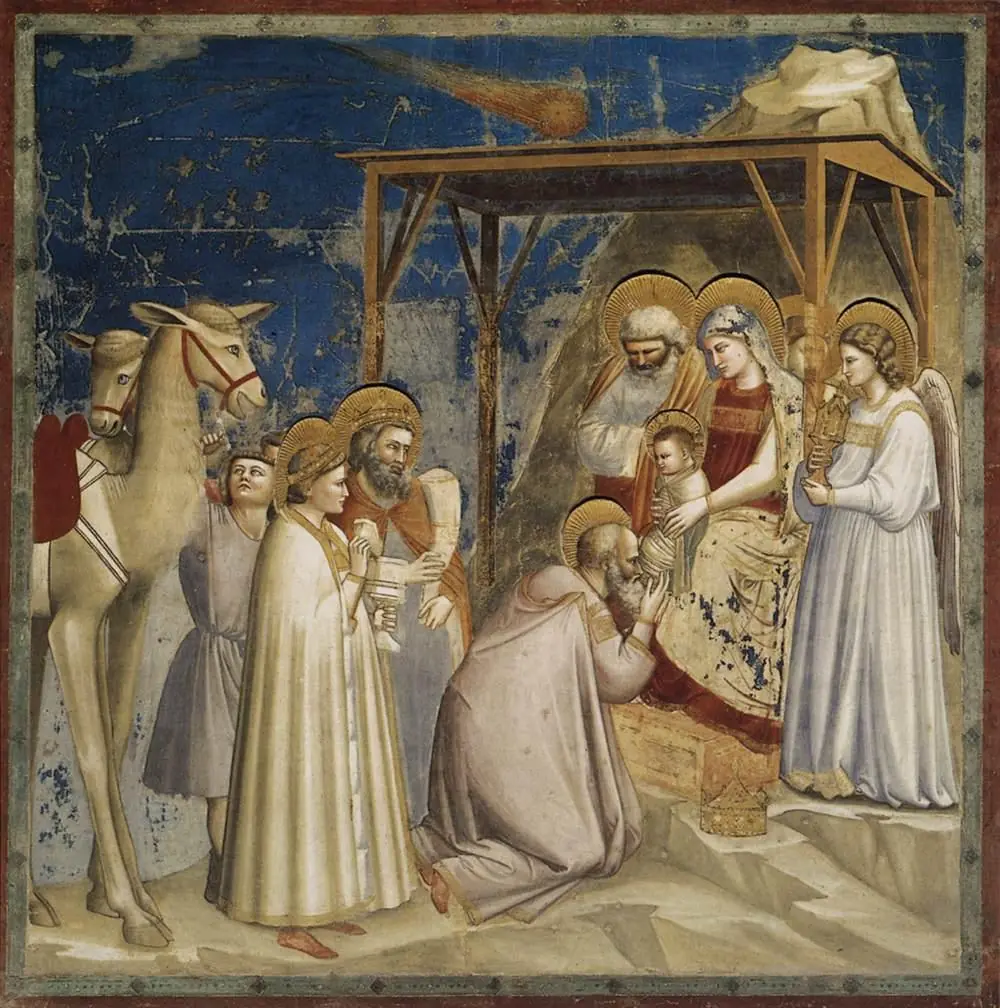
Image: Wikimedia Commons · Public domain (PD-Art) The Adoration of the Magi
Look closely. Look up above the stable roof: the star is painted as a blazing comet with a tail. Many historians link it to Halley's Comet, which passed in 1301, a few years before Giotto painted. Below, the oldest king has taken off his crown and kneels, and Giotto lets you see the camels' odd, bulging eyes as well.
In the library: The Bible (KJV) · Jesus Christ · Mary, mother of Jesus
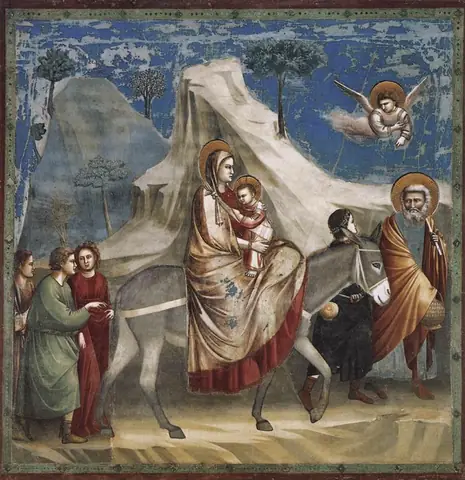
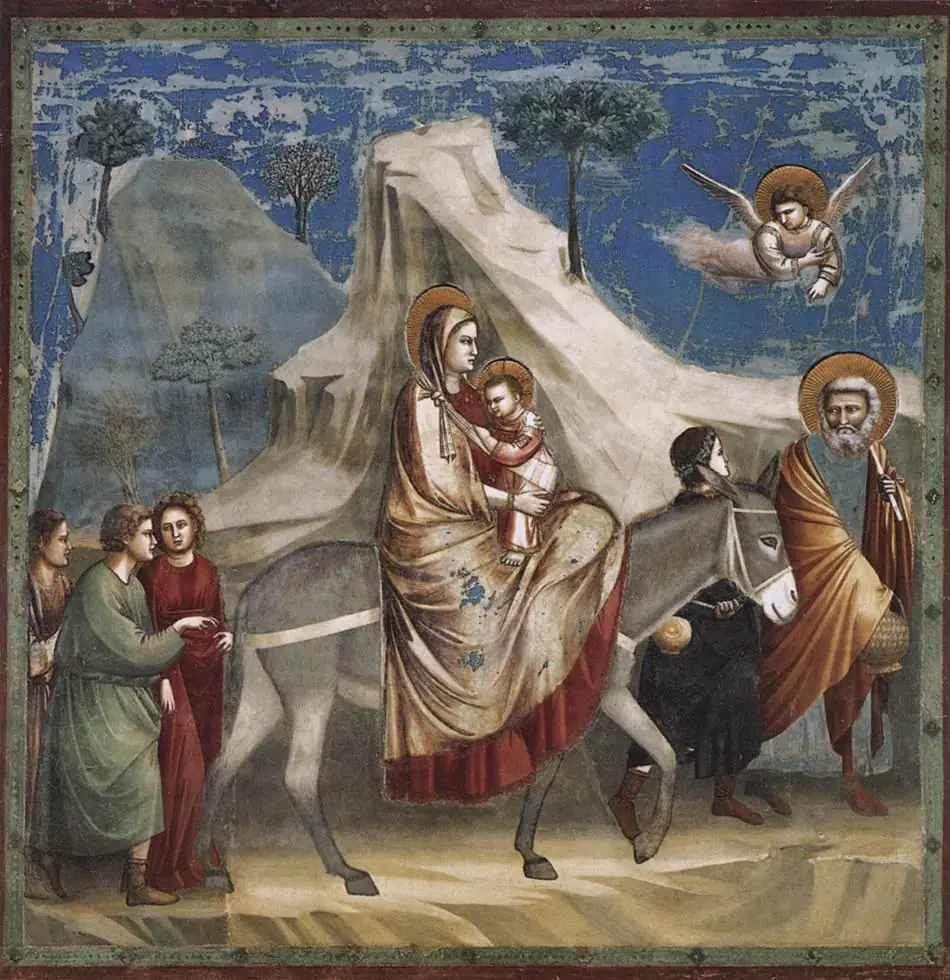
Image: Wikimedia Commons · Public domain (PD-Art) The Flight into Egypt
Look closely. The family is on the move to escape Herod. Notice how the rocky peak behind Mary rises like a tent over her and the Child, framing them, while an angel in the sky leads the way. Joseph turns back as he walks, as if listening.
In the library: The Bible (KJV) · Joseph of Nazareth · Mary, mother of Jesus
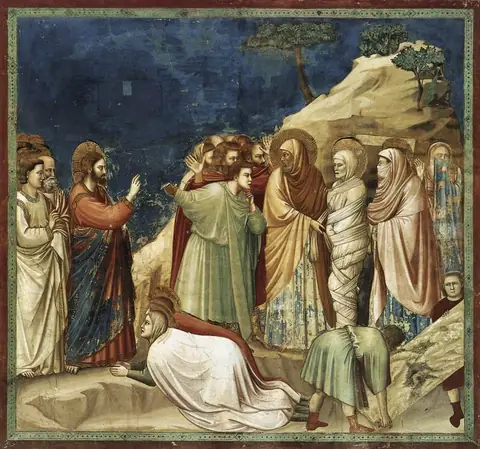
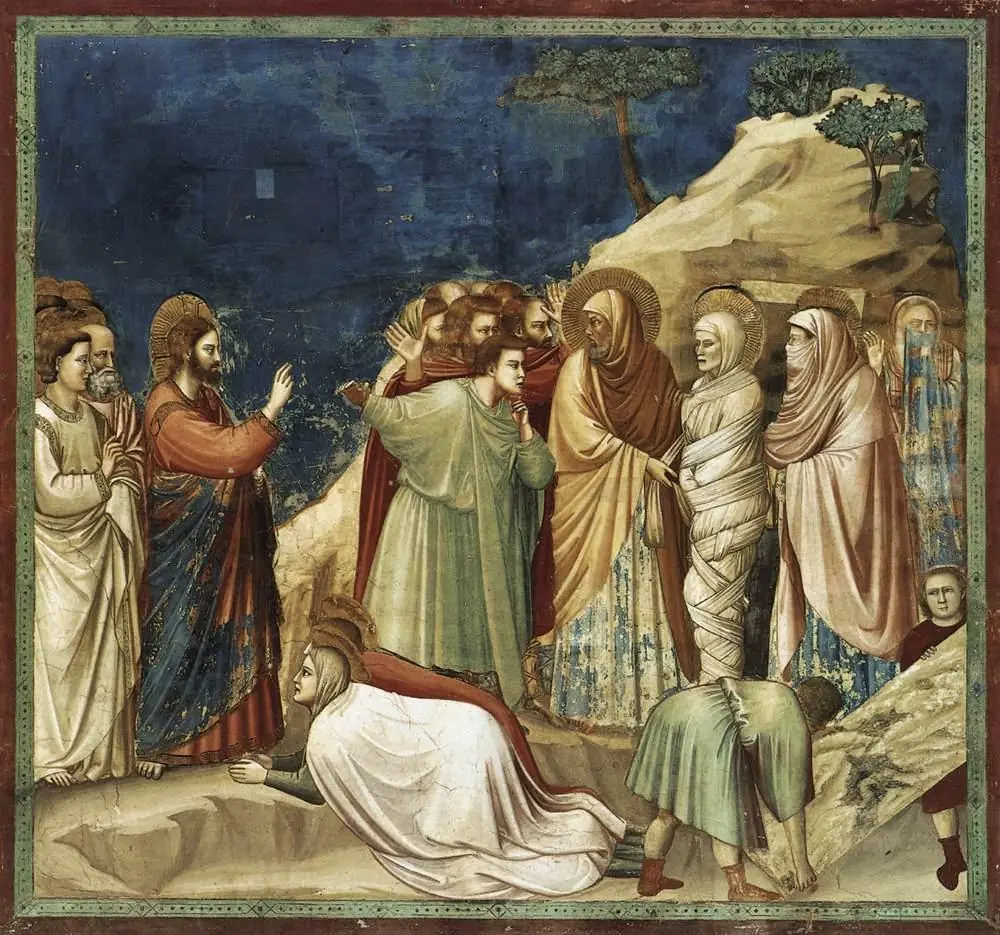
Image: Wikimedia Commons · Public domain (PD-Art) The Raising of Lazarus
Look closely. Lazarus stands wrapped in grave cloths, his face still grey. Bystanders lift their cloaks to their faces, since Martha had warned that after four days in the tomb the body would smell. His sisters lie at Christ's feet, and Christ's raised hand is the still point of the whole crowd.
In the library: The Bible (KJV) · Mary and Lazarus of Bethany · Martha of Bethany
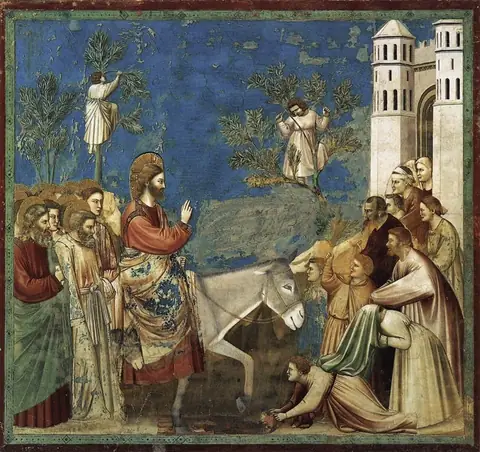
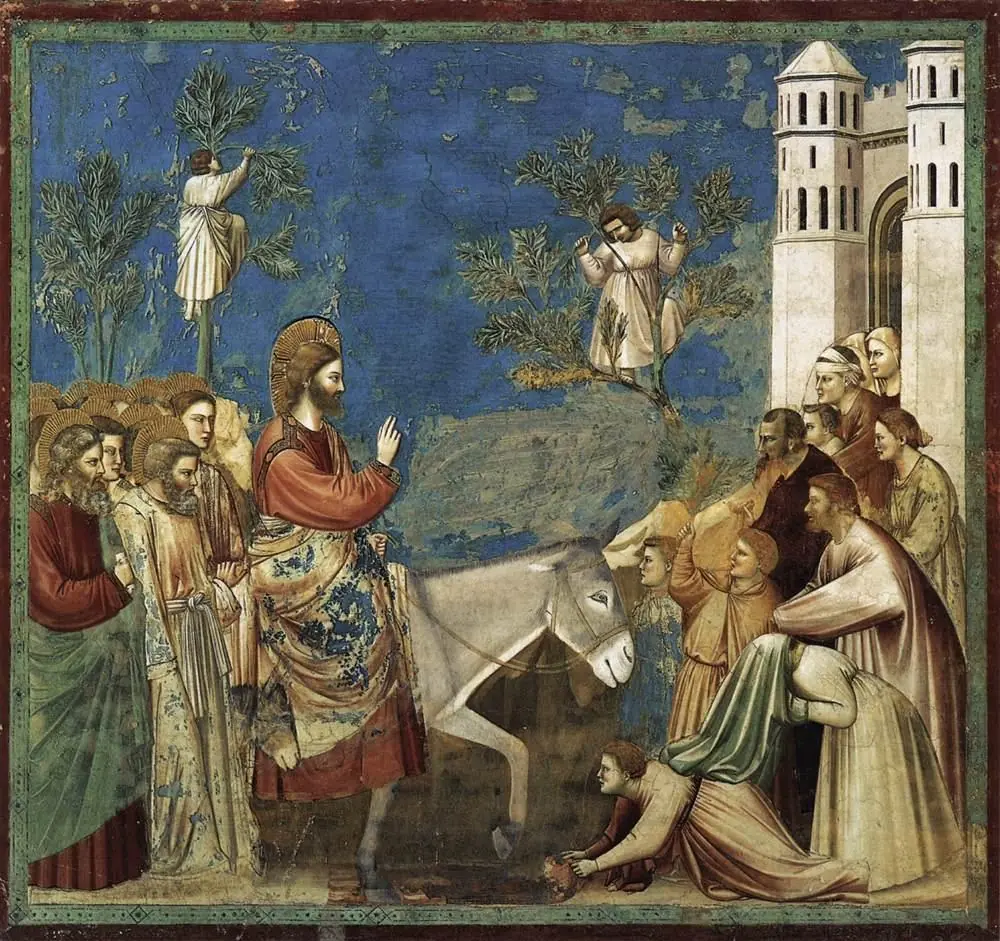
Image: Wikimedia Commons · Public domain (PD-Art) The Entry into Jerusalem
Look closely. Christ rides quietly on a donkey while the city pours out of its gate. Find the boys who have climbed the trees to break off branches, and the men pulling their cloaks over their heads to spread them on the road.
In the library: The Bible (KJV) · Jesus Christ
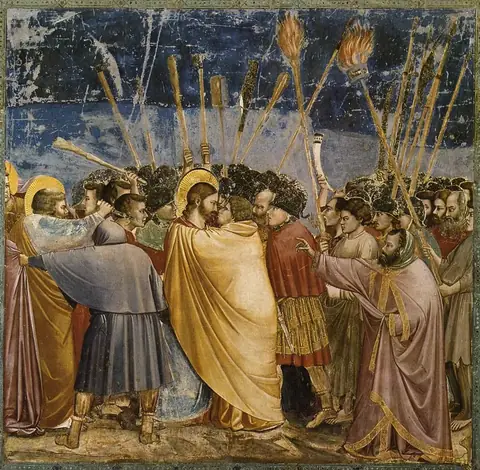
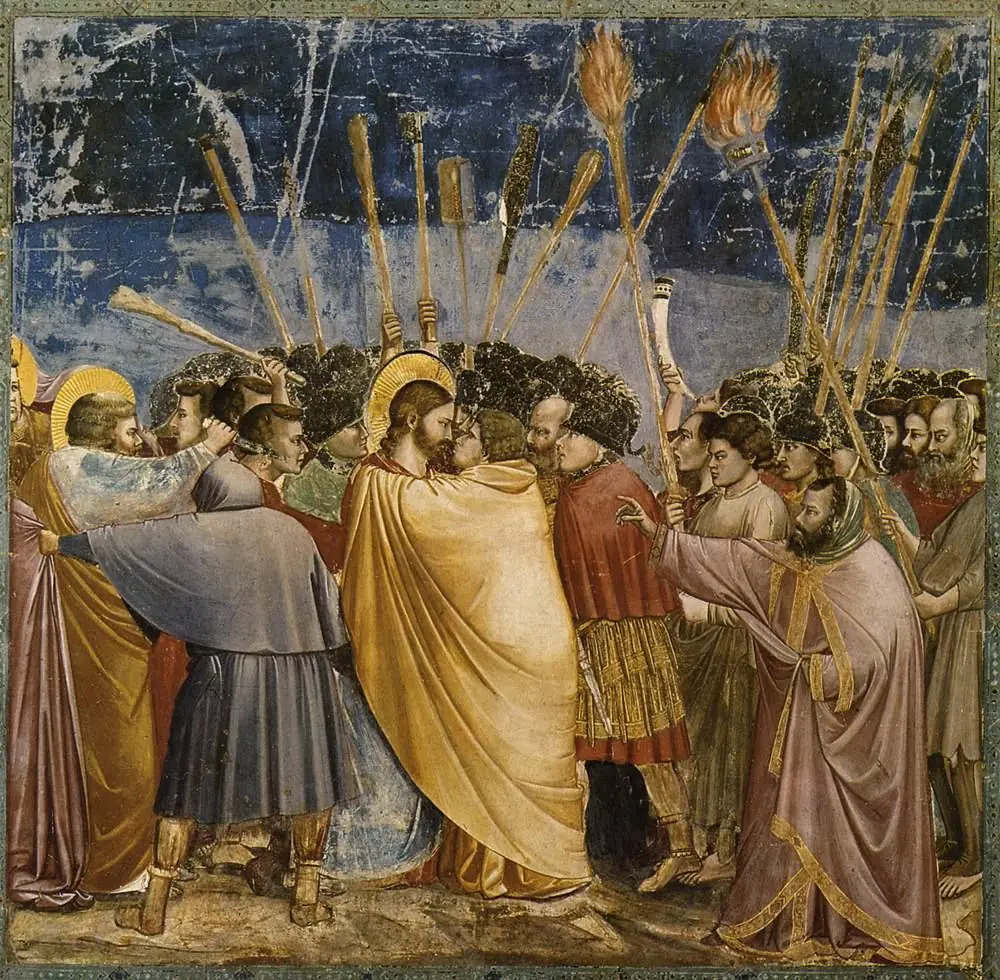
Image: Wikimedia Commons · Public domain (PD-Art) The Kiss of Judas (The Arrest of Christ)
Look closely. Judas's yellow cloak wraps around Christ like a trap, and their faces meet eye to eye: the betrayer and the betrayed, very close. Torches and clubs bristle against the sky. At the left Peter is cutting off the ear of the high priest's servant.
In the library: The Bible (KJV) · Jesus Christ · Peter
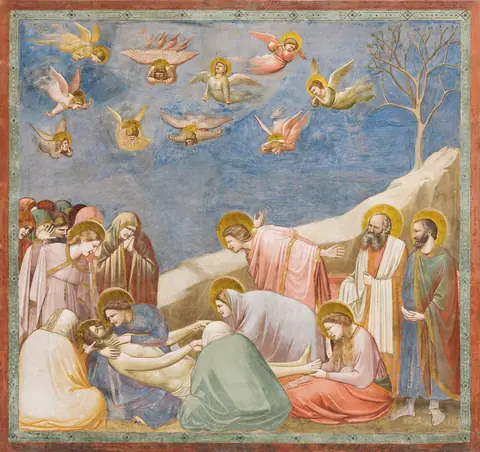
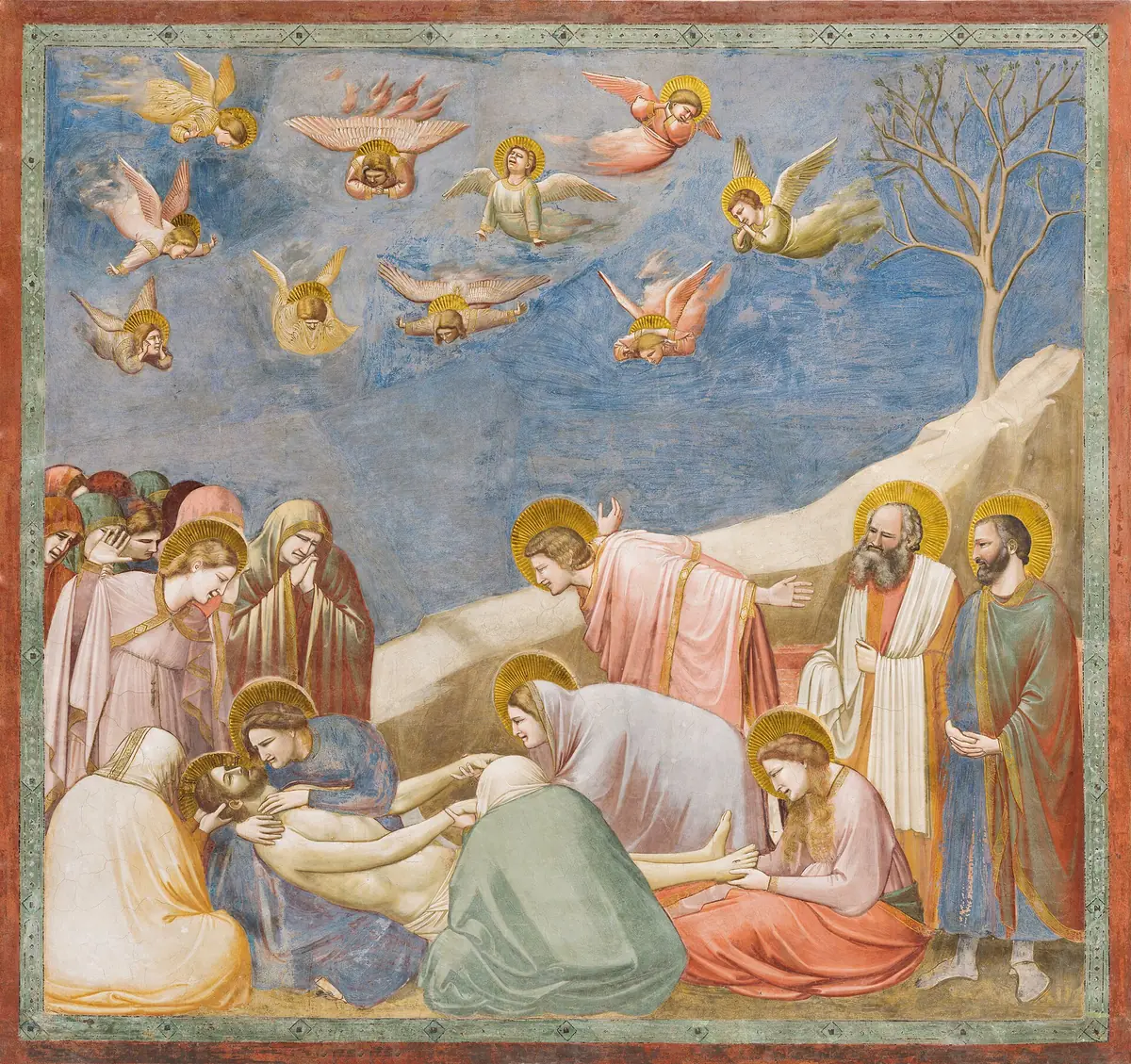
Image: Wikimedia Commons · Public domain (PD-Art) The Lamentation (The Mourning of Christ)
Look closely. Follow the diagonal rock ridge down to the lowest corner, where Mary holds her son's face to hers. John flings his arms back in grief, angels wheel and cry in the sky, and two mourners sit with their backs to us. A single bare tree stands on the ridge.
In the library: The Bible (KJV) · Jesus Christ · Mary, mother of Jesus · John the Apostle · Mary Magdalene
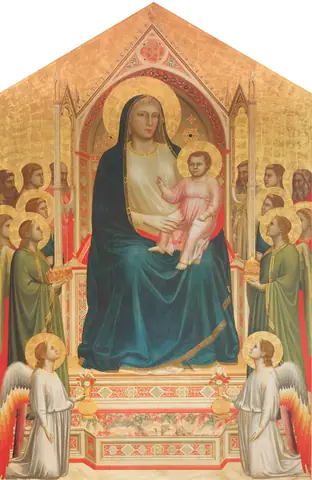
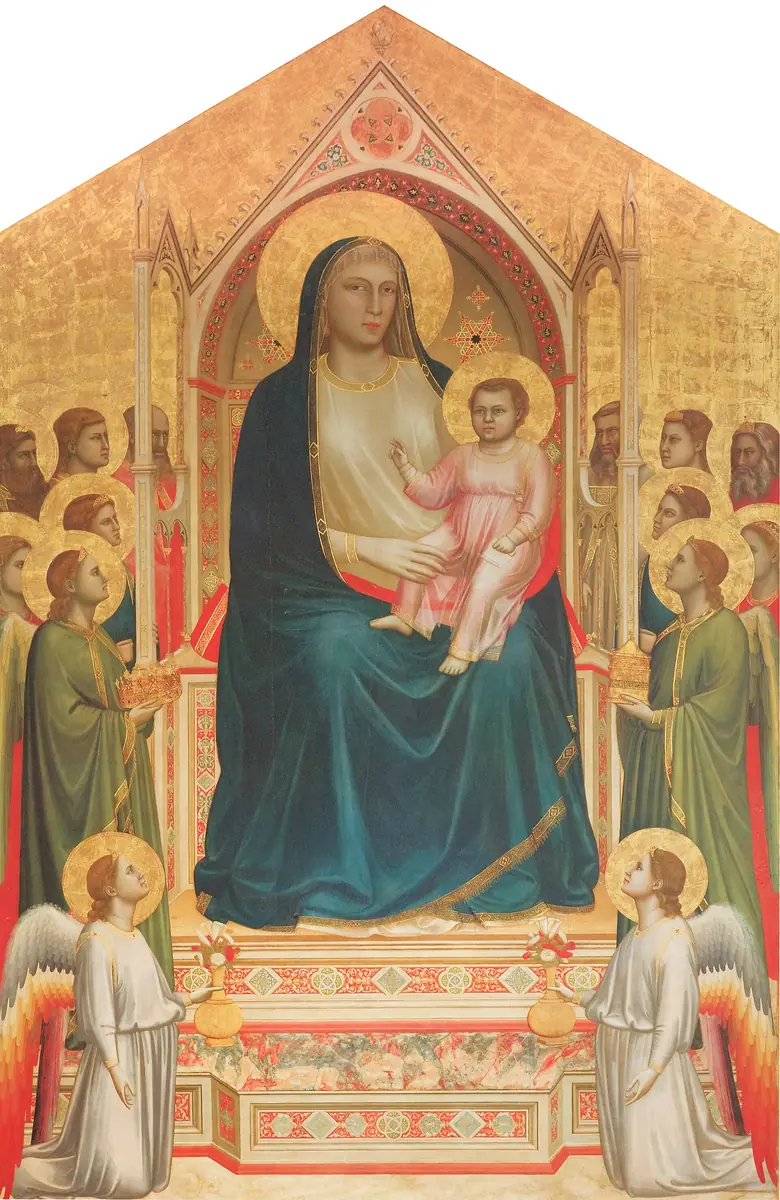
Image: Wikimedia Commons · Public domain (PD-Art) The Ognissanti Madonna (Madonna Enthroned)
Look closely. Compare this with older golden altarpieces: Mary still sits on a gold ground under a Gothic canopy, but she has a body under her robe, real knees and a slight smile. The angels kneeling at the front offer flowers and look up at her across real space.
In the library: Mary, mother of Jesus
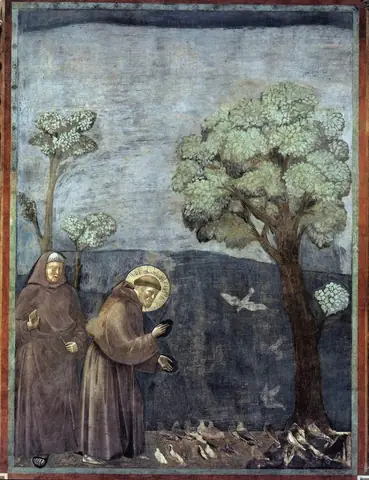
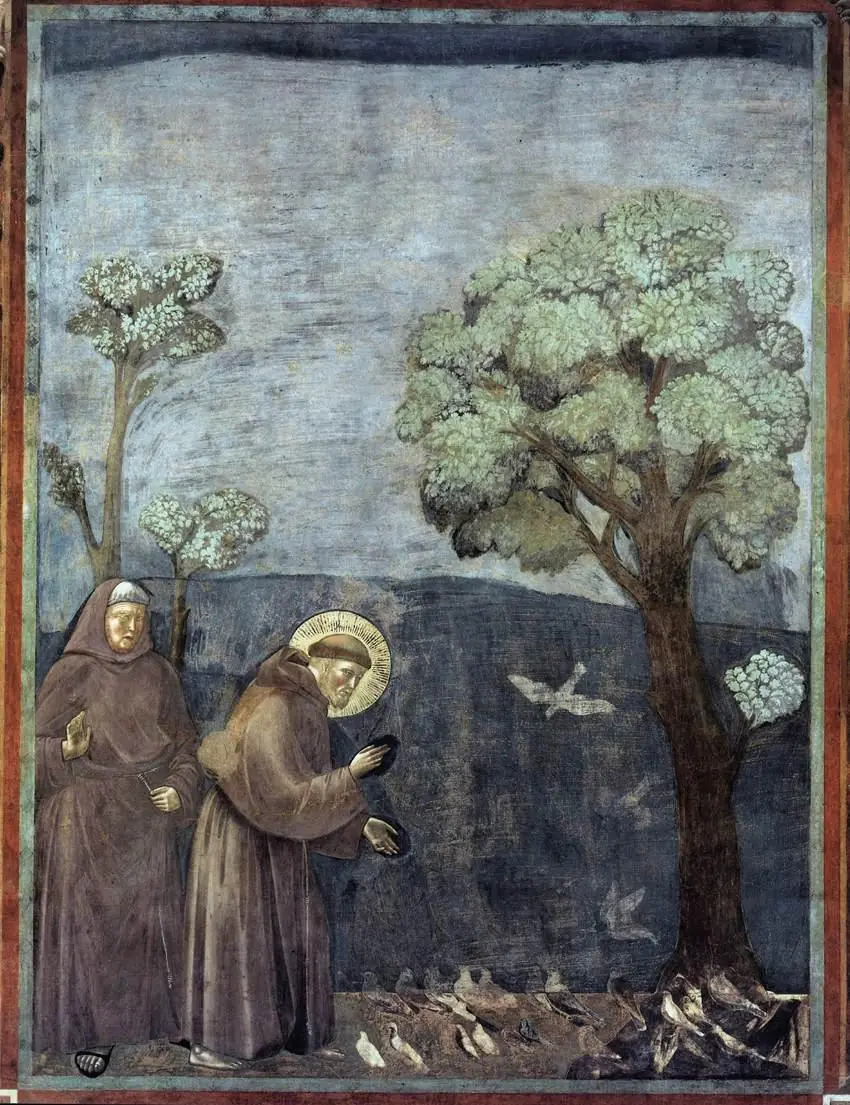
Image: Wikimedia Commons · Public domain (PD-Art) Saint Francis Preaching to the Birds
Look closely. Francis bends toward a tree full of birds while his companion watches in surprise. The scene is part of a long cycle of his life in Assisi; scholars still debate how much of it is Giotto's own hand, so this is a good picture for asking how we know who painted what.
In the library: Francis of Assisi · Early Franciscan Sources


What to watch for in Giotto
Look slowly- Faces and hands. Giotto tells the story through gesture: a hand on a shoulder, a hood pulled over a weeping face.
- Backs to us. Figures seen from behind pull you into the scene as if you were standing in the crowd.
- The deep blue sky. In Padua the same ultramarine sky runs through every panel, tying the whole Gospel story together.
- Rock and tree. Landscape is simple and stage-like; a single ridge or bare tree often points to what matters.
- Gold halos as plates. Halos are solid discs, so you can see who is holy even across a crowded scene.
- Read in order. The panels in a chapel are a sequence. Ask what came just before and what comes next.
Dates and collections follow the holding museums and Wikidata. Images of paintings are photographs of public-domain pictures from Wikimedia Commons or museum open-access releases; photographs of sculpture are used only when the photograph itself is Public domain, CC0, or CC BY with a named credit. Each picture links to its source page with full licence details.