Great Art · Baroque (Landscape)
Claude Lorrain
The painter of ordered landscape, who set Scripture and the Aeneid in a world of harbours, trees and evening light.
His life
Claude Gellée, called Claude Lorrain from his birth in Lorraine, was born around 1600 in the village of Chamagne and went to Rome as a young man. He stayed, worked in other painters' shops, and slowly became the most admired landscape painter of his age. Patrons wanted not a wild view but a composed world: a harbour, a grove, a distant city, and a sacred or classical story taking place as if it were a quiet event in the middle distance.
He kept a book of drawings, the Liber Veritatis, so that his inventions could not easily be faked, and he died in Rome in 1682. His gift was light over a measured land. Dawn and dusk are not decorations; they are the real subject, and the little figures of Isaac and Rebecca, of the Queen of Sheba, or of the Holy Family on the road, give the eye a reason to travel into that light.
Key works
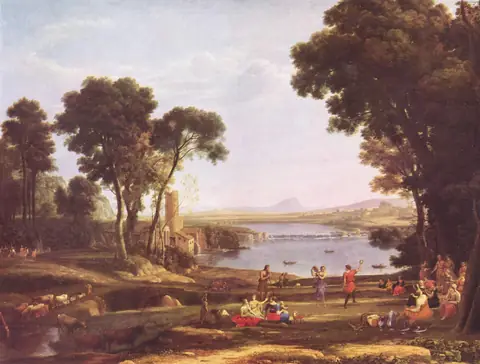
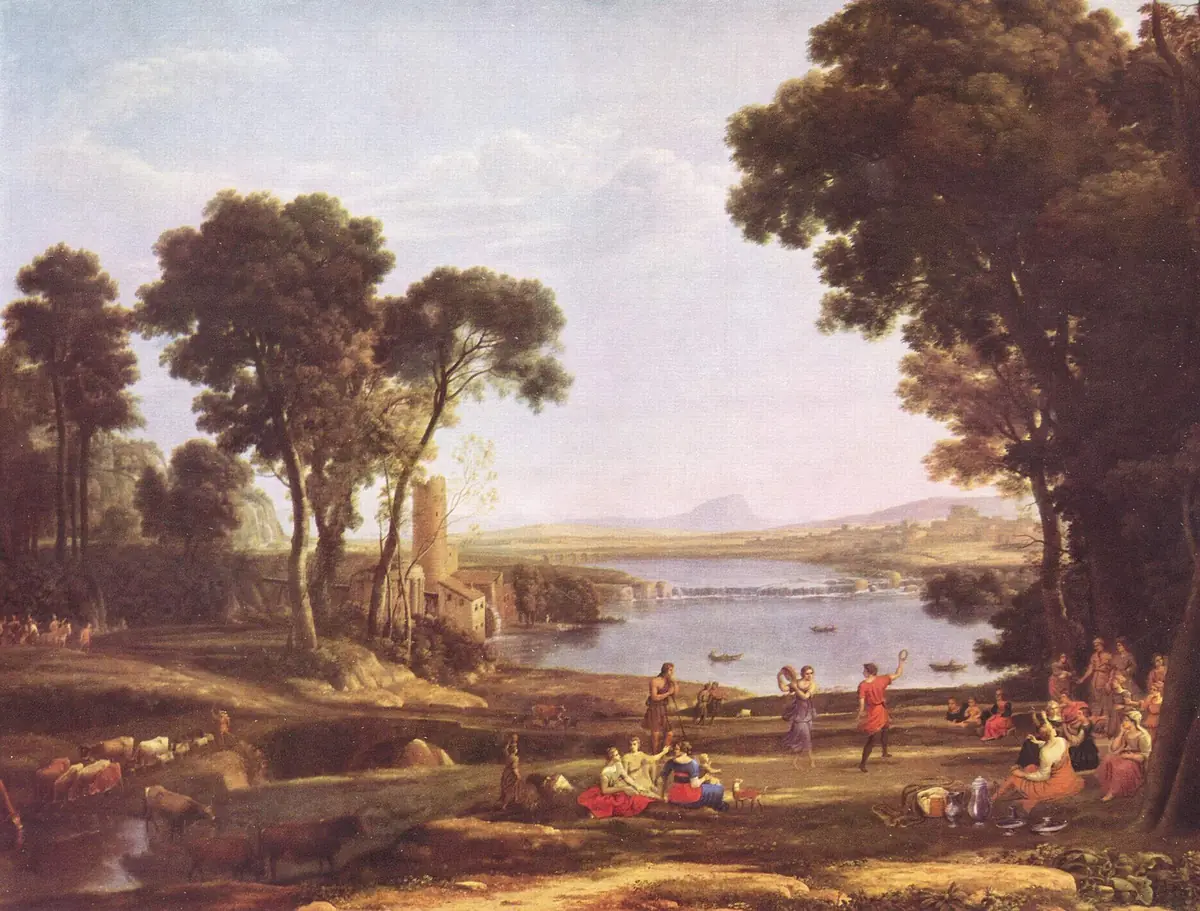
Image: Wikimedia Commons · Public domain (PD-Art) Landscape with the Marriage of Isaac and Rebecca
Look closely. A wide, calmly lit landscape opens to a river and a distant town; a stone mill and a tower sit at the water, cattle drink in the foreground, and a small festal group dances and sits under the trees at the right. The sacred marriage is the occasion, not the only subject. Look at the still water, at the balanced clumps of trees, and at how the light seems to travel from the sky down into the valley.
In the library: The Bible (KJV) · Isaac
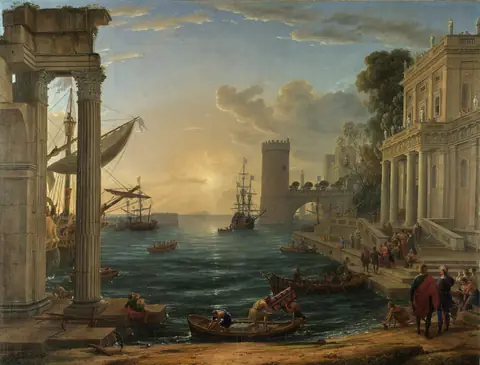
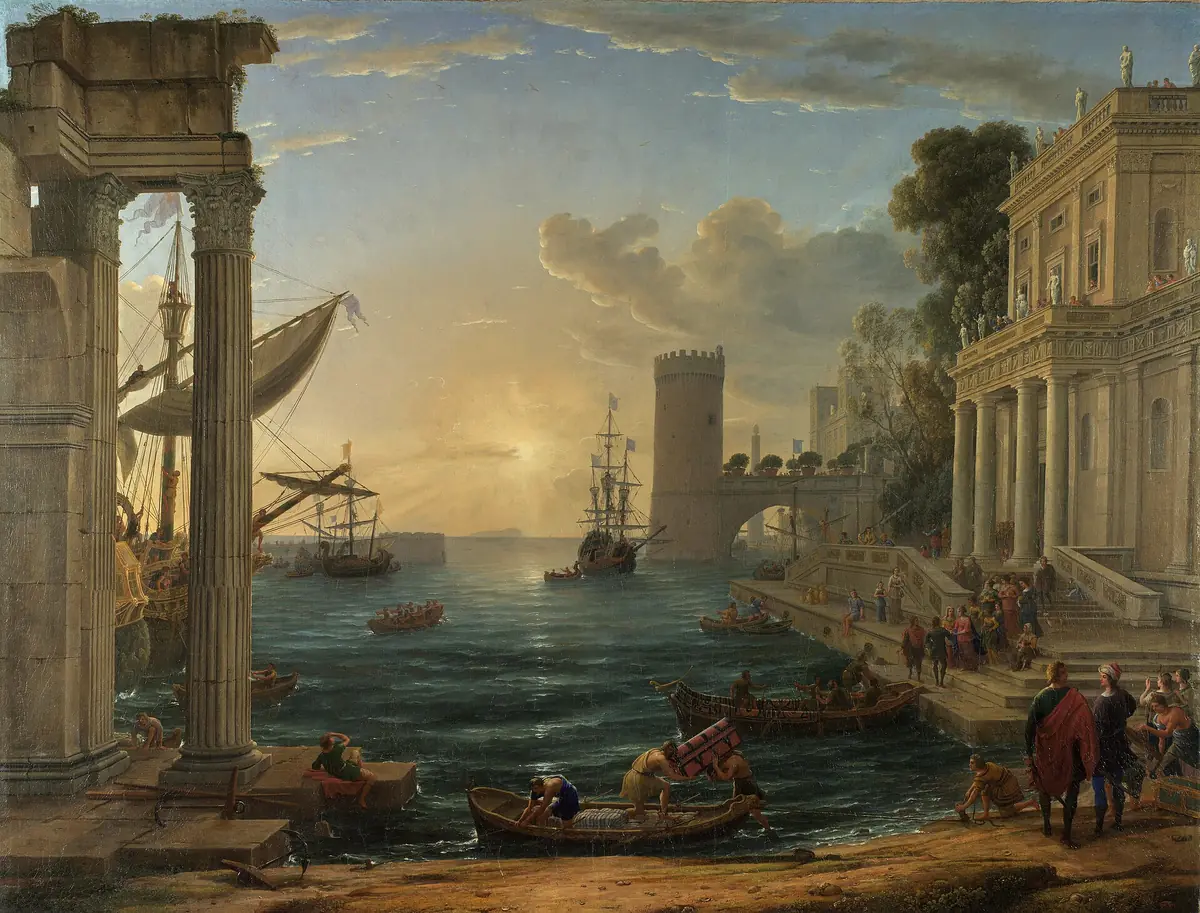
Image: Wikimedia Commons · Public domain (PD-Art) The Embarkation of the Queen of Sheba
Look closely. A great classical harbour at sunrise: the queen and her train go down the steps toward a waiting ship, and the morning light comes straight off the water between the palaces. Look at the columns and the rigging, at the small boats, and at how the real event of the picture is the hour itself — a departure told as a glory of morning air. It was painted as a pair to the Isaac and Rebecca landscape.
In the library: The Bible (KJV) · Solomon
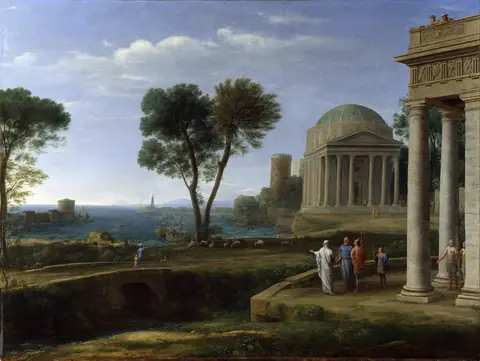
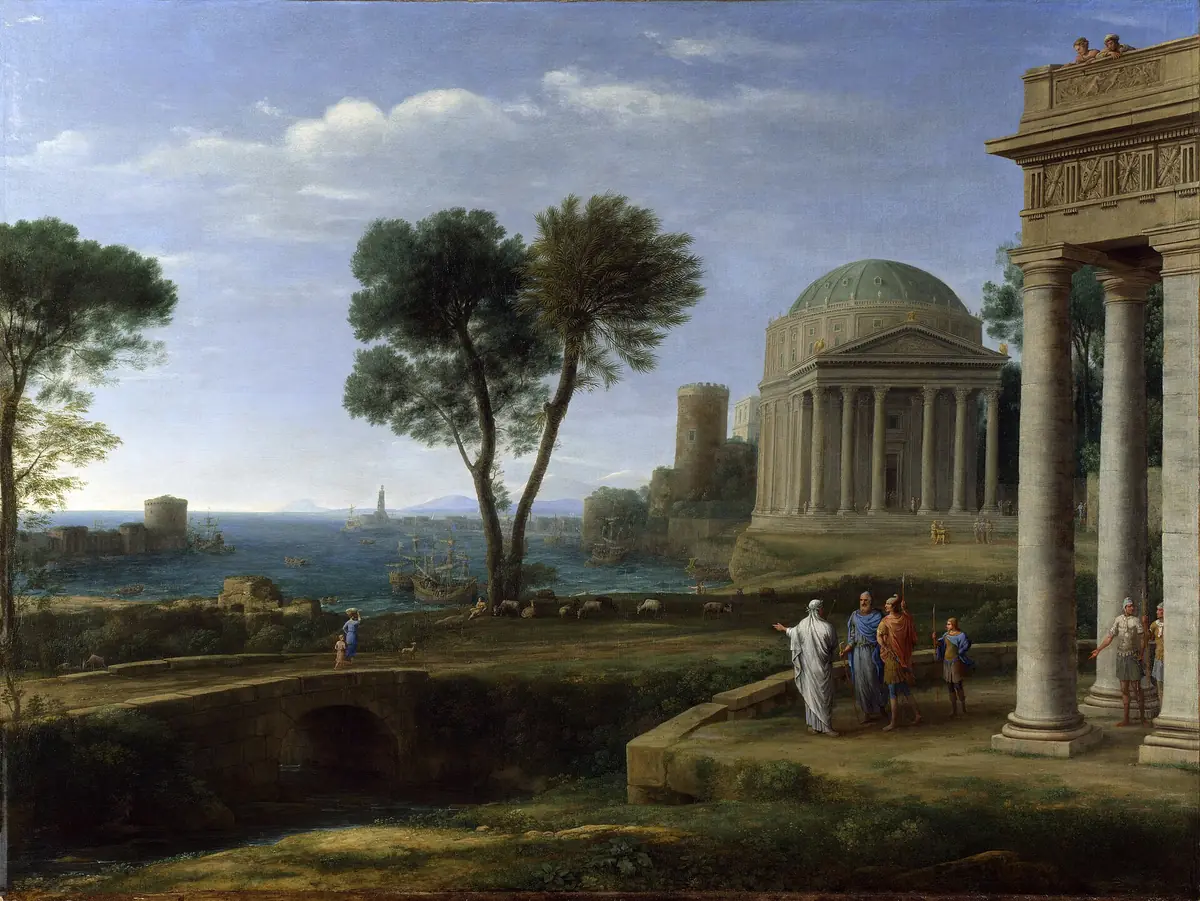
Image: Wikimedia Commons · Public domain (PD-Art) Landscape with Aeneas at Delos
Look closely. Aeneas, with Anchises and Ascanius, has landed at Delos; a priestly figure shows them the ancient shrine, and a wide, luminous gulf opens among temples and trees. Look at the still water, at the tall columns, and at the late, golden quiet in which a scene from the Aeneid is allowed to happen without haste.
In the library: The Aeneid · Virgil
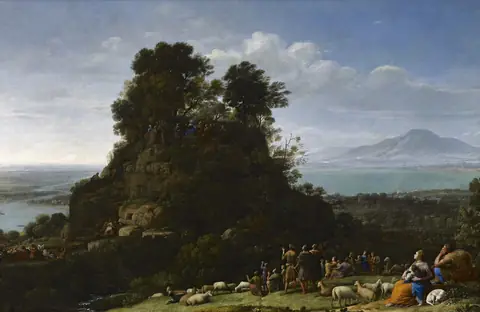
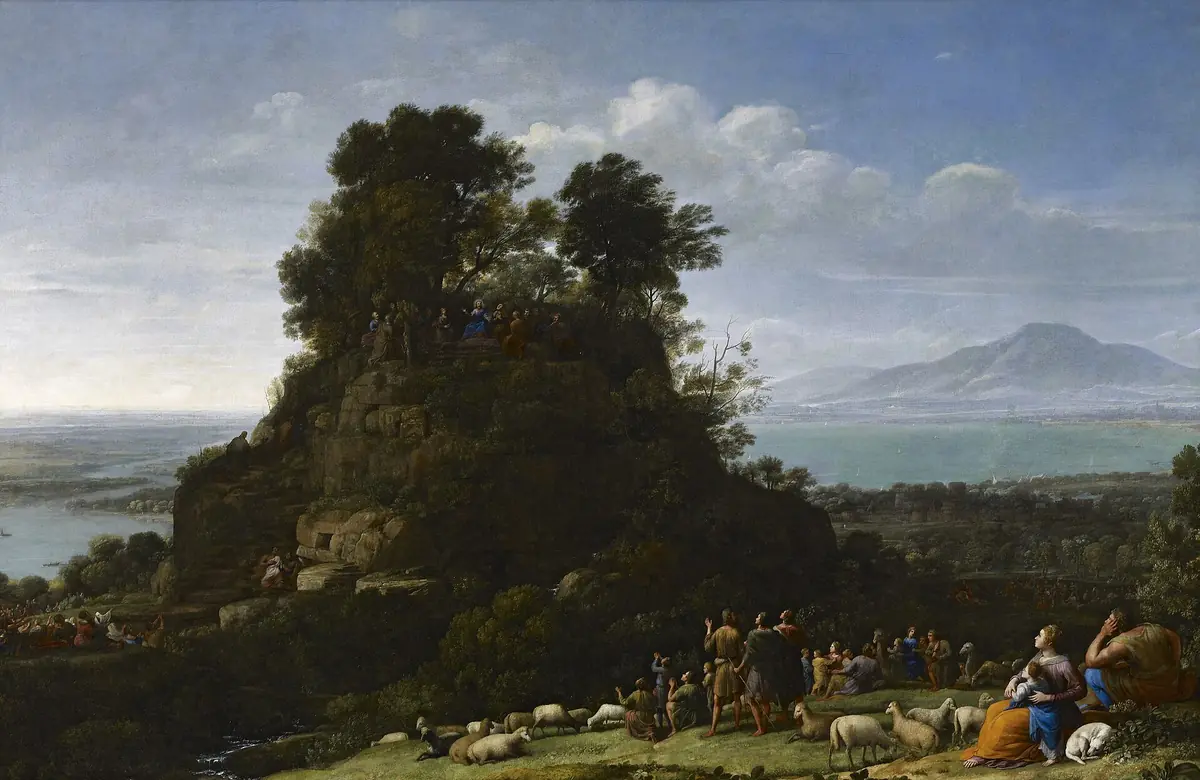
Image: Wikimedia Commons · Public domain (PD-Art) The Sermon on the Mount
Look closely. Christ stands on a high, rocky hill, a small figure against a huge, carefully built landscape of valleys, trees and distant water; the listening crowd is a scatter of tiny people on the slopes. Look at how little of the canvas is given to the figures, and at how the land itself seems to open, in rings of air and distance, around the spoken blessing.
In the library: The Bible (KJV) · Jesus Christ
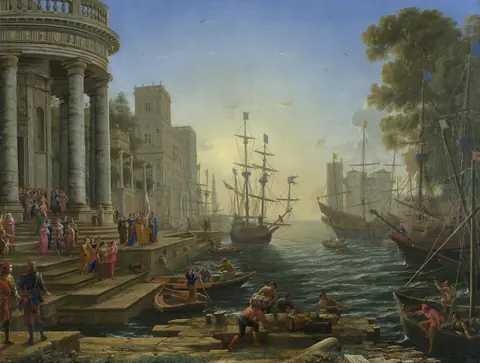
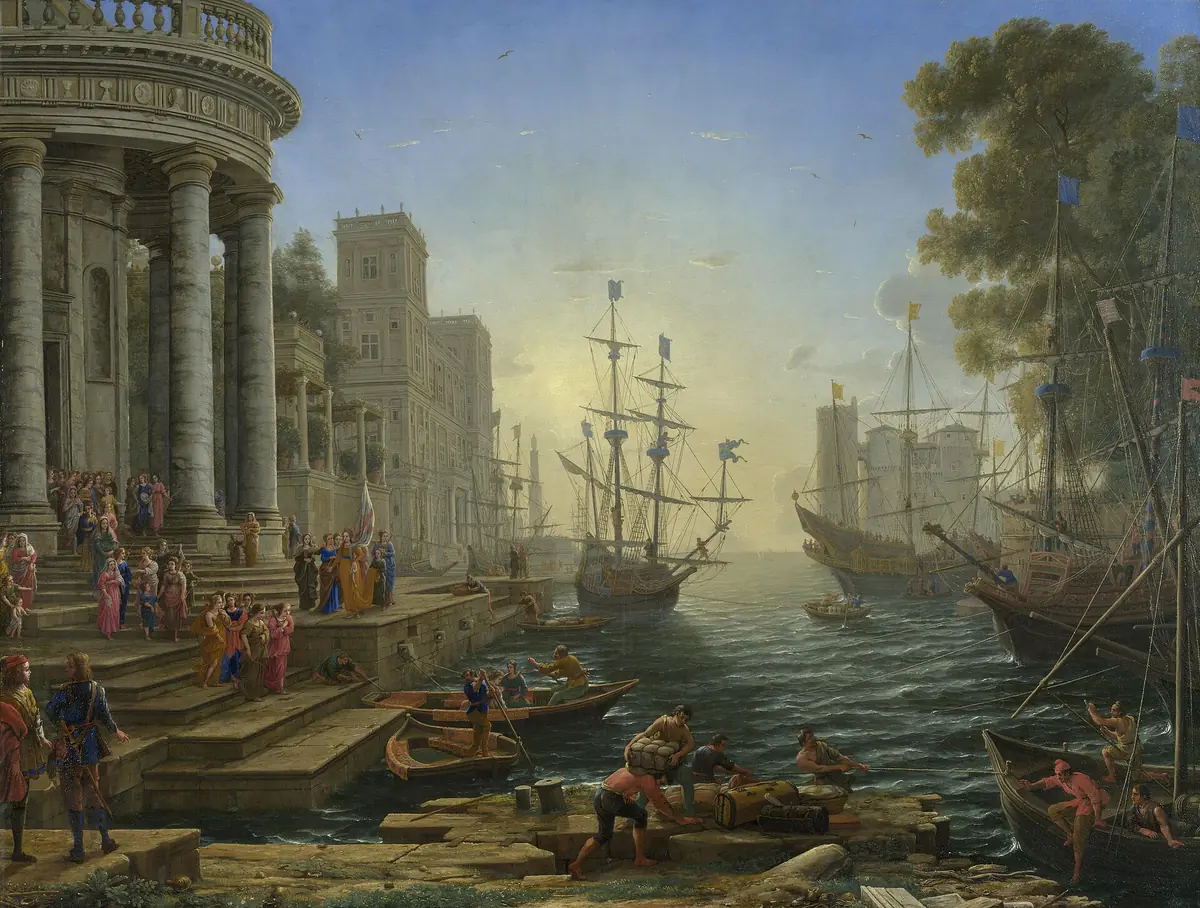
Image: Wikimedia Commons · Public domain (PD-Art) Seaport with the Embarkation of Saint Ursula
Look closely. Morning in a grand invented harbour: Saint Ursula and her companions come down wide steps to the ships that will carry them on their pilgrimage, and the sun rises between the buildings at the centre. Look at the pale gold on the water, at the rigging and the little freight, and at the calm formality of a sacred departure.
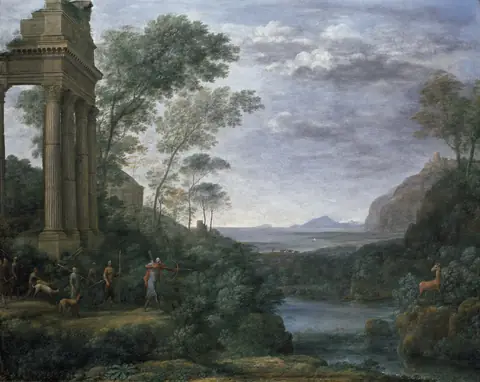
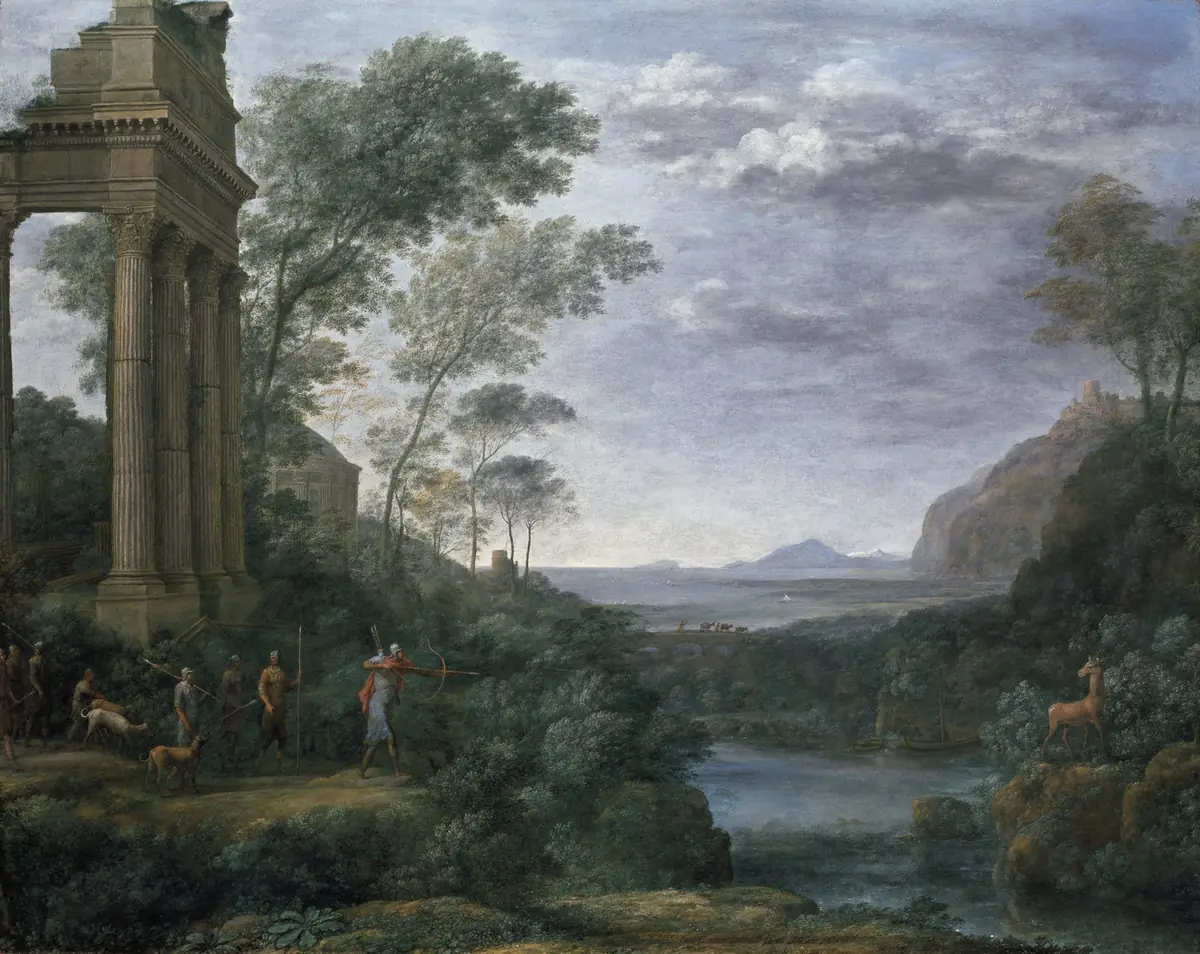
Image: Wikimedia Commons · Public domain (PD-Art) Landscape with Ascanius Shooting the Stag of Sylvia
Look closely. Claude's last picture: a still, late-afternoon wood and a shining river; the young Ascanius has just loosed an arrow at the tame stag, the act that will, in the Aeneid, break a peace and begin a war. Look at the pale tree trunks, at the distant bridge and tower, and at the hush before the consequences arrive.
In the library: The Aeneid · Virgil
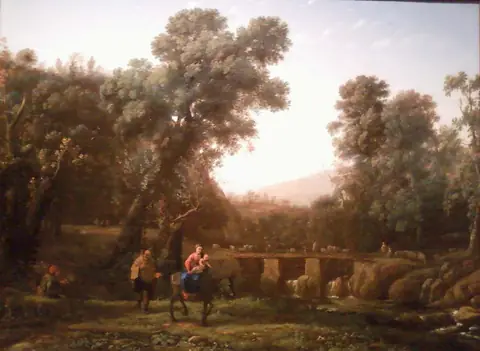
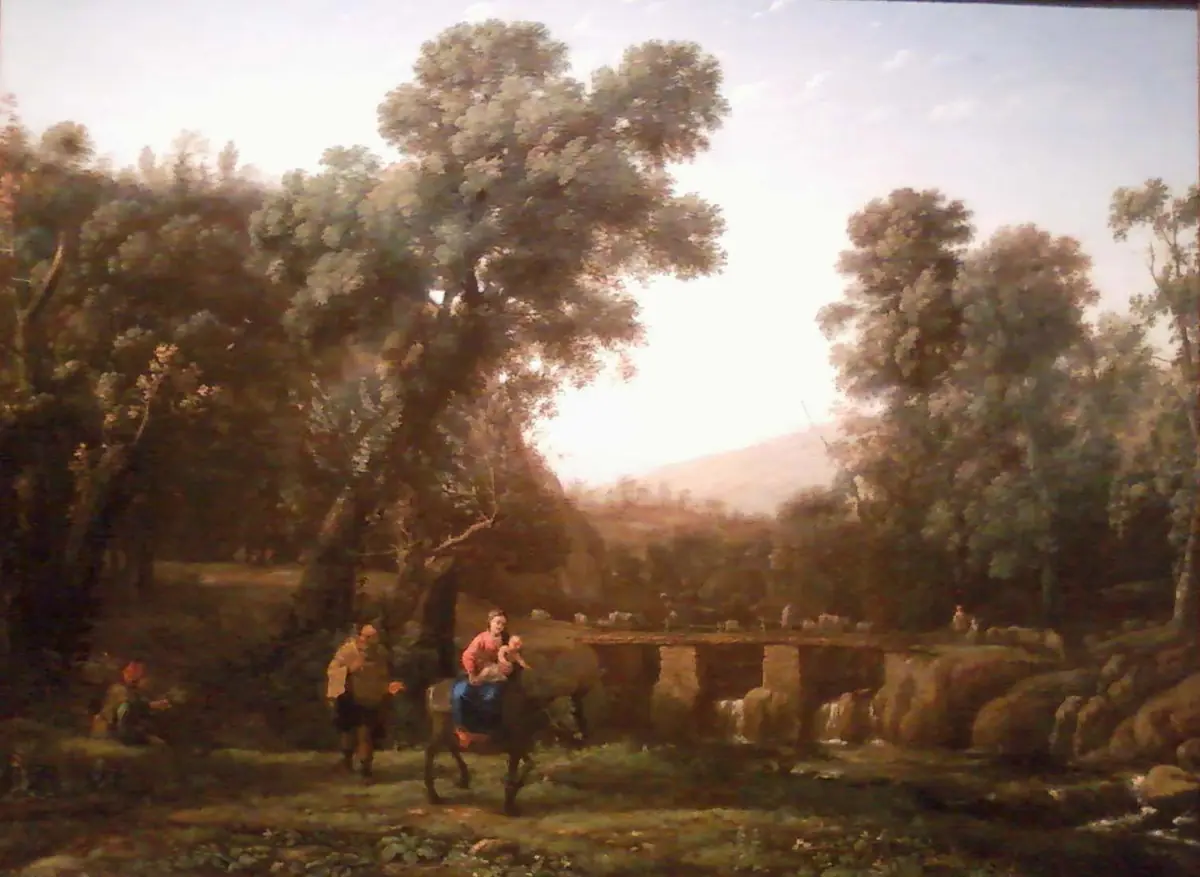
Image: Wikimedia Commons · Public domain (PD-Art) The Flight into Egypt
Look closely. The Holy Family, small in a broad landscape, moves along a path among trees, water and a distant town, an ordinary travelling group in a world of still light. Look at how gently they are placed — not staged at the centre, but found, as if you had come upon them on a real road — and at the rest that the land itself seems to offer the fugitives.
In the library: The Bible (KJV) · Mary, mother of Jesus · Joseph of Nazareth · Jesus Christ


What to watch for in Claude Lorrain
Look slowly- The source of light. Find the sun, or the bright gap in the sky, and see how every plane of the land answers it.
- Trees as wings. Dark foliage at the sides often frames a brighter middle, like a stage.
- A harbour or a river. Water takes the light and leads the eye into the distance.
- Small figures, large air. The story is often tiny; the weather and the land do most of the speaking.
- A composed, not copied, nature. The view is invented from studies, then arranged for calm and travel of the eye.
Dates and collections follow the holding museums and Wikidata. Images of paintings are photographs of public-domain pictures from Wikimedia Commons or museum open-access releases; photographs of sculpture are used only when the photograph itself is Public domain, CC0, or CC BY with a named credit. Each picture links to its source page with full licence details.