Great Art · Mannerism / Spanish
El Greco
The Cretan who made Toledo his home, and who stretched light, colour and the human figure until a vision could be seen in them.
His life
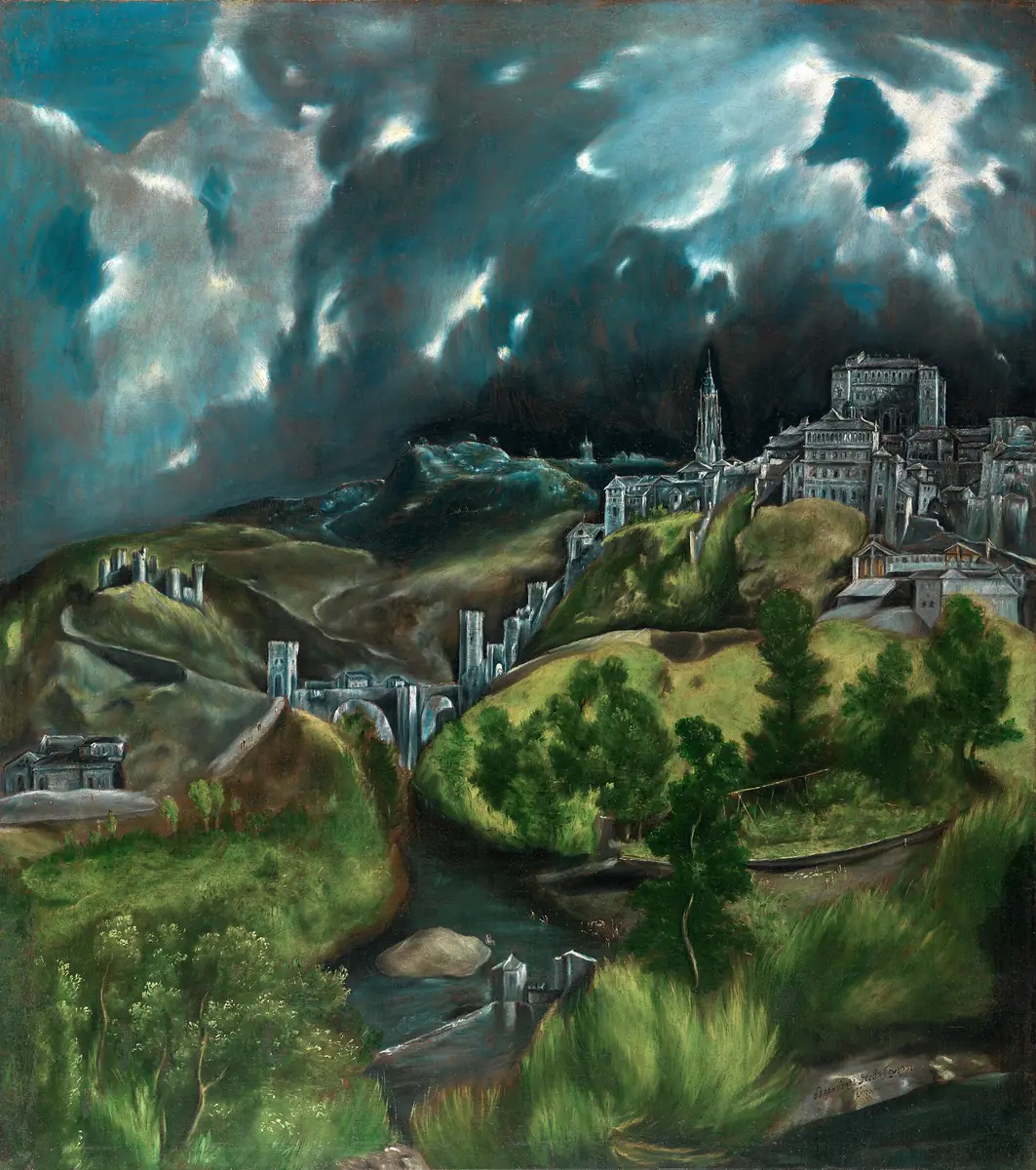
Domenikos Theotokopoulos was born in 1541 in Crete, then a Venetian possession, and trained first as a painter in the post-Byzantine manner of the island. He went to Venice, where he learned from the colour and the composing of Titian's world, then to Rome, and in 1577 he settled in Toledo, where he spent the rest of his life. The Spanish called him El Greco, the Greek, and under that name he painted altarpieces, portraits and a rare, stormy view of the city itself.
He died in Toledo in 1614. His gift was elongation used as praise: a figure can be taller, a robe more sudden in its colour, a cloud more like fire, than everyday sight would allow, and yet the picture still holds together as worship, not as a trick. Later centuries sometimes found him strange; the churches of Toledo had already made a home for that strangeness.
Key works
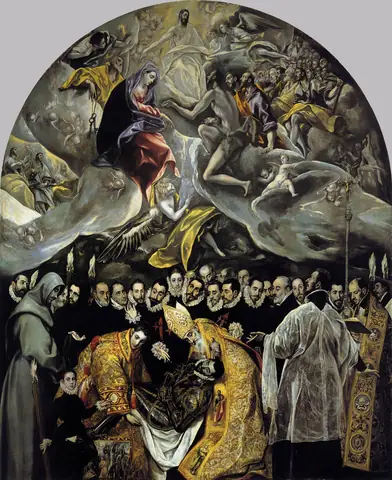
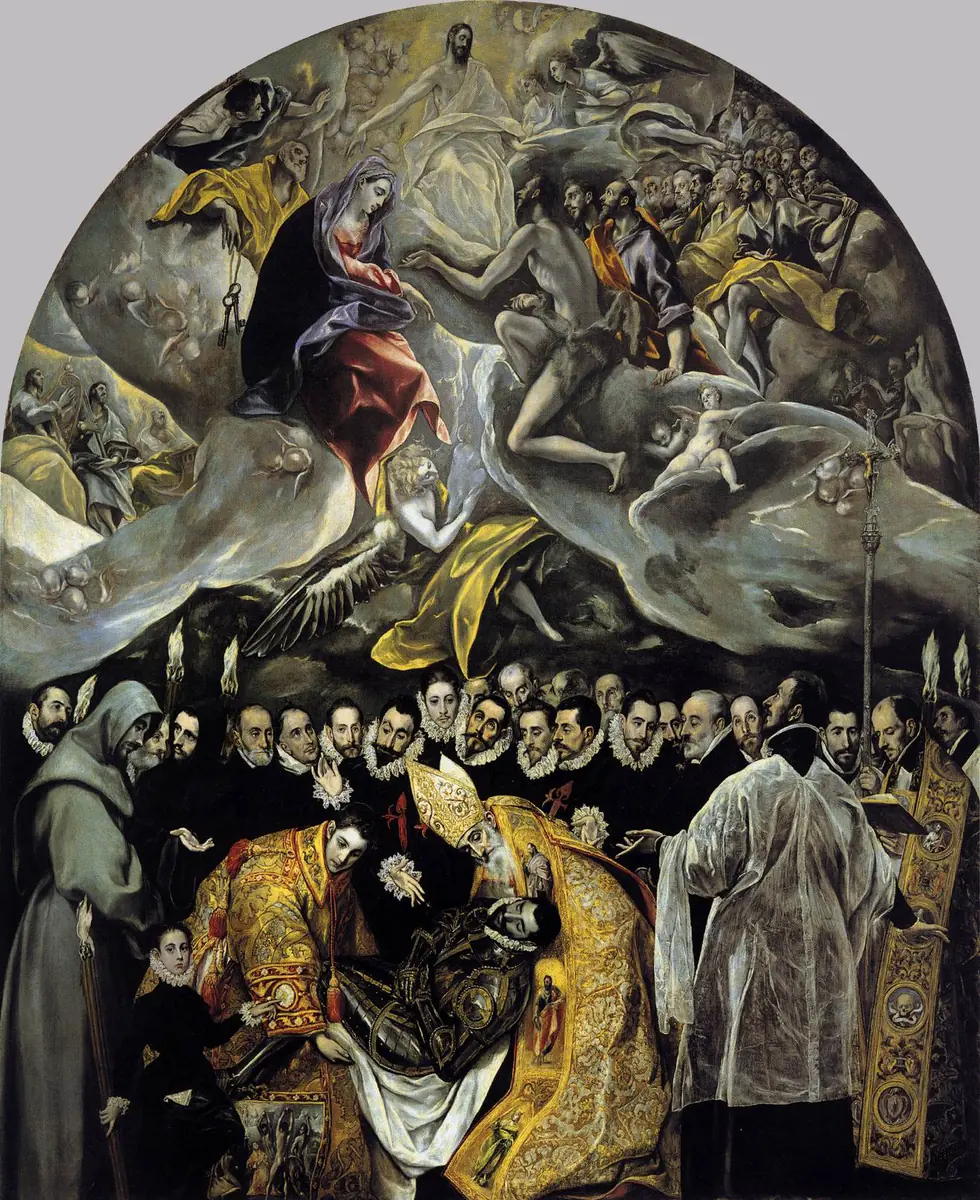
Image: Wikimedia Commons · Public domain (PD-Art) The Burial of the Count of Orgaz
Look closely. In the lower half, Saints Augustine and Stephen, in rich vestments, lower the Count into his tomb among a frieze of contemporary Toledan gentlemen; above, his soul is received in a swirling heaven. Look at the line of ruffs and faces, at the little page who points toward us, at the priest in the transparent surplice, and at how the earthly funeral and the heavenly welcome are stacked in one tall wall.
In the library: The Bible (KJV)
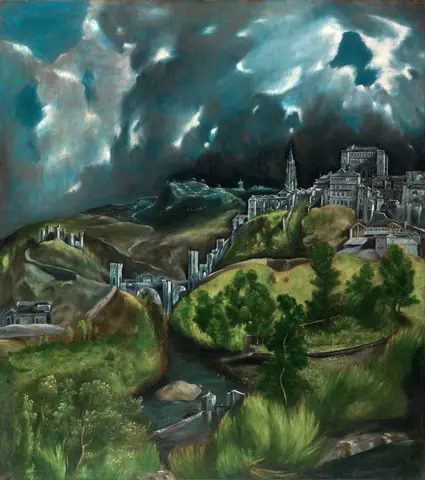
Image: Wikimedia Commons · Public domain (PD-Art) View of Toledo
Look closely. The city stands on its hill under a split, stormy sky, the cathedral and the alcázar catching a cold light, the river and the green fields below. Look at how some buildings are moved or enlarged for the sake of the design, at the white path in the foreground, and at the sense that the weather itself is a kind of judgement and blessing on the place.
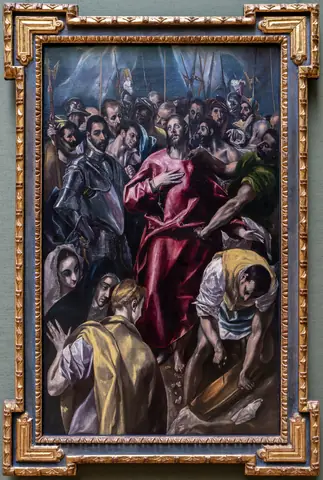
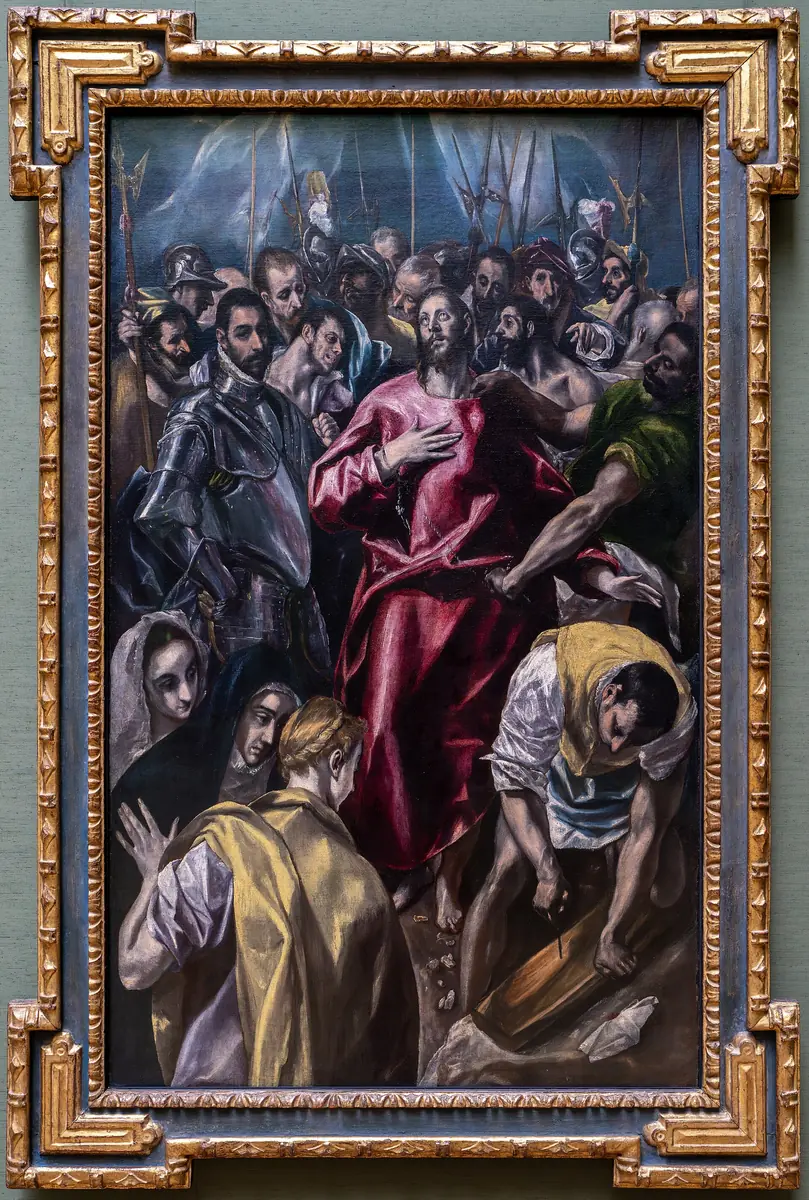
Image: Wikimedia Commons · Public domain (PD-Art) The Disrobing of Christ (El Expolio)
Look closely. Christ stands in a rich red robe at the centre of a packed crowd, about to be stripped, a man in armour at his left and a man boring holes in the Cross at the lower right; the three Marys are bunched at the lower left. Look at the vertical press of heads, at the calm face and the hand on the chest, and at how the red of the robe holds the whole tall panel together. This photograph shows the picture in its frame.
In the library: The Bible (KJV) · Jesus Christ · Mary, mother of Jesus
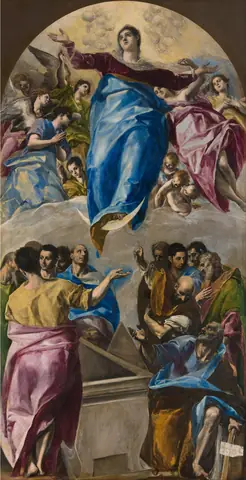
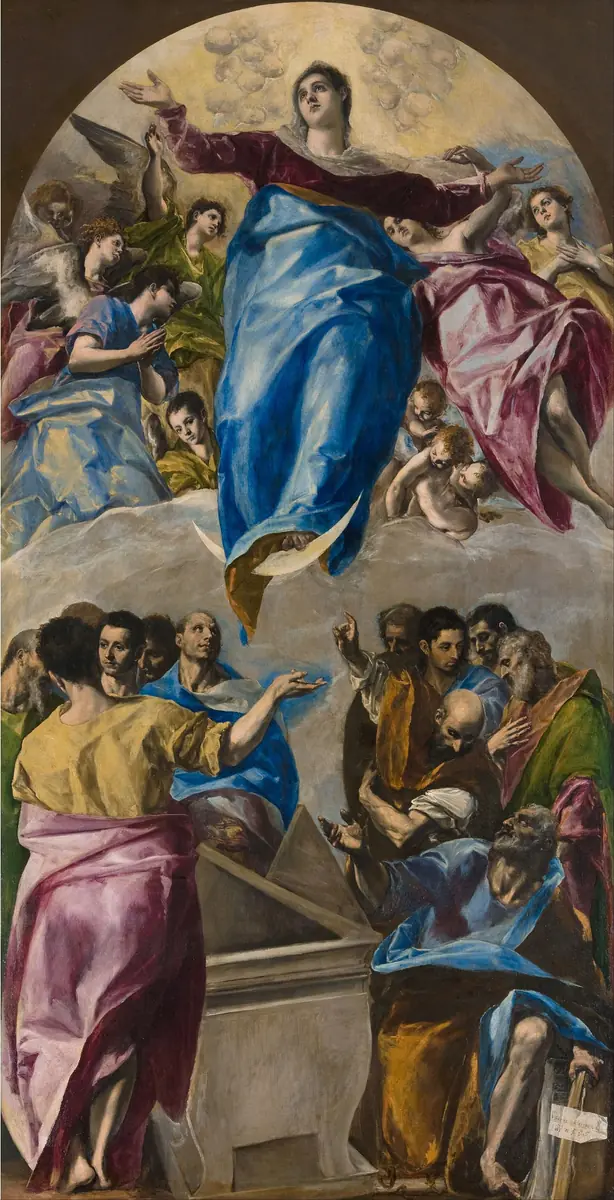
Image: Wikimedia Commons · Public domain (PD-Art) The Assumption of the Virgin
Look closely. Mary rises in a mandorla of light, angels under her feet, while the apostles stand around the tomb below in astonished, turning poses. Look at the sharp pinks and blues, at the long figures, and at the still-fresh energy of an early Toledan altarpiece (it was painted for Santo Domingo el Antiguo, and later came to Chicago).
In the library: The Bible (KJV) · Mary, mother of Jesus
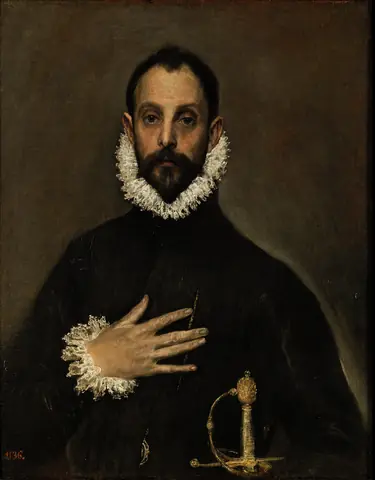
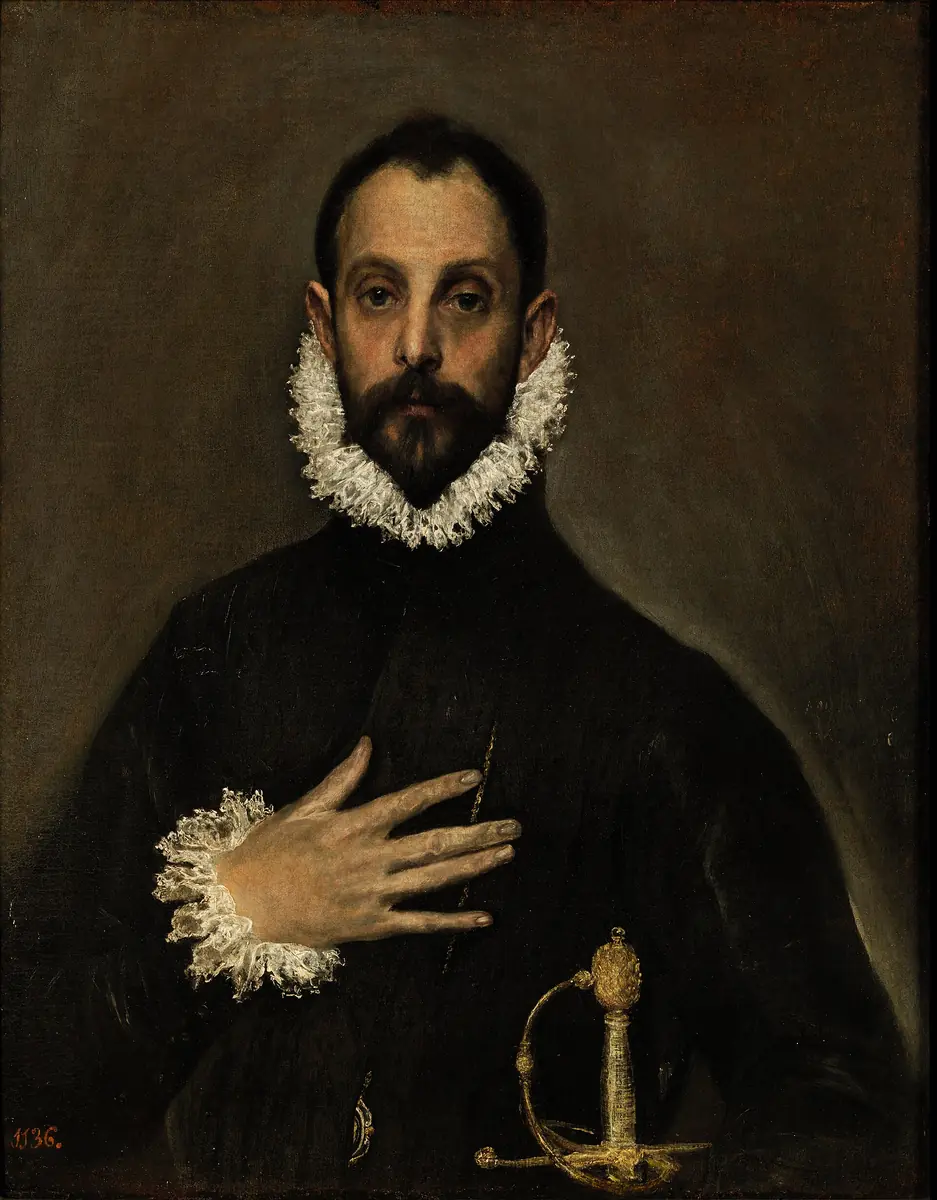
Image: Wikimedia Commons · Public domain (PD-Art) The Nobleman with his Hand on his Chest
Look closely. A dark-clad Spanish gentleman stands against a dark ground, one hand on his chest, a sword at his side, the face pale and oval, the ruff a tight white ring. Look at the long fingers, at the tiny gold chain, and at the gravity of a likeness that needs almost no setting.
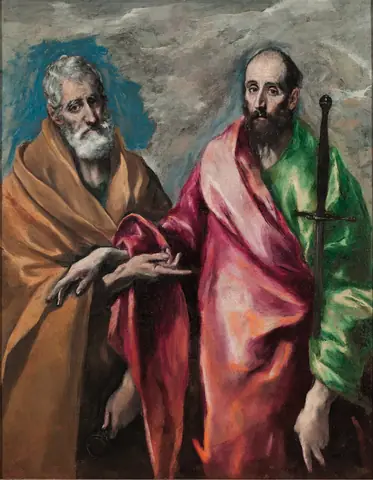
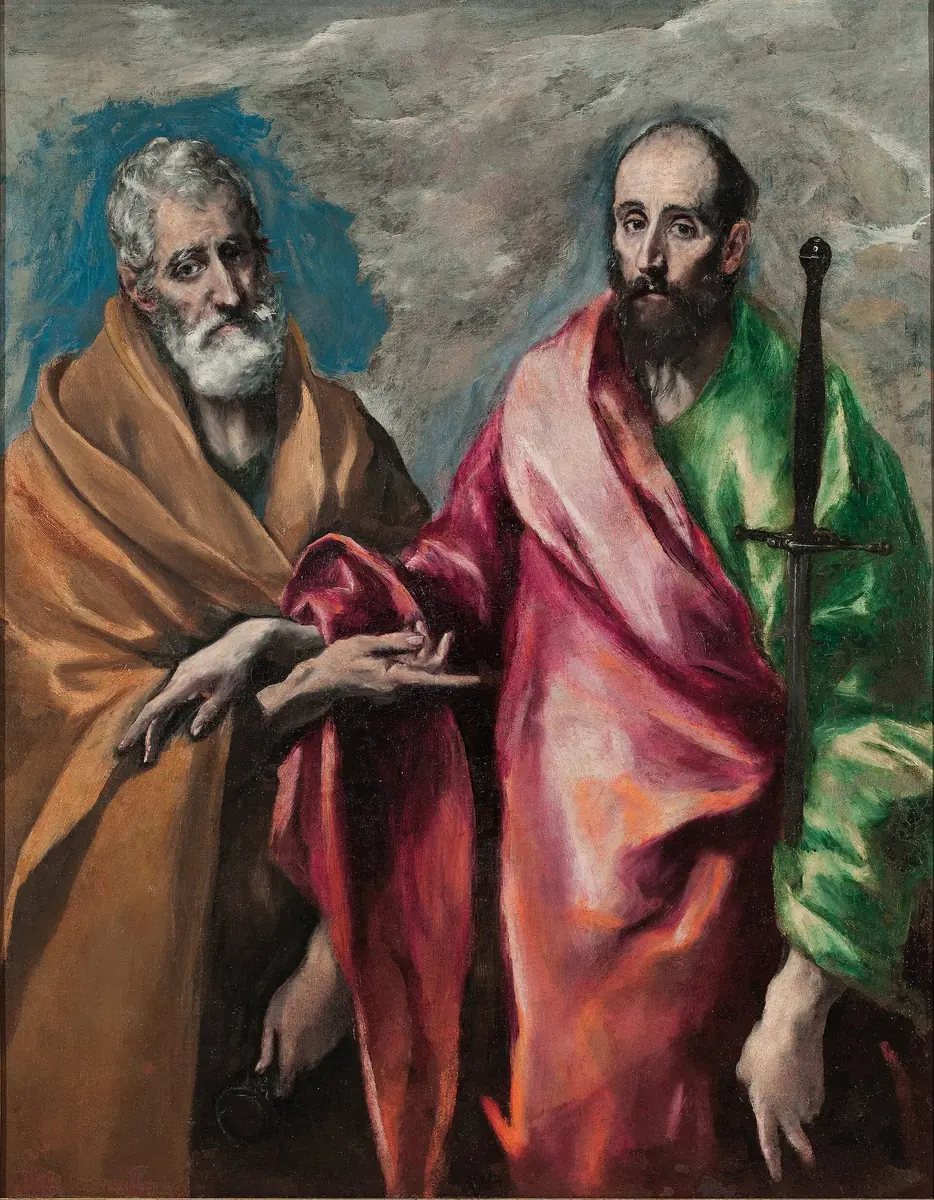
Image: Wikimedia Commons · Public domain (PD-Art) Saint Peter and Saint Paul
Look closely. The two apostles stand close together against a broken sky: Peter, in a gold-ochre mantle, with the keys at the lower left; Paul, in a rose cloak over green, holds a long sword. Look at the meeting of their hands in the centre, at the two very different heads — one white-bearded, one dark — and at how El Greco makes companionship in the faith look like a living conversation.
In the library: The Bible (KJV) · Peter · Paul
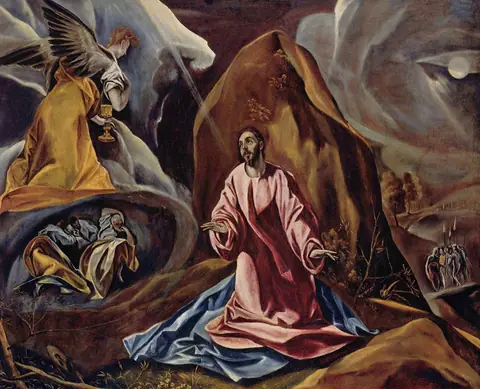
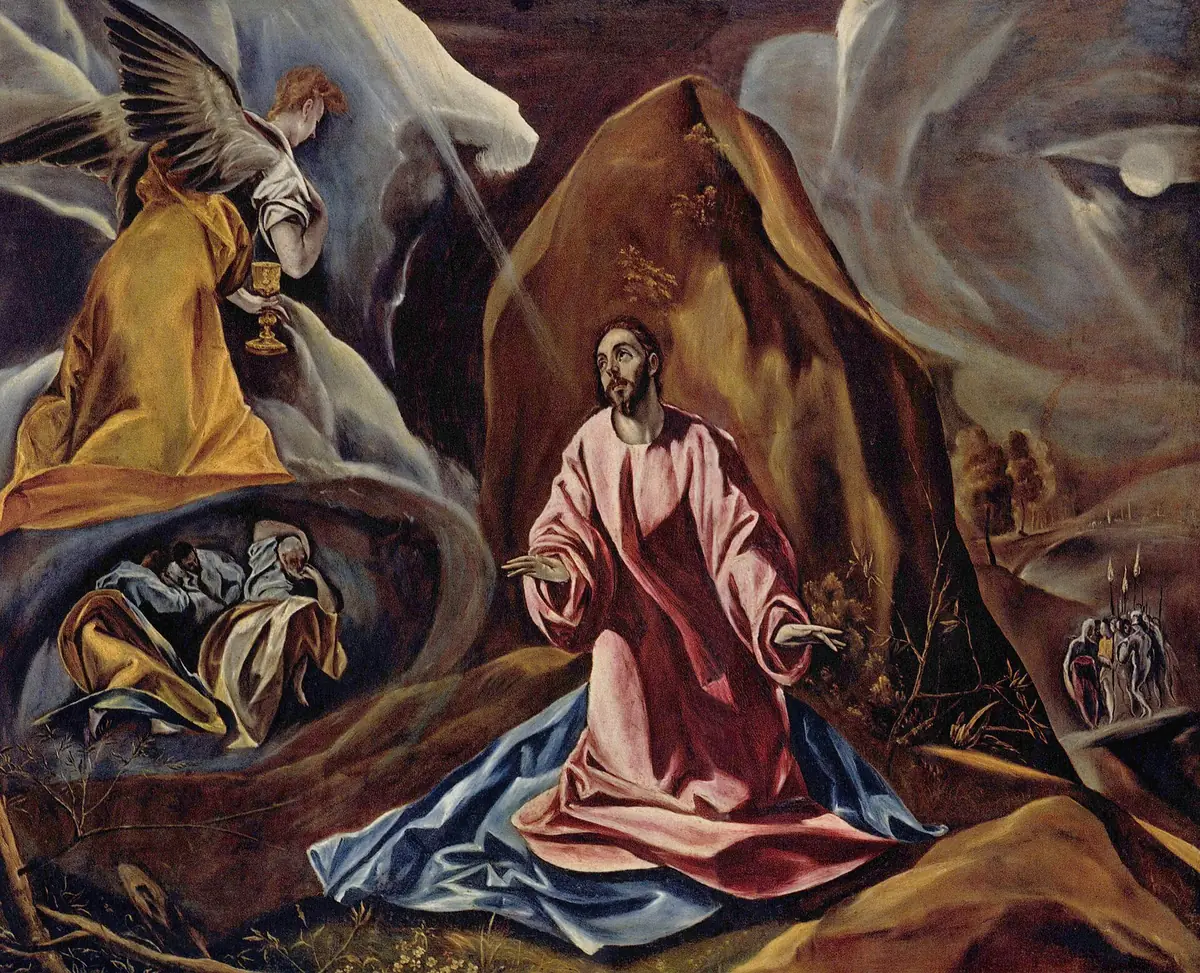
Image: Wikimedia Commons · Public domain (PD-Art) The Agony in the Garden
Look closely. Christ kneels at the left as an angel offers the cup; the three sleeping disciples are folded together in a strange, hollow rock at the right, and a little band with torches approaches in the distance. Look at the chill light, at the red of his robe, and at how the landscape itself seems to fold around the prayer and the sleep.
In the library: The Bible (KJV) · Jesus Christ · Peter


What to watch for in El Greco
Look slowly- Light that does not come from a window only. Faces and robes often seem lit from within, or from a storm.
- Long figures. Bodies are stretched, not because he could not draw, but to lift the eye.
- A sudden colour. Acid green, cold blue, or a burning red can sit beside a livid sky.
- Toledo as a holy city. Even a landscape can look judged and chosen.
- The hands. Long fingers, often slightly apart, do a great deal of the speaking.
For older students
These famous works include nudity, so they are named here but not shown. Teachers and parents can decide when to look at them together.
- The Opening of the Fifth Seal, c. 1608–14, Metropolitan Museum of Art, New York. A late, unfinished vision of Revelation with unclothed risen figures. Named here but not shown.
- Saint Martin and the Beggar, c. 1597–99, National Gallery of Art, Washington. The soldier-saint cuts his cloak for a beggar who is largely unclothed. Named here but not shown.
Dates and collections follow the holding museums and Wikidata. Images of paintings are photographs of public-domain pictures from Wikimedia Commons or museum open-access releases; photographs of sculpture are used only when the photograph itself is Public domain, CC0, or CC BY with a named credit. Each picture links to its source page with full licence details.