Great Art · High Renaissance (Venice)
Paolo Veronese
The painter of Venetian splendour, who filled Gospel feasts with silk, marble and music.
His life
Paolo Caliari, called Veronese after his birthplace of Verona, was the son of a stonecutter. He moved to Venice in his twenties and became, with Titian and Tintoretto, one of the city's three great painters. He covered ceilings in the Doge's Palace, decorated villas built by the architect Palladio, and painted huge banqueting scenes for the dining halls of monasteries.
His gift was for colour and light: silver-blue skies, shimmering silks, and calm, noble architecture. That gift brought him trouble once. In 1573 the Inquisition summoned him to explain why his Last Supper was crowded with jesters, dwarfs and soldiers. He defended an artist's freedom to fill out a scene, then resolved the matter by renaming the picture after a different Gospel feast. He ran a family workshop with his brother and sons, and after his death they finished his work under the name "heirs of Paolo."
Key works
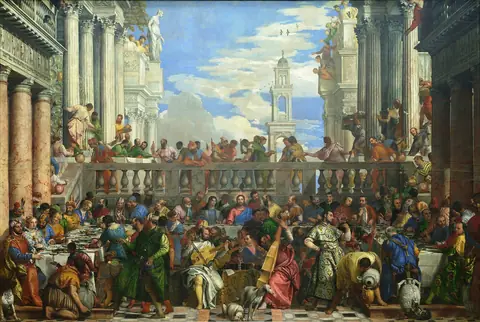
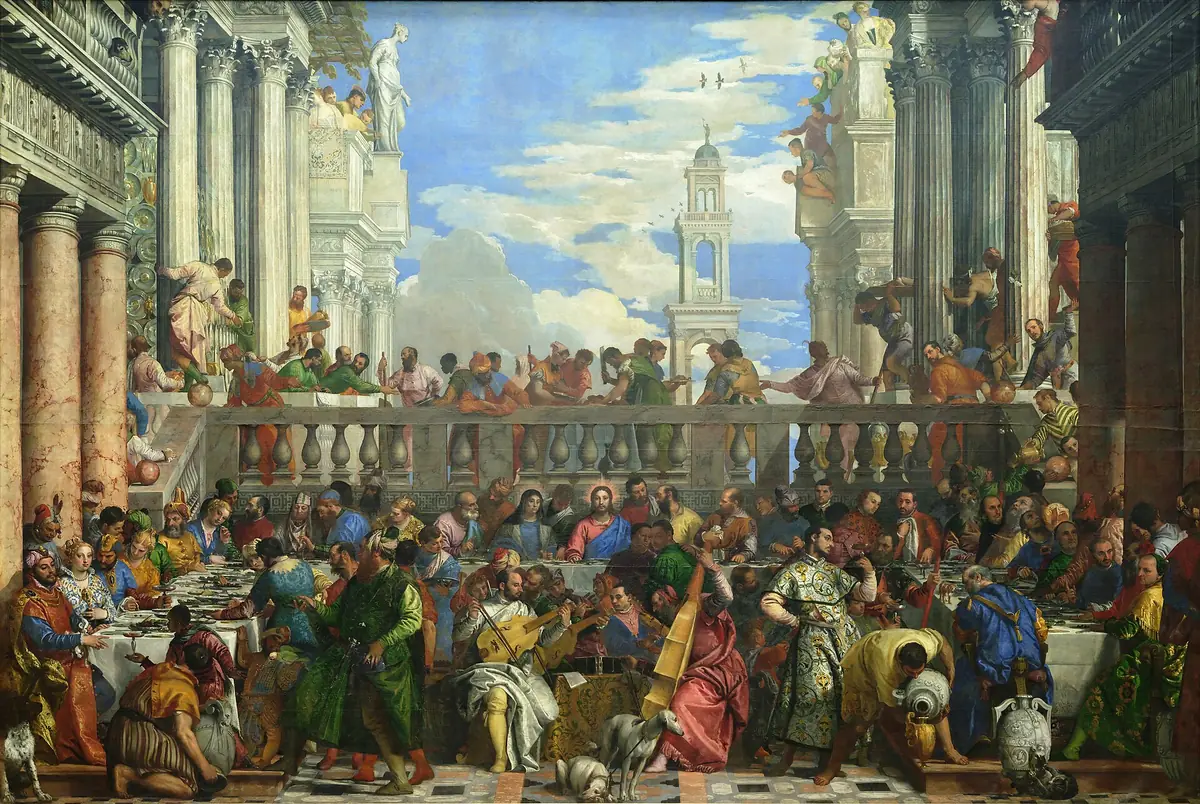
Image: Wikimedia Commons · Public domain (PD-Art) The Wedding Feast at Cana
Look closely. The largest painting in the Louvre, with more than a hundred figures. Christ sits at the centre, quiet and looking straight out, with Mary beside him. At the right, servants pour from the great jars where the water has become wine. In front, musicians play; directly above Christ a man carves meat on the balcony, which many read as a sign of the Lamb.
In the library: The Bible (KJV) · Jesus Christ · Mary, mother of Jesus
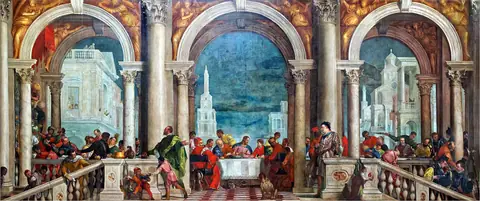
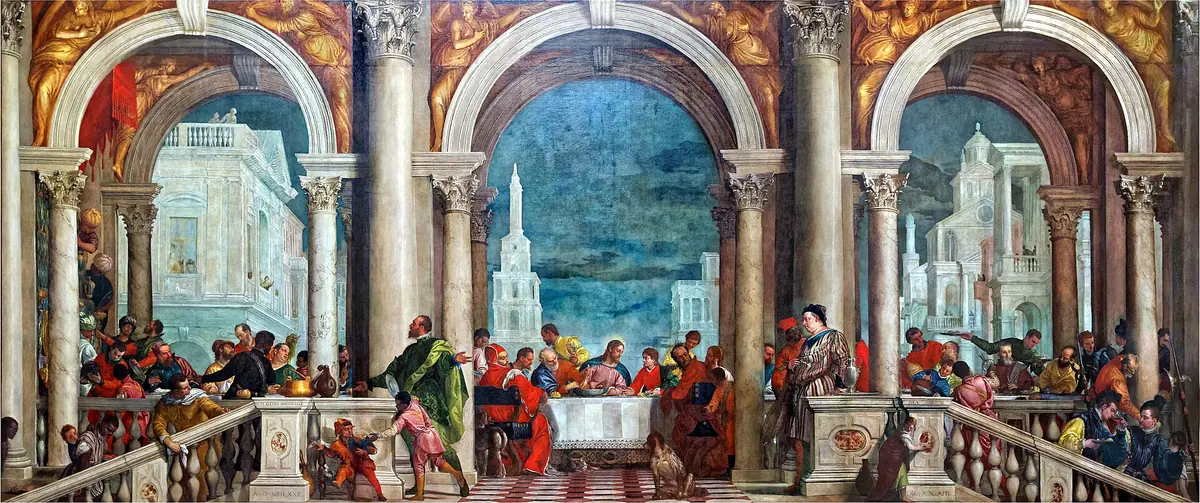
Image: Wikimedia Commons · Public domain (PD-Art) The Feast in the House of Levi
Look closely. Painted as a Last Supper for a monastery dining hall. After the Inquisition questioned its crowds of jesters and soldiers, Veronese renamed it after the feast where Jesus ate with tax collectors and sinners. Look for the Latin inscription on the stair rails that cites Luke chapter 5.
In the library: The Bible (KJV) · Matthew (Levi) · Jesus Christ
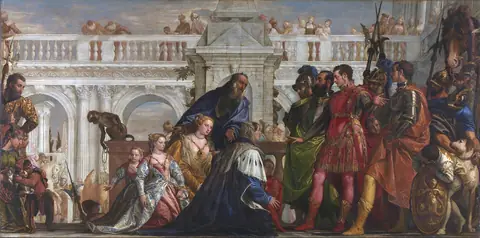
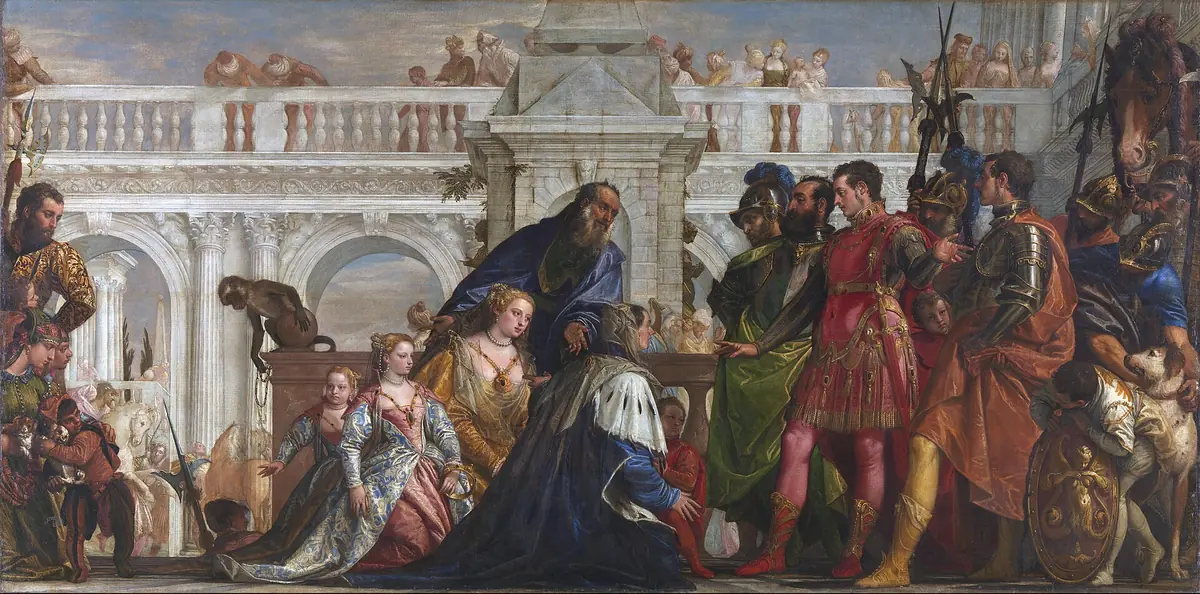
Image: Wikimedia Commons · Public domain (PD-Art) The Family of Darius before Alexander
Look closely. After his victory at Issus in 333 BC, Alexander visits the captured mother, wife and daughters of the Persian king. The ancient historians tell how the queen mother knelt to the wrong man, Alexander's friend Hephaestion, and how Alexander kindly excused her. Which of the men at the centre is Alexander? Veronese leaves you to work it out, as she had to.
In the library: Alexander the Great · Plutarch, Lives (Alexander) · Arrian, Campaigns of Alexander
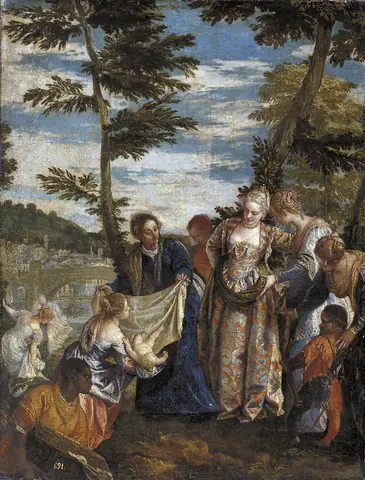
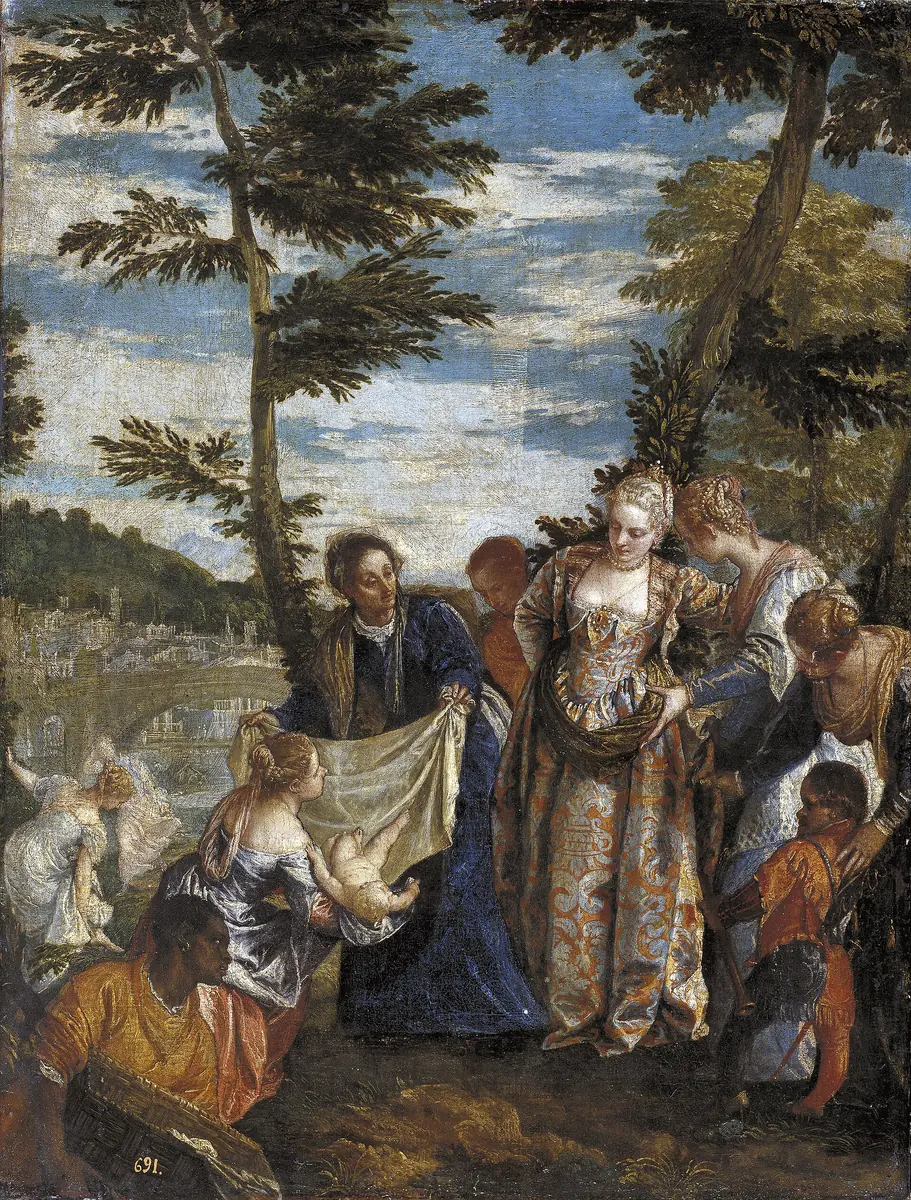
Image: Wikimedia Commons · Public domain (PD-Art) The Finding of Moses
Look closely. Pharaoh's daughter, dressed like a Venetian lady, looks down at the baby rescued from the Nile, while her attendants crowd in. The Egyptian story happens in a European landscape with a bridge and a town. Veronese painted the subject several times; a version of it hangs on the wall in Vermeer's Astronomer.
In the library: The Bible (KJV) · Moses · Vermeer's Astronomer (Great Art)
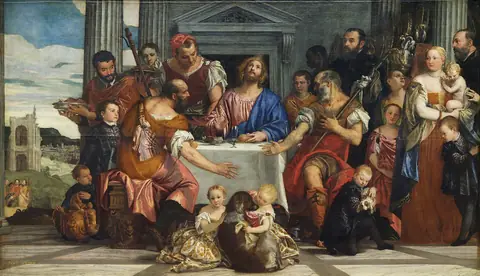
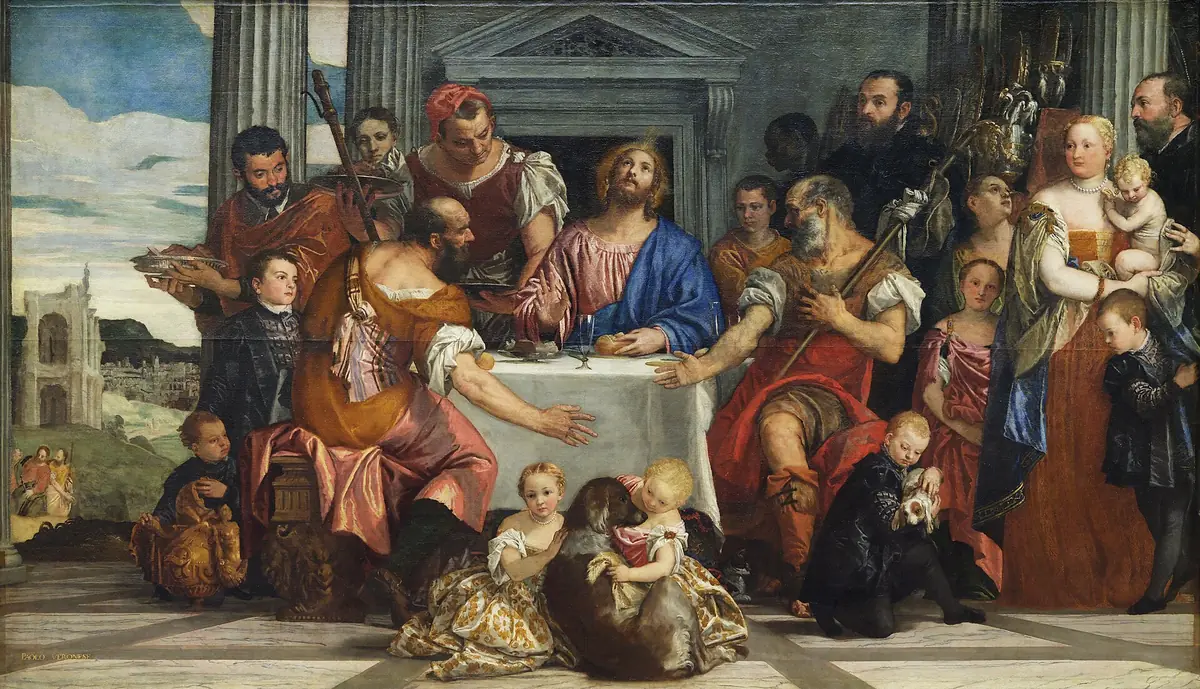
Image: Wikimedia Commons · Public domain (PD-Art) The Supper at Emmaus
Look closely. The risen Christ breaks bread and the two disciples suddenly know him. Around them Veronese has placed a whole Venetian family, probably the patrons, with children playing with a dog in front. Notice how only the disciples react: the family is present but does not yet see.
In the library: The Bible (KJV) · Jesus Christ
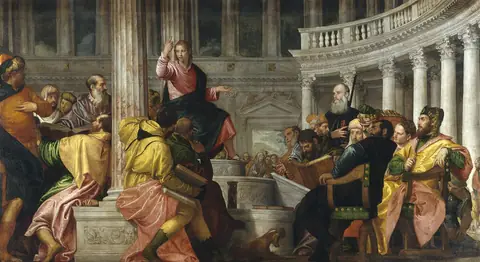
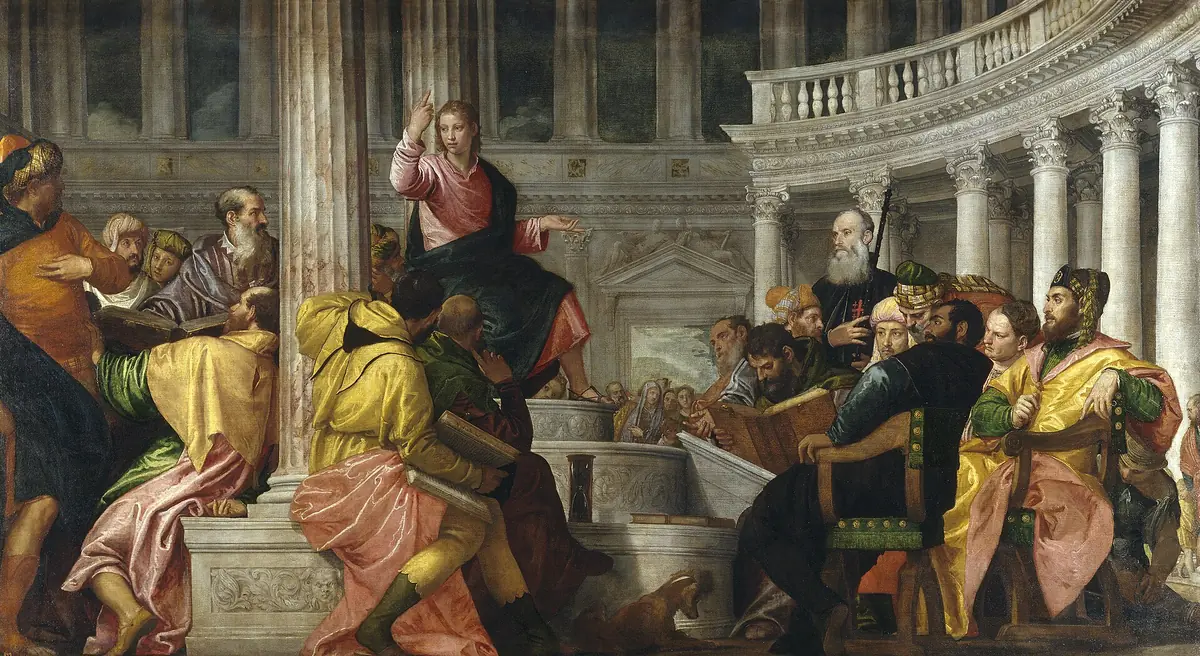
Image: Wikimedia Commons · Public domain (PD-Art) Christ among the Doctors in the Temple
Look closely. The twelve-year-old Jesus sits raised among the learned teachers, who argue, consult books and stare. Look for Mary and Joseph arriving at the left after three days of searching.
In the library: The Bible (KJV) · Jesus Christ · Mary, mother of Jesus · Joseph of Nazareth
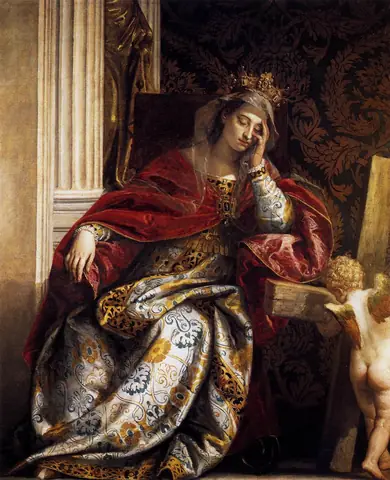
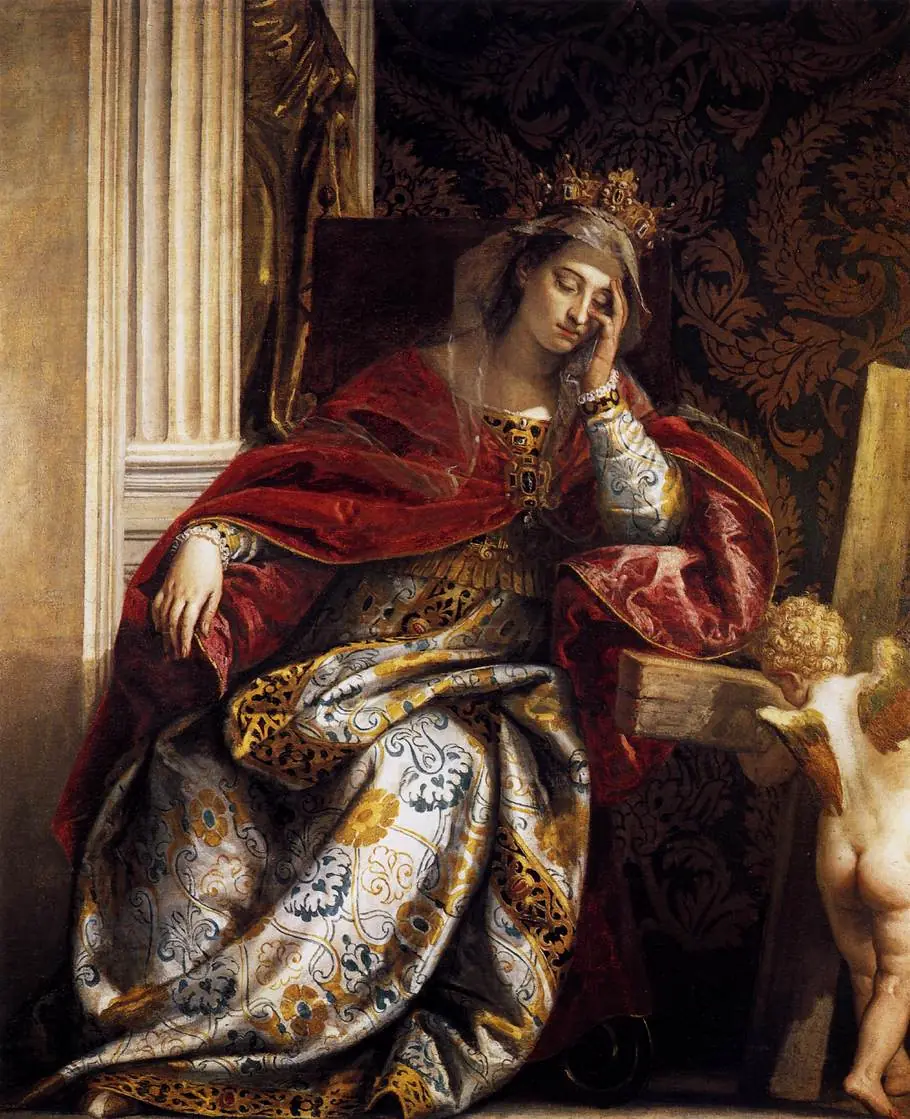
Image: Wikimedia Commons · Public domain (PD-Art) The Vision of Saint Helena
Look closely. Helena, mother of the emperor Constantine, was believed to have found the cross of Christ in Jerusalem. Veronese shows her asleep, head on her hand, in a sumptuous gold-and-silver robe, while a child-angel carries the cross toward her in a dream.
In the library: Constantine the Great


What to watch for in Paolo Veronese
Look slowly- Silver light. Veronese's colours are cool and clear: pale skies, pearly whites, sea-green and rose.
- Architecture as stage. Columns, balustrades and staircases frame his crowds like a theatre set.
- Venice in Bible clothes. Ancient stories are set among Venetian nobles, servants and dogs of his own time.
- Find the centre. In a crowd of a hundred figures, look for the calm one: usually Christ.
- Little lives at the edges. Children, dogs, cooks and musicians carry on their own business around the holy scene.
Dates and collections follow the holding museums and Wikidata. Images of paintings are photographs of public-domain pictures from Wikimedia Commons or museum open-access releases; photographs of sculpture are used only when the photograph itself is Public domain, CC0, or CC BY with a named credit. Each picture links to its source page with full licence details.