Great Art · Spanish (later 18th–early 19th century)
Francisco Goya
The Spanish painter who could be a charming court portraitist and, later, the unsparing witness of war, reason and unreason.
His life
Francisco de Goya was born in 1746 in Fuendetodos, Aragon, and rose from a provincial training to become first painter to the Spanish king. He designed tapestry cartoons of picnic and street life, painted the royal family without flattery, and in 1792–93 suffered a grave illness that left him deaf. After that the work darkens: prints of folly and nightmare, and then the pictures of the second and third of May 1808, when Madrid rose against Napoleon's troops and was punished.
In old age he lived for a time in the House of the Deaf Man, painting the so-called Black Paintings on its walls, and he died in exile in Bordeaux in 1828. His gift was truthfulness that would not look away. A parasol, a family of princes, an execution at night, or a sleeper of reason can all come from the same hand, and none of them is easy decoration.
Key works
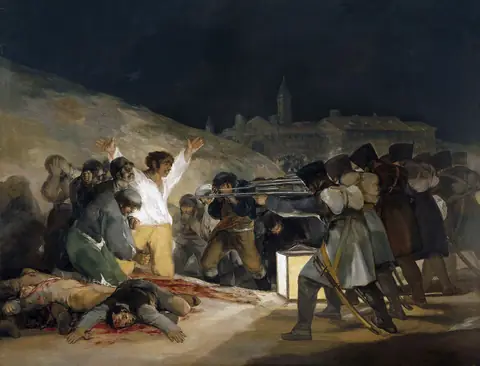
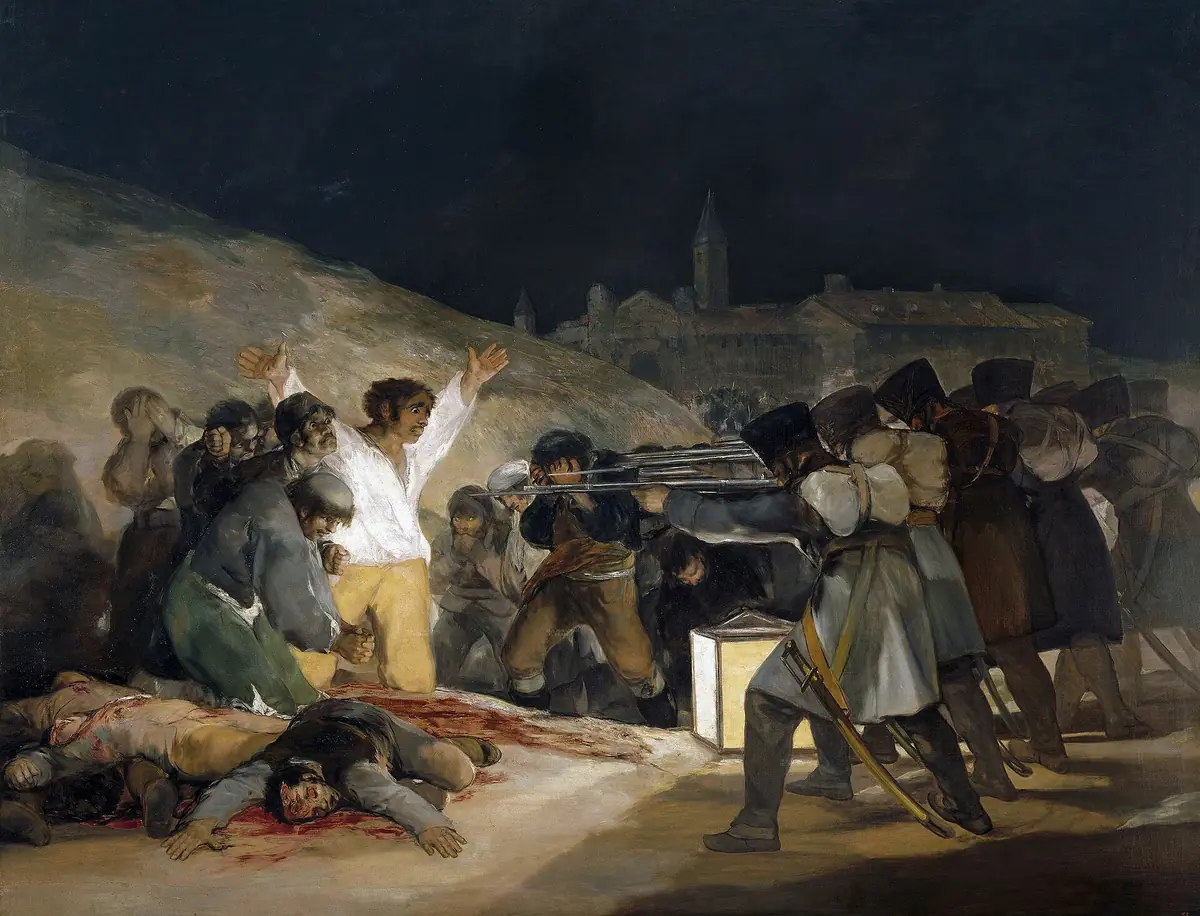
Image: Wikimedia Commons · Public domain (PD-Art) The Third of May 1808
Look closely. On a bare hill at night, a man in a white shirt throws out his arms before a firing squad; already-dead companions lie in a pool of blood, and a lantern on the ground makes a hard, theatrical light. Look at the faceless line of the soldiers, at the church in the dark town, and at the central figure's open hands. Teachers of younger children may wish to look first: it is a picture of an execution, painted so that it cannot be ignored.
In the library: Napoleon
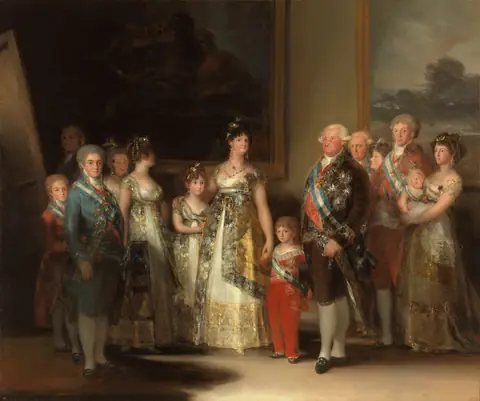
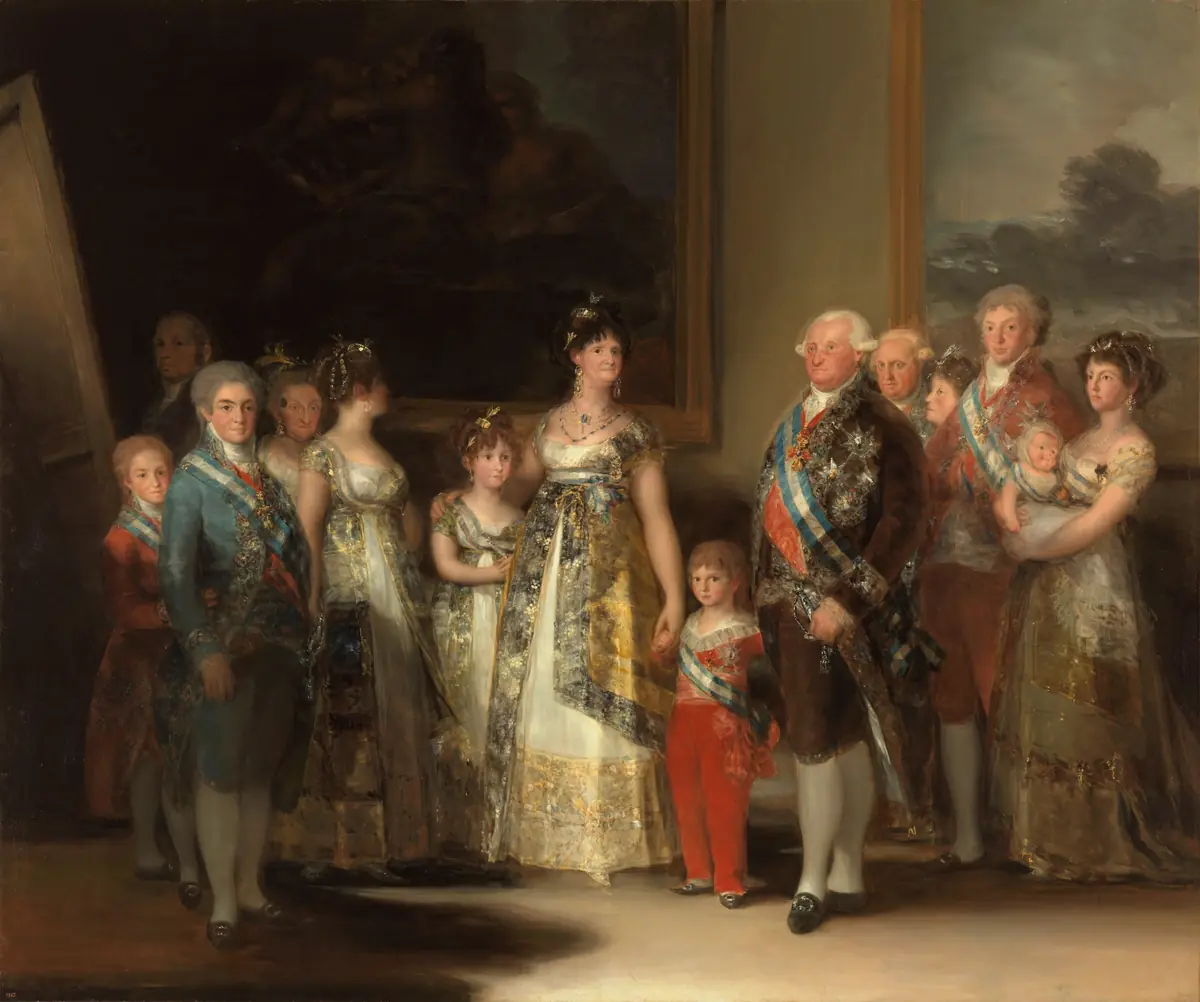
Image: Wikimedia Commons · Public domain (PD-Art) Charles IV of Spain and His Family
Look closely. The king, the queen, and their children and relations stand in a shallow, glittering group, medals and silks catching the light, Goya himself at a canvas in the shadows at the left. Look at the unflattering honesty of the faces, at the sparkling but slightly cramped splendour, and at how a royal portrait can tell the truth without a sneer.
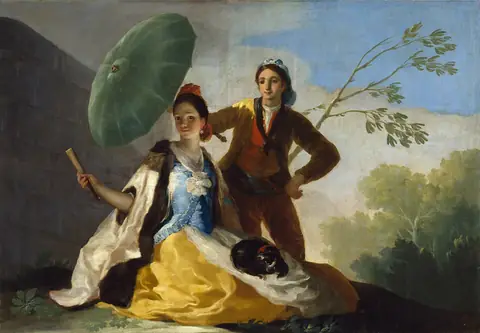
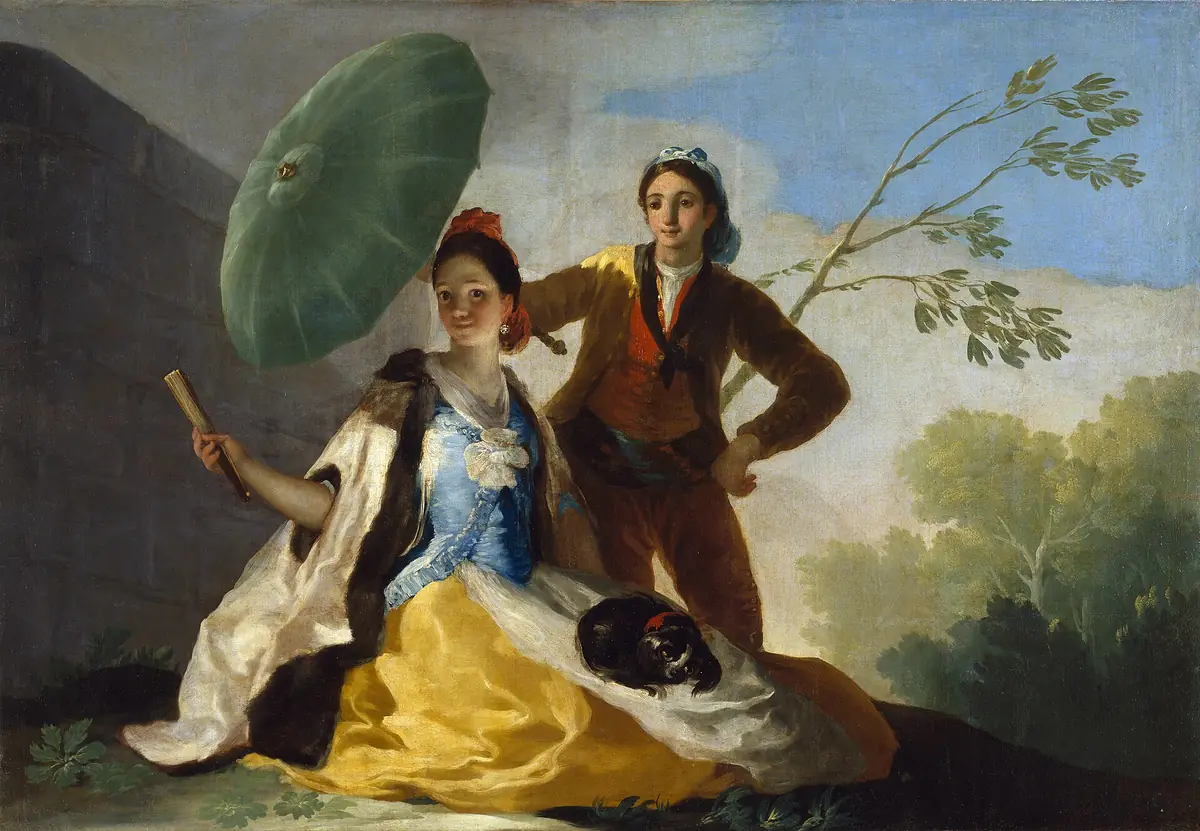
Image: Wikimedia Commons · Public domain (PD-Art) The Parasol
Look closely. A young woman in a pale blue dress sits on a low wall as a boy holds a green parasol over her, a little dog in her lap, a soft landscape behind — a tapestry cartoon of courtship and shade. Look at the fresh, almost playful colour, at the tilt of the parasol, and at the ease of an early Goya still at home in charm.
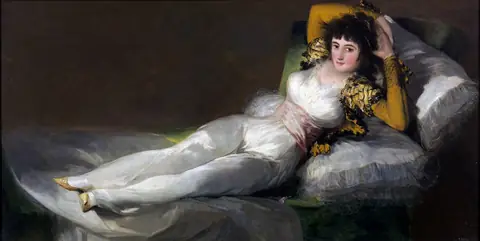
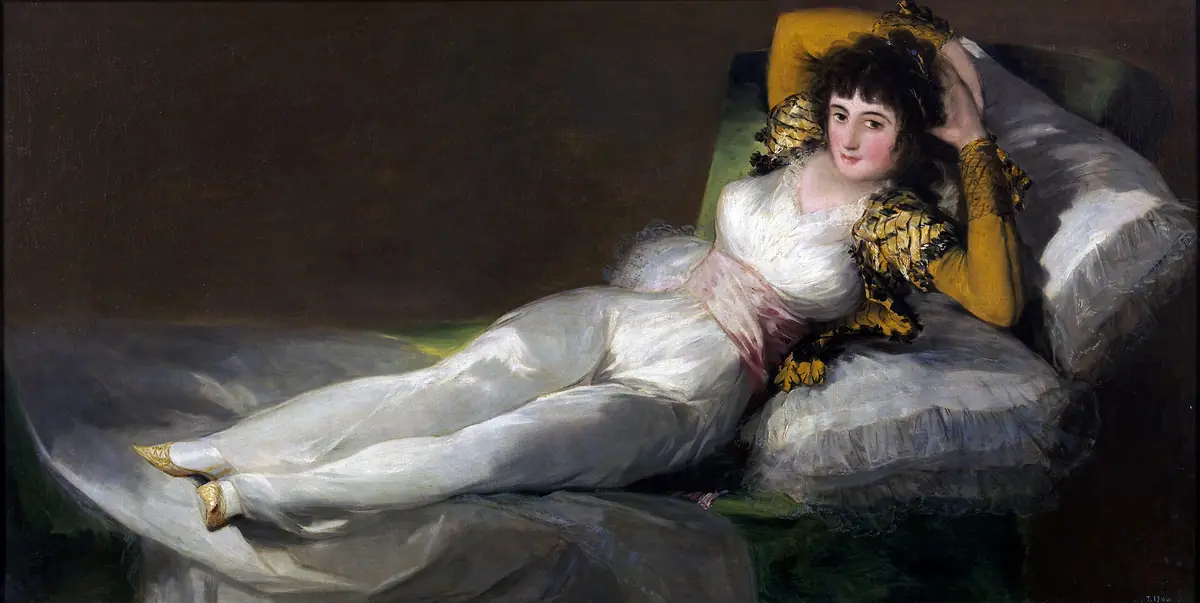
Image: Wikimedia Commons · Public domain (PD-Art) The Clothed Maja
Look closely. A woman in a white silk dress and a short ochre jacket reclines on a green divan, hands behind her head, looking out with a direct, almost amused calm. Look at the long diagonal of the pose, at the pale shoes, and at the frankness of a portrait that has a famous unclothed companion, named for older students and not shown here.
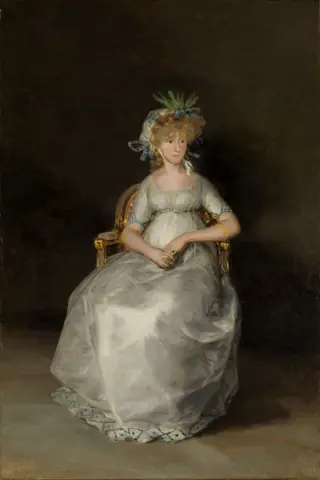
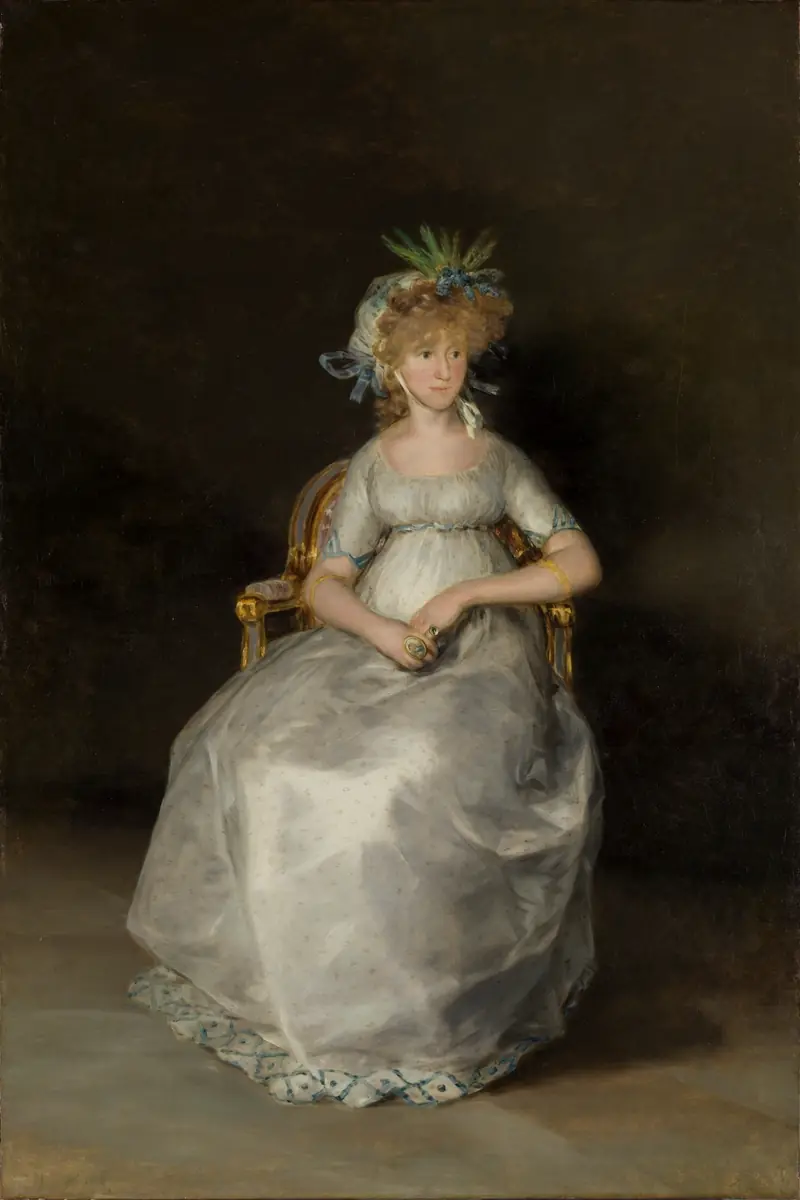
Image: Wikimedia Commons · Public domain (PD-Art) The Countess of Chinchón
Look closely. A young woman, slightly shy and slightly lost, sits in a silver-white dress and a wheat-ear headdress, her hands folded on a softly swelling waist, a pale face against a dark ground. Look at the fragility of the pose, at the shimmer of the dress, and at the sympathy with which Goya paints a princess who is not quite at ease in her splendour.
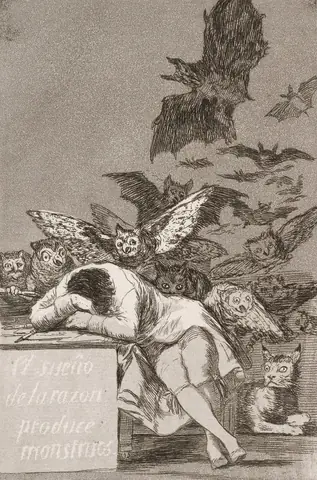
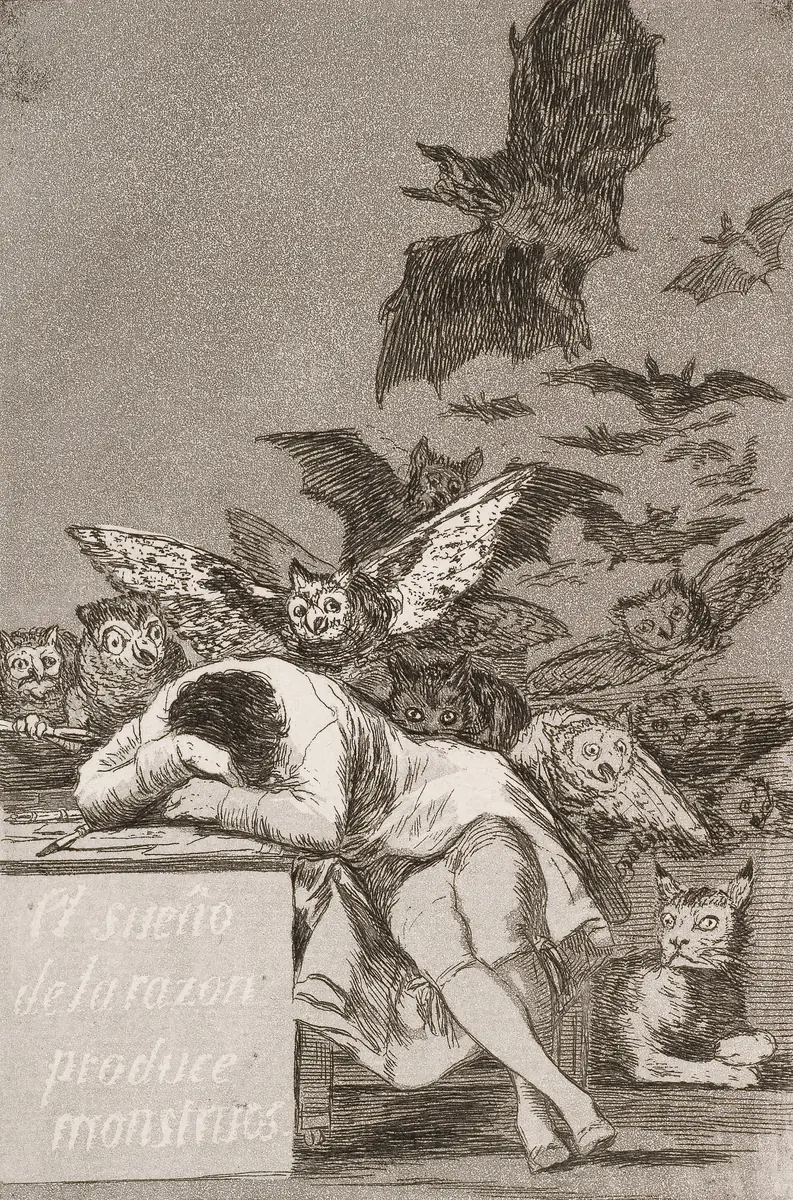
Image: Wikimedia Commons · Public domain (PD-Art) The Sleep of Reason Produces Monsters
Look closely. A man has fallen asleep at a desk, his head on his arms, while owls and bats rise behind him and a lynx lies watchful at his feet. It is a plate from the Caprichos. Look at the title etched on the desk, at the rush of the creatures out of the dark, and at the warning that when reason sleeps, something else takes the room.
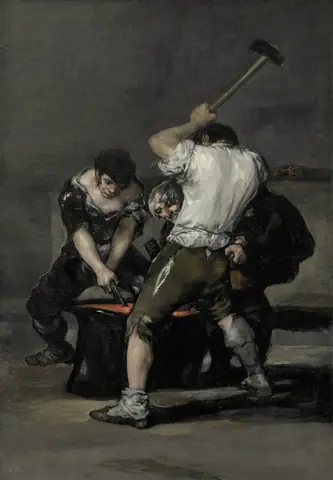
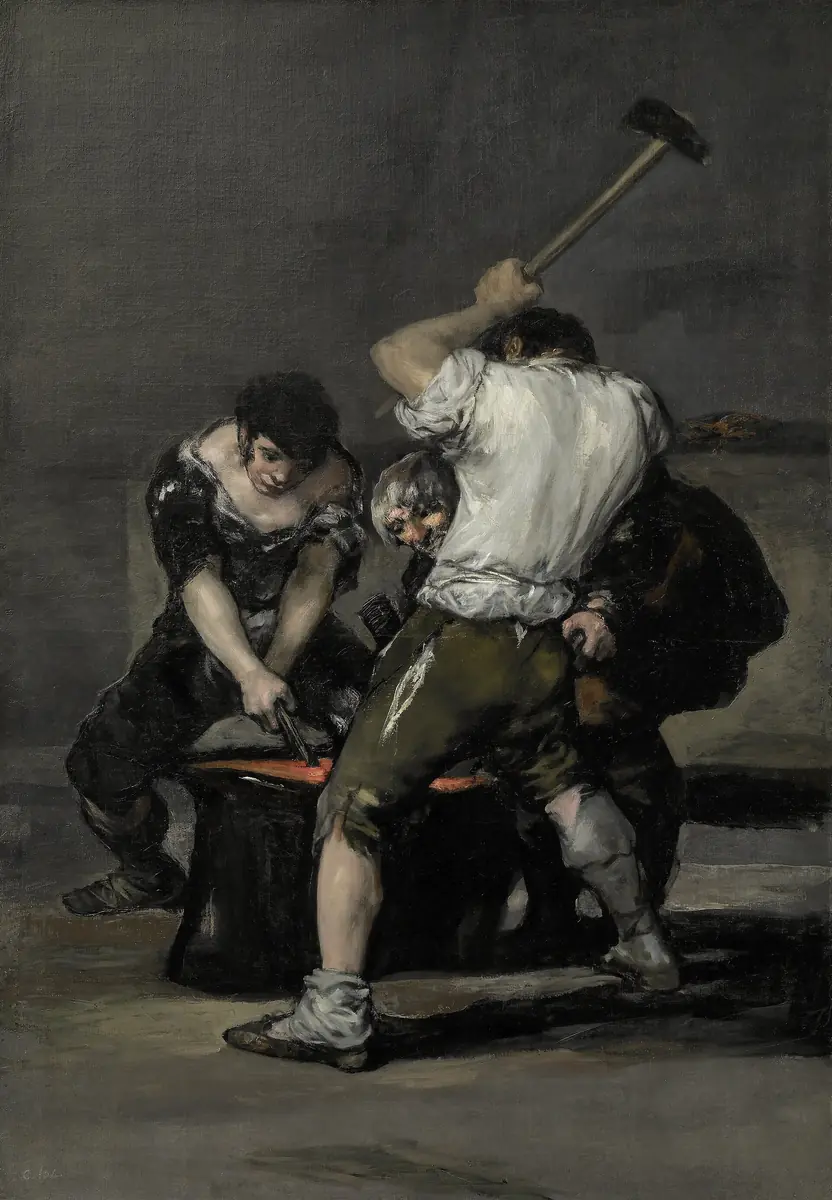
Image: Wikimedia Commons · Public domain (PD-Art) The Forge
Look closely. Three smiths work at an anvil, bodies leaning into the blow, a dark workshop around them, the hammer about to fall. Look at the weight of the standing figure, at the glare of the metal, and at the dignity of heavy, ordinary labour painted with the same seriousness as a court or a history.


What to watch for in Francisco Goya
Look slowly- An unflattered court. In the royal family, look for honesty of face rather than official glow.
- Light as a shock. In the Third of May, a lantern does the work of a whole sun.
- Prints that think. A capricho can hold a proverb, a nightmare, or a political warning in one plate.
- Ordinary Madrid. The early cartoons are full of street and picnic life.
- A late, rougher hand. The paint in some late work is almost scraped or smeared, and still exact.
For older students
These famous works include nudity, so they are named here but not shown. Teachers and parents can decide when to look at them together.
- The Naked Maja, c. 1797–1800, Prado, Madrid. A reclining nude, the unclothed companion to the Clothed Maja shown on this page. Named here but not shown.
- Saturn Devouring His Son, c. 1820–23, Prado, Madrid. One of the Black Paintings; a terrible image of a titan devouring a body. Named here but not shown.
Dates and collections follow the holding museums and Wikidata. Images of paintings are photographs of public-domain pictures from Wikimedia Commons or museum open-access releases; photographs of sculpture are used only when the photograph itself is Public domain, CC0, or CC BY with a named credit. Each picture links to its source page with full licence details.