Epicurus
341–270 BC · Greek philosopher who taught that happiness is freedom from pain and fear, founder of the Garden school in Athens.
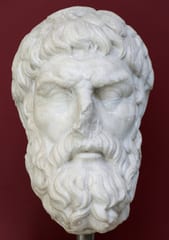
Epicurus was born in 341 BC on the island of Samos to Athenian parents. He studied philosophy as a young man, came under the influence of the atomist teaching of Democritus, and taught at Mytilene and Lampsacus before settling in Athens around 306 BC. There he bought a house and garden where he lived with friends, including women and slaves, in a simple community known as the Garden. He taught that everything is made of atoms moving in the void, that the gods live in bliss and do not concern themselves with human affairs, and that the soul dies with the body. The goal of life, he argued, is pleasure understood as the absence of bodily pain and mental disturbance, reached by moderating desires, cultivating friendship and studying nature. He wrote hundreds of works, but only three letters and a set of maxims survive, preserved by Diogenes Laertius. Epicureanism spread across the Roman world and was strongly opposed by Christian writers. He died in Athens in 270 BC.
Epicurus is also an author in the library: author page and works.
Faith: Taught that the gods exist but take no part in human affairs and that the soul does not survive death. Source: Stanford Encyclopedia of Philosophy

Key dates
- 341 BC Born on Samos
- c. 306 BC Founds the Garden school in Athens
- 270 BC Dies in Athens
Read about them
Grades 9–12
- On Happiness: Letter to Menoeceus and Principal Doctrines · In the library
More lives
Aristotle · Cicero · Confucius · Epictetus · Heraclitus · Kautilya (Chanakya)