Wonders & Monuments · Great monuments
Mount Rushmore
The colossal heads of four presidents, carved by Gutzon Borglum on a mountain in the Black Hills.
Still standing. The four carved faces still stand on the mountain. The work was left unfinished at Borglum’s death and at the end of funding; there are no complete figures below the heads. The site is a memorial and a work of modern sculpture on a colossal scale.
Gutzon Borglum, in Great Art · George Washington, in Great Lives · Thomas Jefferson, in Great Lives · Abraham Lincoln, in Great Lives
What it is
Mount Rushmore, in the Black Hills of South Dakota, is a national memorial whose principal work is the colossal carving of four presidents: George Washington, Thomas Jefferson, Theodore Roosevelt and Abraham Lincoln. The sculptor Gutzon Borglum began the work in 1927; it continued until 1941, the year of his death, and was left without the fuller figures he had at times planned. The heads are cut in the granite of the mountain itself, at a scale meant to be read from a distance.
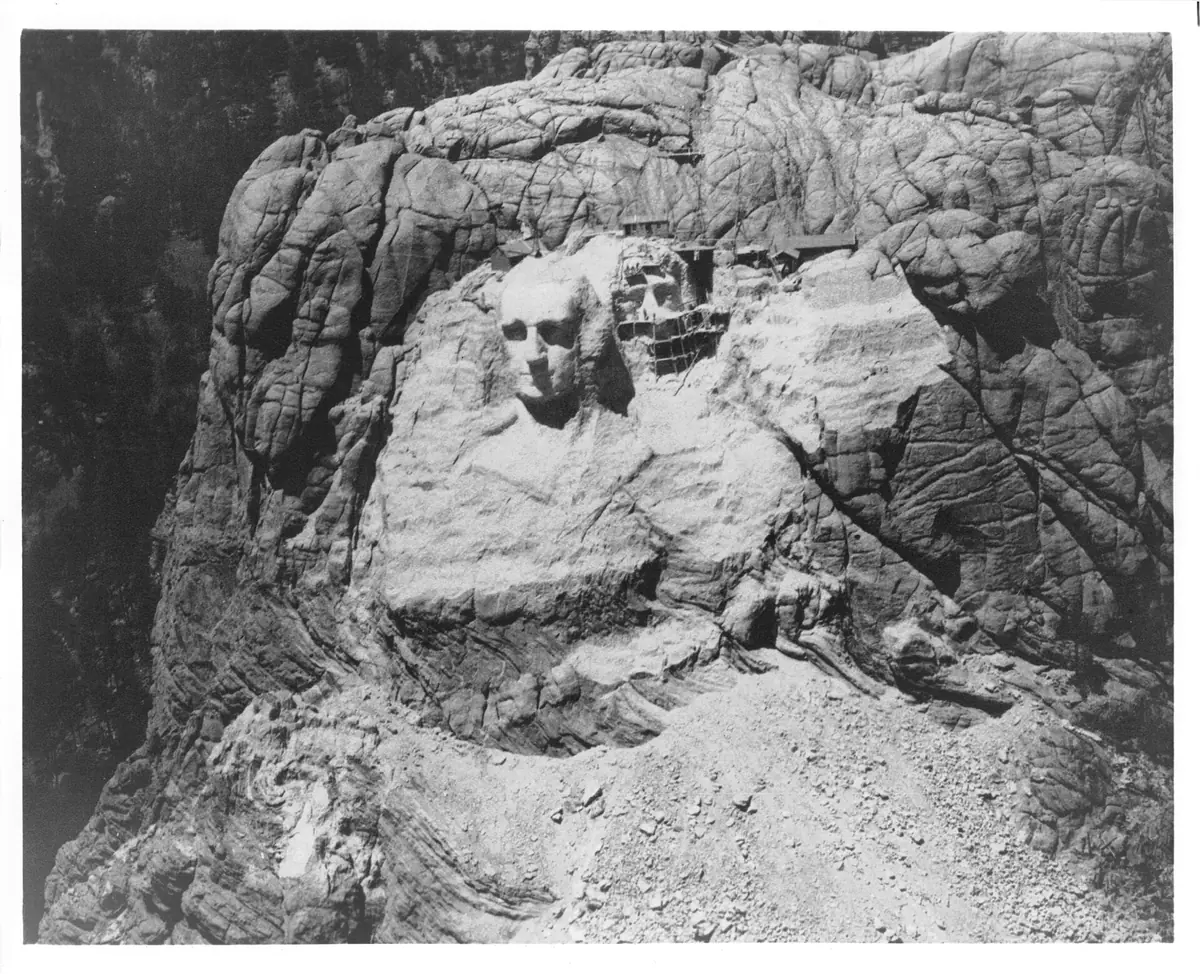
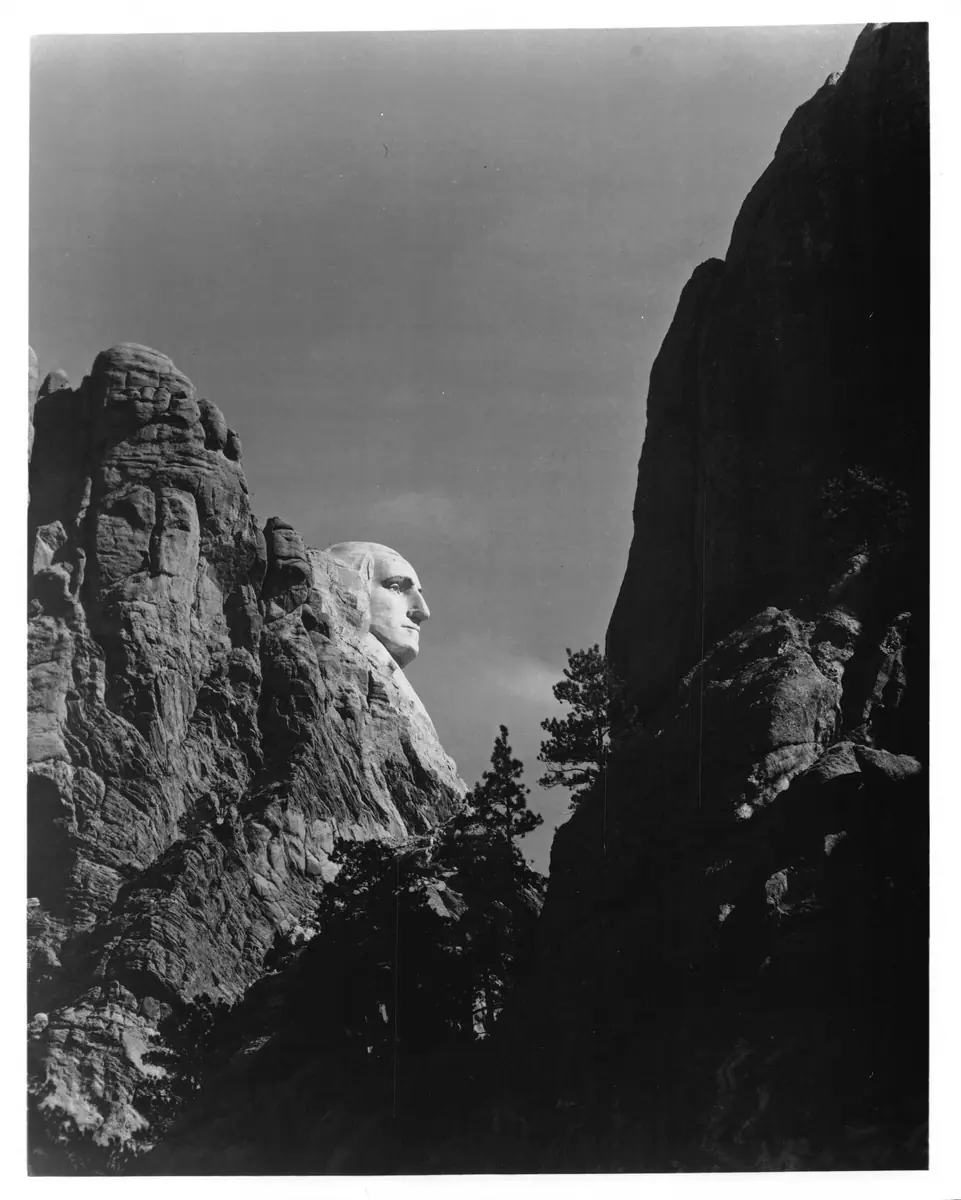
The photographs here include the four faces as a completed group, a view of the work during construction, and a profile of Washington. This library has a Great Art page on Borglum, and lives of Washington, Jefferson and Lincoln. The memorial has always been argued over as well as admired — as a work of national memory, as a colossal sculpture, and as a carving on land sacred to the Lakota. Those facts belong beside one another. The page does not pretend the mountain was an empty rock without a history of its own.
Why it matters
This is costly and dangerous work, offered to civic memory, on a scale almost without precedent in American sculpture. The virtue to notice is perseverance — years of drilling and blasting under Borglum’s direction — and the honesty to see both the skill of the carving and the unfinished, contested character of the monument. Beauty here is a likeness held in living rock, at the size of a cliff.
Look closely
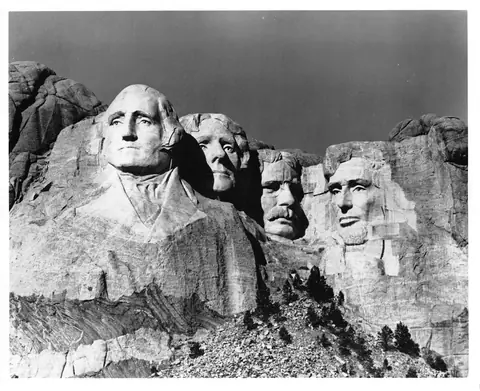
Image: Wikimedia Commons · Public domain The four faces
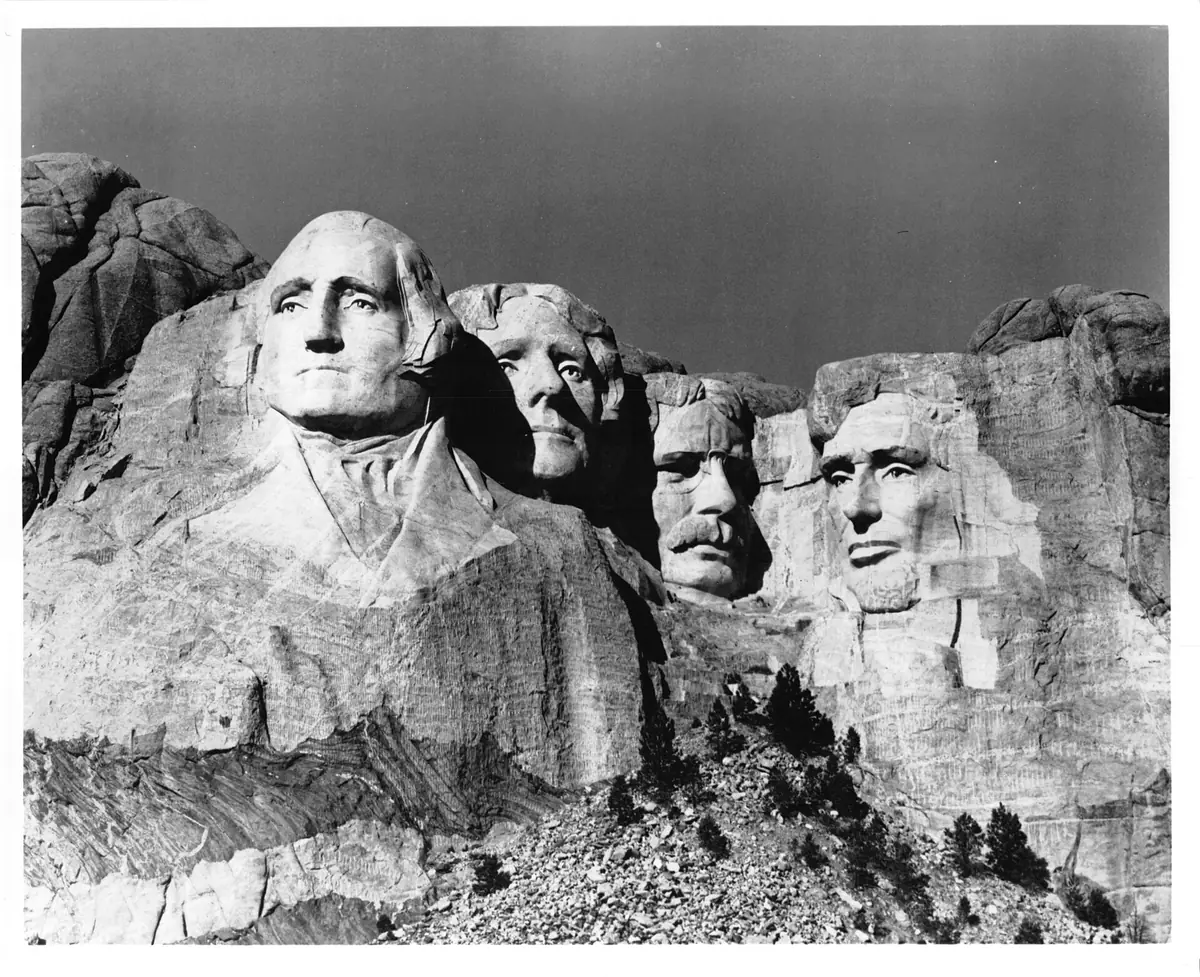
Look closely. The completed group: Washington, Jefferson, Roosevelt and Lincoln, carved in the granite cliff. This is the memorial as it is meant to be seen, the four heads together, with the uncarved rock around them. Look at the scale of a face against the mountain, and at how much of the cliff was left untouched.
In the library: Gutzon Borglum, in Great Art · George Washington, in Great Lives · Thomas Jefferson, in Great Lives · Abraham Lincoln, in Great Lives
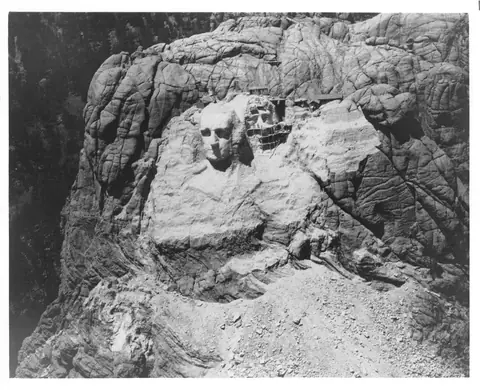
Image: Wikimedia Commons · Public domain The memorial during construction
Look closely. An aerial view of the mountain while the carving was still under way. Some faces are more advanced than others, and the working terraces and uncarved rock are visible. It is the best picture on this page of the labour of the monument, and of the fact that the work was made, not found.
In the library: Gutzon Borglum, in Great Art
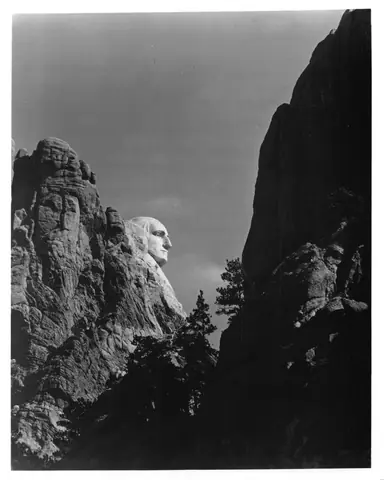
Image: Wikimedia Commons · Public domain Washington in profile
Look closely. A closer view of George Washington’s head in profile, so that the cutting of the features and the grain of the granite can be read. The other presidents are out of this frame. Use it to look at one likeness as sculpture, after the group view has given you the whole memorial.
In the library: George Washington, in Great Lives


What to watch for
Look slowly- Four heads, not four complete figures. The work stops at the heads and collars. That is how it was left.
- A work in progress. The construction photograph shows the mountain mid-carving. Compare it with the finished faces.
- Likeness at a distance. The features are cut to be read from below and from far off, not as a gallery bust.
- Borglum’s work. For the sculptor’s career, including the difficulties of this commission, see his Great Art page.
- The land has a history. The Black Hills are sacred to the Lakota. The memorial stands in that longer story, not outside it.
Sources
Dates follow standard historical references and, where we quote a book, the wording of the edition hosted in this library. Photographs are used only when the photograph itself is Public domain, CC0, or CC BY with a named credit. Lost wonders are shown in later engravings and reconstructions, which are imaginings, not photographs of the original work. Each picture links to its source page with full licence details.