Great Churches & Monasteries · Western Europe
Westminster Abbey
The coronation church of England, where monarchs have been crowned since 1066 and many great people lie buried.
Still standing. The Abbey stands. It has been the coronation church of English and British monarchs since 1066, and it holds the tombs and memorials of kings, poets, scientists, and others. The monastery was dissolved in 1540, and the church is a Royal Peculiar.
Westminster Abbey, in Wonders & Monuments · Canterbury Cathedral
What it is
A Benedictine monastery was established on Thorney Island by the Thames in the tenth century. Edward the Confessor rebuilt the church from about 1042, and it was consecrated on 28 December 1065, a few days before his death. Duke William of Normandy was crowned there on Christmas Day, 1066, and every English coronation since has taken place in the Abbey. In 1245 Henry III began a new church in the French Gothic style, with a tall nave and the shrine of Edward the Confessor at its heart.
Henry VII's Lady Chapel was built from 1503 and has a magnificent fan-vaulted ceiling. The monastery was dissolved by Henry VIII in 1540, and in 1560 Elizabeth I founded the collegiate church that still exists. Nicholas Hawksmoor designed the west towers in the eighteenth century. The Abbey holds the tombs of monarchs including Elizabeth I, and, in Poets' Corner, the grave of Geoffrey Chaucer and memorials to many writers. Isaac Newton, Charles Darwin, Handel, and David Livingstone are buried there.
Why it matters for a classical Christian student
Westminster Abbey shows how a church can be woven into the life of a nation. A classical Christian student will see that the coronation service is a Christian rite, in which the king is anointed and swears an oath before God. The tombs and memorials invite a question about how a nation honors its dead. The student should consider which of those honored are remembered for faith, courage, and service, and which for other things.
Read alongside
- The Canterbury Tales: Chaucer, buried in the Abbey, wrote the Canterbury Tales.
Great Lives connected here
- William the Conqueror, in Great Lives: William was crowned in the Abbey on Christmas Day 1066.
- Henry VIII, in Great Lives: Henry VIII was crowned in the Abbey in 1509 and later dissolved its monastery.
- Elizabeth I, in Great Lives: Elizabeth I was crowned in the Abbey in 1559 and buried there in 1603.
- Queen Victoria, in Great Lives: Victoria was crowned in the Abbey in 1838.
- Geoffrey Chaucer, in Great Lives: Chaucer was buried in the Abbey in 1400, in what became Poets' Corner.
- Charles Dickens, in Great Lives: Dickens was buried in Poets' Corner in 1870.
- Isaac Newton, in Great Lives: Newton was buried in the Abbey in 1727.
- Charles Darwin, in Great Lives: Darwin was buried near Newton in 1882.
- George Frideric Handel, in Great Lives: Handel was buried in the Abbey in 1759.
- William Wilberforce, in Great Lives: Wilberforce was buried in the Abbey in 1833.
- David Livingstone, in Great Lives: Livingstone's body was brought from Africa and buried in the Abbey in 1874.
- Oliver Cromwell, in Great Lives: Cromwell was buried in the Abbey in 1658, and his body was removed after the Restoration.
- Samuel Johnson, in Great Lives: Johnson was buried in the Abbey in 1784, close to the memorial of his friend David Garrick.
- Alfred, Lord Tennyson, in Great Lives: Tennyson was buried in Poets' Corner in 1892.
- Christopher Wren, in Great Lives: Wren was surveyor of the Abbey's fabric from 1698 until 1723.
- C. S. Lewis, in Great Lives: A memorial stone to Lewis was dedicated in Poets' Corner in 2013, fifty years after his death.
Look closely
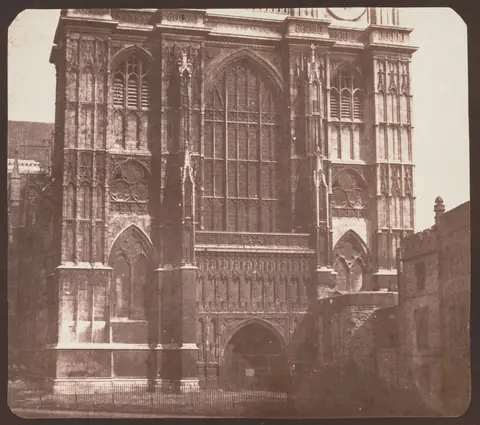
Image: Wikimedia Commons · CC0 (public domain) Westminster Abbey from the outside
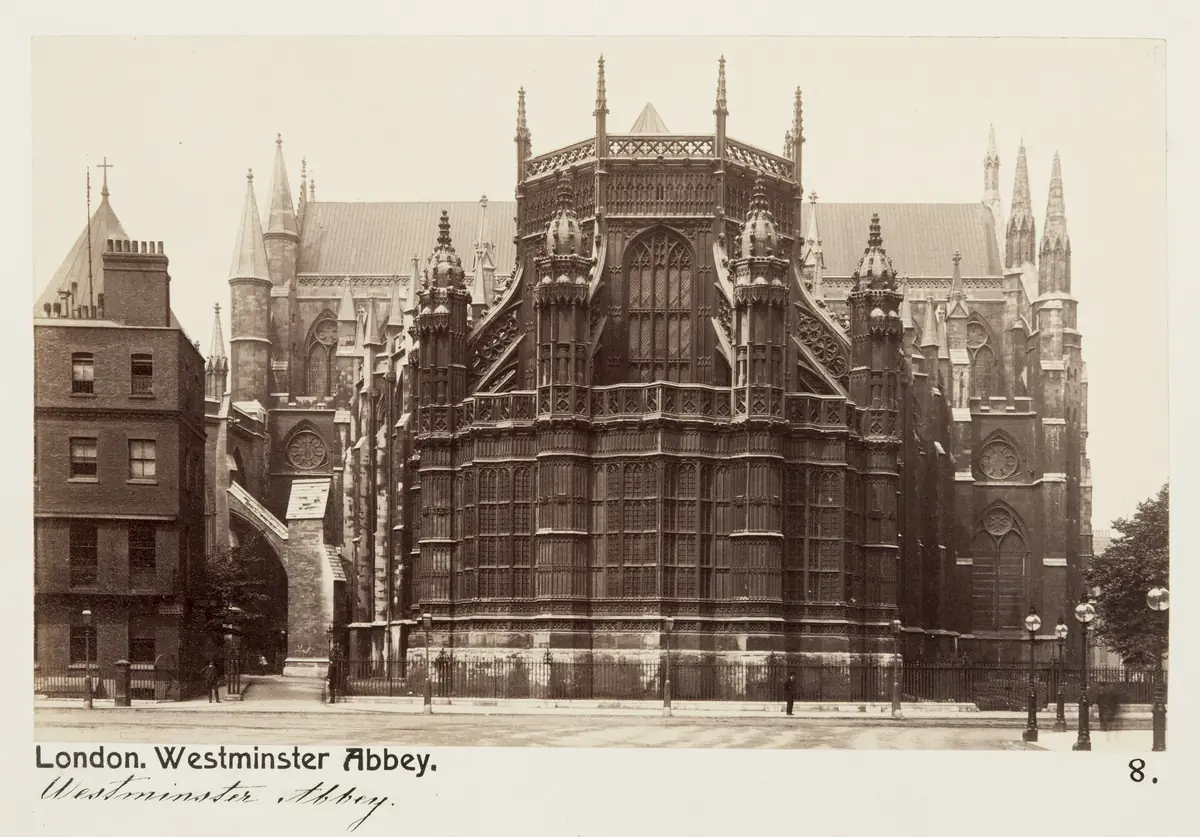
Look closely. An early photograph by Nicholas Henneman of the abbey’s exterior, with the Gothic body of the church and the later west towers. It is a mid-nineteenth-century record, useful because it shows the familiar silhouette before later cleaning and traffic changed the immediate setting.
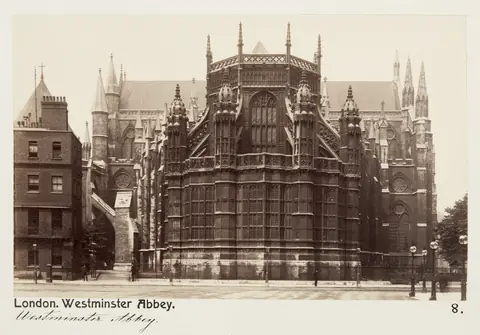
Image: Wikimedia Commons · Public domain The abbey in a historic photograph
Look closely. Another nineteenth-century photograph of the church from the outside. Compare the towers, the nave roof and the east end with Henneman’s view, and notice how much of the skyline is Gothic work with later completions.
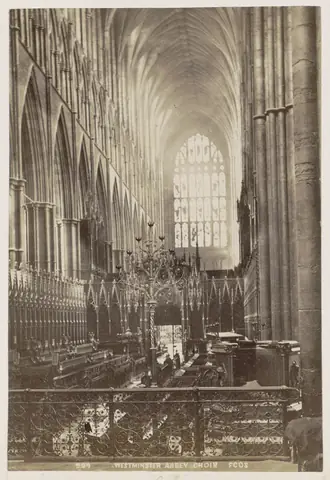
Image: Wikimedia Commons · CC0 (public domain) The choir of Westminster Abbey
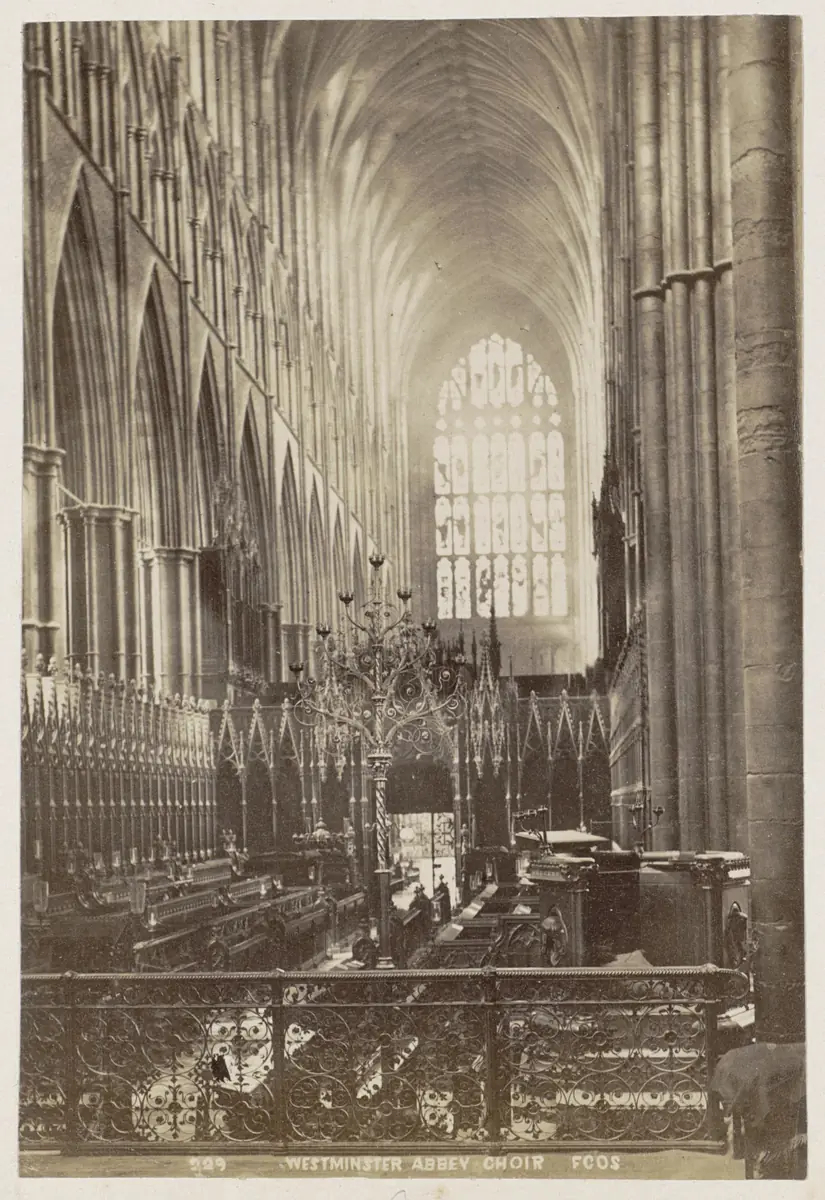
Look closely. A historic interior looking through the choir, with tall vaults, stalls and the depth of the church receding toward the east. This is the ceremonial heart of the abbey, the space in which coronations have been held. The photograph is of the architecture and the fittings as they then stood.
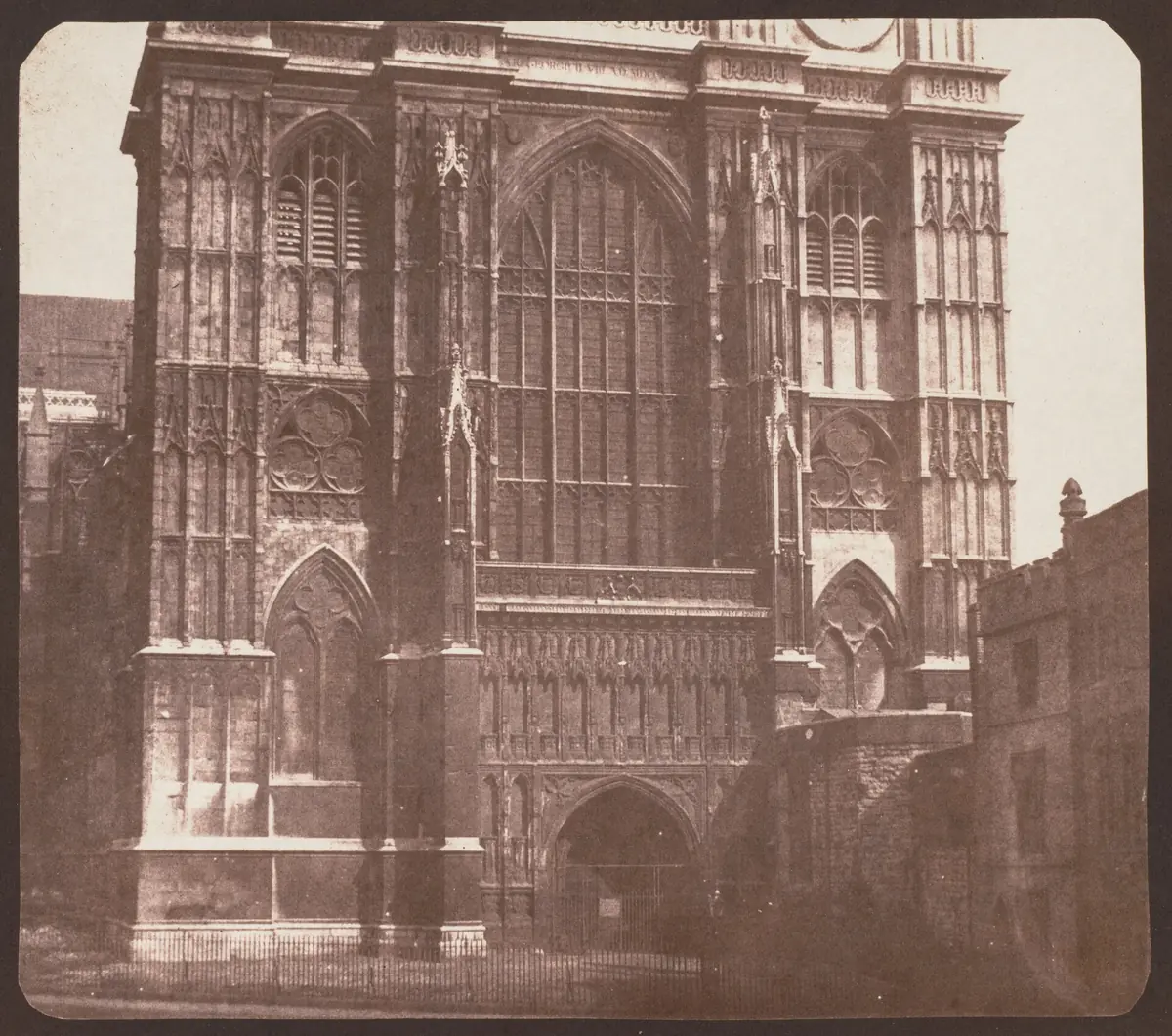

What to watch for
Look slowly- The Henry VII Chapel. Look up at the fan vault.
- The Coronation Chair. It was made about 1300 and has been used for coronations for seven centuries.
- Poets' Corner. Chaucer, Dickens, Tennyson, and Browning are all buried or memorialized there.
- The shrine of Edward the Confessor. It stands behind the high altar.
Sources
Dates follow standard historical references and, where we quote a book, the wording of the edition hosted in this library. Where a tradition is not certain history, the page says so. Photographs and pictures are used only when the image itself is Public domain, CC0, or CC BY with a named credit. Each picture links to its source page with full licence details. Pictures taken before a site was damaged are labelled with their date.