Work record
Homage to Catalonia
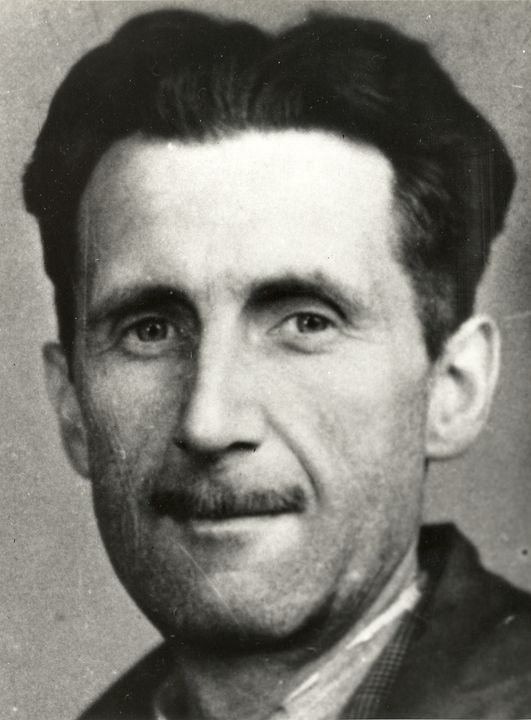
George OrwellHomage to Catalonia by George Orwell (1938)Homage to Catalonia is George Orwell's personal account of his service in the Spanish Civil War, a classic of war writing and of political honesty.1938 · Early 20th Century · Memoir · English
Abstract
Arrival. The author arrived in Barcelona in late 1936 and joined a small anti-Stalinist Marxist militia, moved by a city where workers ruled and class distinctions seemed abolished.
The front. On the Aragon front, war meant cold, lice, hunger and boredom, with ancient rifles and little combat. He describes comrades with warmth.
Street fighting. On leave in May 1937 he found Barcelona torn by fighting between factions of the same side, and he spent days guarding a building.
Wound. Back at the front, a sniper's bullet passed through his neck, and he narrowly survived the wound before being moved through a chain of field hospitals.
Betrayal. The government outlawed his militia's party, falsely calling it a Fascist plot. Its members were jailed and he escaped to France.
For students. The book is a model of honest witness. Discuss propaganda, truth-telling and the lessons Orwell carried into his later fiction. His usual publisher refused the book for its criticism of the Communists; another firm issued it in 1938, and it sold few copies in its author's lifetime. Secker and Warburg's 1938 memoir stays in US copyright through 2033, so the Aragon trench chapters and the Barcelona street fighting are summarized here, and the full witness must be read in a borrowed or bought copy.
Key figures
- George Orwell: author and militiaman
- Eileen O'Shaughnessy: his wife
- Georges Kopp: his commander
- Andrés Nin: POUM leader

Summary
Homage to Catalonia is George Orwell's personal account of his service in the Spanish Civil War, a classic of war writing and of political honesty. In December 1936 Orwell went to Barcelona, intending to write newspaper articles, and joined the militia of the POUM, a small anti-Stalinist Marxist party, because that was the group his British contacts could arrange. He describes Barcelona in its revolutionary phase: workers in control, everyone addressed as 'comrade', no tips, no class distinctions, and he felt something worth fighting for. He was sent to the Aragon front, where for months the war was mostly cold, boredom, lice, firewood and hunger, with few shots fired and rifles that barely worked. He describes his comrades, Spanish and British, with warmth and humor. On leave in Barcelona in May 1937 he found the city changed and caught up in street fighting between the anarchists and POUM on one side and the Communist-dominated government forces on the other; he spent days guarding a building. Back at the front at Huesca, he was shot through the throat by a sniper and nearly died. While he recovered, the government outlawed the POUM, falsely accused it of being a Fascist fifth column, arrested its members, and murdered its leader. Orwell and his wife Eileen had to hide and escape to France. Orwell carefully distinguishes what he saw from what he believes and warns readers to be aware of his bias. The experience taught him how propaganda and lies could rewrite events, a lesson that shaped Animal Farm and Nineteen Eighty-Four. The book sold poorly at first but later became one of his most respected works. Orwell's account of the boredom and discomfort of trench life is as memorable as his account of battle, and his tribute to an Italian militiaman he met only once is among his finest passages. With US protection running to the end of 2033, the record retells the Aragon front and the May Days rather than excerpting them.
Virtues in this work
Plot or Argument
- Chapters 1-3: Barcelona and the front
Orwell joins the POUM militia and is sent to Aragon.
- Chapters 4-8: Trench life
Months of cold, boredom and little fighting.
- Chapters 9-11: The May Days
Street fighting in Barcelona among factions on the Republican side.
- Chapters 12-14: Wounded and hunted
Orwell is shot, the POUM is suppressed, and he escapes to France.
Lessons
Truth in war
Orwell warns readers of his bias and separates seeing from believing.
- How does Orwell try to be fair?
- Why is honesty hard in wartime?
Propaganda
He watches newspapers lie about the POUM.
- What lies are told?
- How does this shape Nineteen Eighty-Four?
Comradeship
He honors ordinary soldiers whose courage and decency outlast political lies.
- Which comrades does Orwell remember?
- What makes comradeship real?
Context
Orwell fought in Spain from December 1936 to June 1937; the Republic was divided between Communist, socialist and anarchist factions.
Composition
Published by Secker and Warburg in April 1938 after Gollancz refused it for its criticism of the Communists.
Reception
Sold poorly at first; later celebrated as one of the most honest war memoirs.
Comparisons
- For Whom the Bell Tolls
Hemingway's novel of the same war.
- Animal Farm
Orwell's fable about revolutionary betrayal, shaped by Spain.
- Nineteen Eighty-Four
Orwell's novel of propaganda and rewritten history.
Quotes
For Students
A reading companion for classical Christian high school students. See the student guide.
Reading Guide
Watch for
- Revolutionary Barcelona.
- Life in the trenches.
- The May Days street fighting in Barcelona.
- The suppression of the POUM.
Key terms and names
- POUM
- Workers' Party of Marxist Unification.
- Militia
- Volunteer citizen army.
- Aragon front
- Battle line in northeastern Spain.
- Propaganda
- Information distorted to serve a cause.
Seminar Questions
- Comprehension Why does Orwell join the POUM?
- Comprehension How is Orwell wounded, and where?
- Interpretation Why does Orwell warn readers about his bias?
- Interpretation What did he learn about propaganda?
- Interpretation How does Barcelona change between visits?
- Big Question How can we find the truth when every side lies?
Faith Connections
- Exodus 20:16 (Scripture)
Thou shalt not bear false witness; the false accusations against the POUM.
- John 8:32 (Scripture)
The truth shall make you free; Orwell's commitment to truth.
Logic and Rhetoric
Central argument: Honest witness to what one has seen is essential when propaganda rewrites history.
Rhetorical device: candid narration. Orwell admits his bias and limited view.
Debate: Resolved: that honesty about one's own side is the first duty of a writer.
Writing Prompts
Essay: Explain how Orwell tries to tell the truth about a confusing war.
Comparison with For Whom the Bell Tolls: Compare Orwell's memoir and Hemingway's novel.
Medical Lens
Orwell gives a detailed account of being shot through the throat and his treatment in Spanish hospitals.
- Chapter 12
Orwell's throat wound and recovery.
Creative Prompts
- Essay
How does Homage to Catalonia prepare for Nineteen Eighty-Four?
- Fiction
Write a letter from Orwell to his family from the Aragon front.
- Classroom
Map the Spanish Civil War factions.
Further Reading
- Nineteen Eighty-Four, George Orwell
Orwell's final novel.
Verification notes
COPYRIGHT: First published 1938; still under US copyright (95 years from publication, until the end of 2033). Abstract and study guide only; no full text and no quotations.
No verification flags recorded.