Work record
The Importance of Being Earnest
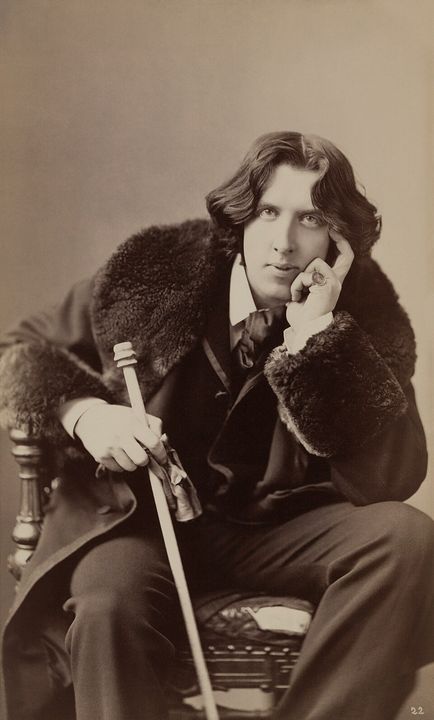
Oscar WildeThe Importance of Being Earnest: A Trivial Comedy for Serious PeopleThe Importance of Being Earnest by Oscar Wilde (1895)The Importance of Being Earnest, subtitled 'A Trivial Comedy for Serious People', is Oscar Wilde's last and most famous play, a farce of mistaken identities and witty epigrams.Also known as: The Importance of Being Earnest: A Trivial Comedy for Serious People
1895 (published 1899) · 19th Century · Drama · English
Abstract
Premise. Two young gentlemen each keep an invented person to escape their duties: one a scapegrace brother in town, the other a sickly friend in the country. Both pretend to be named Ernest to win the women they love.
Complications. A grand dowager refuses one suitor because he was found as an infant in a cloakroom. In the country, two young women each believe they are engaged to Ernest and battle with cucumber sandwiches and sugar.
Revelation. The governess is recognized as the nurse who once left a baby in a handbag and a manuscript in a pram. The orphan is the elder brother of his friend and was christened with the very name he pretended to have.
Style. The play's force lies in its epigrams and paradoxes, in which characters say outrageous things with perfect composure.
For students. This is a superb comedy for discussing satire, honesty and social pretension. Read parts aloud and notice how the ending turns a lie into truth.
History. It opened in February 1895, weeks before its author's arrest and disgrace. The theatre soon removed his name from the posters, though the comedy has never stopped being performed.
Main characters
- Jack Worthing: gentleman with a double life
- Algernon Moncrieff: idle wit
- Gwendolen Fairfax: Algernon's cousin
- Cecily Cardew: Jack's ward
- Lady Bracknell: formidable aunt
- Miss Prism: governess

Summary
The Importance of Being Earnest, subtitled 'A Trivial Comedy for Serious People', is Oscar Wilde's last and most famous play, a farce of mistaken identities and witty epigrams. In the first act, in his London flat, the idle young Algernon Moncrieff discovers that his friend, whom he knows as Ernest Worthing, is really Jack Worthing, a respectable country gentleman who invented a wicked younger brother named Ernest so that he could escape to town. Algernon confesses that he too has an invented friend, the invalid Bunbury, whose illnesses let him escape dull dinners; he calls this 'Bunburying'. Jack is in love with Algernon's cousin Gwendolen Fairfax, who returns his love chiefly because she believes his name is Ernest, a name she says inspires absolute confidence. When Jack proposes, Gwendolen's formidable mother, Lady Bracknell, interviews him and is appalled to learn that he was found as a baby in a handbag at Victoria Station; she forbids the match. In the second act, at Jack's country house, Algernon arrives pretending to be the wicked brother Ernest and falls in love with Jack's young ward, Cecily Cardew, who has long been engaged to 'Ernest' in her imagination and diary. Jack arrives in mourning to announce Ernest's death. Gwendolen arrives too, and the two young women, each believing herself engaged to Ernest, quarrel over tea and cake, until the men's deceptions are exposed. Both men plan to be christened Ernest. In the third act Lady Bracknell arrives; Cecily's fortune softens her. Then the governess Miss Prism is recognized as the nurse who, twenty-eight years earlier, left a baby in a handbag in the cloakroom at Victoria Station and placed her three-volume novel in the pram. Jack turns out to be Algernon's elder brother, christened Ernest. He has been telling the truth all along. The play satirizes Victorian marriage, class and earnestness itself, and Wilde's dialogue is full of brilliant paradoxes. Its moral seriousness lies in its comic exposure of hypocrisy, vanity and double lives.
Virtues in this work
- Justice: The play exposes hypocrisy and empty social judgment.
Plot or Argument
- Act I: Algernon's flat
Jack is revealed as 'Ernest' in town; he proposes to Gwendolen and is interrogated and refused by Lady Bracknell.
- Act II: The Manor House garden
Algernon poses as Ernest and woos Cecily; the two women quarrel over who is engaged to Ernest; the deceptions are exposed.
- Act III: The drawing room
Lady Bracknell arrives, Miss Prism's past is revealed, and Jack learns he really is Ernest.
Characters
- John (Jack) Worthing, hero
Respectable country gentleman who calls himself Ernest in town.
- Algernon Moncrieff, friend
Witty, idle bachelor who invents Bunbury.
- Gwendolen Fairfax, beloved
Fashionable young woman devoted to the name Ernest.
- Cecily Cardew, ward
Romantic young heiress with a diary.
- Lady Bracknell, aunt and mother
Imperious guardian of social standards.
- Miss Prism, governess
Cecily's teacher with a forgotten past.
- Rev. Canon Chasuble, rector
Clergyman who admires Miss Prism.
Lessons
The double life
Jack and Algernon live double lives for convenience; the comedy shows how lies multiply.
- What is Bunburying?
- How do the lies unravel?
Satire of society
Lady Bracknell judges suitors by money and birth. Wilde exposes the shallowness of such values.
- What questions does Lady Bracknell ask Jack?
- What does Wilde find funny about them?
Words and truth
The play's wit turns on paradox and wordplay; it asks whether style matters more than sincerity.
- Find three paradoxes.
- Does the ending make sincerity matter after all?
Context
First performed at the St James's Theatre, London, on 14 February 1895, it was Wilde's greatest success. Within weeks his trials began, the play was closed, and his name was removed from the playbills.
Composition
Originally written in four acts and reduced to three for the first production; published in 1899.
Reception
Now one of the most performed comedies in English, admired for its dialogue and its satire.
Comparisons
- Twelfth Night
Shakespeare's comedy of mistaken identities and disguise.
- The Picture of Dorian Gray
Wilde's novel of a double life with tragic, not comic, consequences.
- Pride and Prejudice
Austen's comedy of courtship, rank and money.
Quotes
“The truth is rarely pure and never simple.”
“To lose one parent, Mr. Worthing, may be regarded as a misfortune; to lose both looks like carelessness.”
“In matters of grave importance, style, not sincerity is the vital thing.”
For Students
A reading companion for classical Christian high school students. See the student guide.
Reading Guide
Watch for
- The meaning of Bunburying.
- Lady Bracknell's interview with Jack.
- The handbag at Victoria Station.
- The final line's play on Earnest.
Key terms and names
- Farce
- Comedy based on improbable situations and mistaken identity.
- Epigram
- A short, witty saying.
- Paradox
- A statement that seems contradictory but reveals a truth.
- Bunburying
- Algernon's word for inventing an excuse to escape obligations.
Seminar Questions
- Comprehension Why does Jack call himself Ernest in town?
- Comprehension How is Jack's identity revealed?
- Interpretation What does Lady Bracknell value?
- Interpretation Why do the women care so much about the name Ernest?
- Interpretation What does the play's title mean?
- Big Question Is a harmless lie ever really harmless?
Faith Connections
- Ephesians 4:25 (Scripture)
Put away lying and speak truth; the comedy exposes the tangle of deceit.
- 1 Samuel 16:7 (Scripture)
Man looketh on the outward appearance, but the Lord on the heart; a corrective to Lady Bracknell's values.
Logic and Rhetoric
Central argument: Society's obsession with appearance, rank and form produces absurd hypocrisy that only honest truth can untangle.
Rhetorical device: paradox. Lines such as the remark that truth is rarely pure and never simple invert ordinary expectations.
Debate: Resolved: that the play has a serious moral point.
Memory Work
To lose one parent, Mr. Worthing, may be regarded as a misfortune; to lose both looks like carelessness.
Writing Prompts
Essay: Show how Wilde satirizes marriage in the play.
Comparison with Twelfth Night: Compare the use of disguise in Shakespeare and Wilde.
Medical Lens
Bunbury's invented illnesses parody Victorian invalidism.
- Act I
Algernon describes his invalid friend Bunbury.
Creative Prompts
- Fiction
Write a short scene in which Bunbury finally appears.
- Essay
Explain how Wilde uses paradox to satirize Victorian society.
- Classroom
Stage the tea-party scene between Gwendolen and Cecily.
Further Reading
- The Picture of Dorian Gray, Oscar Wilde
Wilde's novel.
Verification notes
Text is the three-act version (Gutenberg #844, from the 1899 edition).
No verification flags recorded.