Work record
The Mayor of Casterbridge
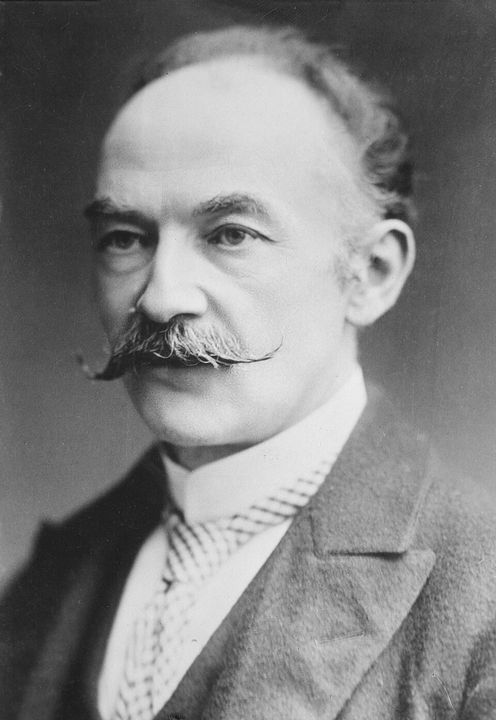
Thomas HardyThe Mayor of Casterbridge by Thomas Hardy (1886)The Mayor of Casterbridge: The Life and Death of a Man of Character opens with one of the most startling scenes in English fiction.1886 · 19th Century · Novel · English
Abstract
Background. Hardy wrote the novel after settling again in Dorchester, the model for Casterbridge, and drew on local records, including reports of wife-sales. It was serialized and published in 1886.
Plot. Drunk at a fair, the young laborer Michael Henchard sells his wife and baby daughter to a sailor. Eighteen years later, now mayor of Casterbridge, he is found by his wife and her daughter. His jealousy of his gifted manager Farfrae, the exposure of his past and his own rash decisions bring the loss of his business, his position and the young woman he has come to love as a daughter. He dies on Egdon Heath, leaving a will that asks to be forgotten.
Ideas. Subtitled 'The Life and Death of a Man of Character', the novel weighs character against chance in a tragedy modeled partly on classical and Shakespearean drama, and shows an old rural economy, run by memory and rule of thumb, yielding to the bookkeeping and machinery of modern trade. Its market-town setting is drawn in close detail.
Reception. Received coolly at first, it is now counted among Hardy's greatest works, and Henchard is often called one of the great tragic figures of the English novel.
Main characters
- Michael Henchard: Corn merchant and mayor who once sold his wife
- Elizabeth-Jane: Susan's daughter, believed to be his
- Donald Farfrae: Young Scot who becomes his rival
- Lucetta Templeman: Henchard's former lover, who marries Farfrae

Summary
The Mayor of Casterbridge: The Life and Death of a Man of Character opens with one of the most startling scenes in English fiction. At a country fair in Weydon-Priors, the young hay-trusser Michael Henchard, drunk on rum-laced furmity, sells his wife Susan and their baby daughter Elizabeth-Jane to a sailor, Richard Newson, for five guineas. Sober and ashamed the next morning, he swears in a church to drink no alcohol for twenty-one years, the years he has lived. About eighteen years later Susan and her daughter come to the market town of Casterbridge, believing Newson lost at sea, and find Henchard a prosperous corn merchant and the town's mayor. He remarries Susan without revealing the past to Elizabeth-Jane. He also hires Donald Farfrae, a capable young Scot who improves the business, but his jealousy soon turns friendship into rivalry. Farfrae sets up on his own, courts Elizabeth-Jane, and gradually overtakes Henchard in trade, in public favor and eventually as mayor. After Susan dies, Henchard learns from a letter that Elizabeth-Jane is not his daughter but Newson's; his own child died in infancy. He grows cold toward her. Lucetta Templeman, a woman from Jersey with whom Henchard once had an affair, arrives to marry him but falls in love with Farfrae and marries him instead. Henchard's ruin is completed by rash speculation on the harvest and by the public revelation, from an old furmity-woman brought before him in court, that he once sold his wife. Their old letters, read aloud in a tavern, lead to a skimmity-ride, a mocking procession that shames Lucetta, who collapses and dies. Reduced to working for Farfrae and drinking again once his oath expires, Henchard comes to depend on Elizabeth-Jane's affection. When Newson returns alive, Henchard tells him that his daughter is dead, a lie that is soon exposed. He leaves Casterbridge rather than face her. He dies in a hut on Egdon Heath, attended only by his former workman Abel Whittle, leaving a bleak will asking that no one mourn him. Elizabeth-Jane marries Farfrae and reflects that happiness is only an occasional episode in a general drama of pain. Hardy subtitled the book a study of 'a man of character', and the novel is often read as a tragedy in the classical sense, in which Henchard's temper and pride, together with chance, bring about his fall.
Plot or Argument
- Chapters I–II: The sale
At Weydon-Priors fair the drunken Henchard sells his wife and child to the sailor Newson, then swears off drink for twenty-one years.
- Chapters III–XVII: The mayor and the Scotsman
Susan and Elizabeth-Jane find Henchard mayor of Casterbridge; he remarries Susan and hires Farfrae, then quarrels with him and drives him into rivalry.
- Chapters XVIII–XXXI: Secrets revealed
Susan dies; Henchard learns Elizabeth-Jane is Newson's daughter; Lucetta arrives and marries Farfrae; the furmity-woman exposes the wife-sale in court; Henchard goes bankrupt.
- Chapters XXXII–XL: The fall
Henchard works for Farfrae and drinks again; he nearly kills Farfrae in a fight in the granary; the skimmity-ride leads to Lucetta's death.
- Chapters XLI–XLV: The end
Henchard lies to Newson about Elizabeth-Jane, is found out, leaves the town, and dies on Egdon Heath after making his will.
Characters
- Michael Henchard, protagonist
Hay-trusser turned corn merchant and mayor, proud, impulsive and capable of remorse.
- Elizabeth-Jane, major
Susan's daughter, quiet and self-educated, believed to be Henchard's child.
- Donald Farfrae, major
Young Scot whose skill and charm make him Henchard's manager, rival and successor.
- Susan Henchard, major
Henchard's wife, sold at the fair, who returns to him years later.
- Lucetta Templeman, major
Henchard's former lover from Jersey, who marries Farfrae.
- Richard Newson, minor
Sailor who buys Susan and is Elizabeth-Jane's father.
- The furmity-woman, minor
Fair vendor who witnessed the sale and later reveals it.
- Joshua Jopp, minor
Henchard's dismissed manager, who helps provoke the skimmity-ride.
Lessons
Character is fate
Hardy quotes Novalis to suggest that Henchard's temperament drives his ruin, yet chance repeatedly turns against him. The novel invites debate over how far people make their own fate.
- Which of Henchard's misfortunes come from his own actions, and which from chance?
- Is Henchard more sinned against than sinning?
The past cannot be buried
Every secret Henchard keeps, the sale, his affair with Lucetta and Elizabeth-Jane's parentage, eventually returns. Hardy shows how concealment compounds wrongdoing.
- Why does Henchard keep the truth from Elizabeth-Jane?
- What might have happened if he had told the truth at each point?
Old ways and new
Farfrae's modern methods, bookkeeping and machinery replace Henchard's rule of thumb. The rivalry reflects a changing rural economy.
- What does the new seed-drill represent in the novel?
- Is Farfrae a better man than Henchard, or only a more modern one?
Context
The novel is set mainly in the 1840s in Casterbridge, Hardy's version of Dorchester, the county town of Dorset, before the repeal of the Corn Laws and the coming of the railway changed the grain trade. Wife-sales, though never legal, did occur in rural England, and Hardy drew on newspaper reports of them.
Composition
Hardy wrote the novel in 1884–1885 after moving back to Dorchester. It was serialized in the Graphic and in Harper's Weekly in 1886 and published in two volumes by Smith, Elder that year.
Reception
Reviews were respectful but cool, and the book sold modestly at first. It is now regarded as one of Hardy's finest novels and a classic tragedy of character, and it has been adapted several times for television and film.
Comparisons
- King Lear
Like Lear, Henchard is a proud man whose rash act divides him from a loving daughter and who dies broken.
- Tess of the d'Urbervilles
Hardy's later Wessex tragedy, in which chance and social judgment destroy a heroine rather than a hero.
- Far from the Madding Crowd
Another Wessex novel of rural trade and rivalry, with a happier ending.
- Silas Marner
George Eliot's novel also turns on a child raised by a man who is not her father and on the question of who deserves her love.
- Macbeth
Ambition, guilt and a fall from power in a tragedy of character.
Quotes
“Character is Fate, said Novalis, and Farfrae’s character was just the reverse of Henchard’s”
“happiness was but the occasional episode in a general drama of pain.”
For Students
A reading companion for classical Christian high school students. See the student guide.
Reading Guide
Watch for
- Each return of a figure from the past.
- Henchard's temper and the moments he regrets it.
- The weather and the harvest as forces in the plot.
- Elizabeth-Jane's self-education and quiet judgment.
Key terms and names
- Furmity
- A thick wheat porridge sold at fairs; the furmity-woman laces Henchard's with rum.
- Skimmity-ride
- A rural mocking procession with effigies, used to shame people accused of sexual misconduct.
- Corn factor
- A dealer in grain, Henchard's trade.
- Tragic hero
- A figure of stature whose fall comes from a flaw or error as well as fortune.
Seminar Questions
- Comprehension What vow does Henchard make after the sale, and how long does it last?
- Comprehension How does the town learn about the wife-sale?
- Interpretation Why does Henchard turn against Farfrae?
- Interpretation Why does Henchard lie to Newson about Elizabeth-Jane?
- Big Question Can a person fully atone for a terrible act committed in youth?
- Big Question Is character really fate?
Faith Connections
- Numbers 32:23 (Scripture)
'Be sure your sin will find you out': the novel dramatizes the way hidden wrongs return.
- Aristotle, Poetics (Great Conversation)
Aristotle's account of the tragic hero, a person neither wholly good nor bad who falls through error, is a standard lens for Henchard.
Logic and Rhetoric
Central argument: If character determines fate, then Henchard's pride and impulsiveness, not chance alone, explain his rise and fall, though Hardy leaves room for chance to share the blame.
Rhetorical device: foreshadowing. The opening wife-sale anticipates every later exposure: the past Henchard tries to bury keeps returning.
Debate: Resolved: Henchard's downfall is caused more by chance than by his character.
Writing Prompts
Essay: Evaluate the claim 'Character is Fate' as it applies to Henchard and Farfrae.
Comparison with King Lear: Compare Henchard and Lear as fathers who misjudge a daughter's love, and the endings Hardy and Shakespeare give them.
Medical Lens
Henchard's drunken wife-sale, his twenty-one-year vow of abstinence and his return to drink chart alcohol's role in his life.
- Chapters I–II
The furmity laced with rum, the sale and the vow.
Creative Prompts
- Fiction
Write Susan's account of the night at Weydon-Priors fair, as she might have told Elizabeth-Jane years later.
- Essay
Is Henchard a tragic hero? Define the term and argue with evidence from at least three episodes.
- Classroom
Read Henchard's will aloud and discuss what each clause reveals about him.
Further Reading
- Tess of the d'Urbervilles, Thomas Hardy
- Thomas Hardy: The Time-Torn Man, Claire Tomalin
Verification notes
Full text from Project Gutenberg #143. Both quotations are exact substrings of the stored text; the first is the opening clause of a longer sentence. Plot and publication history are well documented.
- Grouping of chapters in plotOrArgument is approximate.