Work record
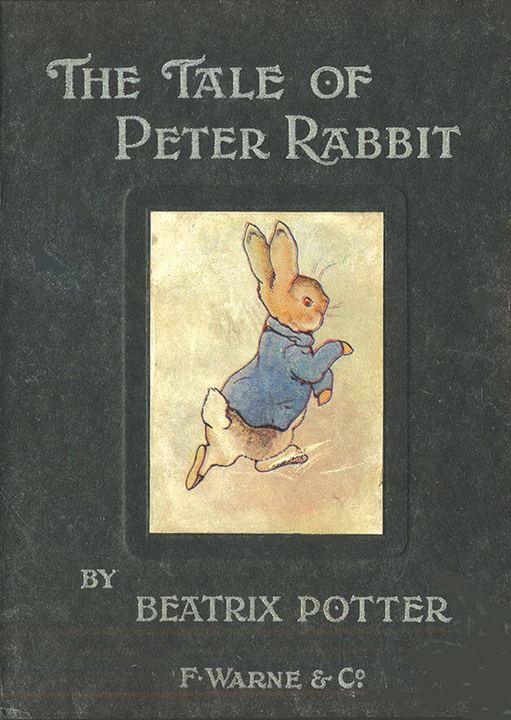
The Tale of Peter Rabbit
1902 · Early 20th Century · Novella · English
Abstract
Background. Potter first told the story in a picture letter of 1893 to Noel Moore, the convalescent son of her former governess. When publishers declined a book version she printed copies at her own expense in 1901; Frederick Warne then issued a color edition the next year.
Narrative. Before leaving for the baker's, Mrs. Rabbit forbids her four children Mr. McGregor's garden, where their father ended up in a pie. The three sisters keep to the lane, but Peter squeezes under the gate, gorges on lettuces, beans and radishes, and is spotted by the gardener. In the chase he loses both shoes, snags his brass-buttoned jacket in a gooseberry net, takes refuge in a watering can, and finally finds the gate again. The abandoned clothes become a scarecrow.
Structure. Each brief passage pairs with a facing picture, and the plain sequence of warning, trespass, pursuit and return lets a young listener retell the tale unaided.
Themes. Obedience and its breach, the fear and exhaustion that follow, and a mother's care that still keeps consequence: Peter is dosed with camomile tea at bedtime while the girls sup on bread, milk and berries.
Significance. The first of Potter's little books for Warne, it helped define the modern illustrated nursery book and has never gone out of print.
Main characters
- Peter: Disobedient young rabbit who slips into the forbidden garden
- Mrs. Rabbit: Widowed mother who warns her children and nurses Peter afterward
- Mr. McGregor: Gardener who chases Peter with a rake and sieve
- Flopsy, Mopsy and Cotton-tail: Peter's obedient sisters, who gather blackberries

Summary
The Tale of Peter Rabbit (1902) is Beatrix Potters short picture-story of a disobedient young rabbit who squeezes under Mr. McGregors gate after his mother has warned him away—his father, she reminds them, was put in a pie. Flopsy, Mopsy, and Cotton-tail gather blackberries; Peter eats lettuces, beans, and radishes until he meets Mr. McGregor, loses his shoes and blue jacket, hides in a watering can, and at last slips home frightened and unwell. Mrs. Rabbit puts him to bed with chamomile tea while his sisters have bread, milk, and blackberries. The tale is brief, exact, and moral without a sermon: curiosity and disobedience have consequences, and home receives the tired child with care. Potters prose is as careful as her watercolors—concrete verbs, clear sequence, no wasted line. For K-2 it is a model narration text and a first lesson in temptation, cause and effect, and mercy at home. Children can retell the gate, the chase, and the return in order, then name the choice that started it all, which is why School Launch places it among first classics rather than as mere amusement. Potter's restraint is part of the moral education. She does not stop the tale to scold; the lost jacket and the chamomile tea do that work. Children notice fairness when the sisters receive blackberries and Peter does not, and they also notice that love has not ended. That double ending—consequence and care—is wiser than either severity alone or indulgence alone. The book is short enough to narrate the same day it is read, which is why it belongs in K-2 rather than only on a shelf of classics for later. School Launch pairs it naturally with Aesop: both animal tales, one comic and domestic, one proverb-like. The Gutenberg text preserves the wording for quote verification and for families who lack a paper Warne copy. Teachers should keep the pictures in view when possible; even so, the prose alone carries the garden, the gate, and the fir-tree sand-bank clearly enough that a blind hearing still yields a complete story, which is a high test of children's writing.
Virtues in this work
- Temperance: Peter’s greedy feast of lettuces, beans, and radishes brings on sickness and fright.
- Prudence: Mrs. Rabbit’s warning and the sisters’ blackberry lane show wise caution about McGregor’s garden.
- Charity: Mrs. Rabbit nurses the returning Peter with chamomile tea rather than shaming him.
Plot or Argument
- Warning and temptation
Mrs. Rabbit forbids the garden; Peter goes anyway.
- Chase and loss
Shoes and jacket lost; hiding and flight.
- Home and consequence
Chamomile tea for Peter; a feast for his sisters.
Characters
- Peter, protagonist
Naughty rabbit who enters the garden.
- Mrs. Rabbit, mother
Warns and nurses.
- Mr. McGregor, antagonist
Gardener who chases Peter.
- Flopsy, Mopsy, and Cotton-tail, siblings
Obedient blackberry-pickers.
Lessons
Disobedience has a plot
Peters choice starts a chain of feast, fright, loss, and sickness.
- What does Mrs. Rabbit forbid?
- Name three things that go wrong after the gate.
Mercy at home
Peter is put to bed, not cast out. The text itself supplies the evidence; students should point to scenes, not slogans.
- How is Peter treated on return?
- Is the ending punishment or care?
Exact seeing
Lettuces, radishes, brass buttons—precision as literary virtue.
- Which detail do you remember?
- Why do exact names help?
Context
Edwardian picture books. The work belongs to the wider English-language tradition of formative reading for the young, preserved here in a public-domain text for school and home use without commercial branding.
Composition
Warne edition 1902 (privately printed 1901).
Reception
Among the most famous English childrens books.
Comparisons
- aesops-fables
Brief animal moral; Potter adds picture-book mercy.
- black-beauty
Animal life and human care at different scales.
Quotes
“Once upon a time there were four little Rabbits, and their names were-- Flopsy, Mopsy, Cotton-tail, and Peter.”
“But Peter, who was very naughty, ran straight away to Mr. McGregor's garden, and squeezed under the gate!”
“Peter was most dreadfully frightened; he rushed all over the garden, for he had forgotten the way back to the gate.”
For Students
A reading companion for classical Christian high school students. See the student guide.
Reading Guide
Watch for
- The warning about Father and the pie.
- Squeezing under the gate.
- Lost clothes and hiding places.
- Chamomile tea versus sisters supper.
- How few words finish the adventure.
Key terms and names
- Narration
- Telling a story back in order; Peter Rabbit is an ideal first narration text.
- Consequence
- What follows from a choice—Peter’s fright and lost clothes follow his gate-crossing.
- Picture book
- A short story designed with images; Potter’s prose still works when heard alone.
- Temptation
- The pull toward a forbidden good; here the garden after a clear warning.
Seminar Questions
- Comprehension Name the four rabbits and the forbidden place.
- Comprehension What does Peter eat, and whom does he meet?
- Comprehension What happens to his clothes, and what does he drink at home?
- Interpretation Why mention Father in the pie before Peter runs off?
- Interpretation What do the sisters morning show besides being good?
- Interpretation Is McGregor wicked or a gardener defending his rows?
- Big Question How can a story teach obedience without crushing curiosity?
Faith Connections
- Proverbs 1:8 (Scripture)
Parental instruction ignored at cost.
- Luke 15:11-24 (Scripture)
A faint comic echo of homecoming care—not a full parable of salvation.
- Aesop (Great Conversation)
Animal moral tale with added domestic tenderness.
Logic and Rhetoric
Central argument: Clear prohibition, willful breach, and fitting consequences can teach obedience and mercy.
Rhetorical device: contrast. Blackberry lane versus McGregors garden; tea versus feast.
Debate: Resolved: that Peter deserves care as much as his sisters deserve their feast.
Memory Work
Once upon a time there were four little Rabbits, and their names were-- Flopsy, Mopsy, Cotton-tail, and Peter.
Writing Prompts
Essay: Narrate the tale in order; add one sentence naming Peters main choice.
Comparison with Aesop's Fables: Compare with one Aesop fable on consequences.
Medical Lens
Chamomile tea as household remedy after chill and overeating.
- Closing
Chamomile tea and bed.
Creative Prompts
- Classroom
Narrate the story with a simple map of the garden and gate.
- Fiction
Write a page from Mr. McGregor’s point of view that morning.
- Essay
How does Potter teach a moral without stopping to lecture?
Further Reading
- Aesop's Fables, Aesop
Short animal morals.
Verification notes
Quotes verified against PG #14838.
No verification flags recorded.