Work record
Pollyanna
1913 · Early 20th Century · Novel · English
Abstract
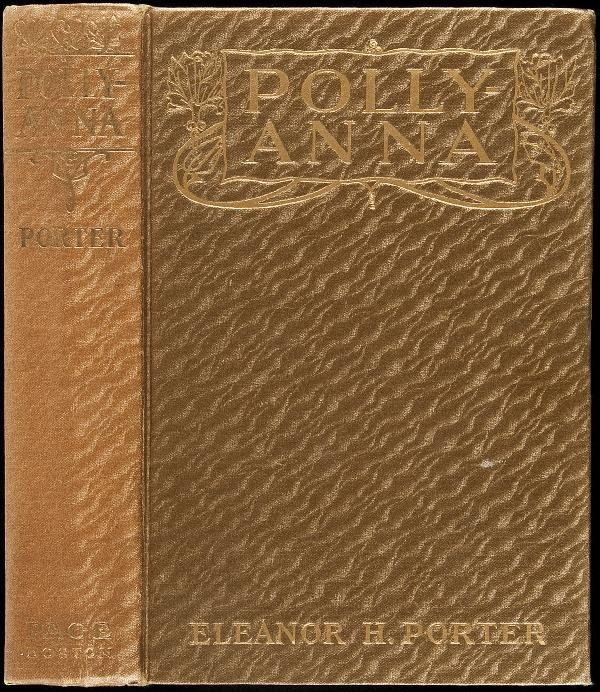
Background. Porter, a New Hampshire writer of magazine fiction, set her best-known book in the Vermont village life she knew. It ran as a weekly serial before L. C. Page issued it in Boston.
Plot. Sent east after her father's death, the girl lands in an aunt's bare attic and answers every hardship with the habit her father gave her over a barrel of donated crutches. One by one she reaches the household servants, a peevish invalid, a hermit with a broken leg, a homeless boy and a disheartened preacher. A car accident leaves her unable to walk, and the neighbours she cheered now cheer her; through Jimmy's boldness the aunt swallows her pride, summons the doctor she once rejected, and marries him.
Themes. Gratitude as a chosen discipline, the gap between duty and affection, the making of homes for the lonely, and Scripture's command to rejoice taken at its word.
Form. Told mostly in lively dialogue, the chapters move from house to town and back, and Pollyanna speaks last, in her own breathless, exclamation-filled letter.
Significance. A runaway best seller that inspired Glad Clubs, a sequel and films with Mary Pickford and Hayley Mills, it also gave English a common noun for an incurable optimist.
Main characters
- Pollyanna Whittier: Orphaned minister's daughter who teaches the glad game
- Miss Polly Harrington: Her proud, duty-bound aunt and guardian
- Nancy: Hired girl and first convert to the game
- John Pendleton: Reclusive rich man, once in love with Pollyanna's mother
- Dr. Thomas Chilton: Lonely town doctor, Miss Polly's former sweetheart
- Jimmy Bean: Runaway orphan seeking a family
- Mrs. Snow: Fretful invalid revived by Pollyanna's visits
- Rev. Paul Ford: Disheartened pastor who changes his sermon

Summary
Pollyanna Whittier, eleven years old, is the orphaned daughter of a poor missionary minister in the American West. Her mother, Jennie, had long ago disappointed her proud New England family by marrying the young minister instead of a wealthy suitor. When her father dies, the Ladies' Aid that cared for them sends Pollyanna east to her only relative, her mother's sister Miss Polly Harrington, a stiff, dutiful and wealthy spinster of Beldingsville, Vermont, who takes her in purely out of duty. Miss Polly puts her in a bare attic room and sets her a strict timetable of sewing, music, reading and cooking. Pollyanna is delighted with everything anyway. She explains to the maid Nancy the 'glad game' her father taught her: when a missionary barrel brought a pair of child's crutches instead of the doll she had hoped for, he showed her she could be glad because she did not need them. The game is to find something to be glad about in everything, and the harder it is, the better the fun. Pollyanna wins over the household servants, Nancy, Old Tom the gardener and his son Timothy, and then the town. She visits Mrs. Snow, a complaining invalid who has kept to her bed for years, and coaxes her into letting her hair be arranged and into taking an interest in life. She makes friends with John Pendleton, the gruff, rich recluse called the Man, and finds him in Pendleton Woods with a broken leg, fetching help and the young physician Dr. Chilton. She befriends Jimmy Bean, a runaway from an orphans' home, and pleads with Aunt Polly and then with the Ladies' Aid to give him a home. Pendleton eventually confesses that he loved Pollyanna's mother and asks Pollyanna to live with him, but she will not leave her aunt, and she persuades him to take Jimmy instead. Her talk of her father's eight hundred 'rejoicing texts' turns the discouraged minister, the Rev. Paul Ford, from a sermon of rebuke to one of encouragement. Then Pollyanna is struck by a motor car, and a famous specialist, Dr. Mead, finds an injury to the spine with paralysis from the hips down. When she overhears that she may never walk again, Pollyanna cannot play her game, and the whole town, one visitor after another, comes to tell Miss Polly how the child taught them to be glad. Jimmy tells Miss Polly that Dr. Chilton knows of a doctor who might help, and that only pride keeps her from calling him. Miss Polly sends for Chilton, whom she had loved and quarrelled with years before, and they are reconciled. The book ends with Pollyanna's letter from a sanitarium: she has walked six steps, and her aunt has married Dr. Chilton at her bedside. The novel first appeared as a weekly serial in The Christian Herald and was published in book form by L. C. Page of Boston in 1913.
Virtues in this work
- Hope: Pollyanna looks for something to be glad about even in the bare attic room and, at last, in her paralysed legs.
- Charity: She carries jelly to Mrs. Snow, befriends the lonely Mr. Pendleton and begs a home for Jimmy Bean.
- Fortitude: After the accident she bears months of pain and the fear of never walking, and writes joyfully of her first six steps.
- Humility: Miss Polly sets aside years of pride to send for Dr. Chilton for Pollyanna's sake.
- Friendship: Jimmy Bean faces Miss Polly's anger to tell her the truth because he would walk over hot coals for Pollyanna.
Plot or Argument
- Chapters I-IV: Arrival in Beldingsville
Miss Polly receives the letter about her orphaned niece and prepares the attic room; Nancy and Timothy meet a chattering, red-haired Pollyanna at the station, and Old Tom recognizes Miss Jennie's child.
- Chapters V-VII: The game and the rules
Pollyanna tells Nancy about the crutches and the glad game; Aunt Polly's timetable meets Pollyanna's protest that breathing is not living; punishments meant to correct her become new things to be glad about.
- Chapters VIII-XII: Mrs. Snow, the Man and Jimmy Bean
Pollyanna carries calf's-foot jelly to Mrs. Snow and surprises her into interest in life; she greets the silent John Pendleton until he speaks; she meets the orphan Jimmy Bean and asks the Ladies' Aid to take him in, but they would rather send money to children in India.
- Chapters XIII-XVIII: Pendleton Woods, the doctor and the prisms
Pollyanna finds Pendleton with a broken leg and brings help; Dr. Chilton calls her better than a tonic; she dresses Aunt Polly's hair with a rose and a lace shawl just as Dr. Chilton drives by; she hangs Pendleton's prisms in the sun to fill his room with rainbows.
- Chapters XIX-XXII: Secrets and sermons
Pendleton reveals that he loved Pollyanna's mother and asks Pollyanna to come and make his house a home; she chooses to stay with Aunt Polly; the Rev. Paul Ford hears about the rejoicing texts and rewrites his Sunday sermon.
- Chapters XXIII-XXVII: The accident
Pollyanna is struck by a motor car; Dr. Mead the specialist comes from New York, and Pollyanna overhears that she may never walk; Pendleton adopts Jimmy Bean, and Pollyanna finds she cannot play the game for herself.
- Chapters XXVIII-XXX: The town plays the game
Nancy finally explains the game to Miss Polly, who takes it up herself; townspeople send messages of thanks; Jimmy overhears Chilton and Pendleton and bravely tells Miss Polly that pride is keeping Pollyanna from help.
- Chapters XXXI-XXXII: A new uncle
Miss Polly calls Dr. Chilton and accepts his love; Pollyanna is carried to a sanitarium, and her closing letter tells of her first six steps and the wedding at her bedside.
Characters
- Pollyanna Whittier, protagonist
An eleven-year-old missionary's orphan, talkative, truthful and warm-hearted, who plays her father's glad game.
- Miss Polly Harrington, Pollyanna's aunt
A stern, dutiful, wealthy spinster who takes Pollyanna in from duty and slowly learns to love her.
- Nancy, maid
Miss Polly's kind-hearted young servant, Pollyanna's first friend and first player of the game.
- Old Tom, gardener
The Harringtons' aged gardener, who remembers Pollyanna's mother as a girl.
- Timothy, Old Tom's son
The good-natured young man who drives the buggy and teases Nancy.
- Mrs. Snow, invalid
A bedridden, complaining woman whom Pollyanna coaxes toward cheerfulness; her daughter Milly looks after her.
- John Pendleton, the Man
A rich, solitary man who once loved Pollyanna's mother and is drawn out of his bitterness by her daughter.
- Jimmy Bean, orphan boy
A runaway from an orphans' home who wants a real family and finally finds one with Pendleton.
- Dr. Thomas Chilton, physician
A lonely young doctor estranged from Miss Polly, who calls Pollyanna better medicine than a tonic.
- Rev. Paul Ford, minister
The weary pastor whose sermon is changed by Pollyanna's talk of the rejoicing texts.
- Dr. Mead, specialist
The New York physician who examines Pollyanna after her accident.
Lessons
Looking for the good on purpose
Pollyanna's game is not pretending that bad things are good; it is a habit of searching each hard thing for a real reason to be thankful. It began with a disappointed little girl and a pair of unwanted crutches, and it works because she practises it. The book shows gladness as something learned and chosen.
- What did Pollyanna's father find to be glad about in the crutches?
- Why does Pollyanna say the game is more fun when it is hard?
- Is there anything you could play the glad game about today?
Duty and love
Miss Polly does everything that duty asks: she gives Pollyanna a room, food, lessons and rules. What she does not give at first is affection. As Pollyanna's love wins her over, the attic room becomes a real bedroom, and duty becomes love.
- Why did Aunt Polly agree to take Pollyanna?
- When do you first see that Aunt Polly is beginning to love her niece?
- Can you do your duty to someone without loving them? What is missing?
A house is not a home
John Pendleton says that it takes a woman's hand and heart, or a child's presence, to make a home. Pendleton, Dr. Chilton and Jimmy Bean all lack a home, and the story ends by giving each of them one. Pollyanna keeps her promise to her aunt and finds a home for Jimmy instead.
- Why does Pollyanna refuse to go and live with Mr. Pendleton?
- How does Jimmy Bean finally get a home?
- What makes a house into a home?
When the cheerful one needs help
After her accident Pollyanna cannot play her own game. Then the people she helped come to help her, and Jimmy has the courage to tell Miss Polly a hard truth. Gladness, the book shows, is passed back and forth among friends.
- Why can't Pollyanna play the game after she hears she may never walk?
- What does Jimmy do that takes courage?
- How do the townspeople repay Pollyanna?
Context
Pollyanna is set in a small Vermont town in the years before the First World War, when motor cars were new on country roads and a church's Ladies' Aid society sent missionary barrels of used goods to poor ministers in the West. Its world of hired girls, orphans' homes, invalids kept in darkened rooms and family doctors in buggies is the New England of Porter's own youth.
Composition
Eleanor H. Porter wrote Pollyanna after a decade of magazine fiction and the novel Miss Billy (1911). It appeared first as a weekly serial in The Christian Herald and then as a book from L. C. Page and Company of Boston in 1913.
Reception
The novel was an immediate best seller and went through dozens of printings within a few years; Glad Clubs were founded in its honour, and Porter wrote the sequel Pollyanna Grows Up (1915). Mary Pickford starred in a 1920 silent film and Hayley Mills in Walt Disney's 1960 film. The heroine's name entered the dictionary as a word for a determined optimist, often used more lightly than the book itself deserves.
Comparisons
- heidi
Both books send a cheerful orphan girl to an unwilling guardian, and in both the child's joy softens a bitter adult and helps an invalid toward healing.
- anne-of-green-gables
Anne and Pollyanna are talkative red-haired orphans who win over stern unmarried guardians in small towns; Anne is ruled by imagination, Pollyanna by gladness.
- the-secret-garden
Mary Lennox begins sour and is healed by the garden, while Pollyanna begins glad and must be healed herself; both books link the spirit's health with the body's.
- understood-betsy
Two Vermont novels of the same decade in which a girl sent to live with relatives grows through daily life in a New England household.
- little-lord-fauntleroy
Cedric and Pollyanna each melt the heart of a rich, hard old relative or neighbour simply by assuming the best of him.
Quotes
Frequently cited
“the game was to just find something about everything to be glad about--no matter what 'twas”
Frequently cited
“Just breathing isn't living!”
Frequently cited
“It takes a woman's hand and heart, or a child's presence, to make a home”
“that little girl is better than a six-quart bottle of tonic any day”
“He said if God took the trouble to tell us eight hundred times to be glad and rejoice, He must want us to do it--SOME.”
“When you look for the bad, expecting it, you will get it. When you know you will find the good--you will get that.”
“I can be glad I've HAD my legs, anyway”
“you never, never know how perfectly lovely legs are till you haven't got them”
For Students
A reading companion for classical Christian high school students. See the student guide.
Reading Guide
Watch for
- The story of the crutches in the missionary barrel in Chapter V, which explains the whole glad game.
- How Pollyanna finds something to be glad about in the bare attic room, and how that room changes later.
- Each grown-up Pollyanna meets who is unhappy: Mrs. Snow, Mr. Pendleton, Dr. Chilton and the minister.
- The moment after the accident when Pollyanna cannot play the game, and who helps her then.
Key terms and names
- The glad game
- Pollyanna's father's game of finding something to be glad about in everything, even when it is hard.
- Missionary barrel
- A barrel of donated clothes and goods sent by churches to poor ministers; Pollyanna's crutches came in one.
- Ladies' Aid
- A church women's society; one in the West cared for Pollyanna, and the one in Beldingsville would not take Jimmy Bean.
- Rejoicing texts
- Pollyanna's father's name for the Bible verses that tell people to be glad and rejoice; he counted eight hundred.
- Prism
- A piece of cut glass that splits sunlight into rainbows; Pollyanna hangs them in Mr. Pendleton's window.
- Calf's-foot jelly
- A jelly made from boiled calves' feet, often brought to sick people; Pollyanna carries it to Mrs. Snow and Mr. Pendleton.
Seminar Questions
- Comprehension Why did Pollyanna come to live with Aunt Polly, and what kind of room did Aunt Polly give her?
- Comprehension What did Pollyanna find in the missionary barrel instead of a doll, and what did her father say about it?
- Comprehension How did Pollyanna help Mr. Pendleton when he broke his leg in the woods?
- Interpretation Why do you think Mrs. Snow started to feel better after Pollyanna's visits?
- Interpretation Why did Pollyanna say no when Mr. Pendleton asked her to live with him? Was that a hard choice?
- Interpretation After the accident Pollyanna could not play the game. How did the people of the town help her be glad again?
- Big Question Is it always possible to find something to be glad about? Is being glad the same as pretending nothing is wrong?
Faith Connections
- Philippians 4:4 (Scripture)
Rejoice in the Lord alway: and again I say, Rejoice. This is the kind of verse Pollyanna's father counted among his eight hundred rejoicing texts.
- 1 Thessalonians 5:16-18 (Scripture)
Paul tells Christians to rejoice evermore and give thanks in everything. Pollyanna's game is a child's way of practising thanks in hard things like the crutches and her hurt legs.
- Psalm 32:11 (Scripture)
Be glad in the Lord, and rejoice, ye righteous: and shout for joy, all ye that are upright in heart. This is the text of the Rev. Paul Ford's new sermon in Chapter XXII.
Logic and Rhetoric
Central argument: A girl who has lost everything still finds real reasons for gladness. Her gladness spreads to the lonely and bitter people around her, and they become kinder and happier. When she herself is hurt, the gladness she gave comes back to her. So the book argues that thankfulness, practised on purpose, can heal a household and a town.
Rhetorical device: repetition of a key word. The word glad returns on nearly every page, from the crutches in Chapter V to the closing letter in Chapter XXXII, so that readers feel the game working through the whole town.
Debate: Resolved: that Pollyanna's glad game is good advice for everyone.
Memory Work
the game was to just find something about everything to be glad about--no matter what 'twas
Just breathing isn't living!
Writing Prompts
Essay: Choose one grown-up in the book, such as Aunt Polly, Mrs. Snow or Mr. Pendleton, and write about how Pollyanna changes that person from the beginning of the story to the end.
Comparison with Heidi: Heidi and Pollyanna both bring joy to a grumpy grown-up and help someone who is sick. Compare how each girl does it and which story you think shows it better.
Medical Lens
The novel is full of early twentieth-century medicine: a chronic invalid kept to her bed and darkened room, a broken leg set by a country doctor, a city specialist called in consultation, a spinal injury with paralysis from the hips down, and a long stay at a distant sanitarium. Dr. Chilton's repeated joke that Pollyanna is a tonic he wishes he could prescribe like pills makes the book an easy entry point for the history of ideas about mood, encouragement and recovery, from the mind-cure movements of Porter's New England to later research on optimism and placebo response; any such link is a modern reading. Mrs. Snow's long invalidism, in which complaint has become a way of life, can be read alongside period ideas of nervous invalidism without asserting a diagnosis. The cure of Pollyanna's paralysis is told as a child would hear it, with no medical detail of the treatment.
- Chapters VIII and X
Pollyanna's visits to the bedridden Mrs. Snow, who wants whatever she has not been brought, until Pollyanna arranges her hair and shows her a mirror.
- Chapter XV
Dr. Chilton says the child is better than any tonic and wishes he could prescribe her for his patients.
- Chapters XXIII-XXVI
The motor-car accident, Miss Polly's account to Pendleton of an injury to the spine with paralysis from the hips down, and the specialist Dr. Mead's consultation.
- Chapters XXXI-XXXII
Pollyanna is sent to a sanitarium run by a friend of Dr. Chilton and, after nearly ten months, writes that she has walked.
Listen to the book
Public-domain audiobook from LibriVox, read by thestorygirl. Recording: Pollyanna (version 4) on LibriVox (Internet Archive).
LibriVox recordings are volunteer readings released into the public domain. The reading may follow a different edition from the text in this library.
Creative Prompts
- Classroom
Play the glad game as a class: each child names one small trouble from the week and one true reason to be glad about it, as Pollyanna does with the attic room and the freckles.
- Fiction
Write a letter from Jimmy Bean to Pollyanna in the sanitarium, telling her about his first month living with Mr. Pendleton.
- Dialogue
Write the conversation between Nancy and Old Tom on the night Pollyanna arrives, when Tom learns that Miss Jennie's little girl has come.
- Essay
Some people use the word Pollyanna to mean someone who ignores trouble. Using the crutches, the accident and the final letter, argue whether that is fair to the girl in the book.
Further Reading
- Pollyanna Grows Up, Eleanor H. Porter
The 1915 sequel.
- Just David, Eleanor H. Porter
- Rebecca of Sunnybrook Farm, Kate Douglas Wiggin
An earlier New England novel of a cheerful girl sent to stern aunts.
Verification notes
Plot, names and chapter locators follow the attached Project Gutenberg text (#1450). Serial publication in The Christian Herald and book publication by L. C. Page (Boston, 1913) were confirmed by web search (Penn Online Books Page and the Children's Literature Association centenary volume listing, https://onlinebooks.library.upenn.edu/webbin/who/Porter%2c%20Eleanor%20H%2e%20%28Eleanor%20Hodgman%29%2c%201868%2d1920). Film dates are standard. All quotes were found by grep in the attached text.
- Confirm the exact years of the Christian Herald serialization (usually given as 1912).