Work record
The Velveteen Rabbit
1922 · Early 20th Century · Novella · English
Abstract
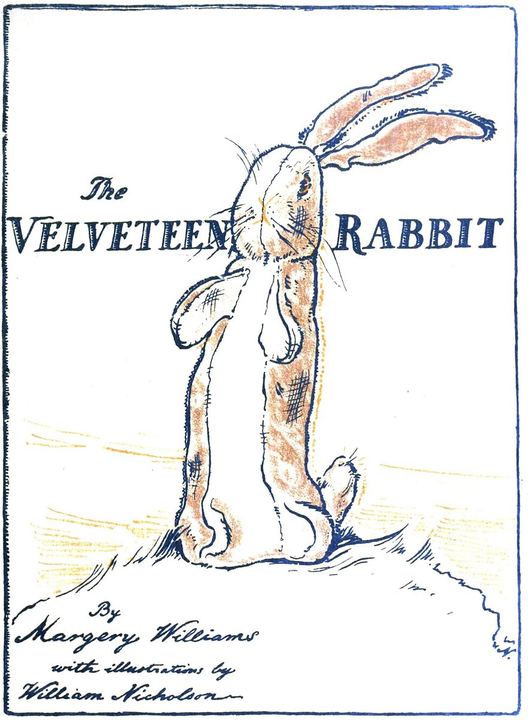
Background. Margery Williams, later Margery Bianco, wrote this first children's book after years of adult fiction; the painter William Nicholson supplied the pictures.
Narrative. Ignored after Christmas morning, the Rabbit learns from the Skin Horse that being Real comes slowly, through long love, and may hurt. When the Boy's china dog goes missing, Nana gives him the Rabbit instead, and for a summer they share burrows of bedclothes and picnics outdoors. Left in the garden one evening, he is fetched back after dark because the Boy insists he is Real. Wild rabbits in the bracken expose his stuffed body.
Crisis. Scarlet fever confines the Boy, and the Rabbit stays by him whispering of their games. On the doctor's order he is sacked for burning while the Boy goes to the seaside. A tear falls, a flower springs up, and the Fairy carries him to the wood, where he finds hind legs and runs with the others. The next spring the Boy notices a rabbit resembling his old Bunny.
Themes. Wear, shabbiness and loss are recast as the evidence and price of being loved, and the Skin Horse's teaching is borne out step by step.
Significance. Continuously reprinted for a century, the Skin Horse's lines are among the most quoted passages in children's literature.
Main characters
- The Velveteen Rabbit: Christmas-stocking toy of brown and white velveteen who longs to be Real
- The Skin Horse: Oldest and wisest nursery toy, bald in patches from love
- The Boy: Child who takes the Rabbit to bed and into the garden
- Nana: Nursemaid who rules the nursery and hands the Boy his Bunny
- The mechanical toys: Modern, superior toys who snub the Rabbit
- The wild rabbits: Living rabbits in the bracken who mock his lack of hind legs
- The doctor: Orders the sickroom toys burned after the Boy's scarlet fever
- The nursery Fairy: Spirit who rises from a flower and makes the Rabbit truly alive

Summary
The Velveteen Rabbit, or How Toys Become Real (1922), is Margery Williamss tender story of a stuffed rabbit who longs to become Real. At first he is unused in the nursery; the wise Skin Horse explains that Real is not how you are made but what happens when a child loves you for a long time. The Boy takes the rabbit into his confidence; they play until scarlet fever separates them and the rabbit, worn and about to be burned with infected toys, is changed by a nursery magic into a living rabbit of the warren. The book treats love, time, and loss with seriousness children can bear: becoming Real can hurt; worn fur is a mark of being loved; parting is part of growing. For K-2 it invites talk about affection, patience, and what lasts. Williams writes without condescension; the Skin Horses doctrine of Realness is the philosophical heart of a small classic now in the US public domain. School Launch can use it for narration and for first conversations about costly love without turning the fairy ending into mere syrup. Williams risks pathos and earns it. The scarlet-fever chapters acknowledge that childhood love lives near illness and loss, a fact Edwardian and modern families both know. The fairy ending does not erase the Boy's danger; it translates the rabbit's worn love into another mode of life. For K-2 discussion, keep questions concrete: Who was kind? What took a long time? What hurt? What was saved? School Launch can set this beside Peter Rabbit to contrast comic disobedience with patient affection as two paths of early moral imagination. The full public-domain text allows verification of the Skin Horse's lines, which are often misquoted from memory. Those lines deserve exactness because they are the book's doctrine. In a library that also holds longer meditations on love and suffering, this small tale remains the right first word: Realness is conferred by love over time, and the marks of that love may look like damage to anyone who does not understand.
Virtues in this work
Plot or Argument
- Unused toy
The rabbit waits among shinier toys. This section of the work carries the argument forward through concrete episode rather than abstract claim.
- The Skin Horses teaching
Realness comes through being loved over time.
- Illness and change
Fever, parting, and the fairys gift of living Realness.
Characters
- The Velveteen Rabbit, protagonist
Stuffed rabbit who longs to be Real.
- The Skin Horse, mentor
Old toy who explains Realness.
- The Boy, child
Loves the rabbit into Realness.
Lessons
Realness takes time
The Skin Horses definition—love over a long time—corrects the wish for instant magic.
- What does the Skin Horse say Real is?
- Why does it take a long time?
Love can wear things out
Shabbiness becomes a sign of being cherished, not of failure.
- How does the rabbit look when he is most loved?
- What does that say about appearances?
Parting and hope
Fever and the rubbish fire threaten the rabbit; the ending grants a different life, not denial of loss.
- Why must the rabbit leave the Boy?
- Is the ending mainly sad or glad?
Context
Post-World War I childrens fantasy with nursery realism. The work belongs to the wider English-language tradition of formative reading for the young, preserved here in a public-domain text for school and home use without commercial branding.
Composition
Published 1922 with Nicholsons illustrations.
Reception
Enduring classic on love and becoming real.
Comparisons
- the-tale-of-peter-rabbit
Two rabbit stories: disobedience comedy versus love-and-Realness fairy tale.
- black-beauty
Becoming known through suffering and care, across species and genres.
Quotes
“He was fat and bunchy, as a rabbit should be; his coat was spotted brown and white, he had real thread whiskers, and his ears were lined with pink sateen.”
“"Real isn't how you are made," said the Skin Horse. "It's a thing that happens to you. When a child loves you for a long, long time, not just to play with, but REALLY loves you, then you become Real."”
“"Does it hurt?" asked the Rabbit. "Sometimes," said the Skin Horse, for he was always truthful.”
For Students
A reading companion for classical Christian high school students. See the student guide.
Reading Guide
Watch for
- The Skin Horses definition of Real.
- How play changes the rabbits look.
- Scarlet fever and the threatened burning.
- The nursery fairys gift.
- Whether hurting is part of becoming Real.
Key terms and names
- Real (in this book)
- What a toy becomes through being loved a long time—not factory perfection.
- Skin Horse
- The old toy mentor who speaks truth about love and time.
- Nursery fairy
- The magical figure who completes the rabbit’s change after the fever parting.
- Scarlet fever
- The contagious illness that separates the Boy from his toys in the story’s crisis.
Seminar Questions
- Comprehension What does the Skin Horse say Real is not, and what makes a toy Real?
- Comprehension How does the Boys illness change the rabbits fate?
- Comprehension What happens to the rabbit at the end?
- Interpretation Why must becoming Real sometimes hurt?
- Interpretation Is the Skin Horse wise, sentimental, or both?
- Interpretation How does this storys magic differ from a wish with no cost?
- Big Question What makes a relationship real—feeling, time, sacrifice, or all three?
Faith Connections
- 1 Corinthians 13:4-7 (Scripture)
Loves patience and endurance illuminate the Skin Horses long-time love.
- John 15:13 (Scripture)
Costly attachment—handled gently at K-2 without forcing allegory.
- Toy-to-life tales (Great Conversation)
Becoming real through love and trial is a wider childrens theme.
Logic and Rhetoric
Central argument: Love over time confers a reality deeper than appearance, and that process may include wear and loss.
Rhetorical device: definition by mentor. The Skin Horse defines Real against how you are made.
Debate: Resolved: that it is better to become Real and worn than to stay perfect and unused.
Memory Work
"Real isn't how you are made," said the Skin Horse. "It's a thing that happens to you. When a child loves you for a long, long time, not just to play with, but REALLY loves you, then you become Real."
Writing Prompts
Essay: Explain the Skin Horses definition in your own words with two story examples.
Comparison with The Tale of Peter Rabbit: Compare with Peter Rabbit: how does each book show love at home?
Medical Lens
Scarlet fever drives the separation and the burning of toys—a period contagious-disease plot useful for history of childhood illness, handled gently.
- Anxious Times / fever chapters
The Boys scarlet fever and the disposal of infected toys.
Listen to the book
Public-domain audiobook from LibriVox, read by Marlo Dianne. Recording: Velveteen Rabbit on LibriVox (Internet Archive).
LibriVox recordings are volunteer readings released into the public domain. The reading may follow a different edition from the text in this library.
Creative Prompts
- Classroom
Draw the rabbit before and after he is loved; label what changed.
- Essay
What makes a toy or a friendship Real in your life?
- Fiction
Write the Skin Horse’s advice as a letter to a new toy in the nursery.
Further Reading
- The Tale of Peter Rabbit, Beatrix Potter
Another rabbit classic for K-2.
Verification notes
Quotes verified against PG #11757.
No verification flags recorded.