Work record
Ethan Frome
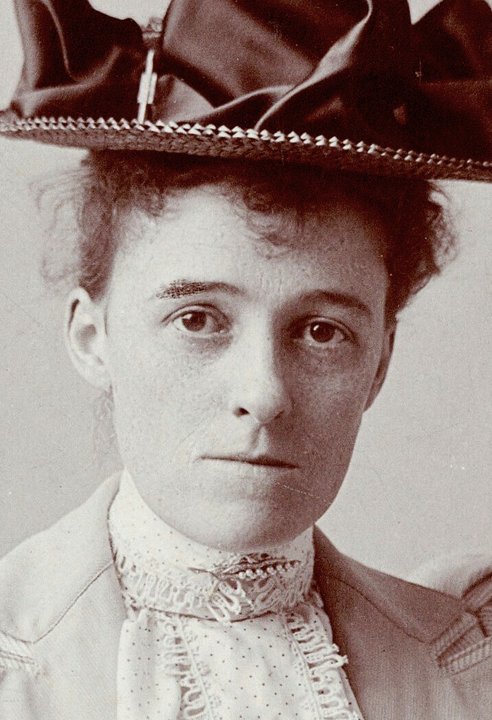
Edith WhartonEthan Frome by Edith Wharton (1911)Ethan Frome is a short novel by Edith Wharton, serialized in Scribner's Magazine and published as a book in 1911.1911 · Early 20th Century · Novella · English
Abstract
Background. Best known for portraits of fashionable New York, Wharton set this compact tragedy among the poor hill farms she knew from her summers in the Berkshires. She later explained that she wanted to portray the region's hill villages more truthfully than earlier local-color writers had.
Plot. An engineer stranded for a winter in a remote village grows curious about a lamed, taciturn farmer and, after a storm drives him into the man's home, imagines his past. Years before, the farmer had married an older, sickly relative and later fell in love with her penniless young cousin. When the wife banished the girl, the pair chose to crash their sled into a tree rather than part, and lived on, crippled, under the same roof.
Ideas. The narrative weighs obligation against longing and shows poverty, isolation and pride closing off every escape. Frozen hills, silence and a shattered dish serve as images of lives held fast. Wharton's restrained style leaves much unsaid, asking readers to infer feelings the characters cannot voice. The outsider-narrator also raises the question of how far any account of another life can be trusted.
Reception. Admired for its economy and force, though thought bleak by some early readers, it became one of the most widely taught American short novels and has been staged and filmed.
Main characters
- Ethan Frome: Struggling farmer
- Zeena Frome: His ailing wife
- Mattie Silver: Zeena's young cousin and helper
- The narrator: Visiting engineer

Summary
Ethan Frome is a short novel by Edith Wharton, serialized in Scribner's Magazine and published as a book in 1911. Set in the fictional village of Starkfield, Massachusetts, it is framed by the account of an unnamed engineer who spends a winter there and becomes curious about Ethan Frome, a striking, silent farmer whose body is twisted and lamed by what the villagers call 'the smash-up' of twenty-four years before. When a snowstorm forces him to take shelter at Ethan's farmhouse, the narrator imagines the story that follows. As a young man, Ethan had hoped to study engineering, but the illness and death of his parents kept him on the farm, and he married his cousin Zenobia, called Zeena, who had nursed his mother. Zeena has since become a sickly, complaining wife, devoted to doctors and patent medicines. Her young cousin Mattie Silver, left penniless, comes to live with them as a helper, and Ethan and Mattie fall quietly in love. When Zeena spends a night away to consult a new doctor in Bettsbridge, Ethan and Mattie share a supper in which nothing improper happens, but the cat breaks Zeena's prized red pickle dish, a wedding present she never uses. Zeena returns with orders to hire a servant and send Mattie away. Ethan thinks of running west with Mattie, but he has no money and cannot bring himself to deceive neighbors to obtain it. As he drives Mattie to the train, they take a last sled ride down School House Hill, and Mattie begs him to steer them into the great elm at the bottom so that they need never part. He agrees, but both survive. In the epilogue the narrator enters the farmhouse kitchen and finds Zeena caring for Mattie, who has been paralyzed for more than twenty years and has become querulous, while Ethan lives on with both of them. A neighbor, Mrs. Hale, remarks that she sees little difference between the Fromes at the farm and those in the graveyard. Wharton, best known for novels of New York society, drew on her years in the Berkshire hills for the book, and later wrote that she wished to show New England life as it actually was. Its spare style, symbolic winter landscape and irony have made it a frequent school text.
Plot or Argument
- Prologue
The narrator, delayed in Starkfield by a winter job, is driven daily by Ethan Frome and, sheltering at his farm in a storm, begins to understand his story.
- Chapters I–III: Ethan and Mattie
Ethan walks Mattie home from a church dance and fears losing her; Zeena announces that she will go to Bettsbridge to see a doctor.
- Chapters IV–VI: The evening alone
Ethan and Mattie spend an evening together; the cat breaks the red pickle dish, and Ethan plans to mend it.
- Chapters VII–IX: The sled ride
Zeena returns, discovers the broken dish and insists that Mattie leave; Ethan fails to find money to escape, and the two attempt to end their lives on the sled.
- Epilogue
The narrator sees the three of them in the farmhouse twenty-four years later, and Mrs. Hale explains how they have lived since.
Characters
- Ethan Frome, protagonist
Poor, thoughtful farmer bound by duty, poverty and a loveless marriage.
- Zenobia (Zeena) Frome, major
Ethan's wife, older than he, preoccupied with her illnesses.
- Mattie Silver, major
Zeena's young cousin, who comes to help in the house and whom Ethan loves.
- The narrator, major
Engineer spending a winter in Starkfield, who pieces Ethan's story together.
- Mrs. Ned Hale (Ruth Varnum), minor
The narrator's landlady, who knew the Fromes and visited them after the accident.
- Harmon Gow, minor
Village stage-driver who first tells the narrator about Ethan.
- Denis Eady, minor
Prosperous young man who pays attention to Mattie.
Lessons
Duty and desire
Ethan stays bound to the farm and to Zeena by poverty and conscience. The novel asks what a person owes to others when duty conflicts with happiness.
- Why does Ethan not leave with Mattie?
- Was his refusal to deceive the Hales a moral strength or a missed chance?
Setting as character
Wharton's frozen landscape mirrors the lives of the Fromes. Students can examine how weather and place carry meaning.
- Find two descriptions of winter and explain what they suggest about Ethan.
- Would the story work in another season?
Framing and point of view
The story is reconstructed by a stranger from fragments. Readers can consider how the frame shapes the tale's reliability.
- What does the narrator know for certain, and what does he imagine?
- Why might Wharton tell the story this way?
Context
By the late nineteenth century, many hill farms in western Massachusetts and New England were declining as young people moved west or to cities. Wharton observed these communities from The Mount, her house in Lenox, in the Berkshires.
Composition
Wharton later recalled that the story began as an exercise in French written in Paris around 1907. She developed it in English, and it was serialized in Scribner's Magazine from August to October 1911 before Scribner's published it as a book that year.
Reception
Reviewers admired its compression and power, though some found it too grim. It became one of Wharton's most widely read works and a staple of American high school reading, and it was adapted for the stage in 1936 and for film in 1993.
Comparisons
- Anna Karenina
Tolstoy's novel also treats a passion outside an unhappy marriage, but in a grand social world rather than a poor farm.
- The Scarlet Letter
Hawthorne's New England tale likewise studies love, duty and community judgment in a severe setting.
- My Ántonia
Cather's novel is another story of rural hardship, narrated by an outsider who reconstructs another person's life.
- Early Poems: A Boy's Will, North of Boston, Mountain Interval
Frost's early poems portray the same northern New England of isolated farms, hard winters and reticent people.
- Washington Square
Henry James, Wharton's friend, also wrote a compact tragedy of thwarted love and duty.
- The Death of Ivan Ilyich
Tolstoy's novella, like Wharton's, examines a life narrowed by circumstance and the meaning of suffering.
Quotes
“I had the story, bit by bit, from various people, and, as generally happens in such cases, each time it was a different story.”
“He seemed a part of the mute melancholy landscape, an incarnation of its frozen woe”
“I don’t see’s there’s much difference between the Fromes up at the farm and the Fromes down in the graveyard”
For Students
A reading companion for classical Christian high school students. See the student guide.
Reading Guide
Watch for
- The narrator's frame at the beginning and end.
- Images of cold, silence and enclosure.
- The red pickle dish.
- Ethan's moral choices about money and honesty.
Key terms and names
- Frame narrative
- A story told within another story, here the narrator's winter in Starkfield.
- Flashback
- A scene from an earlier time inserted into the narrative.
- Symbol
- An object or image that stands for something beyond itself.
- Irony
- A contrast between what is expected and what happens.
- Patent medicine
- A branded remedy sold without prescription, often of doubtful value.
Seminar Questions
- Comprehension Why did Ethan never leave Starkfield as a young man?
- Comprehension Why does Zeena decide that Mattie must leave?
- Interpretation What does the broken pickle dish represent?
- Interpretation How does the epilogue change the meaning of the sled ride?
- Big Question When should duty to others outweigh personal happiness?
- Big Question Can people escape the circumstances into which they are born?
Faith Connections
- Galatians 6:2 (Scripture)
'Bear ye one another's burdens': the epilogue shows the three characters bound to bear one another, raising questions about what such burdens mean.
- Leo Tolstoy, Anna Karenina (Great Conversation)
Tolstoy's very different treatment of love outside marriage offers a useful contrast in scale and outcome.
Logic and Rhetoric
Central argument: Through a man trapped by poverty, conscience and a harsh landscape, the novel suggests that circumstance and character together can make escape impossible, and that an act meant to end suffering may prolong it.
Rhetorical device: irony. The sled ride meant to unite Ethan and Mattie in death instead binds them, with Zeena, to decades of shared life.
Debate: Resolved: Ethan Frome is more a victim of circumstance than of his own choices.
Memory Work
I had the story, bit by bit, from various people, and, as generally happens in such cases, each time it was a different story.
Writing Prompts
Essay: Explain how Wharton uses the winter landscape to express Ethan's situation.
Comparison with The Scarlet Letter: Compare how Hawthorne and Wharton portray forbidden love and its consequences in New England.
Medical Lens
Zeena's chronic complaints and reliance on patent medicines and a new doctor, the attempted double suicide and the long aftermath of disability and caregiving are central to the plot.
- Chapter II
Zeena's ailments and her habit of sending for patent medicines.
- Chapter IX
The sled ride toward the elm.
- Epilogue
Mattie's paralysis and Zeena's role as her caregiver.
Creative Prompts
- Fiction
Write a scene from Zeena's point of view on the day she returns from Bettsbridge.
- Essay
Discuss how the red pickle dish functions as a symbol in the novel.
- Classroom
Map the characters' movements across Starkfield and the farm, and discuss how distance and weather limit their choices.
Further Reading
- Summer, Edith Wharton
- The Age of Innocence, Edith Wharton
- A Backward Glance, Edith Wharton
- Edith Wharton, Hermione Lee
Verification notes
Full text from Project Gutenberg #4517 (Scribner's, 1911). All quotations are exact substrings of the stored text.
No verification flags recorded.