Great Churches & Monasteries · Western Europe
Melk Abbey
A Baroque Benedictine abbey on a rock above the Danube, still a working monastery and school.
Still standing. The abbey stands above the Danube and is still home to a community of Benedictine monks, who run a school in its buildings.
What it is
In 1089 Leopold II, margrave of Austria, gave his fortress on the rock at Melk to Benedictine monks from Lambach. The relics of St Koloman, an Irish pilgrim hanged as a spy in 1012, had been kept there since 1014. The monastery became a center of learning. In the fifteenth century it was the starting point of the Melk Reform, a movement that renewed discipline and study in many Benedictine houses of southern Germany and Austria. Its library and school were known across Europe.
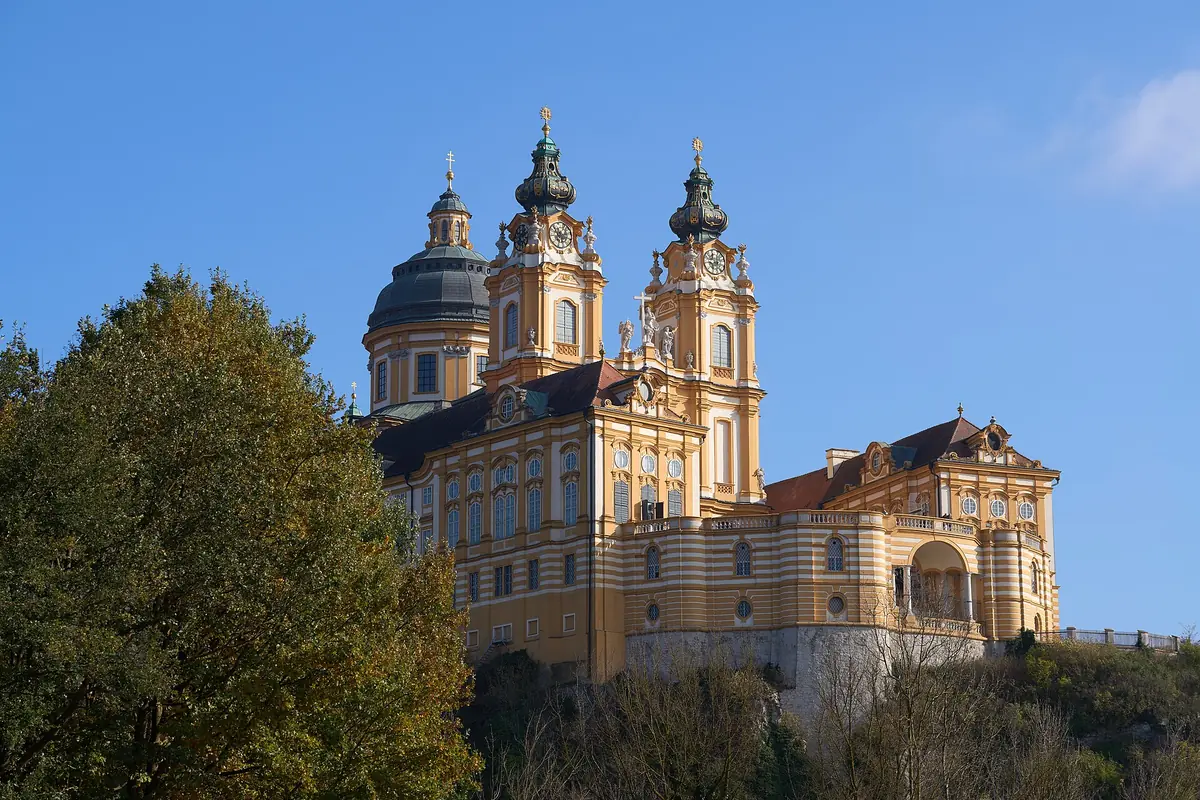
The present buildings were built between 1702 and 1736 by the architect Jakob Prandtauer for Abbot Berthold Dietmayr, in the Baroque style. After Prandtauer's death in 1726, his work was continued by Joseph Munggenast. The abbey church of St Peter and Paul, with its dome and frescoes, and the library with its fresco by Paul Troger are the highlights. French troops occupied the abbey during the Napoleonic wars, in 1805 and 1809. Today monks still live in the abbey, which still keeps a school.
“Let all guests who arrive be received like Christ”
Why it matters for a classical Christian student
Melk shows what a living monastery looks like when it has lasted for nine hundred years. A classical Christian student can read the Rule of St Benedict in the library, and then see how its principles of prayer, study, work, and hospitality shaped a house on the Danube. The student can also compare the Baroque splendor of Melk with the plainness of Benedict's early monastery and ask how the same Rule has been lived in such different ways.
Read alongside
- The Rule of St Benedict: Chapter 53 on the reception of guests.
- The Nibelungenlied: The poem names 'Medelick', which is the old name of Melk, on the road down the Danube.
Great Lives connected here
- Benedict of Nursia, in Great Lives: Melk is a Benedictine abbey, living under the Rule that Benedict wrote.
- Napoleon Bonaparte, in Great Lives: French troops under Napoleon occupied the abbey in 1805 and 1809.
Look closely
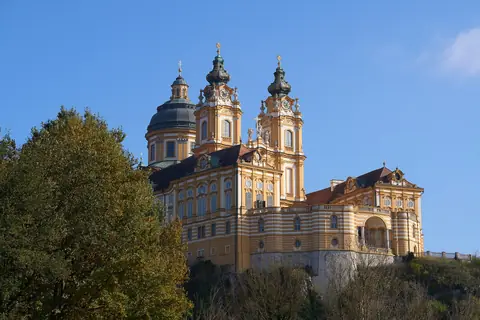
Image: Wikimedia Commons · CC BY 4.0 · Photo: Conny Duck The abbey above the Danube
Look closely. The abbey stands on a rock, with the twin towers and dome of the church at the center. Notice how the buildings follow the rock.
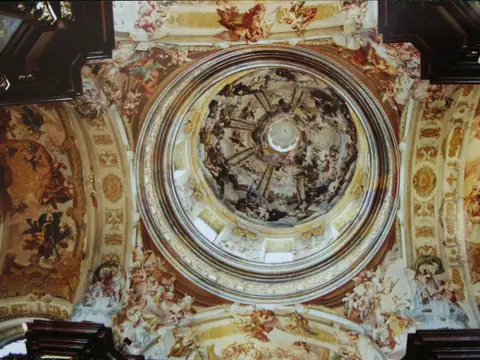
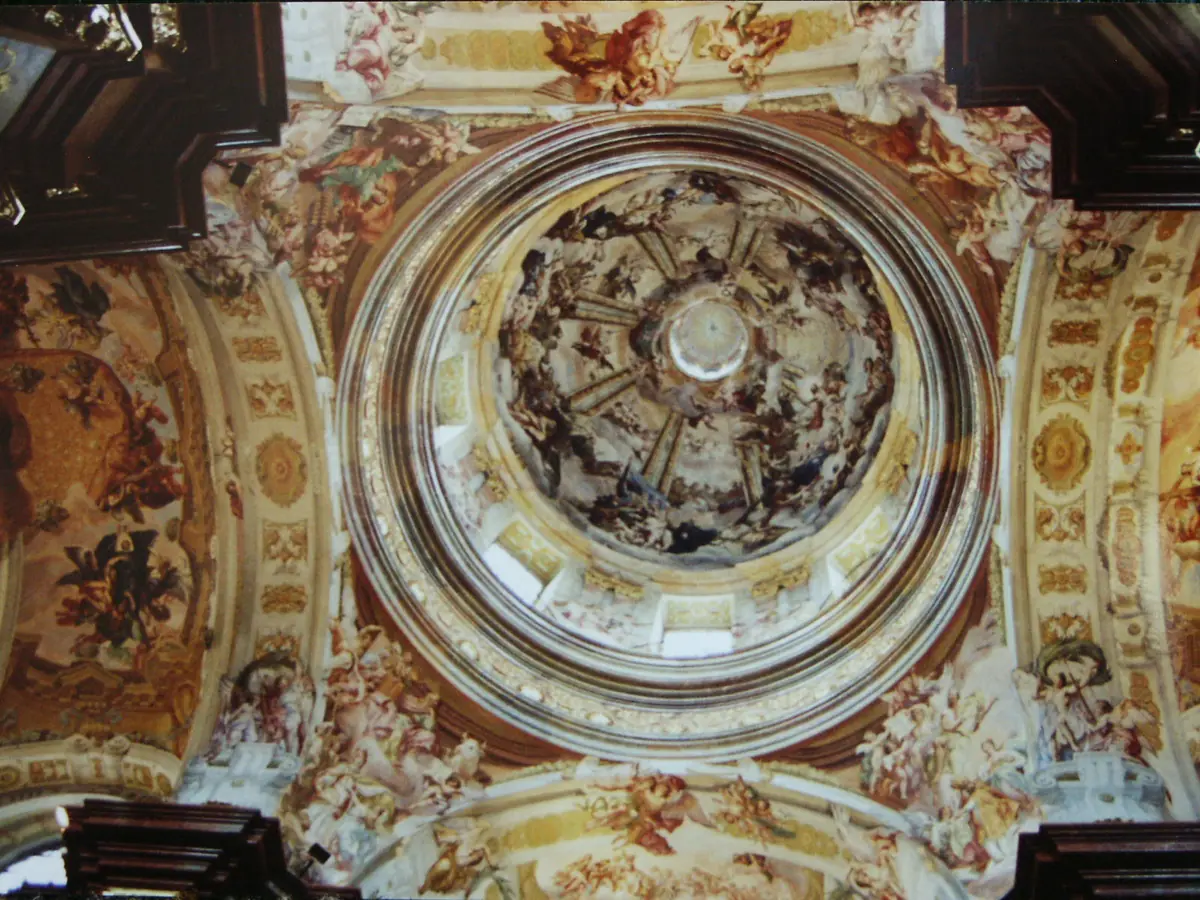
Image: Wikimedia Commons · CC0 (public domain) The dome of the church
Look closely. The dome is painted with scenes in the Baroque manner, with plaster and gilding around the ring. The fresco is dated 1716–1717.
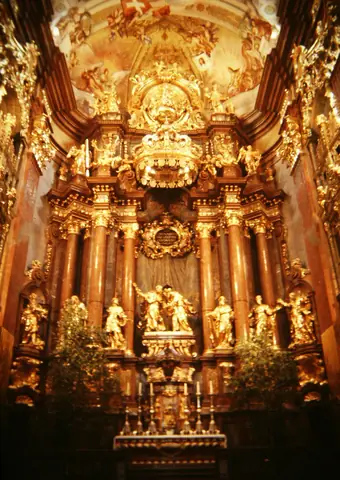
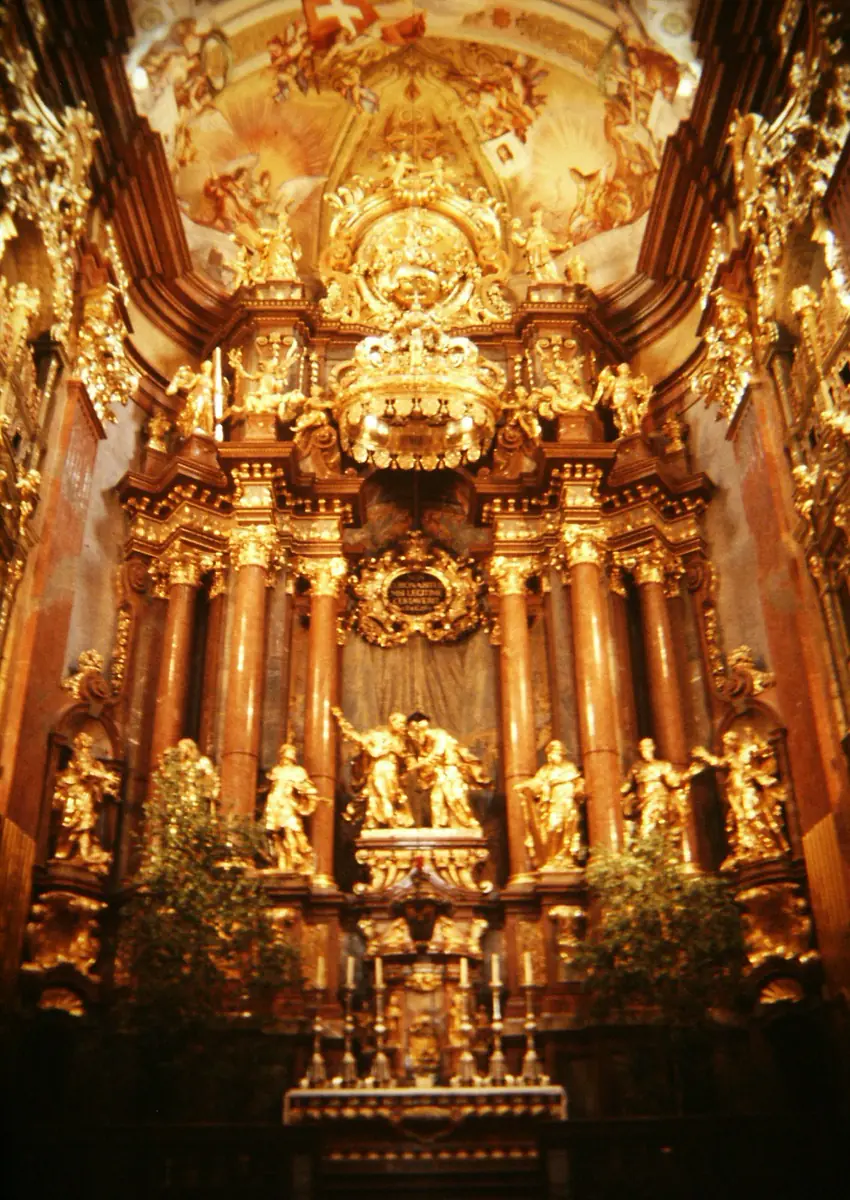
Image: Wikimedia Commons · CC0 (public domain) The high altar
Look closely. The high altar is gilded, with columns, statues and a carved crown. The Baroque church of the abbey was designed to give a vision of heaven.
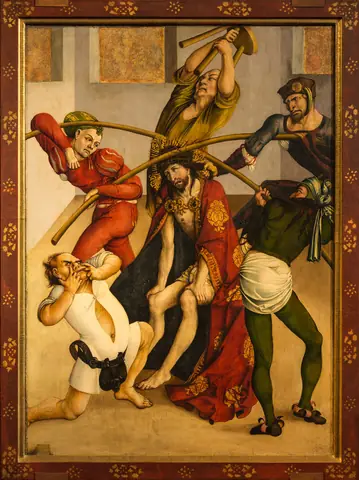
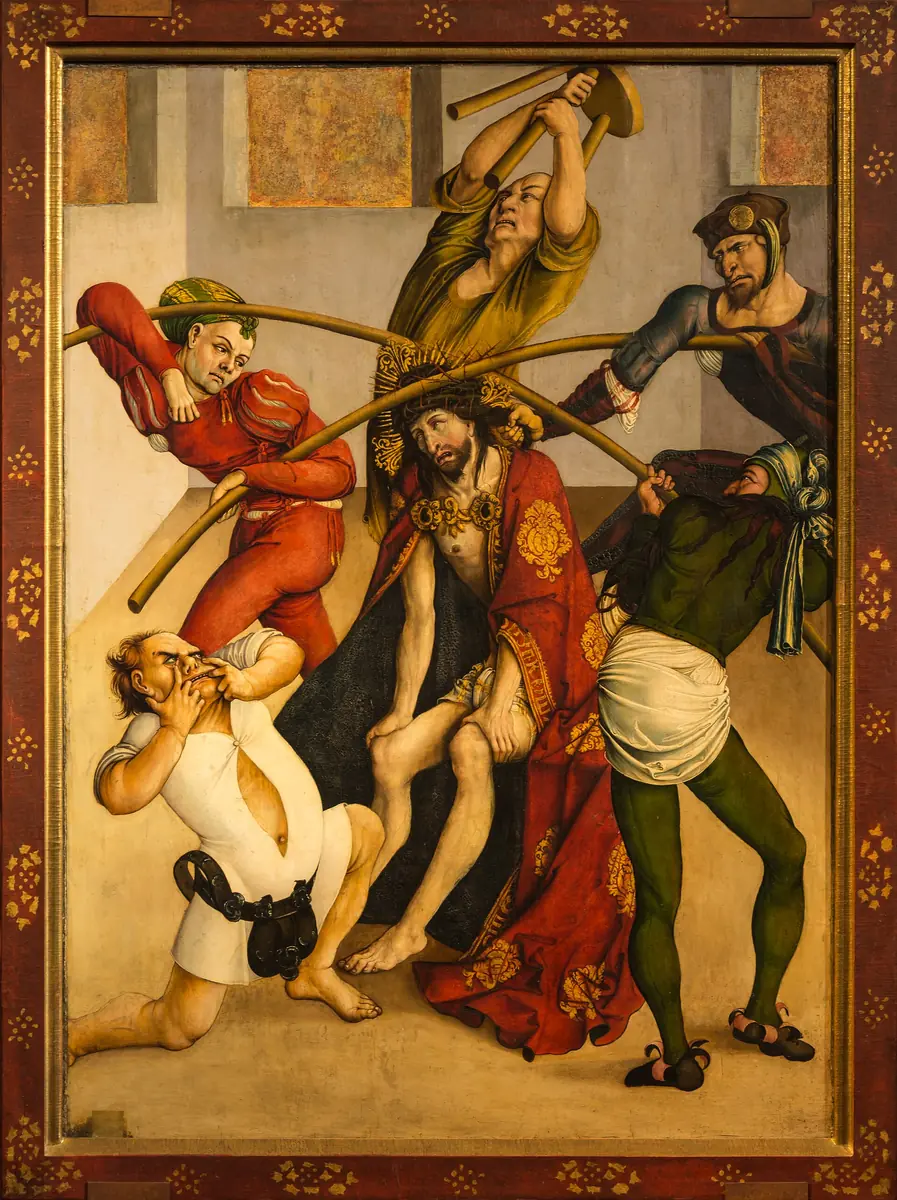
Image: Wikimedia Commons · Public domain (PD-Art) The Crowning with Thorns, from the Melk Altar
Look closely. A panel from an altarpiece painted by Jörg Breu the Elder for Melk shows soldiers beating and mocking Christ. It is from a late Gothic altar, older than the Baroque church.


What to watch for
Look slowly- The abbey church. The Baroque interior is richly decorated.
- The library. The ceiling fresco is by Paul Troger.
- The marble hall. The abbey's main ceremonial room.
- The view. From the terrace look down to the Danube.
Sources
Dates follow standard historical references and, where we quote a book, the wording of the edition hosted in this library. Where a tradition is not certain history, the page says so. Photographs and pictures are used only when the image itself is Public domain, CC0, or CC BY with a named credit. Each picture links to its source page with full licence details. Pictures taken before a site was damaged are labelled with their date.