Work record
O Pioneers!
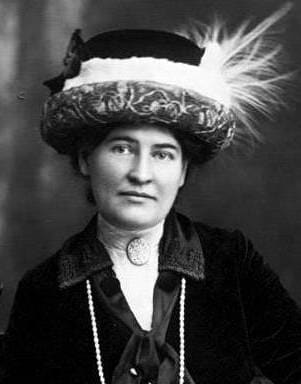
Willa CatherO Pioneers! by Willa Cather (1913)O Pioneers! is a novel by Willa Cather, published in 1913 by Houghton Mifflin.1913 · Early 20th Century · Novel · English
Abstract
Background. Cather grew up in Red Cloud, Nebraska, among immigrant farm families, and later said that this novel was the first in which she wrote about the country and people she knew best. She dedicated it to the memory of Sarah Orne Jewett, who had encouraged her to draw on her own background, and took the title from a poem by Walt Whitman.
Plot. A dying Swedish settler leaves his struggling Nebraska farm in the hands of his eldest daughter. Through drought and debt she holds on, buys more land and becomes prosperous, while her conventional brothers resent her independence and her friendship with a returning neighbor. Her youngest brother falls in love with a married woman, and the jealous husband kills them both in an orchard. Grieving, the heroine forgives him and plans to marry her old friend.
Ideas. The book sets patient, visionary labor against the restlessness of passion, and shows the prairie changing from a hostile wilderness into rich farmland. Immigrant communities, women's authority and the brevity of individual lives against the endurance of the land are central concerns.
Reception. Reviewers welcomed its freshness and its feeling for the plains, and it made Cather's reputation. It is often read alongside her later Nebraska novel about another immigrant woman and remains a common choice in American classrooms.
Main characters
- Alexandra Bergson: Swedish-American farmer
- Emil Bergson: Her youngest brother
- Carl Linstrum: Her childhood friend
- Marie Shabata: Bohemian neighbor

Summary
O Pioneers! is a novel by Willa Cather, published in 1913 by Houghton Mifflin. Its title comes from Walt Whitman's poem "Pioneers! O Pioneers!", and it is set among Swedish, Norwegian, Bohemian and French immigrant farmers on the Divide near the fictional town of Hanover, Nebraska, from the 1880s to the early 1900s. When John Bergson dies after years of struggle with the wild prairie, he leaves the management of the family farm to his eldest child, Alexandra, rather than to her younger brothers Lou and Oscar. During a run of drought years, when many neighbors sell out and leave, Alexandra studies the land, visits the river farms, and persuades her brothers to mortgage their homestead and buy more land. Her faith in the Divide is rewarded: sixteen years later she owns one of the most prosperous farms in the region. Her childhood friend Carl Linstrum, whose family left during the hard times, returns for a visit, but Lou and Oscar, fearing for their inheritance, object to his attentions, and Carl goes north to seek his fortune in Alaska. Alexandra's youngest brother Emil, whom she has sent to the state university, falls in love with Marie Shabata, a lively Bohemian neighbor unhappily married to the jealous Frank Shabata. Emil goes to Mexico to try to forget her, but on his return the two meet in the Shabatas' orchard under a white mulberry tree, where Frank finds them and shoots them both. In the final part, Alexandra, grieving, visits Frank in the state penitentiary at Lincoln and forgives him, promising to seek a pardon. Carl returns, and the two plan to marry. The closing pages reflect on the land, which outlasts every individual life. Cather later regarded O Pioneers! as the first novel in which she found her own subject, the Nebraska country of her youth. It is often read with My Ántonia (1918) as a portrait of immigrant life on the Great Plains.
Plot or Argument
- Part I: The Wild Land
In a hard winter, the dying John Bergson entrusts the farm to Alexandra; during the drought years she resolves to keep the land and buy more, while the Linstrums leave.
- Part II: Neighboring Fields
Sixteen years later Alexandra is prosperous; Carl's visit angers her brothers, Ivar is threatened with the asylum, and Emil's feelings for Marie Shabata grow.
- Part III: Winter Memories
In a quiet winter, Alexandra and Marie visit one another, and Alexandra recalls a recurring dream of being carried by a strong figure.
- Part IV: The White Mulberry Tree
Emil returns from Mexico; his friend Amédée dies after a late operation for appendicitis; Emil and Marie meet in the orchard, where Frank Shabata kills them.
- Part V: Alexandra
Alexandra mourns, visits Frank in prison, and is reunited with Carl; they plan to marry and remain on the land.
Characters
- Alexandra Bergson, protagonist
Eldest child of a Swedish immigrant family, a patient and far-sighted farmer who builds a great farm on the Divide.
- Emil Bergson, major
Alexandra's youngest brother, educated at the university, who falls in love with Marie Shabata.
- Carl Linstrum, major
Alexandra's thoughtful childhood friend, who leaves the Divide and returns years later.
- Marie Shabata, major
Warm, impulsive Bohemian neighbor, married young to Frank Shabata.
- Frank Shabata, major
Marie's jealous, discontented husband.
- Lou and Oscar Bergson, minor
Alexandra's cautious, conventional brothers.
- Ivar, minor
Old Norwegian recluse with a gift for healing animals, whom Alexandra protects.
- John Bergson, minor
Alexandra's father, who dies early in the novel.
- Amédée Chevalier, minor
Emil's French friend, whose sudden illness and death precede the tragedy.
Lessons
Faith in the land
Alexandra succeeds where others give up because she studies the land and trusts its future. The novel invites readers to think about patience, risk and vision.
- Why does Alexandra decide to buy more land when others are selling?
- What does it mean to 'own' land in this novel?
A woman at the head of the family
Alexandra manages the farm while her brothers resent her authority. Students can examine how Cather presents a woman's leadership in a frontier community.
- Why does John Bergson trust Alexandra rather than his sons?
- How do Lou and Oscar react to her success?
Love and its consequences
The story of Emil and Marie contrasts with Alexandra's steady friendship with Carl. Readers can weigh passion, responsibility and forgiveness.
- Why does Alexandra forgive Frank Shabata?
- Could the tragedy in the orchard have been avoided?
Context
After the Homestead Act of 1862 and the arrival of the railroads, large numbers of European immigrants settled the Great Plains. Drought, hard winters and debt drove many from the land in the 1880s and 1890s, while those who stayed often prospered later.
Composition
Cather combined two stories, one about a Swedish farming woman and one about a pair of doomed lovers, into a single novel. She dedicated it to the memory of Sarah Orne Jewett, who had urged her to write about the places and people she knew best.
Reception
Reviewers praised its freshness and its portrait of the prairie, and it established Cather as a major novelist. It is now regarded as the first of her Nebraska novels and is widely read in American schools.
Comparisons
- My Ántonia
Cather's later Nebraska novel returns to immigrant farm families, this time through the memories of a narrator who grew up beside them.
- Little House on the Prairie
Wilder's story of a pioneer family on the Kansas prairie offers a child's view of the same settlement era.
- The Complete Poems
Cather took her title from Whitman's poem "Pioneers! O Pioneers!", which celebrates westward settlement.
- Ethan Frome
Wharton's short novel also studies a farm family bound by hard land and thwarted love, but in a declining New England.
- Death Comes for the Archbishop
Cather's later novel of the Southwest shares her interest in landscape and in people who give their lives to a place.
Quotes
“For the first time, perhaps, since that land emerged from the waters of geologic ages, a human face was set toward it with love and yearning.”
“Isn’t it queer: there are only two or three human stories, and they go on repeating themselves as fiercely as if they had never happened before”
“We come and go, but the land is always here. And the people who love it and understand it are the people who own it—for a little while.”
“Fortunate country, that is one day to receive hearts like Alexandra’s into its bosom, to give them out again in the yellow wheat, in the rustling corn, in the shining eyes of youth!”
For Students
A reading companion for classical Christian high school students. See the student guide.
Reading Guide
Watch for
- How the land changes between Part I and Part II.
- Alexandra's choices compared with her brothers'.
- The white mulberry tree and the orchard.
- Alexandra's recurring dream.
Key terms and names
- Homestead
- Land granted to a settler who lived on and farmed it for a set number of years.
- The Divide
- The high, open land between two river valleys where the Bergsons farm.
- Mortgage
- A loan secured by land or property.
- Pastoral
- Writing that celebrates country life and landscape.
- Foreshadowing
- Hints of what will happen later in a story.
Seminar Questions
- Comprehension Why does John Bergson leave the farm in Alexandra's care?
- Comprehension What happens to Emil and Marie in the orchard?
- Interpretation What does the land represent to Alexandra, and how is that different for her brothers?
- Interpretation Why does Alexandra go to see Frank Shabata in prison?
- Big Question Is success worth what it costs?
- Big Question What do we owe to the place where we grew up?
Faith Connections
- Matthew 6:12 (Scripture)
'Forgive us our debts, as we forgive our debtors': Alexandra's visit to Frank Shabata raises questions about forgiveness after a terrible wrong.
- Walt Whitman, "Pioneers! O Pioneers!" (Great Conversation)
The poem that gave Cather her title praises the courage of settlers; the novel shows what that courage cost.
Logic and Rhetoric
Central argument: Through Alexandra's patient work and the tragedy of Emil and Marie, the novel suggests that the land rewards those who understand and love it, while individual lives and passions pass away.
Rhetorical device: personification. The prairie is presented at first as a wild, resisting land that slowly yields to Alexandra's faith and care.
Debate: Resolved: Alexandra Bergson is the true pioneer of the novel, and her brothers are merely settlers.
Memory Work
We come and go, but the land is always here. And the people who love it and understand it are the people who own it—for a little while.
Writing Prompts
Essay: Explain how Alexandra's relationship with the land shapes her character.
Comparison with My Ántonia: Compare Alexandra Bergson and Ántonia Shimerda as women who make their lives on the Nebraska prairie.
Medical Lens
Alexandra's brothers want to send the old recluse Ivar to the asylum at Hastings because his ways are unusual, and Alexandra refuses; later, Amédée Chevalier dies after an operation for appendicitis performed too late. Both are brief episodes.
- Part II: Neighboring Fields, Ch. II
Ivar fears being sent to the asylum for being 'different'.
- Part IV: The White Mulberry Tree, Ch. V
Amédée's appendicitis and operation.
Creative Prompts
- Fiction
Write a letter from Carl Linstrum in Alaska to Alexandra describing his new life and what he misses about the Divide.
- Essay
Explain how Cather uses the seasons to shape the mood of each part of the novel.
- Classroom
Research the Homestead Act and draw a map of a quarter-section farm, then compare it with the Bergson homestead.
Further Reading
- My Ántonia, Willa Cather
- The Song of the Lark, Willa Cather
- Willa Cather: The Emerging Voice, Sharon O'Brien
- Willa Cather: A Literary Life, James Woodress
Verification notes
Full text from Project Gutenberg #24 (Houghton Mifflin, 1913). All quotations are exact substrings of the stored text.
No verification flags recorded.