Work record
The Razor's Edge
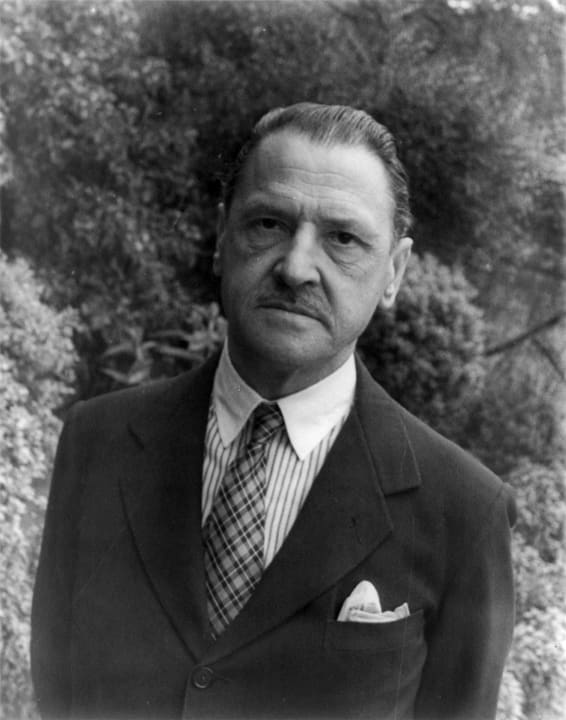
W. Somerset MaughamW. Somerset Maugham; W Somerset Maugham; WSomersetMaugham; William Somerset MaughamThe Razor's Edge by W. Somerset Maugham (1944)The Razor's Edge is narrated by Maugham himself, appearing as a character, who says that he has invented nothing and has simply set down what he knows of a man he met at long intervals over some twenty years.1944 · Early 20th Century · Novel · English
Abstract
Background. Maugham, then living in the United States during the Second World War, drew on a 1938 visit to India for the novel, which was published in 1944 and became a best seller.
Plot. Larry Darrell, a young American shaken by the death of a comrade in the First World War, refuses a career and breaks with his fiancée Isabel to search for meaning. While Isabel marries the wealthy Gray Maturin and is ruined by the 1929 crash, Larry works and studies in Europe and finds enlightenment in India. His attempt to save his friend Sophie from addiction ends in her death after Isabel tempts her to drink. Larry gives away his money to live simply in America.
Ideas. The novel contrasts worldly ambition, represented by Isabel and her uncle Elliott, with spiritual renunciation, and presents Vedanta sympathetically through a skeptical narrator. Its closing judgment, that every character got what he or she wanted, turns the book into a reflection on desire itself. The portrait of Elliott Templeton adds social comedy to the spiritual theme.
Reception. Filmed in 1946 and 1984, the book remains popular and is often credited with spreading Western interest in Indian spirituality.
Main characters
- Larry Darrell: Former war pilot who seeks the meaning of life
- Isabel Bradley: His fiancée, who marries for security
- Elliott Templeton: Her snobbish expatriate uncle
- Sophie Macdonald: Grieving friend who falls into addiction
- The narrator: Maugham himself, an observer of the others

Summary
The Razor's Edge is narrated by Maugham himself, appearing as a character, who says that he has invented nothing and has simply set down what he knows of a man he met at long intervals over some twenty years. That man is Larry Darrell, a young American from Chicago who served as a pilot in the First World War and returned changed after a comrade died saving his life. Larry declines the comfortable career expected of him, including a job in a brokerage, and announces that he wants to "loaf", by which he means reading, thinking and searching for an answer to the problem of evil and the meaning of life. His fiancée, Isabel Bradley, loves him but wants a conventional, prosperous life. When Larry will not change, she breaks the engagement and marries his friend Gray Maturin, a wealthy young stockbroker. Larry's search takes him to Paris, to work in a coal mine in France, to a German monastery and finally to India, where he spends years studying with a swami and has an experience of illumination in the hills. Meanwhile the Wall Street crash of 1929 ruins Gray, and he and Isabel move to Paris to live with her uncle, Elliott Templeton, an expatriate snob devoted to European high society. Maugham's portrait of Elliott, comic and finally touching as he dies anxious about an invitation to a party, is one of the book's great pleasures. Larry, returned to Europe, helps Gray with his headaches by a kind of hypnotic suggestion. He also meets Sophie Macdonald, a childhood friend from Chicago whose husband and baby were killed in a car accident and who has fallen into drink, drugs and promiscuity in Paris. Larry resolves to marry her and save her. Isabel, still in love with him, leaves a bottle of Polish vodka within Sophie's reach; Sophie disappears on the eve of the wedding and is later found murdered in Toulon. At the end Larry gives away his small fortune and plans to return to America to work as a mechanic or taxi driver, living simply and anonymously. Maugham concludes that each character got what he or she wanted: Elliott social eminence, Isabel security, Gray a job, Sophie death and Larry happiness. Published in 1944, during the Second World War, the novel was a best seller and was filmed in 1946 and 1984. Its picture of a Western seeker drawn to Vedanta anticipated later Western interest in Indian spirituality.
Plot or Argument
- Chicago and Paris, 1919
The narrator meets Larry, Isabel and Elliott in Chicago in 1919. Larry refuses to work, goes to Paris to study and read, and Isabel breaks their engagement.
- Isabel's marriage and the crash
Isabel marries Gray Maturin. The 1929 crash ruins Gray, and the couple move to Paris under Elliott's protection.
- Larry's story
In a long conversation Larry tells the narrator of his years in the mines, in Germany and in India, and of his experience of illumination.
- Sophie
Larry plans to marry Sophie Macdonald to save her from drink; Isabel tempts her with vodka, and Sophie disappears and is later found murdered.
- Endings
Elliott dies; Larry gives away his money and returns to America to live as an ordinary working man.
Characters
- Larry Darrell, protagonist
Former American war pilot who renounces ambition to seek the meaning of life.
- The narrator (Maugham), narrator
The author as a character, a worldly observer who records the others' lives.
- Isabel Bradley, major
Larry's fiancée, who chooses wealth and marries Gray but remains attached to Larry.
- Gray Maturin, major
Good-natured stockbroker ruined by the 1929 crash.
- Elliott Templeton, major
Isabel's uncle, a snobbish, generous American expatriate in European society.
- Sophie Macdonald, major
Childhood friend whose family's death sends her into drink and despair.
- Suzanne Rouvier, minor
Parisian woman, an artist's model turned painter, and Larry's friend.
Lessons
The search for meaning
Larry gives up wealth and status to look for answers to the questions the war raised for him. The novel asks what a life well spent looks like and whether everyone can or should choose his path.
- What does Larry mean by wanting to 'loaf'?
- Is Larry's choice admirable, selfish or both?
Getting what you want
Maugham's closing claim that every character got what he or she wanted invites readers to examine what each one valued, and whether those desires were worth having.
- Do you agree that each character got what he or she wanted?
- Which character's goal seems most worth pursuing?
East and West
Larry's encounter with Vedanta in India is presented sympathetically by a skeptical narrator. The novel shows an early Western engagement with Indian thought.
- What does Larry find in India that he did not find in Europe?
- Why does Maugham have a skeptic narrate a spiritual quest?
Context
The novel spans roughly 1919 to the late 1930s, from the aftermath of the First World War through the Jazz Age, the 1929 crash and the Depression. Maugham's own visit to India in 1938, including a meeting with the sage Ramana Maharshi, informed Larry's experience there.
Composition
Maugham wrote the novel in the United States, where he lived during the Second World War. It was serialized in Redbook in 1943–1944 and published by Doubleday, Doran in the United States and by Heinemann in Britain in 1944.
Reception
The book was an immediate best seller. It was filmed by 20th Century-Fox in 1946 with Tyrone Power and in 1984 with Bill Murray. Critics have debated whether Larry is a convincing saint, while its influence on Western interest in Indian spirituality is widely acknowledged.
Comparisons
- Siddhartha: An Indian Tale
Hesse's novel also follows a seeker who renounces worldly life on the path to enlightenment.
- The Great Gatsby
Another portrait of wealthy Americans in the 1920s and the emptiness of their pursuit of money and status.
- The Bhagavad Gita
A central text of the Vedanta tradition that Larry studies in India.
- Confessions
Augustine's account of a restless search for truth ending in conversion parallels Larry's quest.
- The Death of Ivan Ilyich
Tolstoy's novella shows the conventional successful life that Larry refuses.
Quotes
“The sharp edge of a razor is difficult to pass over; thus the wise say the path to Salvation is hard.”
“I have never begun a novel with more misgiving.”
For Students
A reading companion for classical Christian high school students. See the student guide.
Reading Guide
Watch for
- The narrator's claim to invent nothing, and where he admits to guessing.
- What each character wants, and whether he or she gets it.
- Elliott's social world as a comic counterpoint to Larry's quest.
- Isabel's feelings for Larry after her marriage.
Key terms and names
- Vedanta
- A school of Hindu philosophy based on the Upanishads, teaching the unity of the self and ultimate reality.
- Upanishads
- Ancient Sanskrit texts of Hindu philosophy; the title comes from the Katha Upanishad.
- Expatriate
- A person living outside his or her native country, like Elliott in France.
- The Crash of 1929
- The collapse of the US stock market that began the Great Depression.
Seminar Questions
- Comprehension Why does Isabel break her engagement to Larry?
- Comprehension What does Larry experience in India?
- Interpretation Why does Isabel act against Sophie?
- Interpretation Why does Maugham place himself in the story as narrator?
- Big Question Is it possible to live a good life while rejecting what society calls success?
- Big Question Does Larry's search help anyone besides himself?
Faith Connections
- Matthew 19:16-22 (Scripture)
The rich young man who cannot give up his possessions offers a contrast to Larry, who gives away his fortune.
- The Katha Upanishad (Great Conversation)
The source of the title, in which Nachiketa questions Death about the self, frames Larry's quest.
- Augustine, Confessions (Church Fathers)
'Our heart is restless until it rests in thee': Augustine's restless search is a classic Christian parallel to Larry's.
Logic and Rhetoric
Central argument: If each person pursues what he or she most values, then the true measure of a life is the worth of what is sought, and Larry's search for meaning, though it brings no worldly success, is presented as the most fulfilling.
Rhetorical device: first-person frame narration. The author-narrator presents himself as a skeptical recorder, which makes Larry's spiritual claims more credible to the reader.
Debate: Resolved: Larry Darrell's way of life is a model others should follow.
Writing Prompts
Essay: Evaluate the narrator's claim that each character got what he or she wanted.
Comparison with Siddhartha: An Indian Tale: Compare Larry's search with Siddhartha's: what does each renounce, and what does each find?
Medical Lens
Sophie's descent into alcoholism and drug use after the death of her husband and child is a study of grief and addiction, and Larry's relief of Gray's headaches by suggestion reflects interest in hypnosis and mind-body healing. Maugham himself trained as a physician.
- The Paris chapters
Sophie's drinking and relapse.
- The Paris chapters
Larry relieves Gray's headaches by suggestion.
Creative Prompts
- Essay
Write about someone, real or fictional, who chose meaning over money. What did the choice cost, and was it worth it?
- Fiction
Write Isabel's private account of the night she left the vodka for Sophie.
- Classroom
Discuss in groups: rank the characters by how well each lived, and defend your ranking.
Further Reading
- Of Human Bondage, W. Somerset Maugham
- The Secret Lives of Somerset Maugham, Selina Hastings
- The Razor's Edge, Edmund Goulding (director)
20th Century-Fox film, 1946.
Verification notes
The book is under copyright in the United States and no text is stored. Both quotations (the epigraph and the first sentence) are verified against the Project Gutenberg Canada transcription of the 1944 Blakiston edition (ebook #1478) and a 1960s Heinemann printing. Plot and publication history are well documented.
- The novel's exact chapter in which each episode occurs (plot sections are grouped by story, not chapter).