Work record
A Clergyman's Daughter
George OrwellA Clergyman's Daughter by George Orwell (1935)A Clergyman's Daughter is George Orwell's second novel, the story of Dorothy Hare, the devout, overworked daughter of a selfish, impoverished Anglican rector in the Suffolk town of Knype Hill.1935 · Early 20th Century · Novel · English
Abstract
Premise. The anxious, devout daughter of a selfish country rector runs his house, dodges creditors and serves the parish, mortifying herself when her prayers wander.
Amnesia. After a stressful evening she wakes in London with no memory and drifts with a band of vagrants to the Kent hop fields for seasonal work.
Scandal. A village gossip claims she eloped with an older unbeliever, and the papers repeat the story. Her father refuses to help.
Trials. She sleeps rough in a London square, then teaches in a grim little school whose owner cares only for fees and appearances.
Ending. Brought home, she refuses a proposal and resumes her parish work, having lost her faith but holding on to duty.
For students. The novel raises honest questions about faith, doubt and service. Compare it with the Psalms of lament. The author drew on his own months picking hops in Kent, sleeping rough in London and teaching in small private schools, and he later regretted publishing the book. Dorothy's story, published in 1935, stays in US copyright through 2030, so its Trafalgar Square play-chapter and hop-field scenes are summarized here and must be read in a borrowed or bought copy.
Main characters
- Dorothy Hare: rector's daughter
- Rev. Charles Hare: her father
- Mr. Warburton: unbelieving friend
- Nobby: young tramp
- Mrs. Creevy: school proprietor
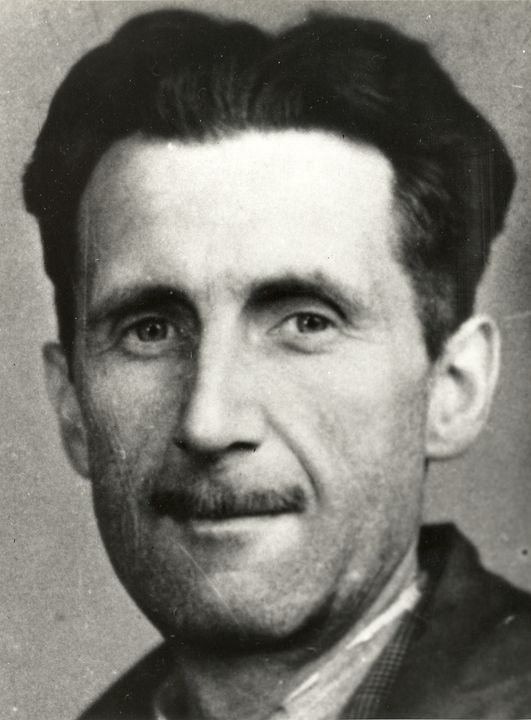

Summary
A Clergyman's Daughter is George Orwell's second novel, the story of Dorothy Hare, the devout, overworked daughter of a selfish, impoverished Anglican rector in the Suffolk town of Knype Hill. Dorothy runs the household, struggles with debts to tradesmen, visits the poor, makes costumes for church pageants, and disciplines herself with pins pressed into her arm when her mind wanders in prayer. Her only friend is Mr. Warburton, a middle-aged, unbelieving bachelor who tries to seduce her. One night, exhausted, she suffers a sudden loss of memory and finds herself in London with no idea who she is. She falls in with a group of young tramps and goes with them to the hop fields of Kent, where she works as a hop-picker, a vivid section drawn from Orwell's own experience. Meanwhile a scandal-mongering local gossip spreads the rumor that she has eloped with Warburton, and the newspapers take it up. When her memory returns, her father, ashamed, does not help her; she sleeps rough in Trafalgar Square in a chapter written as a play, then becomes a teacher at a squalid private school run by the money-grubbing Mrs. Creevy, where she tries to teach real learning to girls whose parents want only good handwriting and respectability, and is dismissed. Finally her cousin arranges her return home. Warburton proposes marriage on the train, warning her of a lonely life, but she refuses. Dorothy has lost her faith during her ordeal, but she returns to her duties, making costumes for the church play, and the novel ends with her concluding that faith and its absence matter less than doing the work at hand, though the book leaves the reader with a sense of loss. Orwell later disliked the novel. For Christian readers it raises honest questions about faith, duty and the meaning of a life of service when belief seems to disappear. As the 1935 novel stays in US copyright through 2030, Dorothy's story is told here in summary only.
Virtues in this work
Plot or Argument
- Chapter 1: Knype Hill
Dorothy's life of duty and anxiety in her father's parish.
- Chapter 2: Hop-picking
Dorothy loses her memory and works in the Kent hop fields.
- Chapter 3: Trafalgar Square
Destitute and alone in London, she sleeps rough in Trafalgar Square among the homeless.
- Chapter 4: The school
She teaches at Mrs. Creevy's private school.
- Chapter 5: Return
Dorothy refuses Warburton and returns home without faith but with duty.
Characters
- Dorothy Hare, heroine
Devout, overworked rector's daughter.
- Rev. Charles Hare, father
Selfish, snobbish rector.
- Mr. Warburton, friend
Charming unbeliever.
- Nobby, tramp
Cheerful companion in the hop fields.
- Mrs. Creevy, headmistress
Mean school proprietor.
Lessons
Faith and duty
Dorothy loses her faith but keeps serving.
- Is duty without faith enough?
- How might Psalm 73 answer Dorothy?
Education
Mrs. Creevy cares only for appearances and fees, never for what the children actually learn.
- How does Dorothy try to teach?
- What is real education?
Gossip
Mrs. Semprill's lies ruin Dorothy's reputation.
- How does gossip harm Dorothy?
- What does James 3 say about the tongue?
Context
Orwell drew on his experiences hop-picking in Kent (1931), sleeping rough, and teaching in small private schools (1932-33).
Composition
Published by Victor Gollancz in March 1935; Orwell later asked that it not be reprinted.
Reception
Considered one of Orwell's weaker novels but valued for its documentary sections.
Comparisons
- Jane Eyre
Another heroine who is cast out and returns.
- Down and Out in Paris and London
Orwell's memoir drawing on the same experiences of poverty.
- Middlemarch
Eliot's heroine who seeks a life of meaningful duty.
Quotes
For Students
A reading companion for classical Christian high school students. See the student guide.
Reading Guide
Watch for
- Dorothy's religious practices.
- The hop-picking chapter.
- The play-script chapter in Trafalgar Square.
- How the ending treats faith without belief.
Key terms and names
- Rector
- Clergyman in charge of a parish.
- Hop-picking
- Seasonal harvest work in Kent.
- Amnesia
- Loss of memory, often after shock or strain.
- Private school
- Fee-paying school, often poorly run in the 1930s.
Seminar Questions
- Comprehension How does Dorothy lose her memory?
- Comprehension What happens at Mrs. Creevy's school?
- Interpretation Why does Dorothy lose her faith?
- Interpretation Why does she refuse Warburton?
- Interpretation What does the ending suggest?
- Big Question Can a person serve faithfully when faith feels absent?
Faith Connections
- Psalm 73:26 (Scripture)
My flesh and my heart faileth: but God is the strength of my heart.
- James 3:5-6 (Scripture)
The tongue is a fire; gossip ruins Dorothy.
Logic and Rhetoric
Central argument: A life of duty may outlast the loss of faith, but the novel exposes the emptiness that loss leaves.
Rhetorical device: experimental chapter. The Trafalgar Square chapter is written as a play script.
Debate: Resolved: that Dorothy was right to return home.
Writing Prompts
Essay: Trace Dorothy's spiritual journey through the novel.
Comparison with Jane Eyre: Compare Dorothy and Jane as women cast out from home.
Medical Lens
Dorothy suffers sudden amnesia, and later hunger and exposure.
- Chapter 2
Dorothy's sudden amnesia and its aftermath.
Creative Prompts
- Essay
Is Dorothy's loss of faith convincing?
- Fiction
Write Dorothy's prayer on the last page.
- Classroom
Compare Mrs. Creevy's school with a classical school.
Further Reading
- Nineteen Eighty-Four, George Orwell
Orwell's final novel.
Verification notes
COPYRIGHT: First published 1935; still under US copyright (95 years from publication, until the end of 2030). Abstract and study guide only; no full text and no quotations.
No verification flags recorded.