Work record
The Professor
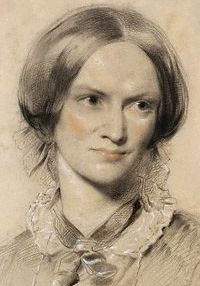
Charlotte BrontëThe Professor by Charlotte Brontë (1857)The Professor was Charlotte Brontë's first novel, written in 1846 but rejected by publishers and published only after her death, in 1857.1857 (written 1846) · 19th Century · Novel · English
Abstract
Premise. An orphan educated by aristocratic uncles refuses their help and takes a clerk's job with his rich, cold brother. After harsh treatment he leaves for Belgium.
Brussels. He teaches at a boys' school and at a neighboring girls' school, where the directress flirts with him. Overhearing her plans with his employer, he turns away from her.
Love. A poor student who mends lace and teaches sewing becomes his favorite pupil. When she is dismissed and her address hidden, he searches until he finds her in a cemetery.
Conscience. He resigns his post rather than remain in a compromising position, endures poverty, and then wins a professorship. The two marry and both continue to work.
For students. This is an early novel about vocation, integrity and partnership. Compare it with Villette, and note the narrator's anti-Catholic remarks as a period attitude.
Publication. Rejected by publishers in 1846, it appeared only after the author's death in 1857. The narrator is proud and guarded, and readers see others only through his judgments. Much of the later and greater novel Villette reworks the same Brussels material from a woman's point of view, so the two books reward reading side by side as a study in how a writer revises her experience.
Main characters
- William Crimsworth: narrator and teacher
- Frances Henri: pupil and wife
- Edward Crimsworth: harsh brother
- Yorke Hunsden: radical friend
- Zoraïde Reuter: school directress

Summary
The Professor was Charlotte Brontë's first novel, written in 1846 but rejected by publishers and published only after her death, in 1857. It is narrated by William Crimsworth, an orphan educated at Eton by his aristocratic uncles, who refuses their offer of a church living and marriage to a cousin, and goes instead to work as a clerk for his cold, rich elder brother Edward, a mill owner in the north of England. Edward treats him harshly. Encouraged by the sardonic Yorke Hunsden, a radical manufacturer, William leaves and goes to Brussels, where he becomes an English teacher at a boys' school run by M. Pelet and then also at a neighboring girls' school directed by Mlle. Zoraïde Reuter. Mlle. Reuter flirts with William, and he is briefly attracted, but he overhears her and Pelet planning their own marriage and turns from her. Among his pupils is Frances Evans Henri, a poor Anglo-Swiss lace-mender and teacher of needlework who studies English to improve herself. Frances is earnest, intelligent and humble; William is drawn to her. Mlle. Reuter, jealous, dismisses Frances and hides her address. William searches for weeks and finds her at last in the Protestant cemetery mourning her aunt. Because Mlle. Reuter has now married Pelet and tries to seduce William, he resigns his post for the sake of conscience, though he has no other work. After a period of poverty and depression he finds a professorship at a college, and he and Frances marry. Frances insists on continuing to work, and she opens a school that succeeds. After ten years they have saved enough to return to England with their son Victor and live near Hunsden. The novel shows a man rising by his own effort, refusing dependence and keeping integrity, and many of its elements were later reworked in Villette. Its Protestant narrator makes harsh remarks about Catholics typical of the period, which teachers should address.
Virtues in this work
- Industry: William and Frances build their life through work.
- Temperance: William resists temptation and keeps his self-command.
- Honor: He resigns his post rather than act against conscience.
Plot or Argument
- Chapters 1-6: England
William refuses aristocratic patronage, works for his harsh brother, and leaves for Brussels.
- Chapters 7-17: Brussels schools
He teaches at Pelet's and Mlle. Reuter's schools, resists Reuter's flirtation, and meets Frances Henri.
- Chapters 18-23: Search and conscience
Frances is dismissed; William finds her in the cemetery and resigns rather than stay in a compromising situation.
- Chapters 24-25: Marriage and success
William and Frances marry, both work, prosper, and return to England.
Characters
- William Crimsworth, narrator
Proud, self-reliant young teacher.
- Frances Evans Henri, pupil and wife
Poor, earnest lace-mender who becomes a teacher.
- Edward Crimsworth, brother
Cruel, wealthy mill owner.
- Yorke Hunsden, friend
Sardonic radical manufacturer.
- Zoraïde Reuter, directress
Calculating head of the girls' school.
- M. Pelet, schoolmaster
Charming but false head of the boys' school.
Lessons
Earning one's bread
William refuses patronage and works for his living.
- Why does William refuse his uncles?
- What does he gain by working?
Integrity under temptation
William resigns rather than stay near Mlle. Reuter.
- Why does he resign?
- Was it wise?
Partnership in marriage
Frances insists on working alongside William.
- Why does Frances want to work?
- How does their marriage differ from others in the novel?
Context
Based on Charlotte Brontë's experiences as pupil and teacher at the Pensionnat Heger in Brussels in 1842-44.
Composition
Written in 1846 and rejected by several publishers; published posthumously by Smith, Elder in 1857 with a preface by her husband, Arthur Bell Nicholls.
Reception
Considered an apprentice work; its material was reworked in Villette.
Comparisons
- Villette
Charlotte Brontë's later and fuller novel of Brussels school life.
- Jane Eyre
Charlotte Brontë's first published novel.
- Agnes Grey
Anne Brontë's first novel, also about teaching.
Quotes
For Students
A reading companion for classical Christian high school students. See the student guide.
Reading Guide
Watch for
- William's choices about work and dependence.
- How William judges Mlle. Reuter.
- Frances's character.
- The theme of self-reliance.
Key terms and names
- Directress
- Head of a girls' school.
- Lace-mender
- A woman who repairs lace, a poorly paid trade.
- Protestant cemetery
- Burial ground in Brussels where William finds Frances.
- Patronage
- Support given by a powerful person in exchange for loyalty.
Seminar Questions
- Comprehension Why does William leave England?
- Comprehension How does William find Frances again?
- Interpretation Why does William resign his post?
- Interpretation How does Frances show independence?
- Interpretation What does the novel say about work?
- Big Question What makes a marriage a true partnership?
Faith Connections
- 2 Thessalonians 3:10 (Scripture)
If any would not work, neither should he eat; William and Frances live by honest work.
- 1 Corinthians 10:13 (Scripture)
God provides a way of escape from temptation; William's resignation is such an escape.
Logic and Rhetoric
Central argument: Self-reliance, integrity and honest work build a better life than patronage or calculation.
Rhetorical device: first-person narration. William's proud, guarded voice shapes the reader's view of every character.
Debate: Resolved: that William was right to resign his post.
Writing Prompts
Essay: Explain how William keeps his integrity in Brussels.
Comparison with Villette: Compare William Crimsworth and Lucy Snowe as narrators.
Medical Lens
William describes a bout of hypochondria and depression after his engagement.
- Ch. 23
William's attack of hypochondria.
Creative Prompts
- Fiction
Write Frances's letter to William after her dismissal.
- Essay
Compare The Professor and Villette.
- Classroom
Discuss how the novel treats teaching as a vocation.
Further Reading
- Villette, Charlotte Brontë
The later Brussels novel.
Verification notes
Plot and publication history are well established.
No verification flags recorded.