Work record
Nutcracker and Mouse-King
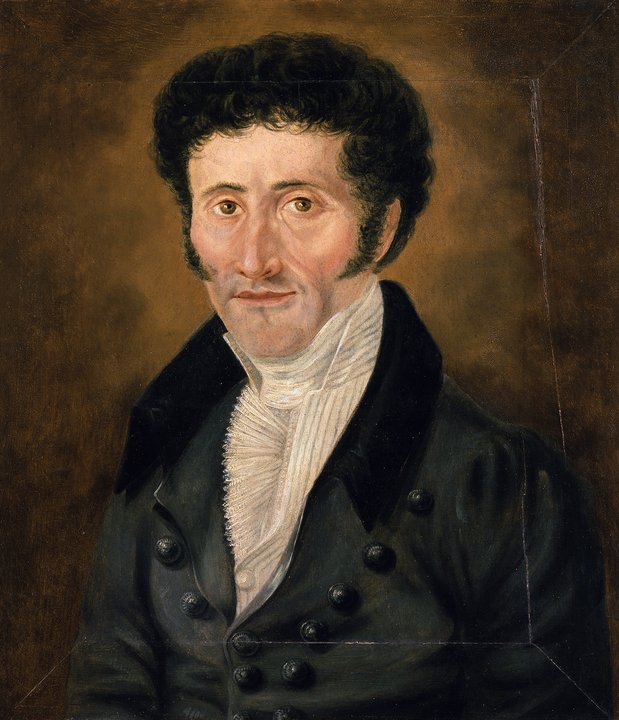
E. T. A. HoffmannE. T. A. Hoffmann; ETA Hoffmann; E.T.A. Hoffmann; E T A Hoffmann; ETAHoffmann; The Nutcracker and the Mouse King; Nussknacker und MausekönigNutcracker and Mouse-King by E. T. A. Hoffmann (1816)Nutcracker and Mouse-King is a fairy tale by the German Romantic writer E. T. A. Hoffmann, first published in 1816 in a collection of children's stories he produced with Carl Wilhelm Contessa and Friedrich de la Motte Fouqué.Also known as: The Nutcracker and the Mouse King · Nussknacker und Mausekönig
1816 · 19th Century · Novella · German
Abstract
Background. A judge, composer and leading Romantic author, Hoffmann wrote this holiday tale in 1816 for a joint volume of stories for young readers, naming its children after a friend's family.
Plot. A little girl befriends an ugly carved soldier among her Christmas presents and defends him when an army of mice, led by a seven-headed king, attacks the toys at midnight. Her godfather explains, through a fairy story about a cursed princess and a magical nut, that the toy is his enchanted nephew. Armed with a sword, the wooden hero kills his foe and takes the girl up a coat sleeve into a land of sweets, and her loyalty at last restores him.
Ideas. The tale prizes loyalty over vanity and imagination over grown-up skepticism, and keeps open whether the wonders are real or feverish dreams. Its narrator speaks to young listeners directly, and the mixture of comedy, menace and sweetness made it unusual among children's stories of its day.
Reception. Dumas's French retelling became the source of Tchaikovsky's ballet of 1892, whose fame now far exceeds that of the stranger original. The original, longer and darker than the ballet, has been retranslated many times and is often read aloud during the holiday season.
Main characters
- Maria: Young girl
- The Nutcracker: Enchanted wooden toy
- Counsellor Drosselmeier: Godfather and storyteller
- The Mouse-King: Seven-headed enemy

Summary
Nutcracker and Mouse-King is a fairy tale by the German Romantic writer E. T. A. Hoffmann, first published in 1816 in a collection of children's stories he produced with Carl Wilhelm Contessa and Friedrich de la Motte Fouqué. Nearly eighty years later, a French retelling by Alexandre Dumas became the basis of Tchaikovsky's ballet The Nutcracker (1892). On Christmas Eve, the children of Doctor Stahlbaum, Frederic and his younger sister Maria, receive their presents, including a mechanical castle from their godfather, Counsellor Drosselmeier, a clockmaker and inventor. Maria is drawn to a plain wooden nutcracker in a soldier's coat, and when Frederic breaks its teeth on a hard nut, she cares for it tenderly. That night, as the clock strikes twelve, mice pour out of the floor, led by a Mouse-King with seven heads, and the toys come to life to fight them under the Nutcracker's command. When the Nutcracker is about to be captured, Maria throws her shoe at the Mouse-King and faints, cutting her arm on the glass of the toy cabinet. While she recovers, Drosselmeier tells her the Story of the Hard Nut. Princess Pirlipat was turned ugly by Lady Mouserings, the queen of the mice, in revenge for her children's deaths, and could be restored only by someone who cracked the nut Crackatuck with his teeth. Drosselmeier's own nephew performed the feat but, stepping on Lady Mouserings, was himself turned into a nutcracker, and the ungrateful princess rejected him. Maria comes to believe that her Nutcracker is that nephew. The Mouse-King demands her sweets and sugar figures as ransom; when Maria obtains a sword for the Nutcracker, he defeats the Mouse-King and leads her up the sleeve of a travelling coat in the wardrobe into the Puppet Kingdom, with its Christmas Wood, the Orange Brook and Lemonade River, and a Marchpane Castle. Her family does not believe her account. When she later says aloud that she would never despise the Nutcracker for his looks, young Drosselmeier arrives, thanks her for breaking the spell and asks her to marry him; the tale ends with Maria as queen of the land of wonders. The story mixes a realistic family Christmas with a fantasy world that only the child can see, and its playful narrator often addresses young readers directly.
Plot or Argument
- Christmas Eve and the gifts
Frederic and Maria receive their presents; Maria adopts the Nutcracker after Frederic breaks his jaw on a nut.
- The battle
At midnight the Mouse-King's army attacks the toys; Maria's thrown shoe saves the Nutcracker, and she is found injured in the morning.
- The Story of the Hard Nut
Drosselmeier tells how Princess Pirlipat was disfigured by Lady Mouserings and how his nephew broke the spell and became a nutcracker.
- The victory and the Puppet Kingdom
The Nutcracker, armed with a sword, defeats the Mouse-King and takes Maria to a kingdom of sweets and toys.
- The conclusion
Young Drosselmeier appears in human form and asks Maria to be his bride.
Characters
- Maria Stahlbaum, protagonist
Seven-year-old girl whose kindness to the Nutcracker breaks his enchantment.
- The Nutcracker, major
Wooden nutcracker in soldier's dress, who leads the toys against the mice; really young Drosselmeier.
- Counsellor Drosselmeier, major
Maria's godfather, a clockmaker and storyteller.
- Frederic Stahlbaum, minor
Maria's older brother, devoted to his toy soldiers.
- The Mouse-King, antagonist
Seven-headed son of Lady Mouserings, who threatens the Nutcracker.
- Princess Pirlipat, minor
Princess in Drosselmeier's tale, cursed by Lady Mouserings.
- Lady Mouserings, minor
Queen of the mice in Drosselmeier's tale.
Lessons
Seeing with a child's eyes
Maria sees wonders that the adults dismiss. The story values imagination and asks who is right about what is real.
- Why don't Maria's parents believe her?
- What does the last sentence suggest about who can see wonders?
Kindness and appearance
Maria loves the Nutcracker although he is ugly, while Princess Pirlipat rejects the young man who saved her. The tale contrasts loyalty with vanity.
- How do Maria and Pirlipat differ?
- Why does Maria's promise break the spell?
A story within a story
Drosselmeier's tale of the hard nut explains the main story. Students can examine how embedded stories work.
- What does the Story of the Hard Nut reveal about the Nutcracker?
- Why might Hoffmann have the godfather tell it?
Context
Hoffmann wrote during the Romantic period, when German writers were collecting and creating fairy tales; the Grimms' first volume appeared in 1812. Decorated Christmas trees and Christmas Eve gift-giving were becoming common in middle-class German homes.
Composition
Hoffmann wrote the tale in 1816 and published it in the first volume of Kinder-Mährchen with Contessa and Fouqué; he later included it in his collection The Serapion Brethren. The children Maria and Frederic are named after the children of his friend Julius Eduard Hitzig. Mrs. St. Simon's English translation was published in New York by D. Appleton in 1853.
Reception
Some contemporary readers thought the tale too complex for children. Alexandre Dumas's adaptation of 1844 simplified it and served as the source for Marius Petipa and Lev Ivanov's ballet with Tchaikovsky's music, first performed in St. Petersburg in 1892, which became a fixture of the Christmas season.
Comparisons
- Household Stories (Grimm's Fairy Tales)
The Grimms' collected tales appeared in the same years and share motifs of enchantment, transformation and reward for kindness.
- Fairy Tales (Selection)
Andersen's literary fairy tales, including The Steadfast Tin Soldier, also give toys feelings and adventures.
- A Christmas Carol
Dickens's Christmas story likewise mixes a domestic holiday with a supernatural night journey.
- The Velveteen Rabbit
Williams's story of a toy made real by a child's love echoes Maria's devotion to the Nutcracker.
- Alice's Adventures in Wonderland
Carroll's Alice also enters a strange world of talking creatures that adults would not credit.
- The Adventures of Pinocchio
Collodi's wooden puppet who becomes a real boy offers another tale of a carved figure transformed.
- The Double
Hoffmann's uncanny tales for adults, with their doubles and doubtful realities, were an important influence on Dostoevsky's early novella.
Quotes
“But I love Nutcracker too well, because he is so droll and so good tempered; therefore he shall be taken good care of as he deserves.”
“where the most beautiful, the most wonderful things can be seen by those who will only have eyes for them.”
For Students
A reading companion for classical Christian high school students. See the student guide.
Reading Guide
Watch for
- How Maria treats the Nutcracker.
- The clock striking midnight and the battle.
- The Story of the Hard Nut and how it connects to the main story.
- What the adults say about Maria's adventures.
Key terms and names
- Fairy tale
- A story with magic, enchantment and often a happy ending.
- Enchantment
- A magic spell that changes someone.
- Marchpane
- An old word for marzipan, a sweet made of almonds and sugar.
- Story within a story
- A tale told by a character inside the main story.
- Counsellor
- An honorary title for an official, used for Drosselmeier.
Seminar Questions
- Comprehension Why does Maria take special care of the Nutcracker?
- Comprehension How did Drosselmeier's nephew become a nutcracker?
- Interpretation Why does Maria's promise break the spell?
- Interpretation Why do the adults not believe Maria?
- Big Question Is it better to see the world as Maria does, or as her parents do?
- Big Question Why do stories about toys that come to life appeal to readers of all ages?
Faith Connections
- 1 Samuel 16:7 (Scripture)
'Man looketh on the outward appearance, but the LORD looketh on the heart': Maria values the Nutcracker for his goodness rather than his looks.
- Hans Christian Andersen, The Steadfast Tin Soldier (Great Conversation)
Andersen's toy soldier also shows loyalty and courage, inviting comparison with the Nutcracker.
Logic and Rhetoric
Central argument: The tale suggests that kindness that looks past appearances can break enchantments, and that wonders are open to those willing to see them.
Rhetorical device: direct address. The narrator speaks to the reader as a listening child, inviting young readers into the story.
Debate: Resolved: Maria's adventures in the Puppet Kingdom really happened.
Memory Work
where the most beautiful, the most wonderful things can be seen by those who will only have eyes for them.
Writing Prompts
Essay: Compare Maria and Princess Pirlipat and explain what the story teaches through their differences.
Comparison with The Velveteen Rabbit: Compare how a child's love transforms a toy in Hoffmann's story and in The Velveteen Rabbit.
Medical Lens
Maria's injury and fever after the battle, and the doctor's treatment, leave open whether her adventures are dreams; the adults attribute them to illness.
- The Sickness
Maria is treated for the cut on her arm and a fever, and the adults dismiss her account of the battle.
Creative Prompts
- Fiction
Write a new adventure for Maria and the Nutcracker in another part of the Puppet Kingdom.
- Essay
Did Maria's adventures really happen, or were they dreams? Use evidence from the story for your answer.
- Classroom
Compare a scene from Hoffmann's story with the same scene in Tchaikovsky's ballet. What was changed, and why?
Further Reading
- The Golden Pot, E. T. A. Hoffmann
- The Sandman, E. T. A. Hoffmann
- The Nutcracker (ballet), Pyotr Ilyich Tchaikovsky
- Grimms' Fairy Tales, Jacob and Wilhelm Grimm
Verification notes
Full text of Mrs. St. Simon's 1853 translation from Wikisource (validated transcription of the D. Appleton edition). The translation names the children Maria and Frederic. Both quotations are exact substrings of the stored text.
No verification flags recorded.