Work record
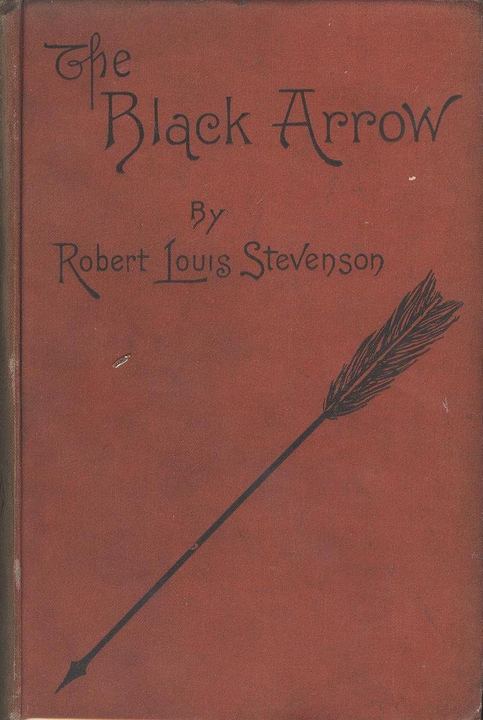
The Black Arrow
1888 (serialized 1883) · 19th Century · Novel · English
Abstract
Background. Stevenson produced this romance for a London boys' weekly in the year Treasure Island first came out, signing it with a pen name, and only later gathered it into a volume he jokingly dedicated to his wife.
Plot. Warned by an outlaw verse that his guardian murdered his father, the young Shelton flees with a runaway who is really a girl in hiding. He changes allegiance, joins the forest archers, steals a ship in a botched rescue, and slips into his enemy's house dressed as a friar. Saving the crooked Yorkist duke earns him a knighthood at a street barricade, which he spends at once on an old sailor's life. He forgives Sir Daniel, whom an outlaw arrow kills anyway, and weds Joanna.
Structure. Each of the five books carries its own title, from The Two Lads to Crookback, and the plot is driven by disguise and pursuit.
Themes. Shifting loyalties in civil war, private vengeance against lawful pardon, the guilt of unintended harm, and constancy between lovers and friends.
Significance. Less admired by its author than by its first young readers, the story keeps a place beside Scott's romances in school reading and offers an early fictional portrait of the future Richard III.
Main characters
- Dick Shelton: Orphaned ward seeking the truth of his father's murder
- Joanna Sedley: Heiress first met in boy's clothes as Jack Matcham
- Sir Daniel Brackley: Turncoat knight of Tunstall and Dick's guardian
- Ellis Duckworth: Wronged outlaw chief behind the black arrows
- Will Lawless: Ex-friar, sailor and thief, Dick's faithful companion
- Sir Oliver Oates: Timid priest implicated in the old crime
- Arblaster: Skipper ruined by the theft of his ship
- Alicia Risingham: Outspoken Lancastrian lady and Joanna's friend
- Richard of Gloucester: Young Yorkist duke and future Richard III

Summary
The Black Arrow is set in England during the Wars of the Roses, when York and Lancaster fought for the crown and lesser lords changed sides as fortune moved. Richard Shelton, called Dick, is the young ward of Sir Daniel Brackley, a grasping knight who holds the Moat House at Tunstall and has grown rich by seizing other men's lands. In the Prologue, as Sir Daniel's men are summoned to battle, old Nicholas Appleyard, a veteran of Agincourt, is shot dead at his own door by a black arrow, and a rhyme pinned to the church door, signed John Amend-All, promises black arrows for Appleyard, Bennet Hatch, Sir Oliver Oates the priest and Sir Daniel, and accuses them of killing Sir Harry Shelton, Dick's father. In Book I Dick befriends a frightened youth, John Matcham, who has escaped from Sir Daniel. Crossing the fen they fall in with the outlaw Fellowship of the Black Arrow, led by Ellis Duckworth, whom Sir Daniel ruined, and see Sir Daniel's men under Selden cut down in the forest. On the heath a blind leper with a bell pursues them and seizes Matcham; he turns out to be Sir Daniel himself, fleeing in disguise after the Lancastrian defeat at Risingham. In Book II, back at the Moat House, Dick questions the dying archer Carter about his father's death, discovers that Matcham is Joanna Sedley, an heiress whose marriage Sir Daniel means to sell, and escapes an attempt on his life by climbing from a window, after which he joins the outlaws. In Book III he follows Joanna to the coast town of Shoreby, where Sir Daniel has promised her to the old Lord Shoreby. He allies himself with Lord Foxham, her rightful guardian, and they steal the ship Good Hope from the skipper Arblaster for a rescue by sea, but the attack fails, Foxham is wounded and the ship is wrecked. In Book IV the outlaw Will Lawless disguises Dick as a friar; inside Sir Daniel's house he kills a spy and finds Joanna and her friend Alicia Risingham, and at the wedding in the abbey church Lord Shoreby falls to black arrows. Arrested, Dick wins his freedom from Earl Risingham by revealing a letter that proves Sir Daniel's double-dealing. In Book V he saves a small, misshapen young nobleman from attackers: Richard, Duke of Gloucester, the future Richard III. Dick holds a street for him in the Battle of Shoreby and is knighted, then spends his reward to save Arblaster's life and loses Gloucester's favor. On his wedding morning he spares Sir Daniel, but Ellis Duckworth shoots him with a black arrow, and Dick marries Joanna. The tale ran in the boys' paper Young Folks in 1883 under the name Captain George North and appeared as a book in 1888.
Virtues in this work
- Charity: Dick spares Sir Daniel on his wedding morning and tells him to seek God's forgiveness, since Dick's own is freely given.
- Friendship: Dick refuses to leave Lawless to be hanged and begs Earl Risingham for his life as well as his own.
- Justice: Dick gives up Gloucester's favor to buy back the life of Arblaster, whom his theft of the Good Hope had ruined.
- Fortitude: Dick holds the barricade in the Battle of Shoreby against the Lancastrian cavalry until the street is cleared.
Plot or Argument
- Prologue: John Amend-All
Appleyard is shot by a black arrow at Tunstall, and the outlaws' rhyme names the men they mean to kill and accuses them of murdering Sir Harry Shelton. Dick rides out with reinforcements for Sir Daniel.
- Book I: The Two Lads
At Kettley Dick meets John Matcham. The two cross the fen, fall among the Fellowship of the Black Arrow, watch Selden's men destroyed, and are hunted across the heath by a leper who proves to be Sir Daniel in disguise.
- Book II: The Moat House
Dick questions the dying Carter about his father's death, and Sir Daniel and Sir Oliver swear their innocence on the book. In the room over the chapel Dick finds that Matcham is Joanna Sedley; warned of a plot against his life, he explores the secret passage, lets himself down from a window by a rope into the moat, and goes over to the outlaws.
- Book III: My Lord Foxham
In Shoreby Dick spies on the house where Joanna is kept, fights in the dark, and meets Lord Foxham at St. Bride's Cross. Lawless steals the Good Hope from Arblaster; the night attack fails and the ship is driven ashore in a gale.
- Book IV: The Disguise
Disguised as friars, Dick and Lawless enter Sir Daniel's house; Dick kills the spy Rutter and meets Alicia Risingham. At the abbey wedding Lord Shoreby is shot, and Earl Risingham, shown Sir Daniel's treacherous letter, sets Dick and Lawless free.
- Book V: Crookback
Dick rescues Richard of Gloucester, holds the barricade in the Battle of Shoreby and is knighted. He asks Arblaster's life as his reward and loses Gloucester's favor; Alicia rebukes him for fighting without a cause. He recovers Joanna in the woods, spares Sir Daniel, and sees Ellis Duckworth kill him. Dick and Joanna marry at Holywood and retire to the forest.
Characters
- Richard Shelton (Dick), hero
Sir Daniel's ward, a brave and honest youth who learns that his guardian killed his father and comes to see the cost of war.
- Joanna Sedley, heroine
An heiress disguised as the boy John Matcham, spirited and loyal, whose marriage is bought and sold by lords.
- Sir Daniel Brackley, villain
Lord of the Moat House at Tunstall, cunning and greedy, who changes sides as the war turns.
- Ellis Duckworth, outlaw leader
Ruined by Sir Daniel, he leads the Fellowship of the Black Arrow under the name John Amend-All.
- Will Lawless, outlaw
A former Grey Friar and sailor, drunken, resourceful and fond of Dick, who dies at last a friar.
- Sir Oliver Oates, priest
Sir Daniel's clerk and chaplain, fearful and evasive, who taught Dick his letters.
- Bennet Hatch, Sir Daniel's retainer
A hard soldier, cruel to enemies but kind to Dick, who falls in the forest fighting for his master.
- Nicholas Appleyard, old archer
A veteran of the French wars, the first victim of the black arrows.
- Lord Foxham, Yorkist lord
Joanna's rightful guardian, who becomes Dick's patron.
- Arblaster, skipper of the Good Hope
An old shipman whose vessel Dick steals and whose life he later buys back.
- Alicia Risingham, Joanna's friend
Earl Risingham's sharp-tongued niece, who shelters Dick and scolds him.
- Earl Risingham, Lancastrian commander
A just but partisan lord who frees Dick after reading Sir Daniel's letter.
- Richard, Duke of Gloucester, the future Richard III
A young, hunchbacked, ruthless and brilliant Yorkist captain who knights Dick.
Lessons
Revenge leaves a sorry taste
The outlaws' rhyme promises a black arrow for every man who wronged them, and the arrows do their work. Yet at the end Dick, who had every cause for vengeance, spares Sir Daniel, and Ellis Duckworth, who kills him, asks Dick to pray for him. Stevenson lets the reader feel the justice of the outlaws' grievance and still judges forgiveness the better part.
- Why does Dick refuse to kill Sir Daniel on his wedding morning?
- What does Ellis mean when he says he took the worse part?
- Is John Amend-All a fair name for the outlaw leader?
Actions cannot be undone
Dick steals the Good Hope to rescue Joanna, and the attempt costs the lives of innocent sailors and ruins Arblaster. When he buys the old man's life, Arblaster still will not forgive him. Dick learns that good intentions do not cancel consequences, and that a deed once done cannot be remedied by penitence alone.
- What does Arblaster lose because of Dick's plan?
- Why does Dick give up Gloucester's favor to save him?
- Is Arblaster right to refuse Dick's hand?
Fighting needs a cause
Dick fights bravely at Shoreby and is knighted, but Alicia tells him that war is noble only by its cause and that he has fought for credit and a wife. Sir Daniel, by contrast, changes sides whenever it suits him. The book asks readers to weigh loyalty, courage and purpose rather than admire courage alone.
- Why does Dick choose York, and when?
- What does Alicia accuse Dick of in Book V, Chapter V?
- How is Sir Daniel's way of changing sides different from Dick's?
Faithfulness to friends
Dick will not leave Lawless to hang, though Earl Risingham calls the old rogue gallows-ripe, and Lawless repeatedly risks his life for Dick. Their unlikely friendship between a young gentleman and an old thief is one of the warmest things in the book.
- What does Dick ask of Earl Risingham besides his own freedom?
- How does Lawless help Dick in Books III and IV?
- What does the last sentence of the book say about Lawless?
Context
The Wars of the Roses (c. 1455-1487) were fought between the houses of Lancaster, under Henry VI and Queen Margaret, and York. Local lords used the disorder to seize land and settle feuds, and many changed allegiance more than once. Stevenson's battles at Risingham and Shoreby, and the town of Shoreby and the forest of Tunstall, are invented; his own footnotes admit that Richard of Gloucester could not yet have held that title at the date of the story and would really have been younger. His portrait of Richard as hunchbacked, ruthless and ambitious follows the Tudor tradition later dramatized by Shakespeare.
Composition
Stevenson wrote the story in 1883, soon after Treasure Island had appeared as a serial in the same paper, and it ran in Young Folks from 30 June to 20 October 1883 as by Captain George North, subtitled A Tale of Tunstall Forest. It was revised and published as a book in 1888 as A Tale of the Two Roses, with a dedication, dated Saranac Lake, 8 April 1888, to his wife, the Critic on the Hearth, teasing her for never having read it. In the dedication he notes that the readers of the story paper had valued it above Treasure Island.
Reception
The serial was popular with boy readers, and the book has stayed in print as a historical adventure, often paired with Ivanhoe. Stevenson himself thought little of it and called it tushery in letters. It was filmed several times, notably in 1948, and adapted for television.
Comparisons
- richard-iii
Stevenson's hunchbacked Duke of Gloucester, brave, cold and contemptuous of mercy, is a younger version of the Richard whom Shakespeare made the archetype of the ambitious usurper; the novel's last paragraph points ahead to his brief kingdom and lasting infamy.
- ivanhoe
Scott's romance of outlaws, captive heiresses, a castle and a disguised great man is Stevenson's model; both mix invented knights with real kings in a divided England.
- the-merry-adventures-of-robin-hood
The Fellowship of the Black Arrow is a darker Sherwood band, living in the greenwood and shooting at the lords who wronged them, but its leader is moved by private revenge, not merry justice.
- treasure-island
Written in the same year for the same paper, both books follow a boy among dangerous men; Dick's unease with Lawless resembles Jim Hawkins's mixed feelings for Long John Silver.
- the-prince-and-the-pauper
Both tales put a boy among outlaws and great lords of English history and let him learn the cost of the age's violence and law.
Quotes
Frequently cited
“A blak arrow in each blak heart.”
Frequently cited
“I love not mercy, nor yet mercymongers.”
“There cometh never any rising, Bennet, from below--so all judicious chroniclers concord in their opinion; but rebellion travelleth ever downward from above”
“Alas, poor soul, and we should rather pity him!”
“Nay, it is the way of England. What would ye have?”
“a life is a life, old shrew, and it is more than ships or liquor.”
“War is but noble by the cause, and y' have disgraced it.”
“Ye took the better part and pardoned; I took the worse, and there lies the clay of mine enemy.”
For Students
A reading companion for classical Christian high school students. See the student guide.
Reading Guide
Watch for
- The rhyme in the Prologue: keep a list of the four men it names and what happens to each.
- Every disguise in the book: Joanna as Matcham, Sir Daniel as a leper, Dick and Lawless as friars, Sir Daniel as a pilgrim.
- How often lords in the story change sides, and what Earl Risingham says about it in Book IV, Chapter V.
- Dick's growing regret after the wreck of the Good Hope and the Battle of Shoreby.
- The final picture of Richard of Gloucester riding toward his brief kingdom.
Key terms and names
- Fellowship of the Black Arrow
- The outlaw band of Tunstall Forest, led by Ellis Duckworth, who sign their threats John Amend-All.
- Moat House
- Sir Daniel Brackley's fortified manor at Tunstall, with a secret passage and a room over the chapel.
- York and Lancaster
- The two royal houses whose rivalry, called the Wars of the Roses, divides every lord in the book.
- Crookback
- The nickname for Richard of Gloucester, the future Richard III, used as the title of Book V.
- Arblast
- A crossbow, the weapon Dick carries and almost uses against the leper.
- Ward
- A young heir under a guardian's control; both Dick and Joanna are wards whose marriages and lands lords fight over.
- Good Hope
- Arblaster's ship, stolen by Dick and Lawless and wrecked in the failed attack on Shoreby.
Seminar Questions
- Comprehension Who is John Amend-All, and whom does his rhyme accuse of killing Dick's father?
- Comprehension How does Dick find out that Matcham is Joanna Sedley?
- Comprehension What reward does Dick ask from Gloucester after the Battle of Shoreby, and what does it cost him?
- Interpretation Why does Stevenson have Sir Daniel disguise himself as a leper? What does the disguise say about him?
- Interpretation Is Alicia's rebuke of Dick in Book V, Chapter V fair?
- Interpretation Why does Stevenson let Ellis Duckworth, not Dick, kill Sir Daniel?
- Big Question Can a person be guilty for harm he did while trying to do good?
Faith Connections
- Romans 12:19 (Scripture)
Paul tells believers not to avenge themselves but to leave room for God's judgment. Dick, on his wedding morning, refuses to be judge or hangman and leaves Sir Daniel to God.
- Psalm 91:5 (Scripture)
Sir Oliver half-remembers the arrow that flieth by day and wrongly credits it to the gospel. The psalm promises protection to those who trust God, a promise the frightened priest cannot claim with a clear conscience.
- Leviticus 13:45-46 (Scripture)
The law required the leper to cover his face, cry unclean and dwell alone outside the camp. The leper of Book I follows this pattern, and Dick's pity for him anticipates Christ's touch of the leper in Mark 1:40-42.
- Augustine, City of God XIX.7 (Church Fathers)
Augustine teaches that even a just war should be waged with grief at its necessity. Alicia's charge that war is noble only by its cause, and Dick's sorrow after Shoreby, echo this teaching.
Logic and Rhetoric
Central argument: In an age when great men change sides for gain and settle feuds by murder, courage alone cannot make a man good. Dick is brave from the start, but he learns through the wreck of the Good Hope, the ruin of Arblaster and Alicia's rebuke that deeds have consequences and that war needs a just cause. Therefore the true victory of the book is his forgiveness of Sir Daniel, not his knighthood.
Rhetorical device: archaism. Stevenson gives his characters an invented old speech of ye, prithee and by the mass, and the Prologue rhyme is printed in rough fifteenth-century spelling.
Debate: Resolved: that the Fellowship of the Black Arrow was justified in its war on Sir Daniel.
Memory Work
War is but noble by the cause, and y' have disgraced it.
Ye took the better part and pardoned; I took the worse, and there lies the clay of mine enemy.
Writing Prompts
Essay: Trace how Dick's understanding of war changes from the Prologue to Book V, using the wreck of the Good Hope and Alicia's rebuke as turning points.
Comparison with Richard III: Compare Stevenson's young Duke of Gloucester with Shakespeare's Richard. What qualities do they share, and how does each writer make the reader feel about him?
Medical Lens
The most memorable medical image is the leper on the heath in Book I, Chapter VII: white-hooded, blind, tapping with a staff and ringing a bell so that others may avoid him, shut out from human touch and believed to carry death in his touch. Sir Daniel chooses the disguise precisely because no outlaw will approach a leper, and the boys' terror and Dick's refusal to shoot at a leper show how medieval fear of the disease set the sufferer apart from the community. Stevenson, who suffered from chronic lung disease and later visited the leper settlement at Molokai, writes with pity as well as horror. Elsewhere the book is full of wounds and slow deaths, among them Carter dying in the Moat House, Lord Foxham struck down on the pier, the slaughter of men and horses at the Shoreby barricade, and Sir Daniel's convulsive death from an arrow. Richard of Gloucester's crooked shoulder belongs to the Tudor tradition of his deformity, here a mark of character as much as of body.
- Book I, Chapter VII
A blind leper with bell and staff crosses the heath and pursues the boys; he is revealed as Sir Daniel in disguise.
- Book II, Chapter I
The wounded archer Carter lies dying in the Moat House and refuses Dick the truth about his father's death.
- Book V, Chapter I
Dick meets the young Duke of Gloucester, slightly deformed with one shoulder higher than the other, fighting off assailants.
- Book V, Chapter VII
Sir Daniel, struck by the last black arrow, dies in spasms of pain in Dick's arms.
Listen to the book
Public-domain audiobook from LibriVox, read by Mark F. Smith. Recording: Black Arrow on LibriVox (Internet Archive).
LibriVox recordings are volunteer readings released into the public domain. The reading may follow a different edition from the text in this library.
Creative Prompts
- Classroom
Map Dick's journey from Tunstall to the fen, the Moat House, Shoreby and Holywood, marking where each black arrow strikes.
- Essay
Is Ellis Duckworth a hero or a villain? Use the Prologue rhyme and Book V, Chapter VII.
- Fiction
Tell the leper scene of Book I, Chapter VII from Sir Daniel's point of view under the hood.
- Dialogue
Write the conversation between Dick and Arblaster a year after the wedding, if the old skipper came to Tunstall.
Further Reading
- Kidnapped, Robert Louis Stevenson
Stevenson's other historical adventure of a young man in a civil conflict.
- Men of Iron, Howard Pyle
A squire's training in arms in the reign of Henry IV.
- The Daughter of Time, Josephine Tey
A detective novel that questions the Tudor picture of Richard III.
- The Wars of the Roses, Alison Weir
Verification notes
Plot, names and locators were checked against the attached Gutenberg text, including the leper (Book I, Chapter VII), Earl Risingham's interview (Book IV, Chapter V), the knighting (Book V, Chapter II), Arblaster's pardon (Book V, Chapter IV), Alicia's rebuke (Book V, Chapter V), Hatch's death (Book V, Chapter VI) and Sir Daniel's death (Book V, Chapter VII). Serial dates and the pseudonym Captain George North were confirmed at https://en.wikipedia.org/wiki/The_Black_Arrow:_A_Tale_of_the_Two_Roses. Stevenson's word tushery for the book comes from his letters; the 1948 film is standard. Quotes were checked against the attached text.
- The 1888 book publishers (usually given as Scribner's in New York and Cassell in London) and the extent of Stevenson's revision from the serial.